Category Archives: Microbiological Risk Assessment

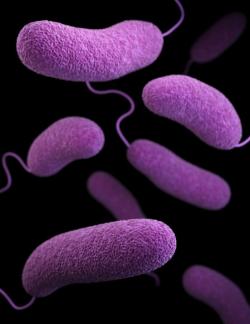
Syria – Cholera outbreak

Jpost

Food Illness

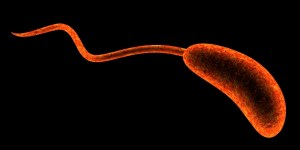
cholera outbreak in several regions of Syria presents “a serious threat to people in Syria and the region”, the United Nations representative in the country said, calling for an urgent response to contain its spread.

The outbreak is believed to be linked to irrigation of crops using contaminated water and people drinking unsafe water from the Euphrates river which bisects Syria from the north to the east, UN Resident and Humanitarian Coordinator Imran Riza said in a statement.

Research – Effect of sub-lethal treatment of carvacrol and thymol on virulence potential and resistance to several bactericidal treatments of Staphylococcus aureusResearch –

Journal of Food Protection

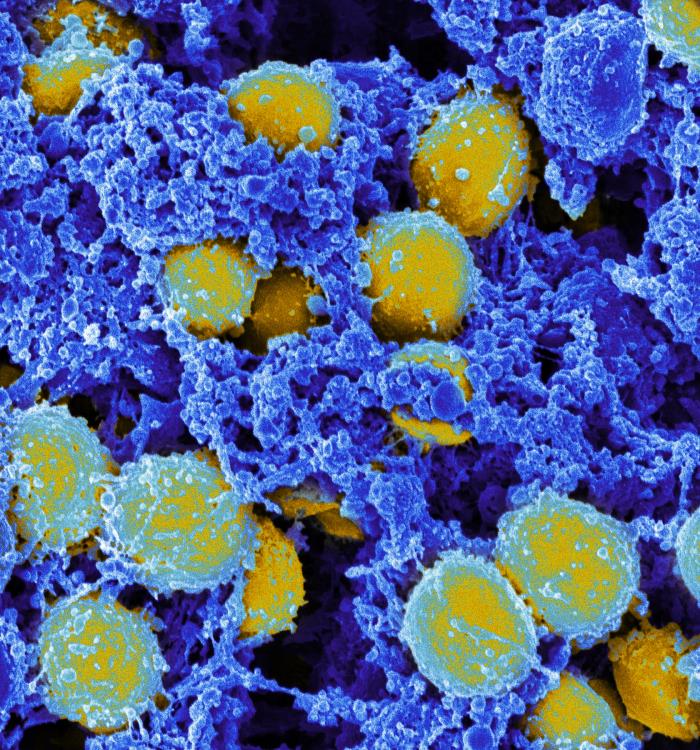
This study examined the changes in biofilm-formation ability, hemolytic/lipase/nuclease/protease activities, and resistance to various bactericidal treatments of Staphylococcus aureus after sublethal treatment with carvacrol and thymol. The minimum inhibitory concentrations (MICs) of carvacrol and thymol for S. aureus were 0.4 and 0.3 mg/ml, respectively, and sublethal concentrations (1/2 and 1/4 MIC) were determined based on these concentrations. Sublethal treatment with carvacrol and thymol did not change the protease and lipase activities but reduced the hemolytic and nuclease activities of S. aureus. After sublethal treatment with carvacrol and thymol, the biofilm-formation ability of S. aureus was decreased, which was found to be due to the decrease in cell surface hydrophobicity. In addition, after sublethal treatment with carvacrol and thymol, the resistance of S. aureus to heating and malic acid treatments increased, whereas resistance to ultraviolet and hypochlorous acid (HOCl) decreased, and resistance to hydrogen peroxide (H2O2) did not change. The results of this study show that sublethal treatment with carvacrol and thymol can effectively suppress some virulence factors of S. aureus and that applying HOCl or ultraviolet radiation would be an effective subsequent treatment to inactivate S. aureus after sublethal treatment.

Research – Shiga toxin-producing Escherichia coli (STEC) infection – Annual Epidemiological Report for 2020

ECDC

Thumbnail

For 2020, 28 EU/EEA countries reported 4 824 confirmed cases of Shiga toxin -producing Escherichia coli (STEC) infection. The overall notification rate was 1.6 cases per 100 000 population. The highest notification rates were reported in Ireland, Malta, Denmark, and Norway. The EU/EEA notification rate decreased notably in 2020 compared with 2016-2019 due to the COVID-19 pandemic. The highest rate of confirmed cases was observed in 0–4-year-old children, with 8.6 cases per 100 000 population for males and 7.5 cases per 100 000 population for females.

Click to access STEC-infection-AER-2020-JD-FINAL.pdf

New Zealand – Public health warning for shellfish reduced for West Coast, North Island – PSP Toxins

MPI

New Zealand Food Safety today reduced a public health warning against collecting shellfish in the Waikato and Taranaki region. The public health warning now extends from Albatross Point south to Oakura Beach and no longer applies to Kawhia and Aotea Harbours. More testing is being undertaken to determine the levels of paralytic shellfish toxins in the affected area.

Routine tests on shellfish samples taken from the Aotea/Kawhia Harbour area have shown levels of Paralytic Shellfish Poisoning (PSP) toxins are now within the safe limit of 0.8 mg/kg set by New Zealand Food Safety.

Mussels, oysters, tuatua, pipi, toheroa, cockles, scallops, catseyes, kina (sea urchin), and all other bivalve shellfish should not be eaten.

Note, cooking shellfish does not remove the toxin.

Pāua, crab, and crayfish may still be eaten if the gut has been completely removed prior to cooking, as toxins accumulate in the gut. If the gut is not removed, its contents could contaminate the meat during the cooking process.

Symptoms typically appear between 10 minutes and 3 hours after ingestion and may include:

  • numbness and a tingling (prickly feeling) around the mouth, face, and extremities (hands and feet)
  • difficulty swallowing or breathing
  • dizziness
  • headache
  • nausea
  • vomiting
  • diarrhoea
  • paralysis and respiratory failure and in severe cases, death.

If anyone becomes ill after eating shellfish from an area where a public health warning has been issued, phone Healthline for advice on 0800 61 11 16, or seek medical attention immediately. You are also advised to contact your nearest public health unit and keep any leftover shellfish in case it can be tested.

Monitoring of toxin levels will continue and any changes will be communicated accordingly. Commercially harvested shellfish – sold in shops and supermarkets, or exported – is subject to strict water and flesh monitoring programmes by MPI to ensure they are safe to eat.

India – 11 people fall sick after consuming stale food in MP’s Khargone district

Business Standard

Eleven people fell sick after consuming stale food during ‘shraddh’, a ritual performed to pay homage to a dead ancestor, in Madhya Pradesh’s Khargone district, an official said on Monday.

The incident took place on Sunday after ‘kheer’ (a sweet dish made of milk) was served to the people during the ritual in Saigon town.

In the evening, 11 people including five women and two girls complained of vomiting and upset stomach. After preliminary treatment at Saigon health centre, they were referred to the district hospital, Dr Mayank Patidar from the medical facility said.

The condition of all of them is stable now, he said.

The food department has collected the kheer sample for testing, he said.

The official said it was suspected that the milk used in the kheer preparation had turned stale which resulted in food poisoning.

Europe – ECDC Vibrio Map Viewer

ECDC

ECDC Vibrio map viewer

KSWFOODWORLD

The Vibrio suitability tool (Vibrio map viewer) shows the environmental suitability for Vibrio growth in the Baltic Sea. It is a near real-time model that uses daily updated remote sensing data to examine worldwide environmental conditions, such as sea surface temperature and salinity for Vibrio spp.. The model used for the Vibrio viewer has been calibrated to the Baltic Region in Northern Europe and might not apply to other worldwide settings prior to validation.

Infections caused by Vibrio species other than V. cholerae can be serious, particularly for immunocompromised persons. However, the overall occurrence is low despite an increase having recently been observed in northern Europe.

ECDC monitors Vibrio growth in the Baltic Sea during the summer. If and when the risk of Vibrio growth is determined as medium or above, notifications are reported in the weekly threats reports (CDTR). The original viewer is available on the ECDC website: https://geoportal.ecdc.europa.eu/vibriomapviewer

Canada – Non-travel related Cyclospora infections under investigation – September 9, 2022

Public Health Notice

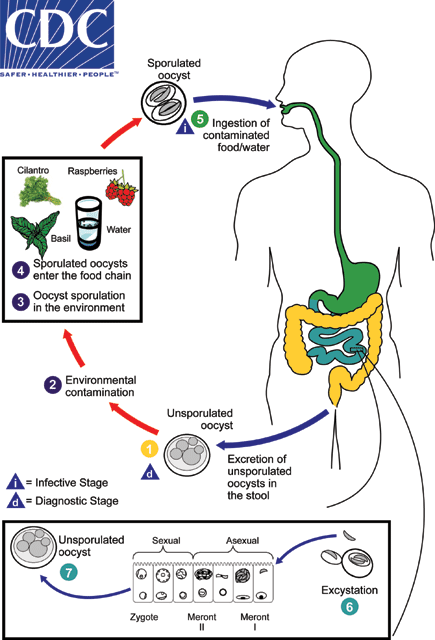
Each spring and summer, Canada sees an increase in non-travel related Cyclospora illnesses reported to the Public Health Agency of Canada (PHAC). PHAC is working with its public health and food safety partners to identify possible ways infections are occurring in Canada. Previous Cyclospora illnesses have been linked to various types of imported fresh produce, including pre-packaged salad mix, basil, cilantro, berries, lettuce, and snow and snap peas.

Learn more about the causessymptoms and risks of infection, as well as how to prevent and treat an illness.

At a glance
Investigation status Ongoing
Case count 310
Provinces/Territories
  • Alberta (1)
  • British Columbia (3)
  • Newfoundland and Labrador (3)
  • Ontario (252)
  • Quebec (51)
Hospitalizations 13
Deaths 0
Gender
  • 150 Males
  • 159 Females
  • Gender is unknown for 1 case
Age Range in Years 1-90
Recall No
Public Health Notice No

Finland – The vegenugget batch is being removed from sale as a precaution – Microbiological Risk

Ruokavirasto

Valio Oy has announced that it has removed from sale one batch of the product Gold&Green® Vegenugetit 230 g, best before 4 October 2022. The product batch is recalled as a precautionary measure, because a suspected microbiological deviation was found in another product manufactured on the same production line on the same day during the manufacturer’s self-monitoring. (That batch has been completely stopped in stock.)

The recalled batch has been put on sale in retail stores on September 7, 2022.

Valio advises consumers to return faulty products for a refund primarily to the store where they were purchased. Consumers can also contact Valio via the feedback form on the website: www.valio.fi/ota-yhteytta .

More information: Valio consumer service number: 0800 0825 (toll-free), Mon-Fri from 9 am to 3 pm.

Read Valio’s announcement on the matter .

The matter is handled at the Food Agency by Chief Inspector Mika Varjonen, tel. 050 38 68 416, firstname.surname@ruokavirasto.fi .

USA – E. coli at San Diego State University

Food Poison Journal

On Sept. 6, Student Health Services notified the SDSU community of two cases of Shiga Toxin-Producing E. coli (STEC) in the student community in one residential and one non-residential student.  These students began experiencing symptoms on Aug. 27 and 29, respectively.

At this time, a specific food source has not been identified for either of these cases. SDSU’s Environmental Health and Safety team is working closely with the County of San Diego Health & Human Services Agency to investigate these cases and to identify and confirm the potential source. Additional information will be shared with the community as it becomes available.

Research – Underreported Human Exposure to Mycotoxins: The Case of South Africa

MDPI

South Africa (SA) is a leading exporter of maize in Africa. The commercial maize farming sector contributes to about 85% of the overall maize produced. More than 33% of South Africa’s population live in rural settlements, and their livelihoods depend entirely on subsistence farming. The subsistence farming system promotes fungal growth and mycotoxin production. This review aims to investigate the exposure levels of the rural population of South Africa to dietary mycotoxins contrary to several reports issued concerning the safety of South African maize. A systematic search was conducted using Google Scholar. Maize is a staple food in South Africa and consumption rates in rural and urban communities are different, for instance, intake may be 1–2 kg/person/day and 400 g/person/day, respectively. Commercial and subsistence maize farming techniques are different. There exist differences influencing the composition of mycotoxins in food commodities from both sectors. Depending on the levels of contamination, dietary exposure of South Africans to mycotoxins is evident in the high levels of fumonisins (FBs) that have been detected in SA home-grown maize. Other potential sources of exposure to mycotoxins, such as carryover effects from animal products and processed foods, were reviewed. The combined effects between FBs and aflatoxins (AFs) have been reported in humans/animals and should not be ignored, as sporadic breakouts of aflatoxicosis have been reported in South Africa. These reports are not a true representation of the entire country as reports from the subsistence-farming rural communities show high incidence of maize contaminated with both AFs and FBs. While commercial farmers and exporters have all the resources needed to perform laboratory analyses of maize products, the greater challenge in combatting mycotoxin exposure is encountered in rural communities with predominantly subsistence farming systems, where conventional food surveillance is lacking.