Category Archives: Food Toxin

RASFF Alert – STEC E.coli O157 – Chilled Beef

RASFF

Shigatoxin-producing Escherichia coli (O157 stx1+ stx2+ eae+ /25g) in chilled beef from Belgium in the Netherlands

RASFF Alert – Ochratoxin A – Spray Dried Instant Coffee

RASFF

Ochratoxin A in Spray dried instant coffee from Vietnam in Romania

RASFF Alert – Aflatoxin – Dried Figs – Pistachio Kernels – Assorted Spice Mix – Sesame Seeds – Groundnuts – Millet Flour – Ground Ginger

RASFF

Aflatoxins (B1 = 12.6; Tot. = 13.1 µg/kg – ppb) in pistachio kernels from the United Kingdom in Ireland

RASFF

Aflatoxins (B1 = 59.2; Tot. = 136.8 µg/kg – ppb) in dried figs from Turkey in Belgium

RASFF

Aflatoxins (B1 = 168; Tot. = 275.7 µg/kg – ppb) in dried figs from Turkey in Belgium

RASFF

Aflatoxins in pistachio kernels from turkey in Germany

RASFF

Aflatoxins (B1 = 29.5; Tot. = 31.2 µg/kg – ppb) in pistachios from Iran in Germany

RASFF

Aflatoxines B1 in assorted spices mix from Pakistan in France and Belgium

RASFF

Aflatoxins and Bacillus cereus in organic sesame seeds from Togo in Germany, Netherlands and Switzerland

RASFF

Aflatoxins in millet flour from Senegal in the Netherlands

RASFF

Aflatoxins (B1 = 18.4; Tot. = 20.3 / B1 = 26.9; Tot. = 29.3 µg/kg – ppb) in groundnuts in shell from Egypt in Italy

RASFF

Aflatoxins in dried figs from Turkey in Germany

RASFF

Aflatoxin in Ground Ginger from India, distribution from UK in Ireland

Denmark – Outbreak of diarrhea-causing E. coli O157

SSI

The Statens Serum Institut is currently investigating an outbreak with a diarrhea-causing and toxin-producing E. coli bacterium. It began in December and currently includes 13 people with possible common source of infection.

Since December 3, 13 patients related to an outbreak with the diarrhea-causing and shiga toxin-producing E. coli bacterium (STEC) with the serotype O157: H7 have been identified. Of these, identical bacteria have been found in nine patients by whole genome sequencing at the Statens Serum Institut (SSI).

Three children with acute renal failure

Among the patients are three children who have developed haemolytic uraemic syndrome / acute renal failure (HUS), which may be a serious consequence of infection with STEC.

The sick are four men and nine women between the ages of 2 and 90. They come from all regions in the country, except Region North Jutland. The sick have not been traveling and have not participated in joint events in the time leading up to their illness.

Nine patients have been hospitalized in connection with the infection.

A serious outbreak

“It is a serious outbreak, as this type of toxin-producing E. coli can in some cases cause acute renal failure. We are paying particular attention when three children with acute renal failure were reported here in December. Patients with severe diarrhea, especially bloody diarrhea, should seek medical attention to get a correct diagnosis “, says Epidemiologist Luise Müller from SSI. She continues:

“As we do not yet know the source of this outbreak, the best advice we can give is to remember to fry minced meat and rinse fruit and vegetables thoroughly before eating it. It is also important to separate raw meat from ready-to-eat food, such as salad, which is not heat-treated before eating. ”

Looking for the source of infection

To find out what may have made the patients ill, interviews are conducted with patients or parents of patients to obtain information on food intake, institutional contact, animal contact and other relevant exposures.

The outbreak is being investigated by SSI in collaboration with the Danish Veterinary and Food Administration and the DTU Food Institute.

Read more

Read more about the outbreak on this outbreak site.

Read more about E. coli infection, among others STEC / VTEC.

Read more about Hemolytic uremic syndrome .

Read more about how to avoid STEC in your food on the Danish Veterinary and Food Administration’s website.

USA – Core Outbreak Table Updates

FDA

This week’s updates are:

  • A new outbreak of E. coli O121: H19 with an unidentified vehicle has been added. This outbreak does not appear to be ongoing, as the last illness onset occurred in November 2021. FDA has initiated traceback and other investigational activities in an effort to learn more about possible sources or routes of contamination.
  • The outbreak of Salmonella Javiana linked to 65 illnesses has ended. The information collected over the course of this investigation indicated cut cantaloupe was the likely source of this outbreak, however it appears that the products linked to outbreak illnesses are past shelf life and are no longer available for sale. The most recent illness occurred in November 2021. FDA’s outbreak investigation did not identify a specific product until after the product had expired and was no longer on the market, and there were no actionable steps for consumers to take to protect themselves.
  • For the outbreak of E. coli O157:H7 linked to spinach, the outbreak has ended and the FDA investigation has closed. This incident was archived in the 2021 Investigation Table.
1/10/2022 1050 E. coli
O121:H19
Not Yet
Identified
4
12/29/2021 1052 E. coli
O157:H7
Packaged Salad See Outbreak
Advisory
12/20/2021 1039 Listeria
monocytogenes
Packaged Salad See Outbreak
Advisory
12/15/2021 1048 Listeria
monocytogenes
Packaged Salad See Outbreak
Advisory
11/24/2021 1044 Salmonella
Javiana
Cut Cantaloupe 65
9/15/2021 1031 Salmonella
Oranienburg
Red, Yellow,
and White Onions
See Outbreak
Advisory

Malaysia – Nine people, including children, suffer food poisoning at relief centre in Tangkak, Johor

New Straits Times

KUALA LUMPUR: Nine people suffered food poisoning at SK Pengkalan Besar flood relief centre in Tangkak, Johor on Sunday.

Health director-general Tan Sri Dr Noor Hisham Abdullah said the cases involved four flood victims and five others included personnel at the relief centre.

The four victims are children between 3 and 14 years old, with three staying in the same cubicle at the relief centre.

“All victims suffered vomiting, diarrhoea and abdominal pain. Two of the victims were admitted to Tangkak Hospital on the same day and was discharged yesterday, while the other two received outpatient treatment,” he said in a statement today.

He ruled out contamination as the cause of the food poisoning and believed it was due to poor hygiene as well as food being exposed for a long time.

“Food samples have been collected for further investigation,” he said.

Research – Mycotoxins impact feed quality in 2021 European grain harvest

All About Feed

Extreme weather patterns across Europe in 2021 have been blamed for increased levels of mycotoxins in arable crops creating concerns over the subsequent quality of animal feed.

Mycotoxins, which are produced by certain species of moulds, are a concern for livestock producers due to their ability to influence feed quality and subsequent animal health and performance.

During extensive research across a number of European countries, a pattern of increased mycotoxins has been documented in the latest harvest analysis report from Alltech, in collaboration with SGS.

Just under 1,200 samples of barley, wheat, corn, corn silage, grass silage, alfalfa haylage, triticale, straw and whole crop silage (wheat and barley) were taken for analysis. Several farms or animal feed production sites across Russia, Spain, Denmark, Hungary, Romania, Germany, Netherlands, the UK, Ireland, Bulgaria, Czech Republic, Lithuania, Latvia, Greece, Belarus, Croatia, Serbia, Slovakia and Ukraine were involved in the data gathering.

Moderate to high risk

Data collected for the key feed ingredients indicated the presence of moderate to high levels of mycotoxin risk. Across all samples, there was an average of 4.34 mycotoxins detected, with 98.5% containing at least 1 mycotoxin and 86.1% containing 2 or more mycotoxins.

Type B-trichothecenes were found in 87% of the grain samples, which is a similar number to those found in 2020. The highest concentration of deoxynivalenol or DON (10,914 ppb) was detected in a Danish straw sample. Out of over 600 corn samples analysed, 24% of these contained aflatoxins, a notably higher percentage than 2020 and something feed and livestock producers should be aware of when putting mycotoxin control plans in place for the coming season.

Of the corn samples analysed using an LC-MS/MS method, fusaric acid was the most prominent mycotoxin, detected in 96.7% of samples, while type B-trichothecenes and fumonisins were found in 90% and 83% of samples, respectively.

France – Fresh yellowfin tuna steak 250g – Histamine

Gov france

Identifying information for the recalled product

  • Product category Food
  • Product sub-category Fishery and aquaculture products
  • Product brand name Costs
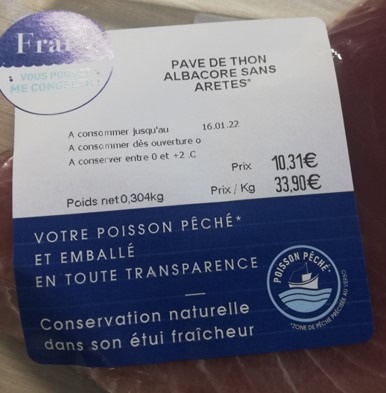
  • Names of models or references Boneless yellowfin tuna steak
  • Product identification
    GTIN Lot Dated
    28696020 1162553 Use-by date 12/01/2022
    28696020 1162554 Use-by date 01/13/2022
    28696020 1162687 Use-by date 01/15/2022
    28696020 1162689 Use-by date 01/15/2022
    28696020 1162556 Use-by date 01/13/2022
    28696020 1162790 Use-by date 01/16/2022
  • Packaging Skin pack 250g vacuum tray
  • Start date / End of marketing From 01/08/2022 to 01/16/2022
  • Storage temperature Product to be stored in the refrigerator
  • Health mark FR 34.336.503 CE
  • Further information DLC on front label – Lot number and DLC on rear label
  • Geographical sales area Whole France
  • Distributors GRAND FRAIS MAREE – WORLD MARECHAL – GRAND FRAIS & FRESH STORES

Practical information regarding the recall

  • Reason for recall Suspected Histamine presence
  • Risks incurred by the consumer Endogenous toxins: histamine (fish, cheese, alcoholic drinks, cold meats)

Ireland – Heavy presence of Mycotoxins confirmed in some Irish silage

Agriland

Surveys carried out by Alltech have confirmed the heavy presence of mycotoxins in silages across Northern Ireland (NI), Munster and south Leinster.

To date, forage samples across the rest of the country seem to be relatively free of the problem — for now, at least.

As a consequence, farmers may not know that they are offering their dairy and beef herds diets that can seriously impact both animal health and overall performance.

Argentina – Botulism behind at least two deaths; others sick in Argentina

Food Safety News

kswfoodworld

Foodborne botulism has been linked to two deaths in an Argentinian province.

The Ministry of Public Health in Misiones reported the two fatalities and at least four other cases occurred this past week in the village of Andresito.

The four ill people, including three adults and one child, are being treated in the intensive care unit of a local hospital. According to media reports, a third person, a child, has since died and up to 10 people have been affected.

Agency officials said that products suspected to be linked to the food poisoning have been seized. Local media reported homemade sausages are believed to be the source of infection.

Botulism antitoxin has been brought from Buenos Aires and Corrientes to reinforce local stock.

Officials reminded people about how food that is not approved by the relevant authorities should not be consumed.