Category Archives: Food Poisoning

USA – Outbreak Investigation of E. coli O103: Clover Sprouts (February 2020)

FDA

March 17, 2020

Recommendation

Chicago Indoor Garden is recalling all products containing Red Clover sprouts. FDA is recommending that consumers not eat the following recalled items with “Best By” dates between 12/1/2019 and 3/12/2020 that were distributed to Whole Foods throughout the Midwest, Coosemans Chicago Inc., Battaglia Distributing, and Living Waters Farms:

  • Red Clover 4oz. clamshell
  • Red Clover 2lb. boxes
  • Sprout Salad 6oz. clamshell
  • Mixed Greens 4oz. clamshell
  • Spring Salad 6oz. clamshell
Sample Labels of Chicago Indoor Garden Sprout Products

(PDF: 849 KB)

The FDA’s analysis of a sample of this firm’s product identified the presence of E. coli O103. Whole Genome Sequencing of this bacteria showed that it matches the outbreak strain.

Generally, it is recommended that children, the elderly, pregnant women, and persons with weakened immune systems should avoid eating raw sprouts of any kind.

Background

FDA, along with CDC and state and local partners, are investigating an outbreak of 14 illnesses caused by E. coli O103 in Iowa, Illinois, Missouri, Texas and Utah likely linked to clover sprouts.

As the outbreak investigation progresses, the FDA will continue in its traceback investigation to determine where implicated sprouts have been distributed and will continue monitoring for additional illnesses associated with this outbreak.

USA – Outbreak Investigation of E. coli O103: Clover Sprouts (February 2020)

FDA

Recommendation

FDA is recommending that consumers not eat the following sprout-containing items from Chicago Indoor Garden, Chicago, IL, with Best By dates between December 1, 2019 and March 12, 2020: red clover (with and without non-GMO labels), sprout salad, mixed greens, and spring salad. Labels of the products are below.

Sample Labels of Chicago Indoor Garden Sprout Products

(PDF: 849 KB)

The FDA’s analysis of a sample of this firm’s product identified the presence of E. coli O103. Whole Genome Sequencing of this bacteria showed that it matches the outbreak strain.

Generally, it is recommended that children, the elderly, pregnant women, and persons with weakened immune systems should avoid eating raw sprouts of any kind.

Background

FDA, along with CDC and state and local partners, are investigating an outbreak of 14 illnesses caused by E. coli O103 in Iowa, Illinois, Missouri, Texas and Utah likely linked to clover sprouts.

As the outbreak investigation progresses, the FDA will continue in its traceback investigation to determine where implicated sprouts have been distributed and will continue monitoring for additional illnesses associated with this outbreak.

RASFF Alerts – Aflatoxin – Curry powder – Chilli Powder – Groudnut Kernels – Almond Kernels

RASFF-Logo

RASFF – aflatoxins (B1 = 7.6; Tot. = 9.3 µg/kg – ppb) in curry powder from Malaysia, via the United Kingdom in Switzerland

RASFF – aflatoxins (B1 = 9.2 µg/kg – ppb) in chili powder from India in Hungary

RASFF – aflatoxins (B1 = 14; Tot. = 16 / B1 = 32; Tot. = 36 µg/kg – ppb) in groundnut kernels from India in the Netherlands

RASFF – aflatoxins (B1 = 2.9; Tot. = 19) in almond kernels from the United States in the Netherlands

RASFF – aflatoxins (B1 = 19; Tot. = 22 µg/kg – ppb) in groundnut kernels from India in the Netherlands

RASFF – aflatoxins (B1 = 49; Tot. = 55 µg/kg – ppb) in groundnut kernels from India in the Netherlands

RASFF – aflatoxins (B1 = 2.2; Tot. = 2.2 µg/kg – ppb) in groundnuts from Argentina in the Netherlands

RASFF Alerts – Salmonella – Raw Chicken – Chicken Legs – Pork Diaphragm – Camel Burger – Sesame Seeds – Chicken Cordon Bleu – Chicken Thighs – Minced Veal – Minced Beef – Frozen Kebab- Frozen Pork – Black Chia Seeds – Chicken Breast – Chicken Fillet – Turkey Meat

RASFF-Logo

RASFF – Salmonella enterica ser. Typhimurium (presence /25g) in chilled raw chicken from France in Norway

RASFF – Salmonella enterica ser. Kottbus (presence /25g) in frozen chicken leg quarters from Poland in Bulgaria

RASFF – Salmonella (in 1 out 5 samples /25g) in frozen pork diaphragm from the United Kingdom in the Czech Republic

RASFF – Salmonella (presence /10g) in frozen camel burger from Belgium in Belgium

RASFF – Salmonella enterica ser. Herston (presence /25g) in sesame seeds from Sudan, dispatched from the United Arab Emirates in Greece

RASFF – Salmonella enterica ser. Nessa (presence /25g), Salmonella enterica ser. salamae (presence /25g) and Salmonella enterica ser. Salford (presence /25g) in sesame seeds from Sudan in Greece

RASFF – Salmonella (in 1 out of 3 samples /25g) in chilled chicken cordon bleu from the Netherlands in the Netherlands

RASFF – Salmonella enterica ser. Enteritidis (presence /25g) in frozen chicken thighs from Poland, via Lithuania in Estonia

RASFF – Salmonella enterica ser. Enteritidis (in 2 out of 5 samples /25g) in chilled chicken broiler thigh meat from Poland in Lithuania

RASFF – Salmonella (presence /25g) in frozen minced veal from the Netherlands in the Netherlands

RASFF – Salmonella (presence /25g) in minced beef from Denmark, via Germany in Sweden

RASFF – Salmonella enterica ser. Typhimurium (presence /25g) in frozen chicken broiler thighs from Poland in Lithuania

RASFF – Salmonella enterica ser. Infantis (in 1 out of 5 samples /25g) in chicken broiler quarters from Lithuania, with raw material from Poland in Lithuania

RASFF – Salmonella enterica ser. Bredeney (presence /25g) and Salmonella enterica ser. Infantis (presence /25g) in frozen kebab from Slovenia in Italy

RASFF -Salmonella (presence /25g) in frozen pork from Germany in Sweden

RASFF – Salmonella enterica ser. Bredeney (presence /25g) in black chia seeds from Bolivia in Romania

RASFF – Salmonella enterica ser. Aberdeen (presence /25g) in sesame seeds from Sudan, via the United Arab Emirates in Greece

RASFF – Salmonella enterica ser. Enteritidis (in 3 out of 5 samples /25g) in chilled chicken breast fillets from Poland in the Czech Republic

RASFF – Salmonella (presence /25g) in frozen chicken breast fillets from Poland in Italy

RASFF – Salmonella enterica ser. Infantis (presence /25g) in frozen chicken fillet from Hungary in Lithuania

RASFF – Salmonella enterica ser. Typhimurium monophasic (1 ,4, [5], 12:i:-) (present /25g) in various chilled turkey meat from France in France

RASFF Alert – Ochratoxin A – Raisins

RASFF-Logo

RASFF – ochratoxin A (33.8 µg/kg – ppb) in raisins from South Africa, via Germany in Switzerland

RASFF Alerts – E.coli – Chilled Cheese – Live Mussels

RASFF-Logo

RASFF – too high count of Escherichia coli (110000 CFU/g) in chilled cheese from France in France

RASFF – high count of Escherichia coli (up to 1100 MPN/100g) in live mussels (Mytilus galloprovincialis) from Italy, with raw material from Spain in Italy

UK – New research shows societal burden of foodborne illness in the UK

FSA

The FSA Board has welcomed a report which presents new comprehensive estimates of the societal burden caused by foodborne illnesses in the UK.

The outcome of an extensive programme of work conducted over a five-year period was scrutinised by Members at the FSA Board Meeting, and provides a more in depth understanding of the wider impacts of foodborne diseases such as norovirus, campylobacter and listeria.

For the first time, the study also incorporates estimates based on the impacts of foodborne illness cases where a specific pathogen is not identified, often as a result of people not seeking medical attention.

The new model which produced the estimates follows an established process used in the UK and internationally to assess the financial impacts and the ‘human costs’ such as pain grief and suffering and changes to quality and length of life.

Estimates for these ‘human costs’ were developed in part by surveying more than 4,000 people to produce monetised values to measure the impact of different foodborne pathogens.

This will allow for these intangible human impacts to be considered alongside financial impacts when decisions relating to foodborne illnesses are made.

The model shows that for 2018:

  • the burden arising from the 13 main foodborne pathogens is around £3bn. Norovirus imposes the greatest burden at an estimated annual cost of £1.68bn followed by Campylobacter spp. (£0.71bn) and Salmonella spp. (non-typhoidal) (£0.21bn).
  • foodborne illness cases where a pathogen was not identified causes an estimated societal burden of around £6bn.
  • Taken together, the two estimates lead to a headline figure of approximately £9bn, as the annual cost burden of foodborne illness in the UK in 2018.
  • cases of Campylobacter, which are more common but generally less severe, impose a burden of £2,380 each while Listeria, the least common of the 13 measured, has a burden equivalent to £230,748 due to a higher proportion of fatalities, resulting in a higher ‘human cost’.


The Board welcomed the work and the report’s findings which provides the FSA with a more robust and comprehensive awareness of the impact of all foodborne illnesses and an additional tool to direct future decisions on prevention.

Heather Hancock, Chair of The Food Standards Agency said:

“I welcome this vital new research.  Being able to put a cost on the personal, social and economic burden when someone becomes ill as a result of food, represents a milestone for the FSA.

“We will use this new analysis of the cost of illness, and how it varies between different germs, to help set our priorities for tackling foodborne illness and to focus the FSA’s expertise, money and influence.”


Professor Rick Mumford, Head of Science Evidence and Research at the Food Standards Agency said:

“For the first time this model gives the FSA and other partners a much more detailed picture of how foodborne illnesses can impact society.

“We have designed it from the ground up to measure the impacts of specific pathogens as well as for the first time providing an estimate of the majority of cases where no pathogen is attributed.

“As a result, we are now equipped with robust, quantitative evidence on the impact of foodborne disease which significantly strengthens our decision-making ability.”


Richard Smith, Deputy Pro Vice Chancellor and Professor of Health Economics at the University of Exeter said:

“Providing an understanding of the impact of foodborne disease on individuals and wider society is a critical building block to understanding where and how to best deal with it.

“The FSA has a rich history of developing such analyses, and this latest work builds on that with significant revisions and updates to provide the most robust values yet of the societal impact of foodborne disease.

“This provides a robust, powerful and flexible tool to assist FSA in determining its priorities for tackling foodborne disease, which remains a serious challenge for our society.”

FSA economists worked with academics from leading UK universities to develop the Cost of Illness (COI) model to identify and measure all the costs of a particular disease.

The model is loosely based on the Health and Safety Executive (HSE)’s Cost to Britain model (Opens in a new window)which estimates the annual cost of workplace fatalities, self-reported injuries and ill health at £15bn.

This new model was quality assured internally and externally by independent experts and represents a significant improvement from the previous, much simpler model used to estimate the burden of foodborne illness. Further work is currently ongoing to apply these methodologies to other areas, including food allergy and hypersensitivity.

Notes to Editors

Publications

The Burden of Foodborne Disease in the UK 2018 Report

Other notes

Comparisons to previous estimates is not possible as this is the first time that the FSA have estimated the total burden of foodborne illness.

This estimate is therefore inevitably greater than the estimates for identifiable cases alone for the following reasons:

  • this is the first time we are measuring cases where no specific pathogen is attributed, which account for 60% of cases
  • the estimated number of illnesses cases attributed to foodborne illnesses has increased from 1 million to 2.4 million as announced last month
  • The new model uses a different methodology to calculate the non-financial ‘human costs’, which account for almost 80% of the overall burden

Pakistan – 168 people hospitalised for food poisoning in Rahim Bughio

The Tribune

LARKANA: As many as 168 people were brought to the hospital suffering from food poisoning on Saturday, said Chandka Medical College Hospital (CMCH) medical superintendent Dr Syed Ershad Hussain Kazmi. Two adult patients were in critical condition.

According to Dr Kazmi, the patients brought to the hospital had apparently consumed contaminated food, consisting of chapatti and chicken karahi, at a ceremony in Rahim Bughio village.

According to the hospital management, 22 affected children had been admitted for treatment. Besides, 86 adults were brought to the CMCH casualty department. Out of them, over 25 were discharged while 20 others were admitted.

Canada-Updated Food Recall Warning – Certain O/W Ahi Tuna products recalled due to histamine

Canada Gov

Recall details

Ottawa, March 6, 2020 – The food recall warning issued on February 28, 2020 has been updated to include additional distribution and product information. This additional information was identified during the Canadian Food Inspection Agency’s (CFIA) food safety investigation.

Save-On-Foods is recalling certain O/W Ahi Tuna products from the marketplace due to elevated levels of histamine. Consumers should not consume the recalled products described below.

Recalled products

Brand Product Size UPC Codes Additional Information
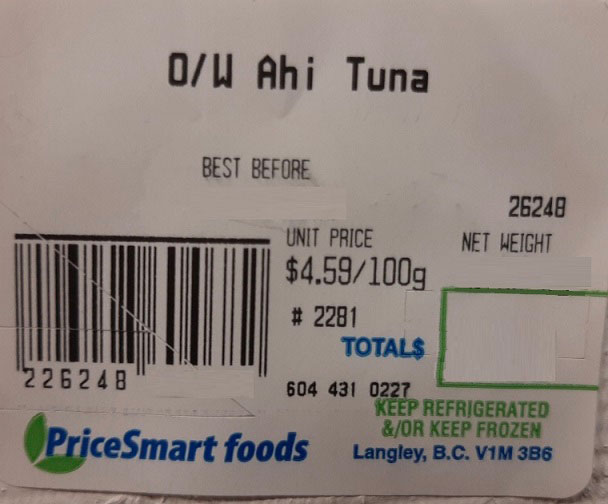
Pricesmart O/W Ahi Tuna Variable Starts with 226248 All units sold from September 18, 2019 to November 6, 2019, inclusive Sold at Pricesmart stores in British Columbia
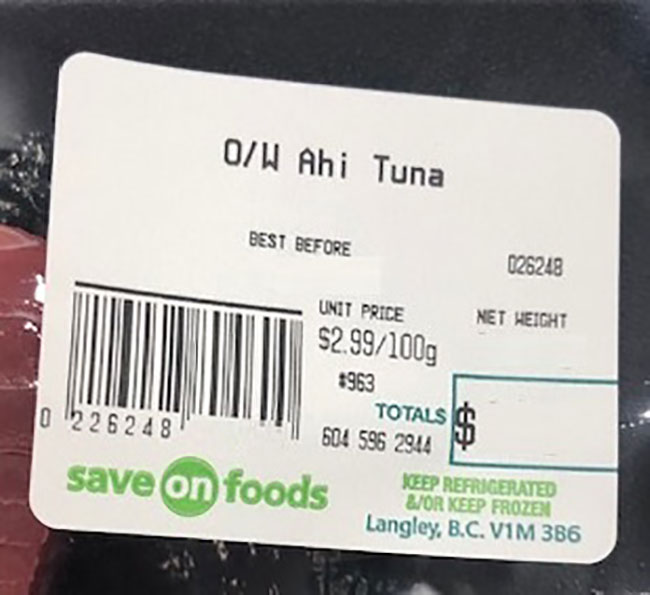
Save on Foods O/W Ahi Tuna Variable Starts with 226248 All units sold from November 7, 2019 to February 28, 2020, inclusive Sold at Pricesmart stores in British Columbia
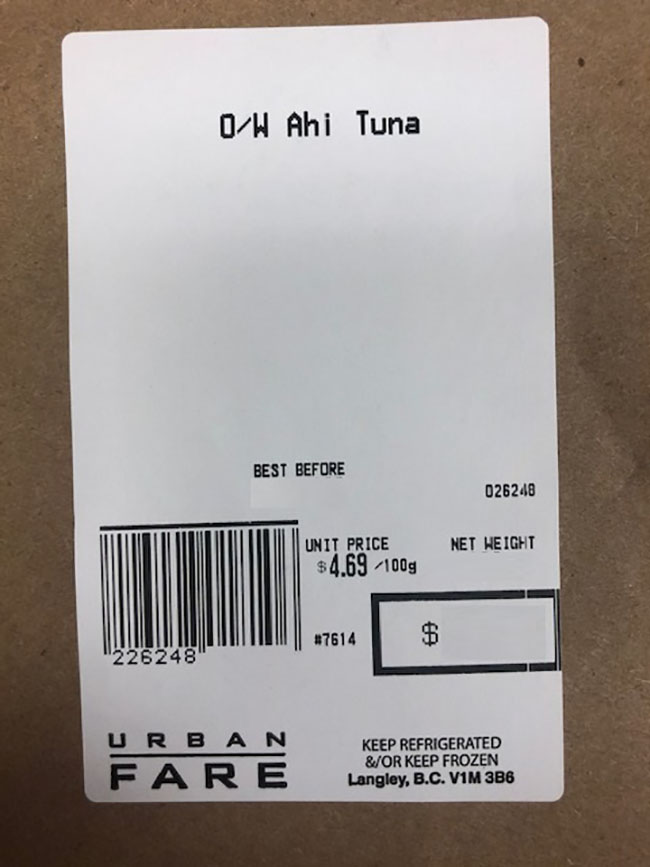
Urban Fare O/W Ahi Tuna Variable Starts with 226248 All units sold from September 18, 2019 to February 28, 2020, inclusive Sold at Urban Fare stores in Alberta and British Columbia

What you should do

If you think you became sick from consuming a recalled product, call your doctor.

Check to see if you have the recalled products in your home. Recalled products should be thrown out or returned to the store where they were purchased.

Food contaminated with high levels of histamine may not look or smell spoiled but can still make you sick. Histamines are not destroyed by cooking. High levels of histamine in fish can cause an allergic-type reaction known as scombroid poisoning. Symptoms can include burning throat, diarrhea, dizziness, facial swelling, headache, vomiting and peppery taste in mouth.

Background

This recall was triggered by consumer complaints. The CFIA is conducting a food safety investigation, which may lead to the recall of other products. If other high-risk products are recalled, the CFIA will notify the public through updated Food Recall Warnings.

The CFIA is verifying that industry is removing the recalled products from the marketplace.

Illnesses

There have been no reported reactions associated with the consumption of these products. However, there were reported reactions associated with the products included in the Food Recall Warning on February 25, 2020.

Product photos

Printer ready version of photos

  • Pricesmart: O/W Ahi Tuna - Variable
  • Save on Foods: O/W Ahi Tuna - Variable
  • Urban Fare: O/W Ahi Tuna - Variable

RASFF Alerts – Aflatoxin – Groundnut Kernels – Peanuts – Capsicum – Dried Red Chillies – Date Syrup – Shelled Groundnuts

RASFF-Logo

RASFF  – aflatoxins (B1 = 38.1; Tot. = 42.2 µg/kg – ppb) in groundnut kernels from the United States in Norway

RASFF – aflatoxins (B1 = 6.4) in groundnut kernels from Argentina in the Netherlands

RASFF – aflatoxins (B1 = 8.1; Tot. = 10 µg/kg – ppb) in peanuts from Brazil in the Netherlands

RASFF – aflatoxins (B1 = 4.9; Tot. = 4.9 µg/kg – ppb) in blanched groundnut kernels from China in the Netherlands

RASFF – aflatoxins (B1 = 20; Tot. = 20 µg/kg – ppb) in capsicum from Sri Lanka in the Netherlands

RASFF – aflatoxins (B1 = 13.7; Tot. = 14.0 mg/kg – ppm) in dried red chillies from India in the UK

RASFF – aflatoxins (Tot. = 89.2 / Tot. = 82.4 µg/kg – ppb) in shelled groundnuts from Egypt in Italy

RASFF – aflatoxins (B1 = 3.6; Tot. = 23. µg/kg – ppb) in date syrup from Tunisia in Belgium