Category Archives: Food Poisoning

Belgium – Demeter corn flour of the Vajra brand – Fumonisins

AFSCA

The VAJRA company is withdrawing from sale and recalling from consumers the Demeter Corn Flour of the Vajra brand. Analyzes have revealed a non-compliance with the fumonisin parameters (exceeding the standard) in a batch of this corn flour.

The products concerned were sold from May 2020 in certain organic food stores.

  • Product: Demeter Corn Flour from Vajra
  • Weight: 500g
  • Lot: 0420/260520
  • Expiration dates (DDM): 05/01/2021
  • Packing: Paper bag

People who have purchased the Demeter Corn Flour from the lot concerned are asked not to consume this product and to return it to the place of purchase where it will be refunded to you.
The product was sold through various health food stores.

For more information, please call VAJRA on 02 731 05 22.
We apologize for any inconvenience.

VAJRA sprl
330 Brusselsesteenweg, hall 5
3090 Overijse


USA – Unidentified Salmonella Newport Outbreak Sickens 125 in 15 States

Food Poisoning Bulletin

An unidentified Salmonella Newport outbreak has sickened at least 125 people in 15 states, according to the Centers for Disease Control and Prevention (CDC). Twenty-four people have been hospitalized because they are so sick. This is the way foodborne illness outbreaks sometimes start; the government publicizes it, and more people come forward who may have information that helps solve it.

Vietnam – Over 100 workers hospitalised because of food poisoning

Vietnam Net

At 7 pm on July 20, Dong Nai General Hospital received dozens of patients who are workers of Great Kingdom Company at Giang Dien Industrial Park, Trang Bom District. The patients suffered from dizziness and nausea. According to the workers, they had symptoms after dinner and starting the extra shift.

All workers are in stable condition. The doctors are still checking their condition, carrying out ultrasound tests and intravenous infusion to find the most suitable treatment.

Luong Ngoc Hoi, deputy director of Great Kingdom Company, said, “The dinner for 1,600 workers from two factories was held at 4 pm at our cafeteria. There were fried fish, boiled eggs, cabbage, spinach and sponge gourd.But after dinner, the workers at one factory showed symptoms of food poisoning. We sent 50 of them to Shing Mark Hospital and 50 to Dong Nai General Hospital.”

The cause of the poisoning is still being investigated. Dtinews/Tienphong

Ireland – Withdrawal of a Batch of Symbio Ekologiczne Platki Jaglane Millet Flakes Due to the Presence of Elevated Ochratoxin A

fsai

Summary
Category 2: For Information
Alert Notification: 2020.40
Product: Symbio Ekologiczne Płatki Jaglane (Millet Flakes); pack size: 250g
Batch Code: 10.2020 (3003); best before date: 31/10/2020
Country Of Origin: Ukraine

Message:

Elevated Ochratoxin A was detected in the above batch of Symbio Ekologiczne Płatki Jaglane millet flakes.  Ochratoxin A is a toxin which is produced by fungi growing on the plant material.  The implicated batch is being withdrawn from the market.

Millet photo

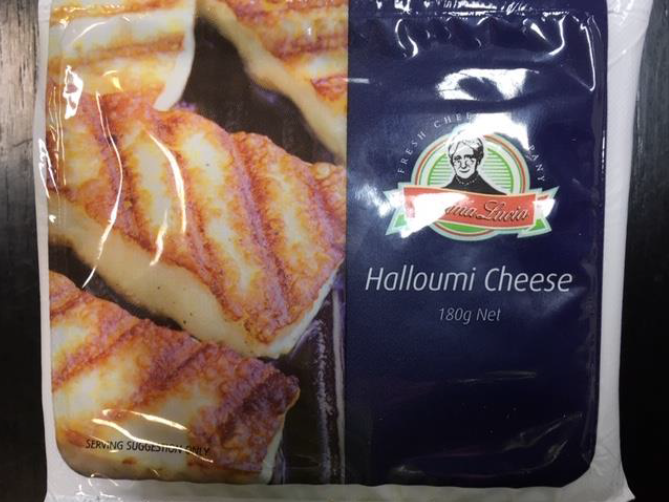
New Zealand – Mamma Lucia brand Halloumi Cheese – E.coli

MPI

A pack of Mamma Lucia Brand Halloumi Cheese (180g)

Product identification
Product type Cheese
Name of product (size) Mamma Lucia brand Halloumi Cheese (180g)
Batch marking 20139
Date marking Use by 14 11 20
Package size and description The product is sold in a 180g plastic package.
Distribution The product is imported from Australia.

The affected product has only been sold at Mediterranean Foods Trattoria & Deli, 42 Constable Street, Newtown, Wellington.

Notes This recall does not affect any other Mamma Lucia brand products.

Consumer advice

Customers are asked to check the batch and date mark printed on the product packaging.

Affected product should not be consumed. There have been no reports of associated illness, however if you have consumed any of this product and have any concerns about your health, seek medical advice.

Customers should return the product to their retailer for a full refund.

Escherichia coli (E. coli) is a bacterium that normally lives in the intestines of people and other warm-blooded animals. Although most strains of E. coli are harmless, some types can cause serious illness with severe diarrhoea and stomach cramps.

Who to contact

If you have questions, contact Mediterranean Foods (Wgtn) Limited:

  • Phone: 021 750 211
  • Address: 30 Landfill Road, Owhiro Bay, Wellington.

Research – Raw is risky: Why salads are the biggest source of food poisoning and what to do to avoid it

Barf blog

Brian Adam of Intallght writes just over a year ago, the United States saw the largest outbreak of E. coli since 2006; affecting at least 98 people in more than 20 states. The origin wa bagged romaine lettuce. Unfortunately, this is not an isolated case. Vegetables and fresh fruit have become a real headache for food safety experts.

Today in the United States, fresh vegetables are the largest source of food poisoning. In Europe, the figures are not so pristine, but the bacteria and viruses associated with this type of food also are to blame for the vast majority of poisonings. We are facing a real danger for food safety: salads.

Japan and South Korea – Thousands sick in E. coli outbreaks

Food Safety News

Officials in Korea are investigating an E. coli outbreak that has affected 100 people while more than 3,000 students and teachers recently got food poisoning in Japan, according to media reports.

The Korea Centers for Disease Control and Prevention (KCDC) has been investigating an Enterohemorrhagic E. coli (EHEC) outbreak with the local municipality and relevant ministries since mid-June. EHEC is also known as Shiga toxin-producing E. coli (STEC).

The outbreak in a kindergarten in Ansan-si, Gyeonggi Province had 58 confirmed cases as of late June with 114 people showing symptoms. Most of these are students of the kindergarten but three are family members of pupils.

A total of 21 people — 19 kindergarten students and two family members — were in hospital for inpatient care. Sixteen people — 14 students and two family members — had onset of symptoms suspected to be hemolytic uremic syndrome (HUS), a type of kidney failure associated with E. coli infection, and four people were receiving dialysis treatment.

USA – Paralytic shellfish poisoning (PSP) – Death

Food Safety News

The Alaska State Medical Examiner’s Office has confirmed that the death of an Alaska resident is consistent with paralytic shellfish poisoning (PSP). Officials have yet to release personal information.

Warnings have been issued to the community by email, fax, radio and social media after blue mussel samples collected from the beach on the same day the shellfish were consumed were found to have extremely high toxin levels, more than 100 times higher than the safe regulatory limit. The snail samples also had elevated toxin levels, but not as high as the blue mussels.

Research – Attributing human foodborne diseases to food sources and water in Japan using analysis of outbreak surveillance data

JFP

In Japan, strategies for ensuring food safety have been developed without reliable scientific evidence on the relation between foodborne infections and foods. The aim of this research was to provide information on the proportions of foodborne diseases caused by seven major causative pathogens ( Campylobacte r spp., Salmonella spp., EHEC, V. parahaemolyticus , Clostridium perfringens , Staphylococcus aureus , and Norovirus) attributable to foods using analysis of outbreak surveillance data. For the calculation of the number of outbreaks attributed to each source, simple-food outbreaks were attributed to the single-food category in question, and complex-food outbreaks were classified under each category proportionally to the estimated probability. Between 2007 and 2018, 8.730 outbreaks of foodborne diseases caused by seven pathogens were reported and another 6,690 (76.6%) were of “unknown source”. We observed fluctuations in the sources of foodborne diseases caused by the seven pathogens from 2013 to 2018 as follows: chicken products (92.9%, CI 92.6–92.9) for Campylobacter spp., beef products (40.1%, CI 38.2–41.2) and vegetables (39.3%, CI 38.2–41.2) for EHEC, eggs (22.8%, CI 14.9–31.9), chicken products (13,3%, CI 6.4–21.3) for Salmonella spp., finfish (86.3%, CI 62.5–95.8) and shellfish (13.7%, CI 4.2–37.5) for V. parahaemolyticus, grains and beans (47.2%, CI 31.2–62.5) for S. aureus, vegetables (69.3%, CI 50.8–79.7) and beef products (13.1%, CI 10.2–15.3) and chicken products (10.0%, CI 1.7–27.1) for C. perfringens , and shellfish (74.7%, CI 73.1–75.9) for Norovirus. In this study, we provide the best currently available basis to evaluate the link between foodborne diseases and foods. Additionally, our results reflected the effect of strict health regulations for raw beef during a given time period, and demonstrate the importance of controlling the contamination rate of Campylobacter spp. in chicken products at each step of the food supply chain.

Scotland – Salmonella and STEC behind most outbreaks in Scotland

Food Safety News

There were 11 foodborne outbreaks in Scotland this past year with almost 50 people falling ill.

Salmonella and Shiga toxin-producing E. coli (STEC) were the most frequently reported organisms.

Findings come from the Health Protection Scotland (HPS), part of Public Health Scotland (PHS), annual surveillance report on bacterial, protozoal and viral outbreaks of infectious intestinal disease in 2019.

The 11 outbreaks and 49 illnesses in 2019 is down from the 14 outbreaks and 117 illnesses reported in 2018, but in line with the previous five-year average of 13 outbreaks per year. Figures from 2018 include a norovirus outbreak that affected 60 people.