Category Archives: Food Poisoning

Research – Assessment of spoilage potential posed by Alicyclobacillus spp. in plant-based dairy beverages mixed with fruit juices during storage

Journal of Food Protection

The scope of the present study was to assess the spoilage potential of different Alicyclobacillus spp. in commercial pasteurized (ambient-stable) plant-based dairy beverages mixed with fruit juices at different inoculation levels and storage temperatures. Different products (Coconut and Berry‒CB; Almond, Mango, and Passionfruit‒AMP; Oat, Strawberry, and Banana‒OSB) were inoculated with 10 or 2×10³ spores/mL of either Alicyclobacillus acidoterrestris or A. fastidiosus or A. acidocaldarius strain composites, while non‒inoculated samples served as controls. Samples inoculated with A. acidoterrestris and A. fastidiosus were stored at 30°C and 45°C, while in case of A. acidocaldarius storage took place at 50°C for 240 days. Gas composition, Alicyclobacillus spp. populations, total viable counts, pH, aw, color, and guaiacol off-taste were monitored. CB and AMP supported growth of A. acidoterrestris and A. fastidiosus, reaching populations of 4.0‒5.0 log CFU/mL. In OSB, populations of the latter species remained close to the initial inoculation levels during storage at 30°C, while at 45°C, the populations declined <1 CFU/mL. A. acidocaldarius growth was supported only in CB samples, reaching ca. 3.0 log CFU/mL at 50°C, regardless of initial inoculum size. Total color change was increased during storage, however the instrumentally recorded color changes were not macroscopically visible. Spoilage in terms of guaiacol off-taste, was identified only in CB and AMP samples inoculated with A. acidoterrestris after 60 days at 30°C and 45°C. Considering that these products are becoming increasingly popular and the scarcity of existing literature related to their spoilage by Alicyclobacillus spp., the contribution of the findings and data of present study are critical for assessing the significance of Alicyclobacillus spp. as a potential spoilage hazard in these products and thus, to assist in the design and implementation of effective mitigation strategies by the beverage industry.

USA – Outbreak Investigation of Salmonella Enteritidis: Peaches (August 2020)

FDA

The FDA, along with CDC, Canadian, state and local partners, has been investigating a multistate outbreak of Salmonella Enteritidis infections linked to peaches packed or supplied by Prima Wawona or Wawona Packing Company.

The multistate outbreak of Salmonella Enteritidis infections linked to peaches from Prima Wawona that were sold in several regions of the United States and Canada, investigated by the FDA, along with CDC and Canadian, state, and local partners, is over. As of October 15, 2020, CDC reported a total of 101 cases across 17 states. This outbreak resulted in recalls of bagged and bulk, or loose, peaches packed or distributed by Prima Wawona. FDA also worked to publicly disclose international distribution of recalled product from Prima Wawona in an effort to facilitate the swift removal of all potentially affected product from the international market. More information about international distribution of the recalled product can be found in the previously published table below. FDA’s traceback investigation, which included 18 cases across eight states, identified multiple distributors, packing facilities, and orchards that supplied peaches during the time period of interest. Investigators from FDA, the California Department of Public Health (CDPH) and the California Department of Food and Agriculture (CDFA) visited Wawona packing facilities and/or orchards that likely supplied peaches to Prima Wawona during the timeframe of interest. FDA’s traceback investigation is ongoing; however, the cause and source of the outbreak has not yet been determined.

Thus far, in an effort to investigate several possible pathways of contamination, FDA has completed over 570 product and environmental sample analyses from multiple facility locations and/or peach orchards, including environmental swabs, peaches and peach tree leaf samples. At this time, sample collection and analysis is underway related to additional peach orchards. A genetic match to the outbreak strain has yet to be identified in any of the samples collected, although a different serotype of Salmonella was detected in one sample collected and analyzed during the investigation. No peaches linked to the positive sample ever reached the marketplace. Although the outbreak is being declared over, FDA will continue its investigation and will communicate any findings that could assist future prevention efforts.

Available recall information is included below.

Recommendation

On August 22, 2020, Prima Wawona recalled bagged and bulk, or loose, peaches that they supplied to retailers nationwide.

The recalled products are now well beyond expiration and likely no longer on the market or in consumers’ homes. However, consumers who may have frozen the recalled bagged peaches packed or supplied by Prima Wawona from June 1, 2020 to August 19, 2020 or the recalled loose/bulk peaches packed or supplied by Prima Wawona from June 1, 2020 to August 3, 2020 should throw them away.

France – Product recall: Picodon aop x2, x5 – Guinguette x6 – Goat cheese x3 from Les Fromagers Fermiers du Peytot

Oulah

Product recall: Picodon aop x2, x5 - Guinguette x6 - Goat cheese x3 from Les Fromagers Fermiers du Peytot

ENCOUNTERED PROBLEM

Presence of Escherichia coli O157: H7

PROPOSED SOLUTION

People who hold the product in question are asked not to consume them – and more particularly young children, pregnant women, immunocompromised people and the elderly – and to return them to the point of sale where they were purchased.

People who have consumed it and who present symptoms such as diarrhea, abdominal pain or vomiting should consult their doctor as soon as possible, mentioning this consumption and the possible link with the bacterium Escherichia coli.

If there are no symptoms within 10 days of consuming the affected products, there is no need to worry and consult a doctor.

The E. coli bacterium is naturally present in the digestive microflora of humans and warm-blooded animals. Some strains of E. coli are pathogenic, and can be responsible in humans for various disorders ranging from mild diarrhea to more serious forms such as hemorrhagic diarrhea or severe kidney damage such as HUS, mainly in young children.

FURTHER INFORMATION

▸ Type of packaging
Rolls x6, x5, x3, x2, tray x2 or bare

▸ Lots
• 23110
• 23810
• 24510
• 25210
• 25910
• 26610
• 27310

▸ Health
stamp FR 07.176.001 CE

▸ Marketing period
from August 17, 2020 to October 14, 2020

▸ Consumer service contact
La Sarl Les Fromagers Fermiers du Peytot is available to consumers to answer their questions by email at peytotsarl@gmail.com

▸ Source
https://www.supercasino.fr/

Denmark – Imported, fresh mint linked to Shigella outbreak

Outbreak News Today

Shigella - kswfoodworld

The Statens Serum Institut (SSI) has in collaboration with the Danish Veterinary and Food Administration and the DTU Food Institute report that a Shigella outbreak in August and September that sickened some 44 people is linked to fresh mint bought at a local greengrocer or bazaar in and around the Copenhagen area.

Of the 44 cases from August 22 to September 9, 30 of the cases was reported in women and 14 in men. A total of 13 people have been hospitalized. The sick live primarily in the Capital Region.

Because fresh mint has a short shelf life, it is no longer on the market. There is therefore no risk of more consumers becoming infected, says Emergency Manager Nikolas Kühn Hove from the Danish Veterinary and Food Administration.

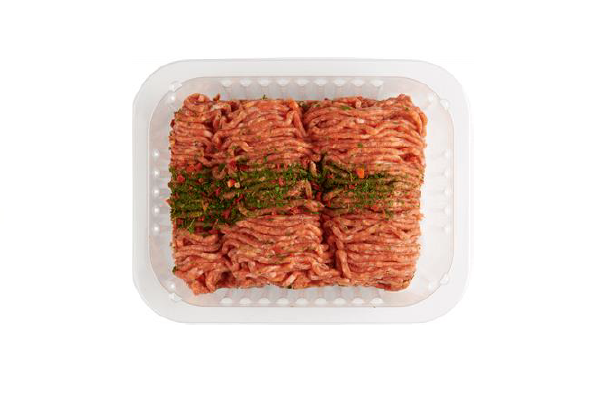
Netherlands – Important safety warning Butchers Best / 1 the Best Mixed Minced Stroganoff 400 grams Dekamarkt and Dirk – Salmonella

NVWA

packaging stroganoff minced meat

Immediately, DekaMarkt and Dirk have bought Butchers Best / 1 Best Mixed Minced Stroganoff 400 grams with barcode code 2390600 (first 7 digits) and best before date 17-10-2020 from the shelves. After checking, it appeared that salmonella was found in this product.

Customers are urged not to consume the product. If not heated sufficiently, this product may pose a health hazard, especially to young children, the elderly, people with a weakened immune system and pregnant women. Consult your doctor or general practitioner for more information if you have health complaints after eating the said product.

Customers who have purchased the product can return it to a DekaMarkt or Dirk store.

Belgium – Albert Heijn recall – Flevosap Appel (apple juice) – Patulin

AFSCA

In agreement with the AFSCA, Albert Heijn reminds consumers of the “Flevosap Appel” apple juice from the Flevosap brand, the date of minimum durability (DDM) of which is 30/09/2021. The product contains too high a patulin content (a mycotoxin). Consumption of this product may present a risk to health.

Albert Heijn asks his customers not to consume this product and to bring it back to the point of sale where it was purchased. The product will be refunded or changed there. Please contact a doctor if you have any health problem.

Product Description

• Product Category: Fruit Juice
• Product Name: Flevosap Appel
• Brand: Flevosap
• Date of Minimum Durability (DDM): 09/30/2021
• Batch number: L20232A
• Sales period: from 2/09/2020 to 09/10/2020 inclusive
• Type of packaging: glass bottle
• Weight: 1 l

The product was sold through Albert Heijn stores in Belgium.

For any further information , please contact Albert Heijn on 0800 777 05

France – Product recall: Carrefour brand Basmati rice – Aflatoxin

Oulah

Product recall: Carrefour brand Basmati rice

ENCOUNTERED PROBLEM

Presence of aflatoxins B1

PROPOSED SOLUTION

Do not consume and return to the point of sale for reimbursement.

Aflatoxins are mycotoxins which can be present in different products such as cereals, coffee, rice, dried rasisins and dried fruits. Only a large quantity of contaminated products can lead to health problems.
People with hepatitis are sensitive to aflatoxins. You are advised to contact Carrefour in order to put them in touch with your medical consultant.

FURTHER INFORMATION

▸ Barcode
• 3245412435256 (Basmati rice box 500g – 4x125g)
• 3560070837984 (Basmati rice box 1kg bag)

▸ DDM / DLUO
• 07/16/2022 (Basmati rice 500g box – 4x125g)
• 07/20/2022 (Basmati rice 500g box – 4x125g)
• 07/21/2022 (Basmati rice 500g box – 4x125g)
• 07/15 / 2022 (Basmati rice in 1kg bag bag)


EMB code 59606B

▸ Consumer service contact
For any further information, you can contact the Carrefour consumer service by dialing N ° Cristal 09 69 39 7000 (non-surcharged call from a landline) from Monday to Friday from 8:30 am to 7:00 pm

▸ Source
https://www.carrefour.fr/

Belgium – Fuet Espetec Extra 175 g of the Sola brand – Salmonella

AFSCA

Following a notification via the RASFF system (European Food and Feed rapid alert system), the AFSCA withdraws from sale and reminds consumers of the “Fuet Espetec Extra 175 gr” of the Sola brand, following the possible presence of Salmonella.

The AFSCA asks not to consume this product and to bring it back to the point of sale where it was purchased.

Product description

• Product name: Fuet Espetec Extra 175 gr
• Brand: Sola
• Batch number &
           Best before dates (DDM): 201802 – DDM 16/10/2020
           202508 – DDM 30/11/2020
           201741 – DDM 30 / 11/2020
           202809 – DDM 12/31/2020
• Packaging: plastic packaging
• Weight: 175 g

The product was sold through several points of sale in Belgium:

– Vanbergen-Vervaeke – Rue de l’Eglise 170, 1150 Bruxelles
– Vanbergen-Vervaeke – Place de la Victoire 6, 1370 Jodoigne
– La Fromagerie du Samson – Chaussée de Gramptinne 37, 5340 Gesves
– Crémerie Papy – Rue Patenier 24b, 5000 Namen
– L’Alpage by Julie – Avenue du Bourgmestre Jean Materne 99 5100 Jambes
– La Fromagée – Rue du Mat Pays 43, 4621 Retinne
– De Brandt – Rue Ropsy Chaudron 24-V13, 1070 Anderlecht

For any further information , you can contact the AFSCA contact point for consumers: 0800 / 13.550 or pointdecontact@afsca.be.

RASFF – Salmonella – Frozen Chicken Fillets – Chilled Turkey Legs – Black Pepper – Chilled Broiler Quarters – Crushed Paprika Powder – Chicken Breast – Chicken Meat – Chicken Aiguillettes – Chicken Broiler Soup – Raschera Cheese

European Food Alerts

RASFF

Salmonella enterica ser. Enteritidis (present /25g) in frozen chicken fillets from Poland in France

RASFF

Salmonella enterica ser. Typhimurium monophasic (1 ,4, [5], 12:i:-) (present /25g) in chilled turkey legs from France in France

RASFF

Salmonella (in 2 out of 10 samples /25g) in black pepper from Brazil in the Netherlands

RASFF

Salmonella enterica ser. Enteritidis (in 4 out of 5 sample /25g) in chilled broiler quarters from Poland in Latvia

RASFF

Salmonella (presence /10g) in crushed paprika from China in Romania

RASFF

Salmonella enterica ser. Enteritidis (presence (4 in 5 samples)) in chilled broiler quarters from Poland in Latvia

RASFF

Salmonella enterica ser. Infantis (presence /25g) in chilled chicken breast meat from Poland in the Czech Republic

RASFF

Salmonella enterica ser. Enteritidis in chilled chicken meat from the Netherlands in the Netherlands

RASFF

Salmonella enterica ser. Enteritidis (presence /25g) in frozen chicken aiguillettes from Poland in France

RASFF

Salmonella (presence /25g) in quick frozen chicken broiler soup set from Lithuania, with raw material from Poland in Lithuania

RASFF

Salmonella (presence /25g) in cheese Raschera from Italy in Italy

RASFF

Salmonella enterica ser. Typhimurium (presence /25g) in chilled chicken meat in France

RASFF Alerts – Aflatoxin – Groundnut Kernels – Dried Whole Chillies – Dried Figs

European Food Alerts

RASFF

aflatoxins (B1 = 53; Tot. = 60 µg/kg – ppb) in groundnut kernels from Egypt in the Netherlands

RASFF

aflatoxins (B1 = 10.7; Tot. = 11 µg/kg – ppb) in dried whole chillies from Sri Lanka in the UK

RASFF

aflatoxins (B1 = 110; Tot. = 120 / B1 = 48; Tot. = 56 µg/kg – ppb) in organic groundnut kernels from Egypt in the Netherlands

RASFF

aflatoxins (B1 = 4.3; Tot. = 5.4 µg/kg – ppb) in blanched groundnut kernels from India in the Netherlands

RASFF

aflatoxins (B1 = 16; Tot. = 19 / B1 = 66; Tot. = 77 µg/kg – ppb) in organic groundnut kernels from Egypt in the Netherlands

RASFF

aflatoxins (B1 = 9.1; Tot. = 9.1 / B1 = 11; Tot. = 14 mg/kg – ppm) in organic groundnut kernels from Egypt in the Netherlands

RASFF

aflatoxins (B1 = 160; Tot. = 190 µg/kg – ppb) in organic groundnut kernels from Egypt in the Netherlands

RASFF

aflatoxins (B1 = 822 µg/kg – ppb) in dried figs from Turkey in Bulgaria

RASFF

aflatoxins (B1 = 78; Tot. = 83 µg/kg – ppb) in organic groundnut kernels from Egypt in the Netherlands

RASFF

aflatoxins (B1 = 30; Tot. = 35 µg/kg – ppb) in organic groundnut kernels from Egypt in the Netherlands

RASFF

aflatoxins (B1 = 27.5; Tot. = 29.1 µg/kg – ppb) in whole dried chillies from India in the UK