Category Archives: Food Poisoning

RASFF Alert – Ochratoxin A – Basmati Rice

European Food Alerts

RASFF

ochratoxin A (6.23 µg/kg – ppb) in basmati rice from India, via the Netherlands in Germany

RASFF Alert – Patulin – Mycotoxin – Apple Juice

European Food Alerts

RASFF

patulin (200 µg/kg – ppb) in apple juice from the Netherlands in the Netherlands

Canada – Food Recall Warning – Alwatania brand Liquid Tahina recalled due to Salmonella

CFIA

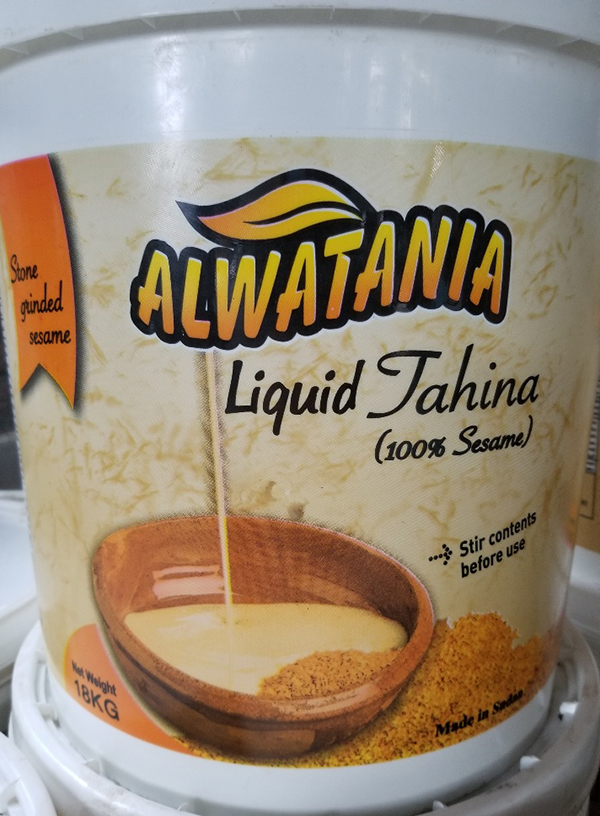
Alwatania - Liquid Tahina - 18 kg - front

Recall details

Ottawa, October 15, 2020 – The food safety warning issued on October 11, 2020 has been updated to a food recall warning and includes additional product information. This additional information was identified during the Canadian Food Inspection Agency’s (CFIA) food safety investigation.

Migahid & Elsawi Co. Ltd. is recalling Alwatania brand Liquid Tahina from the marketplace due to possible Salmonella contamination. Consumers should not consume the recalled products described below.

Recalled products

Brand Product Size UPC Codes
Alwatania (Arabic characters only) Liquid Tahina 350 g 6 224007 246221 PRO : 20/05/2019
EXP : 19/05/2021
Alwatania (Arabic characters only) Liquid Tahina 750 g 6 224007 246191 PRO : 20/05/2019
EXP : 19/05/2021
Alwatania Liquid Tahina 18 kg None PRO : 20/05/2019
EXP : 19/05/2021

What you should do

If you think you became sick from consuming a recalled product, call your doctor.

Check to see if you have the recalled products in your home. Recalled products should be thrown out or returned to the store where they were purchased.

Background

This warning was triggered by CFIA test results. The CFIA is conducting a food safety investigation, which may lead to the recall of other products. If other high-risk products are recalled, the CFIA will notify the public through updated Food Recall Warnings.

The CFIA is verifying that industry is removing the recalled products from the marketplace.

Illnesses

There have been no reported illnesses associated with the consumption of these products.

USA – Red Monkey Foods, Inc. Recalls Parsley and Herbes De Provence Because of Possible Health Risk – Salmonella

FDA

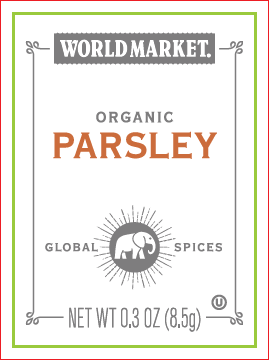
Photo 1 – Label, World Market Organic Parsley

Red Monkey Foods, Inc. out of an abundance of caution is voluntarily recalling select organic parsley as part of a recall initiated by High Quality Organics (HQO). HQO has issued a recall for a lot of parsley because a sample was tested by one of HQO’s customers and was found to be potentially contaminated with Salmonella. A portion of the lot recalled by HQO was supplied to Red Monkey Foods, Inc and subsequently repacked into consumer containers for parsley and was also used to manufacture herbes de provence which was then sold in consumer containers. To date, there have been no consumer complaints or reported cases of Salmonellosis in connection with these products.

The potentially affected product consists of retail packages weighing 0.3-0.65 oz.

The “Best By” date information can be found on the square bottom of the glass bottle. No other “Best By” dates are being recalled.

Item Number Product Name Package Size Product UPC Production Lot Product Dates
533310-06 Cost Plus World Market Herbes De Provence 0.6 oz 2533 3107 2552005C BEST BY 13 MAR 2023
533325-06 Cost Plus World Market Organic Parsley 0.3 oz 2533 3251 2662003D BEST BY: 24 MAR 2023
GV5451-24 Great Value Herbes De Provence Organic 0.6 oz 0 78742 15451 0 2562001C BEST IF USED BY MAR 14 2023
GV5460-24 Great Value Organic Parsley Flakes 0.3 oz 0 78742 15460 2 2532002J BEST If Used By: MAR 11 2023
14200102-24 O Organics Herbes De Provence Organic 0.65 oz 0 79893 41131 6 2662001J BEST If Used By: MAR 24 23
14200099-05 O Organics Parsley Organic 0.3 oz 0 79893 41109 5 2672001D BEST If Used By: MAR 25 23
32831-06 Full Circle Parsley Organic 0.3 oz 0 36800 32831 0 2532001J Best By: 11 MAR 2023

The products in question were distributed to all fifty states and Puerto Rico. The product was produced for sale at retail.

Consumers who have purchased the product with the listed “Best By” dates are urged not to consume the product, but to discard it or return it to the place of purchase for a full refund. Consumers or Media with questions may call our Customer Service Center at (417) 319-7300 or by e-mail at customerservice@redmonkeyfoods.com for more information. Customer Service will be available in person from 8am to 5pm CST Monday to Friday.

Red Monkey Foods, Inc. is committed to providing food safe, high-quality products and the safety and satisfaction of our consumers is the company’s utmost priority. Although there have not been any reported cases of Salmonellosis, we are voluntarily recalling the products listed as a preventive measure.

Updated Press PDF

Belgium – Burger Iberico, Chipolata Iberico and Gourmet Iberico – Salmonella

AFSCA

Following an inspection and in order to guarantee consumer safety, Deli Ostrich NV is withdrawing from sale the ‘burger Iberico’, ‘chipolata Iberico’ and ‘Gourmet Iberico’ products of the Carrefour brand sold in the butcher’s department of certain Carrefour stores in Belgium. and recalls them to consumers due to the presence of Salmonella.

Product description:

Iberico Burger:
o Brand: Carrefour
o EAN-code: 2721846000000
o DLC: 10/15/2020
o Lots: 5550405

Iberico Chipolata:
o Brand: Carrefour
o EAN-code: 2721848000000
o DLC: 10/14/2020 and 15/10/2020
o Lots: 5550405

Iberico Gourmet:
o Brand: Carrefour
o EAN-code: 2721319000000
o DLC: 14/10/2020 and 15/10/2020
o Lots: 5450413 and 5450414

The company Deli Ostrich NV withdraws from sale the products ‘burger Iberico’, ‘chipolata Iberico’ and ‘Gourmet Iberico’ of the brand Carrefour and recalls them to consumers due to the presence of Salmonella.

The products have already been taken off the shelves. However, some products have already been sold. Consumers who have purchased the affected products are urged not to consume them and to return them to the point of sale. They will be reimbursed.

If you have consumed these products before and you have symptoms such as fever and / or headache, contact your GP. These symptoms can be more serious in children, pregnant women, the elderly and people with weakened immune systems.

For more information, consumers can call Carrefour customer service via the free number 0800 / 9.10.11 – working days from 8:30 a.m. to 8 p.m. and on Saturdays from 9 a.m. to 8 p.m.

The company Deli Ostrich NV apologizes to Carrefour consumers for the inconvenience.

Canada – Food Recall Warning – Raschera DOP (cheese) recalled due to Salmonella

CFIA

Recall details

Ottawa, October 14, 2020 – Taste for Luxury is recalling Raschera DOP (cheese) from the marketplace due to possible Salmonella contamination. Consumers should not consume the recalled products described below.

The following products have been sold in Ontario and Quebec as indicated in the table below.

Recalled products

Brand Product Size UPC Codes Additional information
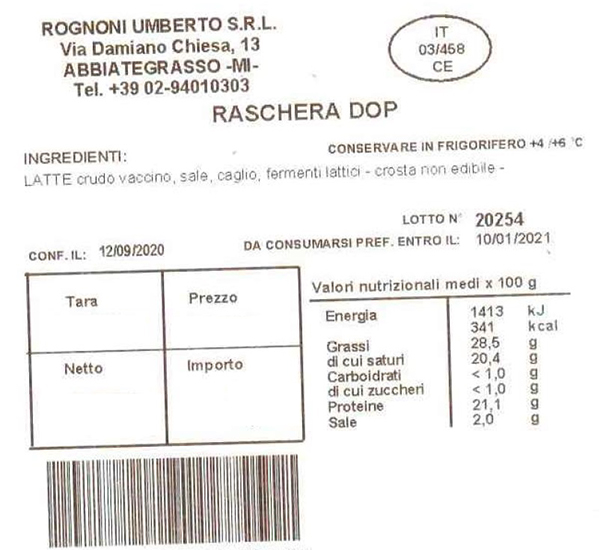
Rognoni Umberto Raschera DOP (cheese) Variable Variable Lot 20254
Best before 10/01/2021
Distributed in Ontario and Quebec
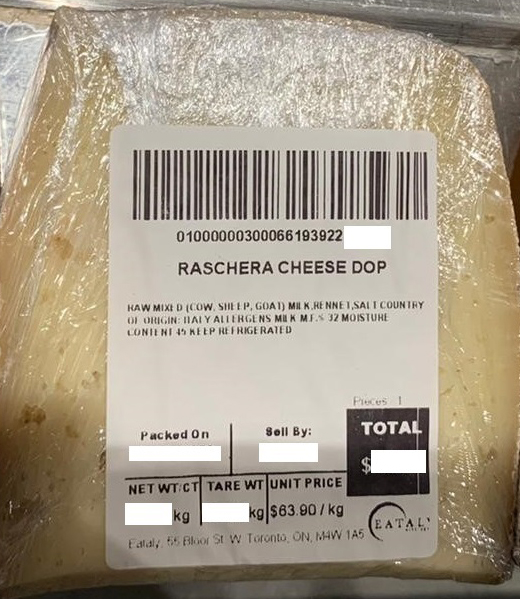
None – sold by Eataly Raschera Cheese DOP Variable None Sold from September 29, 2020 to October 9, 2020 inclusively Sold at Eataly, 55 Bloor Street West, Toronto, Ontario
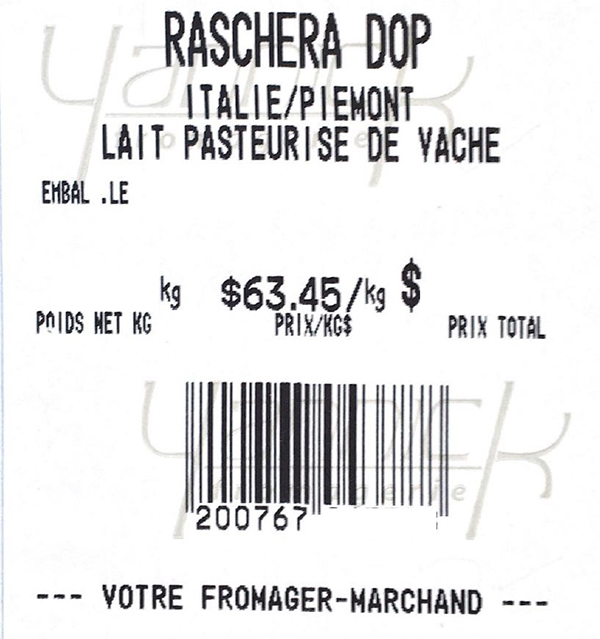
Yannick Fromagerie Raschera DOP (cheese) Variable Starts with 200767 Sold from September 27, 2020 to October 5, 2020 inclusively Distributed in Quebec

What you should do

If you think you became sick from consuming a recalled product, call your doctor.

Check to see if you have the recalled products in your home. Recalled products should be thrown out or returned to the store where they were purchased.

Food contaminated with Salmonella may not look or smell spoiled but can still make you sick. Young children, pregnant women, the elderly and people with weakened immune systems may contract serious and sometimes deadly infections. Healthy people may experience short-term symptoms such as fever, headache, vomiting, nausea, abdominal cramps and diarrhea. Long-term complications may include severe arthritis.

Background

This recall was triggered by a recall in another country. The Canadian Food Inspection Agency (CFIA) is conducting a food safety investigation, which may lead to the recall of other products. If other high-risk products are recalled, the CFIA will notify the public through updated Food Recall Warnings.

The CFIA is verifying that industry is removing the recalled products from the marketplace.

Illnesses

There have been no reported illnesses associated with the consumption of these products.

Product photos

Printer ready version of photos

  • Rognoni Umberto - Raschera DOP  (cheese)
  • None – sold by Eataly - Raschera Cheese DOP
  • Yannick Fromagerie - Raschera DOP  (cheese)

Benin – Seven Family Members Die from Suspected Food Poisoning

This Day Live

A family of seven has been reported to have died after taking a meal suspected to have been contaminated in Benin, Edo State.
The incident as gathered, occurred at No. 40, Otete Street, off Textile Mill Road, Ogida quarters, in Egor Local Government Area of Edo State.

A visit to the victim’s house met the entire place deserted except for few sympathisers seen outside the compound.

New Zealand – Shellfish biotoxin alert – Northland west coast

MPI

The Ministry for Primary Industries today issued a public health warning against collecting shellfish on the Northland west coast from Waipapakauri on 90 Mile Beach, south to Pouto Point on the northern head of the Kaipara Harbour. This includes the Herekino, Whangape and Hokianga Harbours. Warning signs will be posted in the coming days.

Another warning remains in place for the west coast of the North Island – from South Head (Manukau Harbour entrance) to Tirua Point (south of Kawhia).

Routine tests on shellfish samples taken from these regions have shown levels of Paralytic Shellfish Poisoning (PSP) toxins above the safe limit of 0.8 mg/kg set by MPI. Anyone eating shellfish from this area is potentially at risk of illness.

Mussels, oysters, tuatua, pipi, toheroa, cockles, scallops, catseyes, kina (sea urchin) and all other bivalve shellfish should not be eaten.

Note, cooking shellfish does not remove the toxin.

Pāua, crab and crayfish may still be eaten if the gut has been completely removed prior to cooking, as toxins accumulate in the gut. If the gut is not removed its contents could contaminate the meat during the cooking process.

Symptoms typically appear between 10 minutes and 3 hours after ingestion and may include:

  • numbness and a tingling (prickly feeling) around the mouth, face, and extremities (hands and feet)
  • difficulty swallowing or breathing
  • dizziness
  • headache
  • nausea
  • vomiting
  • diarrhoea
  • paralysis and respiratory failure and in severe cases, death.

If anyone becomes ill after eating shellfish from an area where a public health warning has been issued, phone Healthline for advice on 0800 61 11 16, or seek medical attention immediately. You are also advised to contact your nearest public health unit and keep any leftover shellfish in case it can be tested.

Monitoring of toxin levels will continue and any changes will be communicated accordingly. Commercially harvested shellfish – sold in shops and supermarkets, or exported – is subject to strict water and flesh monitoring programmes by MPI to ensure they are safe to eat.

MPI Alerts

USA – Dungeness Valley Raw Milk and Cream Recalled For E. coli

Food Poisoning Bulletin

According to the Washington State Department of Health, Dungeness Valley raw milk and cream is being recalled because it may be contaminated with toxin-producing E. coli bacteria. The dairy, which is located in Sequim, Washington, is telling consumers to discontinue consumption of the retail Dungeness Valley raw milk and cream products with best by dates of 9/29/20 and 9/30/20 and dispose of them, or return them to the place of purchase for a refund. No other best by dates are affected at this time.

Denmark – The source of infection for Shigella disease outbreaks has been found

SSI

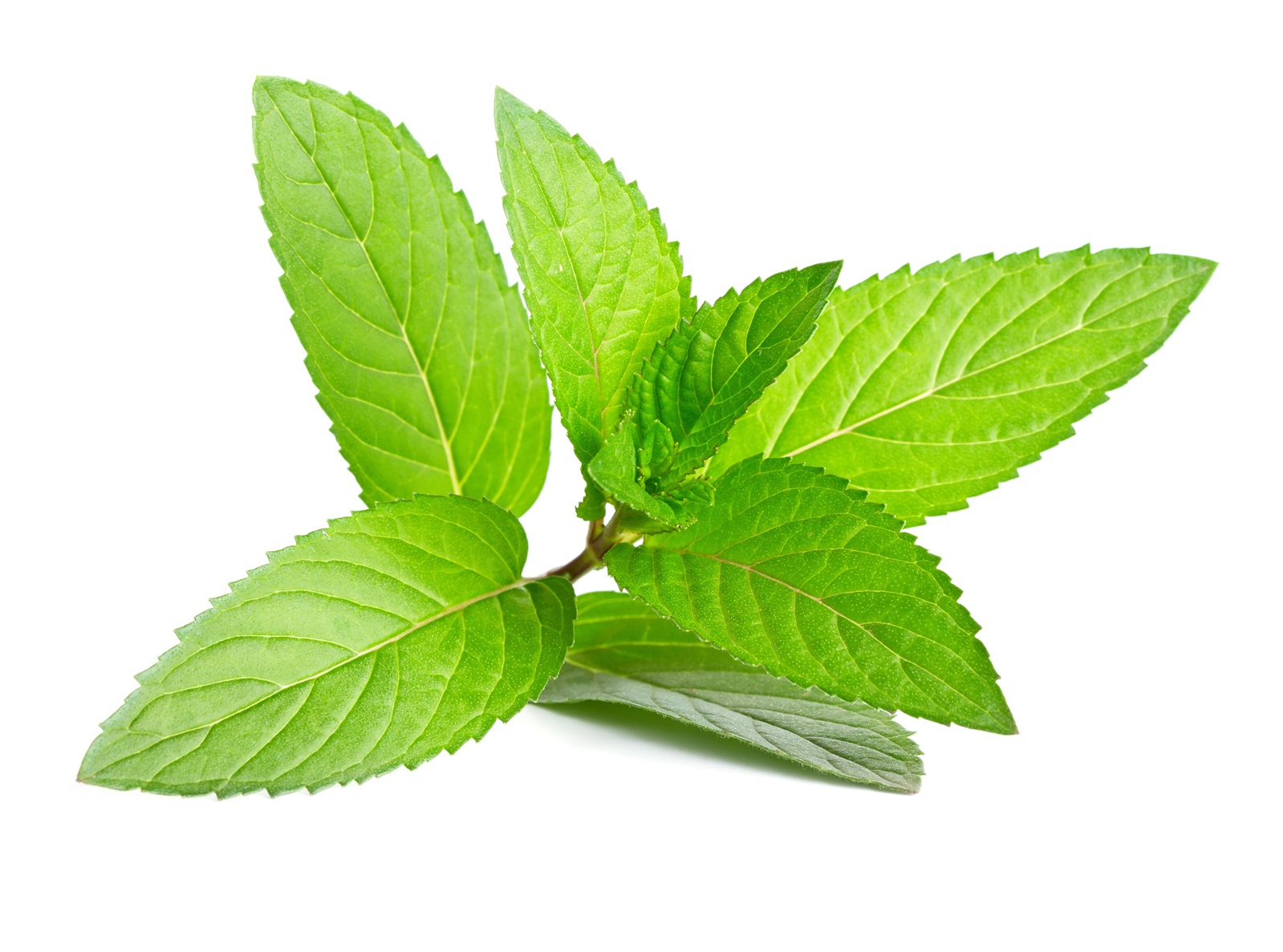
In August and September, 44 Danes became ill with the intestinal bacterium shigella. The investigation shows that the source of infection was probably imported, fresh mint.

Picture of mint 01

The Statens Serum Institut (SSI) has in collaboration with the Danish Veterinary and Food Administration and the DTU Food Institute investigated an outbreak of the intestinal bacterium shigella.

The outbreak includes 44 patients. These are 30 women and 14 men aged 0-75 years. The patients experienced symptoms in the period from 22.08.2020 to 09.09.2020. A total of 13 people have been hospitalized. The sick live primarily in the Capital Region.

Read more in EPI-News number 41/20 .