
enterotoxin producing Bacillus cereus (up to 7100 CFU/g) in cocoa powder for children from unknown origin, via Germany in Finland
Bacillus cereus in different varietes of pudding from Germany in Germany

enterotoxin producing Bacillus cereus (up to 7100 CFU/g) in cocoa powder for children from unknown origin, via Germany in Finland
Bacillus cereus in different varietes of pudding from Germany in Germany

histamine in frozen yellowfin tuna loins and sakus (Thunnus albacares) from Vietnam, via Belgium in the UK

Presence of salmonella
Those in possession of this product are asked not to consume it and to return it to the point of sale where it was purchased.
Foodborne illness caused by salmonella results in gastrointestinal disturbances, diarrhea, vomiting and abdominal pain, often accompanied by fever; these symptoms may be more severe in young children, immunocompromised individuals and the elderly. The incubation period can range from 6 to 72 hours.
People who have consumed the products mentioned below and who have these symptoms are invited to consult their doctor, notifying him of this consumption.
▸ Barcode
3263858760916
▸ Lot
• 030701
• 030901
• 031101
• 031401
• 031901
▸ DLC
• 11/19/20
• 11/21/20
• 11/23/20
• 11/26/20
• 12/01/20
▸ Health
stamp FR 01-159-002 CE
▸ Consumer service contact
For any further information, you can contact customer service by dialing the telephone number: 09 70 17 10 00 (non-surcharged call) from Monday to Saturday from 8:30 am to 10 pm or by e-mail at the contact address @ franprix.fr.
▸ Source
https://www.franprix.fr/

Presence of salmonella
Those in possession of this product are asked not to consume it and to return it to the point of sale where it was purchased for reimbursement.
Foodborne illness caused by salmonella results in gastrointestinal disturbances, diarrhea, vomiting and abdominal pain, often accompanied by fever; these symptoms may be more severe in young children, immunocompromised individuals and the elderly. The incubation period can range from 6 to 72 hours.
People who have consumed the products mentioned below and who have these symptoms are invited to consult their doctor, notifying him of this consumption.
▸ Barcode
20021139
▸ Lot
• 111001
• 111928
▸ DLC
• 01/22/2021
• 01/29/2021
▸ Health
stamp FR 69.238.010 CE
▸ Marketing date
From 10/15/2020 to 11/17/2020
▸ Consumer service contact
The LIDL consumer service is at your disposal at the following telephone number 0 800 900 343.
▸ Source
https://www.lidl.fr/fr
Posted in Bacteria, bacterial contamination, food contamination, Food Hygiene, Food Illness, Food Inspections, Food Micro Blog, Food Microbiology, Food Microbiology Blog, Food Microbiology Testing, Food Pathogen, Food Poisoning, food recall, Food Safety, Food Safety Alert, foodborne disease, Foodborne Illness, foodborne outbreak, Laboratory, Salmonella
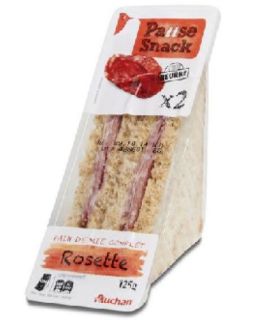
| Last name | Club Rosette Sandwich |
| Mark | Auchan |
| Unit | 125 g |
| Bar code | 3596710385041 |
| Use by date (DLC) | 11/15/20; 11/18/20; 20/11/20; 11/22/20; 11/25/20; 11/28/20 |
| Lot | 030401; 030701; 030901; 031101; 031401; 031701 |
Danger : Potential presence of Salmonella
Salmonella can cause symptoms such as nausea, vomiting, abdominal cramps, diarrhea, fever and headache within 6 to 72 hours after consumption. These symptoms may be aggravated in young children, immunocompromised individuals and the elderly. People who have consumed these products and who present these symptoms are advised to consult a doctor, notifying him of this consumption.
Sale in Luxembourg by: Auchan
Source of information: Auchan recall notification
Communicated by: Government Commission for Quality, Fraud and Food Safety .
Fresh Express is voluntarily recalling a limited number of cases of expired 10.5 oz. Fresh Express Kit Caesar Supreme with the Use-By Date of November 8, 2020 and Product Code S296 because it may be contaminated with Escherichia coli STEC 026 bacteria. The recall is being executed out of an abundance of caution in the unlikely event the product, which is now 8 days past the Use-By Date, is still in stores or consumers’ homes. The recalled product was distributed primarily in Western and Southwestern U.S. states.
Posted in Bacteria, bacterial contamination, E.coli, E.coli O26, food contamination, Food Hygiene, Food Inspections, Food Micro Blog, Food Microbiology, Food Microbiology Blog, Food Microbiology Testing, Food Pathogen, Food Poisoning, food recall, Food Safety, Food Safety Alert, Food Testing, Food Toxin, STEC, STEC E.coli
More than 700 food-related outbreaks were reported in the Netherlands in both 2018 and 2019.
In 2018, 756 foodborne outbreaks with 2,805 illnesses were recorded and in this past year 735 outbreaks with 3,058 illnesses were reported. The number of outbreaks went up from 2017 but illnesses declined.
The data comes from an overview by the National Institute for Public Health and the Environment (RIVM) of the main zoonoses and their prevalence in the country for the Netherlands Food and Consumer Product Safety Authority (NVWA). It features 2018 and 2019 figures. The NVWA did not report 2018 outbreak data in 2019 because of a technical issue.
Norovirus was the main cause of outbreaks with 16 and 17 in 2018 and 2019, respectively, and most patients in both years with 370 and 375. The number of outbreaks is lower than 2017 but higher than 2016.
Posted in Campylobacter, food bourne outbreak, food contamination, food handler, Food Hygiene, Food Illness, Food Inspections, Food Micro Blog, Food Microbiology, Food Microbiology Blog, Food Microbiology Research, Food Microbiology Testing, Food Pathogen, Food Poisoning, food recall, Food Safety, Food Safety Alert, Food Spoilage, Food Virus, foodborne outbreak, foodbourne outbreak, Norovirus, outbreak, Virus
The exact source of a food poisoning outbreak that sickened about 200 people may never be known, although contaminated hummus has been fingered as the most likely suspect, Lambton Public Health said.
Forty-five people were lab-confirmed to be infected with Salmonella and another 185 reported feeling sick after eating at the Barakat restaurant in Sarnia and Barakat food truck in Corunna in late October.
An investigation involving local, provincial and federal officials did not identify a specific food, but officials suspect cross-contamination of multiple dishes with hummus the most likely source of contamination, the health unit said.
“Many of these foodborne investigations are not conclusive in their cause, and this is one of those,” said Dr. Sudit Ranade Ranade, Lambton’s medical officer of health.
When the restaurant and food truck are ready to reopen they will be re-inspected.
Posted in Bacteria, bacterial contamination, food bourne outbreak, food contamination, food handler, Food Hygiene, Food Illness, Food Inspections, Food Micro Blog, Food Microbiology, Food Microbiology Blog, Food Microbiology Testing, Food Pathogen, Food Poisoning, food recall, Food Safety, Food Safety Alert, foodborne outbreak, foodbourne outbreak, outbreak, Salmonella

Presence of salmonella
Those in possession of this product are asked not to consume it and to return it to the point of sale where it was purchased.
Foodborne illness caused by Salmonella results in gastrointestinal disturbances, diarrhea, vomiting and abdominal pain, often accompanied by fever; these symptoms may be more serious in young children, immunocompromised people and the elderly. The incubation period can range from 6 to 72 hours.
People who have consumed the products mentioned below and who have these symptoms are invited to consult their doctor, notifying him of this consumption.
▸ Barcode
• 3564700012246 (Dry sausage straight 250g)
• 3564700012253 (Dry sausage curved 300g)
▸ DDM
All DDM until 08/12/20 included
▸ Health
stamp FR 69.238.010 CE
▸ Consumer service contact
0 800 86 52 86 Free service and call
▸ Source
https://www.e-leclerc.com/
Posted in Bacteria, bacterial contamination, food contamination, Food Hygiene, Food Inspections, Food Micro Blog, Food Microbiology, Food Microbiology Blog, Food Microbiology Testing, Food Pathogen, Food Poisoning, food recall, Food Safety, Food Safety Alert, Food Testing, microbial contamination, Microbiology, Oulah, Salmonella
In November 2017, Public Health England identified an outbreak of Shiga toxin-producing Escherichia coli O157:H7 in England where whole genome sequencing results indicated cases were likely to be linked to a common source, and began investigations.
Hypothesis generation included a review of enhanced surveillance data, a case-case study and trawling interviews. The hypothesis of interest was tested through the administration of focussed questionnaires and review of shopping history using loyalty card data. Twelve outbreak cases were detected, eight were hospitalised and four developed haemolytic uraemic syndrome. Frozen beef burgers supplied by a national retailer were identified as the vehicle of the outbreak. Testing of two left-over burger samples obtained from the freezers of two separate (unlinked) cases and a retained sample from the production premises were tested and found to be positive for the outbreak strain. A voluntary recall of the burgers was implemented by the retailer. Investigations at the production premises identified no contraventions of food safety legislation. Cooking guidance on the product packaging was deemed to be adequate and interviews with the cases/carers who prepared the burgers revealed no deficiencies in cooking practices at home. Given the long-shelf life of frozen burgers, the product recall likely prevented more cases.
Posted in E.coli O157, E.coli O157:H7, food contamination, Food Hygiene, Food Illness, Food Inspections, Food Micro Blog, Food Microbiology, Food Microbiology Blog, Food Microbiology Research, Food Microbiology Testing, Food Pathogen, Food Poisoning, food recall, Food Safety, Haemolytic Uremic Syndrome, HUS, Research, STEC, STEC E.coli, Uncategorized


