Category Archives: Food Poisoning

Belgium – Golden Sun brand Basmati rice – Aflatoxin B1

AFSCA

LT Foods recall
Product: Golden Sun brand Basmati rice.
Problem: Aflatoxin B1 content too high.
LT Foods has decided, in agreement with the FASFC, to withdraw the product Basmati Rice (1 kg) of the Golden Sun brand from sale and to recall it from consumers because of an excessively high aflatoxin B1 content.

We ask that you do not consume this product and return it to your point of sale. You will be reimbursed even without presenting the receipt. Product description: – Product name: Basmati rice – Brand: Golden Sun – Best before date (BDD): 06/10/2023 – EAN code: 20364625

 Sale period: from 08/10/2021 to 18/02 /2022 – Type of packaging: plastic packaging (bag) – Weight: 1 kg The product was distributed in Belgium by Lidl.

For any further information , contact Lidl customer service ( 0800/73520 (free))

Belgium – Basmati rice “Basmati rijst Aromatisch” from the AH brand – Ochratoxin

AFSCA

Recall by Albert Heijn
Product: Basmati rice “Basmati rijst Aromatisch” from the AH brand.
Problem: the product contains too high an ochratoxin content.

In agreement with the FASFC, Albert Heijn reminds consumers of the basmati rice “Basmati rijst Aromatisch” of the Albert Heijn brand with the expiry date 10/08/2023. The product contains too high an ochratoxin content. Consumption of this product may pose a health risk.

Albert Heijn asks its customers not to consume this product and to return it to the point of sale where it was purchased. The product will be refunded or exchanged there. Please contact a doctor in case of any health problem.

Product description

• Product category: rice
• Product name: Basmati rijst Aromatisch
• Brand: Albert Heijn
• Expiry date (BDD): 10/08/2023
• Sale period: from 11/08/2021, product no. is no longer on sale in stores
• Nature of packaging: cardboard
• Weight: 400 g

For any further information , please contact Albert Heijn via 0800 777 05.

RASFF Alert – Histamine – Tuna

RASFF

Histamine in chilled tuna from The Netherlands in Belgium

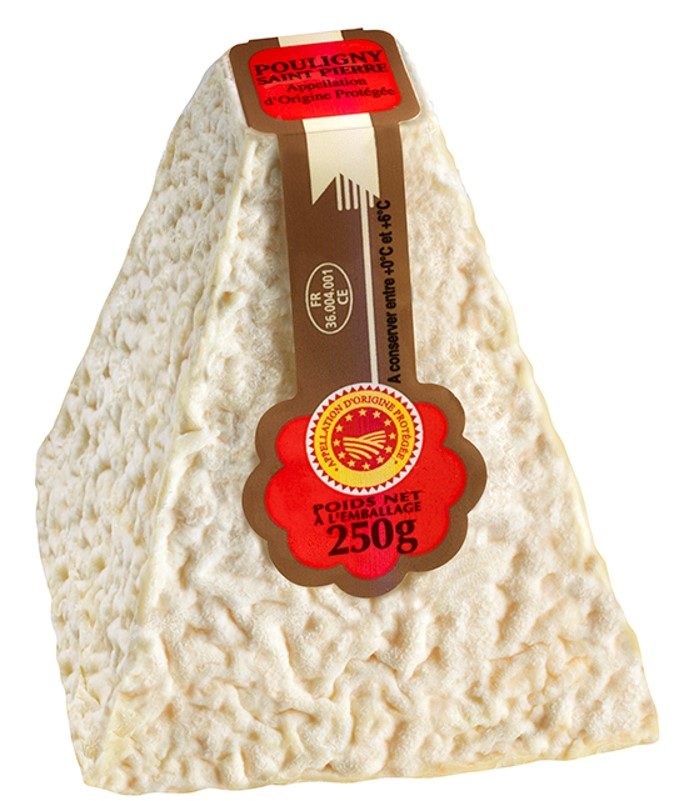
France – POULIGNY AOP ANJOUIN CPE – Salmonella

Gov france

Identification information of the recalled product

  • Product category Food
  • Product subcategory Milk and dairy products
  • Product brand name Anjouin Cheese Factory
  • Model names or references PETIT POULIGNY AOP ANJOUIN CP 150g
  • Identification of products
    GTIN Lot Dated
    0003301170008863 L010 Date of minimum durability 03/17/2022
  • Packaging150g
  • Marketing start/end date From 01/02/2022 to 14/02/2022
  • Storage temperature Product to be stored in the refrigerator
  • Health mark EN 36.004.001 EC
  • Geographic area of ​​sale Whole France
  • Distributors U-SYSTEM, CROSSROADS

Practical information regarding the recall

  • Reason for recall Presence of Salmonella
  • Risks incurred by the consumer Salmonella spp (causative agent of salmonellosis)

South Africa – At least 109 pupils treated for suspected food poisoning

Herald live

At least 109 pupils from Ikamva Lesizwe Public School in Kenton-on-Sea received medical treatment on Monday afternoon for suspected food poisoning, believed to have been caused by the umphokoqo (maize meal with sour milk) they ate for lunch.

The pupils started vomiting and experiencing diarrhoea allegedly after eating the meal served at their school during the lunch break as part of the school nutrition programme.

Provincial Education Spokesperson, Malibongwe Mtima says they are investigating the incident.

India – 15 kids suffer ‘food poisoning’ in Andhra, adulterated food at Anganwadi

New Indian Express

NELLORE: At least 15 children fell sick after they reportedly ate adulterated food at an Anganwadi in Podalakuru town of Nellore district. According to reports, the children were suffering from diarrhoea since Wednesday evening. Parents staged a demonstration at the Anganwadi and blamed the negligent attitude of the staff for delaying treatment to their children.

They alleged that the children began vomiting and fell sick after eating food provided at the Anganwadi. They said the children were admitted to a local hospital for treatment where doctors confirmed that they fell sick due to the adulterated food they ate. The children are getting treated at various hospitals in Podalakuru and Nellore city. Sources said their condition is stable now.

Research – Escherichia coli O103 outbreak associated with minced celery among hospitalized individuals in Victoria, British Columbia, 2021

PHAC

Abstract

Background: In April 2021, a Shiga toxin-producing Escherichia coli (E. coli) (STEC) O103 outbreak was identified among patients at two hospitals in Victoria, British Columbia (BC). The objective of this study is to describe this outbreak investigation and identify issues of food safety for high-risk products prepared for vulnerable populations.

Methods: Confirmed cases of E. coli O103 were reported to the Island Health communicable disease unit. The provincial public health laboratory conducted whole genome sequencing on confirmed case isolates, as per routine practice for STEC in BC. Exposure information was obtained through case interviews and review of hospital menus. Federal and local public health authorities conducted an inspection of the processing plant for the suspect source.

Results: Six confirmed cases of E. coli O103 were identified, all related by whole genome sequencing. The majority of cases were female (67%) and the median age was 61 years (range 24–87 years). All confirmed cases were inpatients or outpatients at two hospitals and were exposed to raw minced celery within prepared sandwiches provided by hospital food services. A local processor supplied the minced celery exclusively to the two hospitals. Testing of product at the processor was infrequent, and chlorine rinse occurred before mincing. The spread of residual E. coli contamination through the mincing process, in addition to temperature abuse at the hospitals, are thought to have contributed to this outbreak.

Conclusion: Raw vegetables, such as celery, are a potential source of STEC and present a risk to vulnerable populations. Recommendations from this outbreak include more frequent testing at the processor, a review of the chlorination and mincing process and a review of hospital food services practices to mitigate temperature abuse.

Belgium – 4 Albert Heijn brand products containing pumpkin seeds – Salmonella

AFSCA

Recall of Albert Heijn
Products: 4 Albert Heijn brand products containing pumpkin seeds.
Problem: possible presence of Salmonella.
In agreement with the FASFC, Albert Heijn is withdrawing four AH products containing pumpkin seeds from sale and reminding consumers of them due to the possible presence of salmonella.

Consumption of these products can potentially cause foodborne infections and pose a health risk, especially to young children, the elderly, people with weakened immune systems and pregnant women.

Albert Heijn asks his customers not to consume these products and to return them to the point of sale. There they will be replaced or refunded. Please contact a doctor in case of health problems.

Description of products:

• Product category: nuts and seeds
• Product name: AH pumpkin seed products
• Brand: Albert Heijn
• Best before date (BDD – date of minimum durability):
            o BDD 27/2/22 – AH ontbijt moerbei goji bessen mix
            o BDD 27/2 /22 – AH pitten mix salad
            o DDM 2/27/22 – AH Italiaanse mix
            o DDM 1/30/22 – AH pitten mix croutons
               (our packaging says “Look, smell and taste after this date”).
• Sales period: 9/15/21 – 11/30/21
• Type of packaging: jars/plastic bags
• Weight: various weights

USA – Pepperoni recalled due to Bacillus cereus

FSIS USDA

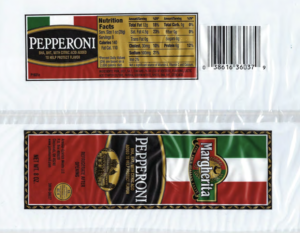
WASHINGTON, Dec. 14, 2021 – Smithfield Packaged Meats Corp., doing business as Margherita Meats, Inc., an Omaha, Neb. establishment, is recalling approximately 10,990 pounds of ready-to-eat (RTE) pepperoni products that may be adulterated with Bacillus cereus (B. cereus), the U.S. Department of Agriculture’s Food Safety and Inspection Service (FSIS) announced today.

The RTE unsliced pepperoni product was produced and packaged on June 17, 2021.  The following products are subject to recall [view label]:

  • 8-oz. plastic shrink-wrapped packages containing unsliced pepperoni “Margherita PEPPERONI” with lot code P1931C and a “use by date” of 12-14-21 represented on the label.

The products subject to recall bear establishment number “EST. 19” inside the USDA mark of inspection. These items were shipped to retail locations nationwide.

The problem was discovered when the Department of Defense notified FSIS that they found B. cereus during routine product testing.

B. cereus is a toxin-producing microorganism that causes diarrhea and vomiting in people. Those with compromised immune systems are at risk for more severe illness. Vigorous rehydration and other supportive care including antibiotics are the usual treatment.

There have been no confirmed reports of adverse reactions due to consumption of these products. Anyone concerned about an injury or illness should contact a healthcare provider.

FSIS is concerned that some product may be in consumers’ pantries or refrigerators. Consumers who have purchased these products are urged not to consume them. These products should be thrown away or returned to the place of purchase.

FSIS routinely conducts recall effectiveness checks to verify recalling firms notify their customers of the recall and that steps are taken to make certain that the product is no longer available to consumers. When available, the retail distribution list(s) will be posted on the FSIS website at www.fsis.usda.gov/recalls.

Media with questions regarding the recall can contact Jim Monroe, Corporate Affairs, Margherita Meats Corp., at (703) 559-1875. Consumers should call the Margherita Consumer Affairs Hotline at (844) 342-2596.

Consumers with food safety questions can call the toll-free USDA Meat and Poultry Hotline at 1-888-MPHotline (1-888-674-6854) or live chat via Ask USDA from 10 a.m. to 6 p.m. (Eastern Time) Monday through Friday. Consumers can also browse food safety messages at Ask USDA or send a question via email to MPHotline@usda.gov. For consumers that need to report a problem with a meat, poultry, or egg product, the online Electronic Consumer Complaint Monitoring System can be accessed 24 hours a day at https://foodcomplaint.fsis.usda.gov/eCCF/.

RASFF Alert – STEC E.coli – Raw Milk Cheese – Bovine Meat – Frozen Lamb

RASFF

Shiga toxin-producing Escherichia coli in raw milk cheese from France in Belgium and Luxembourg

RASFF

Presence E. coli STEC in Bovine meat from Brazil in Spain

RASFF

Shiga toxin-producing Escherichia coli in frozen lamb meat from New Zealand in Italy