Category Archives: Food Pathogen

USA – SunSprout Enterprises Voluntarily Recalls Two Lots of Alfalfa Sprouts Due to Potential Contamination with Salmonella

FDA

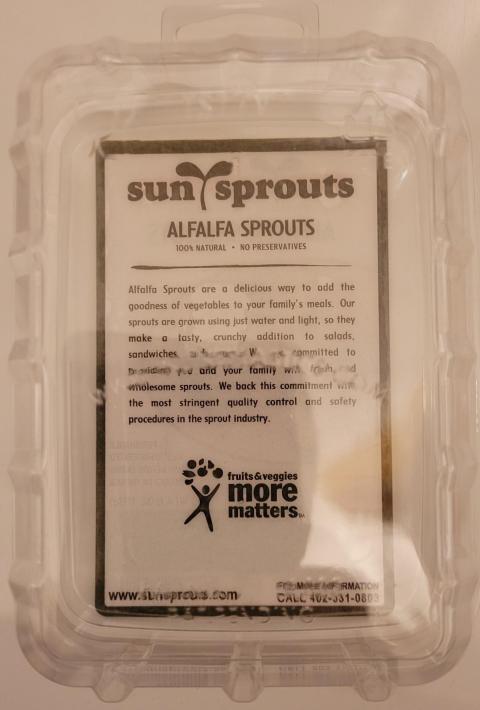
Image 1 – SunSprouts Alfalfa Sprouts, Back Clamshell

Summary

Company Announcement Date:
FDA Publish Date:
Product Type:
Food & Beverages
Produce
Foodborne Illness
Reason for Announcement:
Salmonella
Company Name:
SunSprout Enterprises
Brand Name:
Sun Sprouts
Product Description:
Alfalfa Sprouts

Company Announcement

Fremont, Nebraska, December 28, 2022 – SunSprout Enterprises is voluntarily recalling two lots (#4211 and 5211) of raw alfalfa sprouts in 4-ounce clamshells, with best by dates between 12/10/22 and 12/27/22, due to potential contamination with Salmonella.

Salmonella is an organism which can cause serious and sometimes fatal infections in young children, frail or elderly people, and others with weakened immune systems. Healthy persons infected with Salmonella often experience fever, diarrhea (which may be bloody), nausea, vomiting and abdominal pain. In rare circumstances, infection with Salmonella can result in the organism getting into the bloodstream and producing more severe illnesses such as arterial infections (i.e., infected aneurysms), endocarditis and arthritis.

The company directly distributed 808 pounds of product to five foodservice and grocery customers in Nebraska, Kansas, and Iowa between late November and early December 2022. No other SunSprout lot codes or products are impacted by this voluntary recall.

The raw alfalfa sprouts are packaged in 4-ounce clamshells with best buy dates between 12/10/2022 and 12/27/2022 and lot codes #4211 and 5211. The lot code and best buy date can be found on the front of the package. The alfalfa sprouts are available in the produce section of grocery stores.  To date, SunSprout has received no complaints or reports of illness due to this recalled product. This voluntary recall is a result of a preliminary investigation by the State of Nebraska in connection with CDC of an outbreak of illness likely associated with alfalfa sprouts. SunSprout, out of an abundance of caution, is initiating this voluntary recall while it further investigates how this alfalfa product was handled and stored after it left its Nebraska facility.

Customers with product from this lot number in  their possession should stop using it and dispose of it immediately. Consumers are also encouraged to follow all safe handling instructions and wash their hands and all preparation surfaces after handling any raw product. If consumers have any questions, they can contact SunSprout by email at Admin@sunsprouts.com anytime, responses will be provided Monday–Friday, 8:00 a.m. through 5:00 p.m. CST.

This recall is being conducted in cooperation with the U.S. Food and Drug Administration.  Photographs of the product label are below for ease of confirmation.

Link to Expanded Recall.

Company Contact Information

Consumers:
Mike Rhodes
 402-331-0803
 Admin@sunsprouts.com

RASFF Alerts – Ochratoxin A – Organic Raisins

RASFF

Ochratoxin A in organic raisins from Uzbekistan, via Türkiye in Germnay and Uzbekistan

RASFF Alert – Cottage Cheese Tubes – Microbiological Defect

RASFF

Tubes de fromage blanc – Défaut microbiologique from France in the Netherlands

RASFF Alert – Norovirus – Clams – Oysters

RASFF

Norivirus genotype I in clam (chamelea gallina) from Italy in Spain

RASFF

Presence of norovirus genogroup I in oysters from France in Italy

RASFF Alert – Vibrio parahaemolyticus – Mussels

RASFF

Vibrio parahaemolyticus in mussels (mytilus galloprovincialis) produced in Italy and reared in Spain in Italy

RASFF Alerts – E.coli – Cheese

RASFF

E.coli detected on a cheese from France in Belgium

RASFF Alert – Clostridium perfringens – Dried Natural Casings

RASFF

Detection of Salmonella and Clostridium perfringens in dried natural casings from Portugal in France

RASFF Alerts – Salmonella – Pistachios – Polish Chicken – Minced Thigh Broiler Chickens – Black Pepper – Dried Natural Casings – Live Razor Clams – Milano Salami

RASFF

Salmonella Worthington in pistachios from USA via Lithuania in Finland

RASFF

Salmonella Infantis (in 2 out of 5 units) in fresh chicken quarters from Poland in Latvia

RASFF

Salmonella Enteritidis (in 2 out of 5 units) in chicken quarters from Poland in Lithuania and Latvia

RASFF

Salmonella (in 2 out of 5 samples) in chilled minced thigh meat of broiler chickens from Poland in Lithuania

RASFF

Salmonella spp. in black pepper from Brazil in Germany

RASFF

Salmonella C1 in chicken neck skin from Poland and France

RASFF

Detection of Salmonella and Clostridium perfringens in dried natural casings from Portugal in France

RASFF

Detection of Salmonella in Live Razor Clams (Ensis spp.)from Ireland in Hong Kong

RASFF

Salmonella spp in salami Milano from Italy in Croatia and Slovenia

Research – Recent Trends and Applications of Nanoencapsulated Bacteriocins against Microbes in Food Quality and Safety

MDPI

Abstract

Bacteriocins are ribosomal-synthesized peptides or proteins produced by bacterial strains and can inhibit pathogenic bacteria. Numerous factors influence the potential activity of bacteriocins in food matrices. For example, food additives usage, chemical composition, physical conditions of food, and sensitivity of proteolytic enzymes can constrain the application of bacteriocins as beneficial food preservatives. However, novel bacteriocin nanoencapsulation has appeared as an encouraging solution. In this review, we highlight the bacteriocins produced by Gram-negative bacteria and Gram-positive bacteria including lactic acid bacteria that have shown positive results as potential food preservatives. In addition, this review encompasses the major focus on bacteriocins encapsulation with nanotechnology to enhance the antimicrobial action of bacteriocins. Several strategies can be employed to encapsulate bacteriocins; however, the nanotechnological approach is one of the most effective strategies for avoiding limitations. Nanoparticles such as liposomes, chitosan, protein, and polysaccharides have been discussed to show their importance in the nanoencapsulation method. The nanoparticles are combined with bacteriocins to develop the nano-encapsulated bacteriocins from Gram-negative and Gram-positive bacteria including LAB. In food systems, nanoencapsulation enhances the stability and antimicrobial functionality of active peptides. This nanotechnological application provides a formulation of a broad range of antimicrobial peptides at the industry-scale level. Nano-formulated bacteriocins have been discussed along with examples to show a broader antimicrobial spectrum, increase bacteriocins’ applicability, extend antimicrobial spectrum and enhance stability.

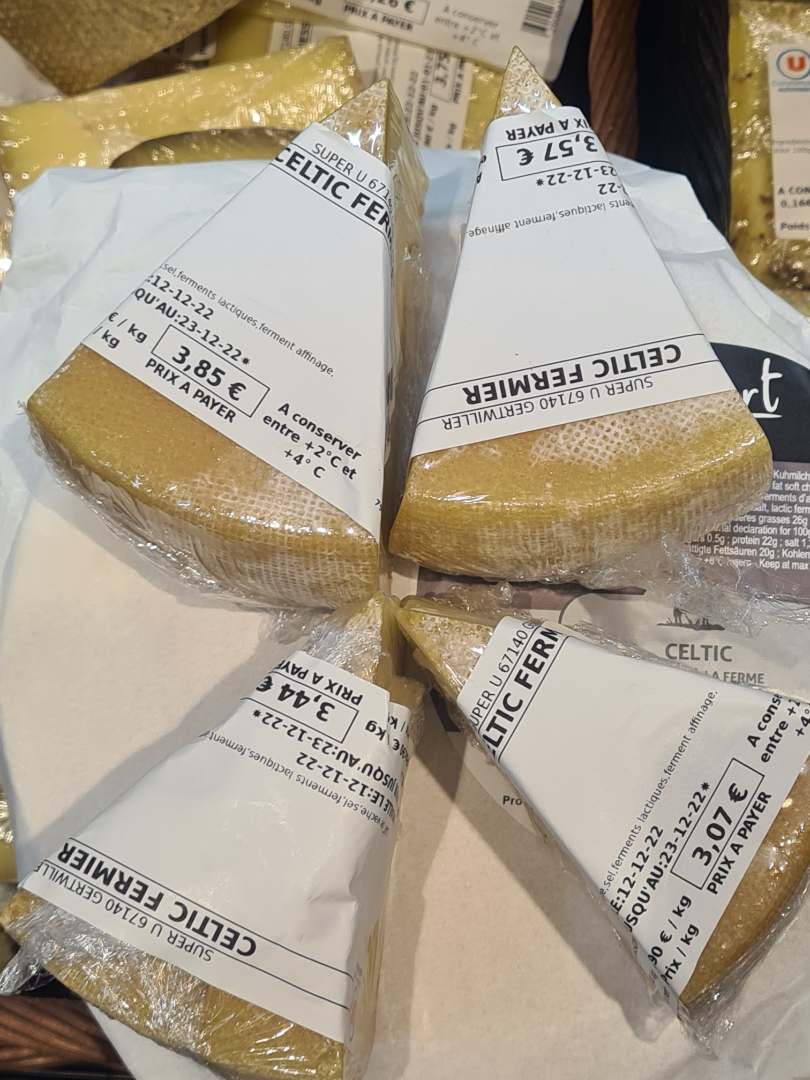
France – RAW MILK FARM CELTIC – Salmonella

Gov france

Identification information of the recalled product

  • Product category Food
  • Product subcategory Milk and dairy products
  • Product brand name HENNART
  • Model names or references RAW MILK FARM CELTIC
  • Identification of products
    GTIN Lot Date
    2606427000000 243101 Use-by date 14/12/2022
  • Packaging WHEEL CUTTING APPROXIMATELY 200GR
  • Marketing start/end date From 06/12/2022 to 14/12/2022
  • Storage temperature Product to be stored in the refrigerator
  • Geographic area of ​​sale Departments: BAS-RHIN (67)
  • Distributors SUPER U GERTWILLER
  • List of points of saleLIST.pdf

Practical information regarding the recall

  • Reason for recall PRESENCE OF SALMONELLA
  • Risks incurred by the consumer Salmonella spp (causative agent of salmonellosis)