Category Archives: Food Microbiology Research

Research – Inactivation of Foodborne Pathogens on Inshell Walnuts by UV-C Radiation

Journal of Food Protection

Inshell walnuts could be contaminated with pathogens through direct contact or cross-contamination during harvesting and postharvest hulling, drying, or storage. This study aimed to assess the efficacy of ultraviolet–C (UV–C) radiation in inactivating foodborne pathogens on inshell walnut surfaces. Intact inshell walnut surfaces were inoculated separately with Salmonella spp., Escherichia coli O157:H7, Listeria monocytogenes , and Staphylococcus aureus , and then subjected to UV–C radiation at doses of 29.4, 147.0, 294.0, 588.0, and 882.0 mJ/cm 2 . UV–C radiation inactivated the inoculated pathogens in a dose-dependent manner, and a tailing effect was observed for the inactivation of pathogens. UV–C radiation at 29.4 mJ/cm 2 and 882.0 mJ/cm 2 reduced the populations of  S . Enteritidis PT 30, S . Typhimurium, E. coli O157:H7, L. monocytogenes , and S. aureus on inshell walnut surfaces by 0.82–1.25 and 1.76–2.41 log CFU/walnut, respectively. Scanning electron photomicrographs showed pathogenic bacterial cells in the cracks and crevices of the inshell walnut surface, and the shielding of microorganisms by the cracks and crevices may have contributed to the tailing effect observed during UV–C inactivation. No significant changes ( p  > 0.05) were found in walnut lipid oxidation following UV–C radiation at doses up to 882.0 mJ/cm 2 . Together, the results indicate that UV–C radiation could be a potential technology for reducing the populations of various foodborne pathogens on inshell walnut surfaces while maintaining the quality of walnuts.

Research – Dutch survey finds a quarter of people wash chicken, despite expert advice

Food Safety News

A survey in the Netherlands has found more than a quarter of people wash raw chicken, which public health officials say increases the chances of spreading bacteria.

Results come from two surveys by the Netherlands Nutrition Centre (Voedingscentrum) with the Dutch population about safe food handling.

The first survey in May 2021 with 2,000 participants asked Dutch consumers about general food safety handling in the domestic kitchen. One of the questions was if they washed their chicken.

A second survey in November 2021 with 1,000 respondents was focused on safe handling of chicken. People were asked if they washed their chicken and more details about why and how. Both surveys revealed that more than 25 percent of consumers washed their chicken often or almost always.

Bacteria on chicken can cause food poisoning. Usually it is because of Campylobacter or Salmonella.

Washing raw poultry is not recommended, because of concerns about contaminating other foods and surfaces and increasing the risk of foodborne illness.

Research – Attachment and survival of Salmonella enterica and Listeria monocytogenes on tomatoes (Solanum lycopersicum) as affected by relative humidity, temperature and time of storage 

Journal of Food Protection

Tomatoes (Solanum lycopersicum) are one of the most consumed fruits worldwide. The fruit can become contaminated with Salmonella and Listeria monocytogenes at different stages of the production and supply chain, and these pathogens may survive under different storage conditions. The effect of relative humidity, temperature and time of storage on the attachment and survival characteristics of both pathogens on the surface of tomatoes was investigated. Fresh whole Roma tomatoes were inoculated with a cocktail of Salmonella or L. monocytogenes and stored at 5, 12, 25, 30, or 35 ºC for 10 days. Every day during storage, relative humidity and temperature were measured and tomatoes were removed to enumerate cells of these pathogens that were loosely attached (LA, cells detached from the tomato surface by simple rinse) and strongly attached (SA, cells that required sonication to detach. Enumeration was achieved by spread-plate method. Surviving populations of LA and SA cells were obtained and the attachment strength (SR) was calculated to express the proportion of SA cells on the tomato surface. The LA initial counts of Salmonella and L. monocytogenes on the surface of the fruit after inoculation were 6.6 and 6.5 log CFU/tomato, and for SA were 5.1 and 5.6 log CFU/tomato, respectively. For both pathogens, the LA counts were higher (p < 0.05) than the SA counts. Also, the LA and SA counts varied significantly as a function of temperature, relative humidity and time of storage. The S R for Salmonella was affected by the time but not the temperature of storage, while the S R for L. monocytogenes was affected by the temperature, relative humidity and time of storage (p < 0.05). Understanding the attachment and survival of Salmonella and L. monocytogenes on tomatoes stored at different temperature conditions may be useful in determining ways to prevent/reduce the establishment of pathogens and designing improved decontamination methods for tomatoes.

Research – Evaluation of the safety and efficacy of lactic acid to reduce microbiological surface contamination on carcases from kangaroos, wild pigs, goats and sheep

EFSA

Studies evaluating the safety and efficacy of lactic acid to reduce microbiological surface contamination from carcases of wild game (i.e. kangaroos and wild pigs) and small stock (i.e. goats and sheep) before chilling at the slaughterhouse were assessed. Wild pig and kangaroo hide‐on carcases may have been chilled before they arrive at the slaughterhouse and are treated after removal of the hides. Lactic acid solutions (2–5%) are applied to the carcases at temperatures of up to 55°C by spraying or misting. The treatment lasts 6–7 s per carcass side. The Panel concluded that: [1] the treatment is of no safety concern, provided that the lactic acid complies with the European Union specifications for food additives; [2] based on the available evidence, it was not possible to conclude on the efficacy of spraying or misting lactic acid on kangaroo, wild pig, goats and sheep carcases; [3] treatment of the above‐mentioned carcases with lactic acid may induce reduced susceptibility to the same substance, but this can be minimised; there is currently no evidence that prior exposure of food‐borne pathogens to lactic acid leads to the occurrence of resistance levels that compromise antimicrobial therapy; and [4] the release of lactic acid is not of concern for the environment, assuming that wastewaters released by the slaughterhouses are treated on‐site, if necessary, to counter the potentially low pH caused by lactic acid, in compliance with local rules.

Research – Clostridioides difficile positivity rate and PCR ribotype distribution on retail potatoes in 12 European countries, January to June 2018 separator

Eurosurveillance

 infection (CDI) is a notable cause of infectious diarrhoea worldwide. In Europe, the estimated number of CDI cases in 2011–12 was 123,997 (95% confidence interval (CI): 61,018–284,857), based on a survey of healthcare-associated infections performed by the European Centre for Disease Prevention and Control (ECDC) [1]. In 2016, as part of  surveillance performed by ECDC, 556 hospitals from 20 countries covering 24 million patient-days reported 7,711 CDI cases [2]. The symptoms can range from mild diarrhoea to potentially fatal pseudomembranous colitis. While historically regarded as a typical healthcare infection, community CDI is increasingly recognised [3].

In CDI, human-to-human transmission plays a major role, but other infection sources and transmission routes are under investigation.  has been repeatedly isolated from various foods worldwide, and it is feasible that some foods could be important vectors for its widespread dissemination [3]. Some important healthcare-associated  PCR ribotypes (RT) such as RT 027 and RT 001/072 tend to spread clonally within a single hospital, region or country, while others such as RT 014, RT 002 and RT 015 do not exhibit country-based clustering and are most likely disseminated across Europe by other sources possibly including the food chain [4]. Confirmed cases of food-associated CDI have so far not been described [3].

Existing evidence suggests that potatoes, which represent a major staple food consumed worldwide, could contribute to the spread of . Potatoes have the highest  contamination rates among all vegetables tested to date; the proportion of -positive retail potato samples ranges from 25.7% (18/70) to 53.3% (24/45) [5,6]. By contrast, the highest positivity rate in other types of vegetables such as leaf vegetables, ginger, sprouts and ready-to-eat salads is 9.4% [58] and in meats and meat products, reported positivity rates are typically below 20% [8,9]. Additionally, diverse and clinically relevant  PCR ribotypes have been previously recovered from potatoes. Certain PCR ribotypes such as RT 014/020, which are suggested to spread by non-clonal transmission networks [4], are among those often detected on potatoes [5,6]. Furthermore, potatoes are frequently imported and exported between countries. A previous study from Slovenia reported that 78.9% (15/19) of -positive retail potatoes were imported from more than 10 countries on three different continents [6].

Here we present the results of a European-wide study on  contamination of retail potatoes. Identical protocols for sampling and isolation were used for all 12 studied countries, enabling a direct comparison of the positivity rates of  on potatoes.

Research – Controlled Recirculating Wet Storage Purging V. parahaemolyticus in Oysters

MDPI

Food Illness

This work explored the effects of salinity and temperature on the efficacy of purging V. parahaemolyticus from eastern oysters (Crassostrea virginica). Oysters were inoculated with a 5-strain cocktail of V. parahaemolyticus to levels of 104 to 105 MPN (most probable number)/g and depurated in a controlled re-circulating wet-storage system with artificial seawater (ASW). Both salinity and temperature remarkably affected the efficacy for the depuration of V. parahaemolyticus from oysters during wet-storage. The wet-storage process at salinity 20 ppt at 7.5 °C or 10 °C could achieve a larger than 3 log (MPN/g) reduction of Vibrio at Day 7, which meets the FDA’s requirement as a post-harvest process for V. parahaemolyticus control. At the conditions of 10 °C and 20 ppt, a pre-chilled system could achieve a 3.54 log (MPN/g) reduction of Vibrio in oysters on Day 7. There was no significant difference in the shelf life between inoculated and untreated oysters before the depuration, with a same survival rate (stored in a 4 °C cooler for 15 days) of 93%. View Full-Text

USA – Patient complaints of illnesses after eating Lucky Charms top 550

Food Safety News

More people have been added to the patient list in an outbreak of “adverse events” linked to dry cereal, according to the FDA.

The agency is now reporting 555 complaints of what it is describing as “adverse events” after eating un unnamed dry cereal. Although the cereal is not identified in the Food and Drug Administration’s outbreak update, a spokesperson has confirmed to Food Safety News that it is investigating complaints about Lucky Charms breakfast cereal.

Ferrero Kinder Factory – hopes to reopen plant linked to Salmonella outbreak in June

Food Safety News

Ferrero’s confectionery plant in Belgium that has been linked to a large Salmonella outbreak could reopen next month.

Belgian authorities stopped production at the facility in Arlon in early April. Meetings have been held between Ferrero officials, a worker’s union and the Federal Agency For the Safety of the Food Chain (FASFC) on what conditions need to be met before production can resume.

Cleaning in the factory is ongoing and any restart is likely to require a test period before products are sent to market to ensure there is no contamination.

Research – France – Cholera

Sante Publique

Food Illness

Digestive poisoning , cholera is a notifiable disease caused by the ingestion of water or food contaminated by Vibrio cholerae bacilli of the toxigenic serogroups O1 and O139.

Cholera: the disease

A rare imported pathology in France

Cholera is an acute digestive poisoning caused by ingestion of water or food contaminated by Vibrio cholerae bacilli of toxigenic serogroups O1 and O139 (cholera vibrios).

Today, collective and individual sanitation and hygiene measures have led to the disappearance of cholera in France (excluding Guyana and Mayotte, where sporadic and limited epidemics were described in the decades 1990-2000 in the two previous decades). In mainland France, cholera, which is subject to mandatory notification , is indeed a rare imported pathology. Symptomatic cases of cholera are mainly linked to the absorption of contaminated drinks or food abroad.

Early reporting of suspected and confirmed cases, and notification of confirmed cases takes place from a single case. They allow the management of imported cholera cases as soon as possible. Between 0 and 2 cases of cholera have been declared each year in France since 2000, they concern travelers returning from endemic areas . This is a small and decreasing number.

Although rare in France, cholera can cause severe digestive symptoms and dehydration. Even if the risks of contamination and epidemic are very limited on French territory, the epidemiological surveillance of Public Health France requires the early notification of cases as soon as this infection is suspected in order to prevent its spread.

Human-to-human and environmental transmission

Man is the main reservoir of cholera. But in some regions, the environment can also play this role, resulting in the circulation of cholera vibrios in an endemic mode . Cholera is linked to the absorption of contaminated water or food. Bacilli , or cholera vibrios, secrete cholera toxin in the intestine, which causes the loss of water and electrolytes (up to 15-20 liters per day). Diarrheal stools released in large quantities spread bacilli in the environment and faecal-oral transmission .

High population concentrations, combined with poor environmental hygiene, favor the appearance and development of cholera epidemics.

Prevention through hygiene and vaccination

When the basic rules of hygiene are respected, the vibrio responsible for cholera is not very transmissible. Appropriate chlorination of water and basic hygiene measures are generally sufficient to prevent contamination.
In the event of a trip to these endemic areas , compliance with hygiene measures (food hygiene with consumption of cooked and hot food, capsulated bottled water, avoidance of ice cubes, and hand washing) remains the best prevention.

There is no active vaccine against Vibrio cholerae serogroup O139. On the other hand, health personnel going to work with patients or in refugee camps during an epidemic can benefit from the anti-cholera vaccine (against different Vibrio cholerae O1 strains and a recombinant cholera toxin B subunit) administered orally (2 doses one week apart for adults and 3 doses one week apart for children 2 to 6 years of age).

Severe intestinal symptoms

The incubation period of cholera is short, from a few hours to five days.

Most people infected with Vibrio cholerae show few or no symptoms, although the bacillus can be found in their stool for one to two weeks. In case of illness, 80 to 90% of episodes are mild or moderately severe and it is then difficult to distinguish them clinically from other types of acute diarrhoea.

Less than 20% of patients develop all the typical symptoms of cholera, with symptoms of moderate to severe dehydration: violent diarrhea profuse with “rice water”, vomiting, without fever.

In the absence of treatment, death occurs in 1 to 3 days, by cardiovascular collapse in 25 to 50% of cases. Mortality is higher in children, the elderly and vulnerable individuals.

The diagnosis of cholera is clinical and biological. It is based on the detection of V. cholerae serogroup O1 or O139 producing cholera toxin in the stools of a patient. In the event of suspected isolation of a strain of cholera vibrio, immediate contact should be made with the National Reference Center for vibrios and cholera for typing and confirmation of the diagnosis: https://www.pasteur.fr/fr/ public-health/cnr/the-cnr/vibrions-cholera

A treatment based on rehydration

The treatment of cholera essentially consists of compensating for the digestive losses of water and electrolytes. Depending on the degree of dehydration, rehydration takes place orally or intravenously. An improvement in the subject’s condition is visible quickly (in a few hours) and healing occurs in a few days. There are no sequels. Antibiotic therapy can be useful in certain severe cases, but multi-resistant strains may appear.

An endemic circulation in South Asia

Cholera is regularly the subject of epidemics in developing countries where it evolves according to the country on an endemic and/or epidemic mode .

The world has been experiencing the seventh cholera pandemic since 1961, caused by Vibrio cholerae serogroup O1 .

Cholera has been endemic in the Indian subcontinent for several centuries. Cholera spread from 1817 to all of Asia, the Middle East and part of Africa, during the first cholera pandemic. Subsequent pandemics also developed from Asia and were facilitated by improved transportation. The seventh pandemic started in Indonesia in 1961, affected Asia in 1962, the Middle East and part of Europe in 1965, Africa in 1970, and South America in 1991.
On the n the island of Hispaniola an epidemic has been ongoing since the emergence of V. cholerae serogroup O1 in 2010 in Haiti.
Today, Africa and Asia are the two areas most affected by cholera. The disease is spreading there. The outbreak declared in Yemen since 2016 is the largest ever documented.

In 1992, a strain of Vibrio cholerae belonging to the new  serogroup O139 appeared in India and Bangladesh. Since then, it has caused epidemics in several Asian countries and could one day be the cause of an eighth pandemic. Cholera is the first disease to have been the subject of international notification (since 1892).

Research – Investigation of grouped cases of haemolytic-uremic syndrome (HUS) and shiga-toxin-producing E. coli (STEC) infections linked to the consumption of Buitoni® brand Fraîch’Up pizzas. Update on May 4, 2022.

Sante Publique

Public Health France and the National Reference Center (CNR) E. coli and its associated laboratory (Institut Pasteur, Paris, and Microbiology Laboratory of the Robert Debré Hospital, Paris), in conjunction with the Directorate General for Food, the Directorate General for Competition, Consumer Affairs and Fraud Prevention, and in coordination with the Directorate General for Health, have been investigating since 02/10/2022 an increase in the number of cases of haemolytic uremic syndrome (HUS) pediatric infections and Shiga toxin-producing Escherichia coli (STEC) infections.

The epidemiological, microbiological and traceability investigations carried out since that date have confirmed a link between the occurrence of these grouped cases and the consumption of frozen pizzas from the Buitoni brand Fraîch’Up range contaminated with STEC bacteria. On 03/18/2022, the company proceeded with the withdrawal-recall of all the pizzas in the Fraîch’Up range, marketed since June 2021 and the authorities asked the people who hold these pizzas not to consume them and to destroy them.

The total number of HUS cases linked to the consumption of these pizzas has stabilized since the withdrawal-recall. Other reports of STEC infection are investigated as part of routine surveillance. To date, these reports are not linked to grouped cases or consumption of Fraîch’Up pizzas.

Case of SHU in France: update on 04/05/22

As of 04/05/2022, 56 confirmed cases have been identified, of which 54 are linked to STEC O26 strains, and 2 to STEC O103 strains.

These 56 cases occurred in 55 children and 1 adult, who presented symptoms between 18/01/2022 (week 3) and 05/04/2022 (week 14) (Figure 1). The epidemic peak is in week 7 (14/02 to 20/02) and week 9 (28/02 to 06/03), with 10 cases each of these weeks.

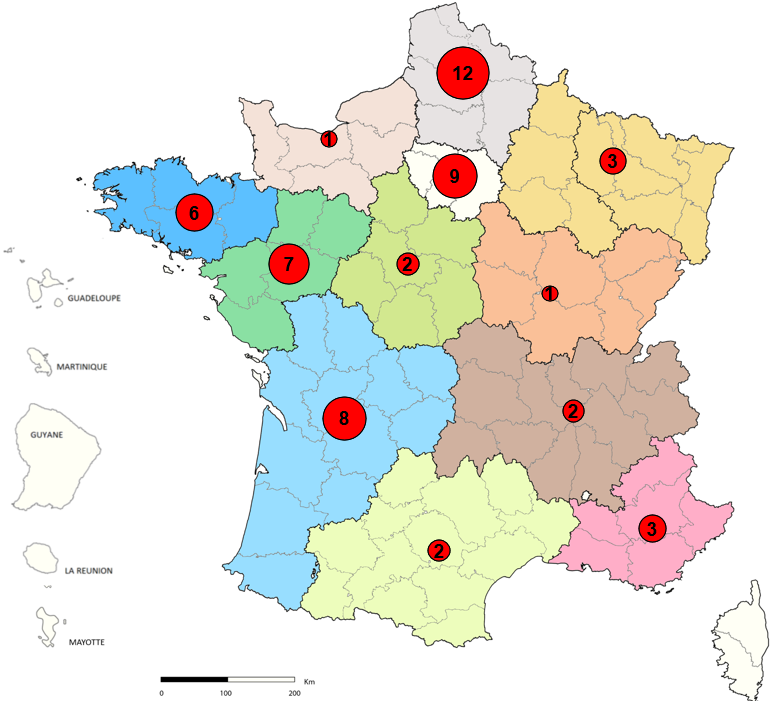
These 56 cases occurred in 12 regions of metropolitan France: Hauts-de-France (12 cases), Ile-de-France (9 cases), New Aquitaine (8 cases), Pays de la Loire (7 cases), Brittany ( 6 cases), Grand Est (3 cases), Provence-Alpes-Côte d’Azur (3 cases), Auvergne-Rhône-Alpes (2 cases), Occitanie (2 cases), Center Val-de-Loire (2 cases) , Bourgogne Franche-Comté (1 case) and Normandy (1 case) (Figure 2).

The 55 sick children are aged from 1 to 17 years old with a median age of 6 years; 25 (45%) are female; 48 (87%) presented with HUS, 7 (13%) with STEC gastroenteritis. Two children died. The adult did not present with HUS.

Figure 1: Epidemic curve: number of confirmed cases of HUS and STEC infections, by week of onset of symptoms – metropolitan France, weeks 3 to 14, 2022 (N=54: week of onset of symptoms not specified for 2 cases )
Figure 1: Epidemic curve: number of confirmed cases of HUS and STEC infections, by week of onset of symptoms - metropolitan France, weeks 3 to 14, 2022 (N=54: week of onset of symptoms not specified for 2 cases )
Figure 2: Geographical distribution of confirmed cases of HUS and STEC infections (N=56) linked to the consumption of Buitoni® brand Fraîch’Up pizzas, by region of residence in metropolitan France, weeks 3 to 14, 2022
Figure 2: Geographical distribution of confirmed cases of HUS and STEC infections (N=56) linked to the consumption of Buitoni® brand Fraîch'Up pizzas, by region of residence in metropolitan France, weeks 3 to 14, 2022