Category Archives: Food Microbiology Blog

Iran – Hundreds Of Food Poisonings In Iran’s Universities Raise Alarm

Iran Intl

Food poisoning affecting hundreds of Iranian university students has alarmed many who claim canteen food was deliberately contaminated to keep them out of protests.

In the past couple of days “a large number of students” at Arak Industrial University and Kharazmi University in Karaj came down with symptoms of food poisoning including diarrhea, body aches, and vomiting, the Telegram channel of a national student union said Thursday.

There were food poisoning breakouts recently at two other universities, Al-Zahra University in Tehran and Isfahan University of Technology both believed to have originated from canteens.

Calling the incidents another case of “serial food poisoning”, the channel said, authorities of Arak University attribute the illness, which has sent many to hospital since Wednesday, to some sort of virus but given a similar incident at Isfahan university of technology last week where many students got seriously ill after eating canteen food makes authorities’ explanation implausible.

Netherlands Veal Rosé Picanha approx. 1 kg Makro – STEC E.coli

NVWA

Safety warning Veal Rosé Picanha approx. 1 kg Makro

Makro warns against Veal Rosé Picanha. The product may contain the E. coli bacteria (STEC). Do not eat this product.


See Makro’s website .


Which product is it?

  • Veal Rose Picanha approx. 1 kg
  • Batch code: 990196845
  • Best before 03-12-2022

Sincerely

The Dutch Food and Consumer Product Safety Authority

USA – Exportadora Copramar Recalls James Farms Frozen Raspberries Due to Possible Health Risk -Hepatitis A

FDA

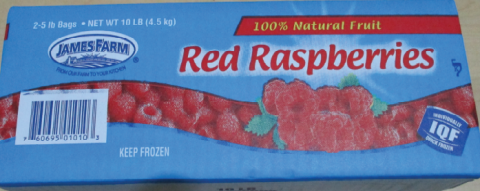
James Farms Frozen Raspberries : 2/5 lb. bags per 10 lb carton, UPC 76069501010

Summary

Company Announcement Date:
FDA Publish Date:
Product Type:
Food & Beverages
Fruit/Fruit Product
Foodborne Illness
Reason for Announcement:
Hepatitis A
Company Name:
Exportadora Compramar
Brand Name:
James Farms
Product Description:
Frozen Raspberries

Company Announcement

Exportadora Copramar is recalling 1260 cases of James Farm frozen raspberries due to the potential of the product being contaminated with Hepatitis A.

U.S. Food and Drug Administration (FDA) testing indicated the presence of Hepatitis A in James Farm branded frozen raspberries identified by UPC Code: 76069501010 and Lot Code – 22-165.

The recalled frozen raspberries are packaged in foodservice 10 lb James Farm branded cartons. The product is exclusively sold through Restaurant Depot/Jetro locations in New York, New Jersey, Connecticut, Massachusetts, Rhode Island, Pennsylvania, Maryland, Virginia and Delaware.

All inventories of the effected lot have been removed from Restaurant Depot/Jetro locations. Restaurant Depot/Jetro locations are also directly contacting their customers regarding this recall. There have been no illnesses or adverse reaction reports to date related to this product.

This Notice affects the following product:

1260 cases of James Farms Frozen Raspberries : 2/5 lb. bags per 10 lb carton

“Best if used by ” date of June 14th, 2024 .

“Product of Chile.”UPC Code: 76069501010, Lot Code – CO 22-165

UPC code is found on the top of the carton with the lot code on the bottom of the carton.

No other retail packages of frozen raspberry products are included in this voluntary recall. Consumers who have purchased the above products should not consume them and should either discard them or return them to point of sale / place of purchase for a full refund

Company Contact Information

Exportadora Compramar

302-401-6474 ext 223, Monday through Friday between 9am and 6pm Eastern Standard Time.

Czech Republic – Slovak salami – Mold/Mould

Potravinynapranyri

Illustrative photo #2

Place of inspection:
Domaželice ( Domaželice 35, 751 15 Domaželice )
ID: 73866491
Invalid parameter:
fungi visible to the eye
surface appearance
scent

The product smelled of spoilage, had a slimy and sticky surface with mold colonies. Food is not considered safe if it shows signs of spoilage.

The food had an expired use-by date.


Expiration date: 11/09/2022
Packaging: Original cut-out wrapper
Date of sample collection: 26/09/2022
Reference number: 22-000594-SZPI-CZ
 
The sample was detected by the official control of the State Agricultural and Food Inspection.
 

EU – Annual report of the Scientific Network on Microbiological Risk Assessment 2022

EFSA

Abstract

Among the tasks of EFSA, according to its founding regulation (Regulation (EC) No 178/2002), there is the establishment of a system of Networks of organisations operating in the fields within EFSA’s mission, the objective being to facilitate a scientific cooperation framework by the coordination of activities, the exchange of information, the development and implementation of joint projects, the exchange of expertise and best practices. The Scientific Network on Microbiological Risk Assessment (MRA Network) had its first meeting in 2007. Currently, 25 European Union Member States and two observer countries (Switzerland and Norway) are participating in the MRA Network. The 22nd meeting was held on 18‐19 October 2022 as a hybrid‐meeting in Parma and online. A wide range of activities related to microbial risk assessment were presented including impact of Vibrio infections, activities on Campylobacter in broilers, Salmonella and Listeria monocytogenes, transfer of anisakid allergens to meat, risk assessment of monkey pox transmission through food and risk‐based classification of food establishments as well as an invited presentation on ionophor resistance in poultry. Activities of the EFSA BIOHAZ panel and the BIOHAW Unit were presented.

PDF


Research – Multi-country outbreak of Salmonella Mbandaka ST413, possibly linked to consumption of chicken meat in the EU/EEA, Israel and the UK

EFSA

A cross-border outbreak of Salmonella Mbandaka ST413 has been ongoing in the EU/EEA, Israel, and the UK since September 2021. By 8 November 2022, 196 cases had been reported in Czechia (n=5), Estonia (n=3), Finland (n=89), France (n=10), Germany (n=2), Ireland (n=1), the Netherlands (n=1), the United Kingdom (n=81), and Israel (n=4), according to the European case definition. Nineteen cases were hospitalised and five cases had septicaemia. One case in the UK died.

Based on case interviews from Finland and the UK, ready-to-eat (RTE) chicken products and/or fresh chicken meat are the likely vehicles of infection. Fifteen cases in Finland reported consumption of six RTE products from three brands. All 15 cases had consumed at least one RTE chicken product. Two products were marketed under the same brand name, which is adopted by the Estonian Company A and the Finnish Company B. Based on additional information, such as purchase data, and consultation of the grocery chains selling the products and of the Finnish Company B, the food authority in Finland linked the products to the Estonian Company A. However, this link could not be verified by the identification of the batches nor by microbiological evidence. The Estonian Company A received processed chicken meat from different suppliers, but there is no further information in RASFF. Therefore, the role of the Estonian Company A as a source of infection could not be established.

Epidemiological data and microbiological evidence from whole genome sequencing of human isolates indicate there are several active sources through different food distribution chains, with a likely common source higher up in the chicken supply chain. New cases are likely to occur in the EU/EEA until the source has been identified and controlled.

Further investigations are needed by public health and food safety authorities to identify the source(s)/origin of contamination.

Click to access roa-7707.pdf

Research – Treatment of Fresh Meat, Fish and Products Thereof with Cold Atmospheric Plasma to Inactivate Microbial Pathogens and Extend Shelf Life

MDPI

Abstract

Assuring the safety of muscle foods and seafood is based on prerequisites and specific measures targeted against defined hazards. This concept is augmented by ‘interventions’, which are chemical or physical treatments, not genuinely part of the production process, but rather implemented in the framework of a safety assurance system.
The present paper focuses on ‘Cold Atmospheric pressure Plasma’ (CAP) as an emerging non-thermal intervention for microbial decontamination. Over the past decade, a vast number of studies have explored the antimicrobial potential of different CAP systems against a plethora of different foodborne microorganisms.
This contribution aims at providing a comprehensive reference and appraisal of the latest literature in the area, with a specific focus on the use of CAP for the treatment of fresh meat, fish and associated products to inactivate microbial pathogens and extend shelf life. Aspects such as changes to organoleptic and nutritional value alongside other matrix effects are considered, so as to provide the reader with a clear insight into the advantages and disadvantages of CAP-based decontamination strategies.

Research – Study on the Effect of Relaying on Norovirus Reduction from Crassostrea gigas Oysters

MDPI

french oysters

Abstract

Norovirus (NoV) is the most important cause of seafood-borne gastroenteritis worldwide, mainly associated with the consumption of raw oysters. NoV is often present in oysters that comply with existing control standards for shellfish. Therefore, the improvement of post-harvest treatments and practices can represent one of the main strategies to reduce the incidence of viral diseases related to shellfish. This study aimed to investigate long-term relays for the reduction of NoV levels in live oysters, during the high-risk cold months, by transferring the oysters from a more contaminated site to two sites with lower NoV levels. The efficacy of relaying was evaluated by analyzing oyster samples collected at days 0 (T0) and 30 (T30) for NoV levels using a real-time quantitative PCR (RT-qPCR). The NoV level at the relay sites was consistently lower than at the harvest site. The relay process for 30 days in seawater with a lower NoV level resulted in a decrease in the NoV load compared to day 0 with significant reductions depending on the site and genogroup of NoV considered. These results suggest that long-term relaying of oysters to reduce NoV levels is promising and could help growers to improve oyster safety; however, further investigations are needed.

Research – Occurrence of Aflatoxins and Ochratoxin a during Merkén Pepper Powder Production in Chile

MDPI

Abstract

Berry fruits of Capsicum annuum L. cv. “Cacho de Cabra” are used for the manufacture of a traditional pepper powder known as Merkén. In the present study, aflatoxins (AFs) and ochratoxin A (OTA) contamination in berry fruits of C. annuum was determined at harvest, drying, and smoking stages of Merkén production, in cumin and coriander seeds used as Merkén ingredients, and in the final packaged Merkén produced by local farmers. Additionally, Merkén samples from local markets in the region of La Araucanía (Chile) were also evaluated. Chromatographic analysis was based on a qualitative method. AFs and OTA were not detected on pepper pods and seeds. There was no detection of AFs and OTA on cultured Aspergillus and Penicillium strains isolated from pepper pods, cumin and coriander seeds and Merkén. The lack of AFs/OTA-producers among the isolated fungal species can explain and support the absence of contamination in pepper pods. In contrast, the AFB1 was detected in 75% of Merkén obtained from farmers and 46% of Merkén samples purchased from local markets; while OTA was detected in 100% of Merkén samples obtained from farmers and local markets. In the Merkén production chain, the harvest and post-harvest are key stages for fungal growth while the commercialization stage is highly susceptible to AFs and OTA contamination.

Research – One Health Campylobacter Risk Model Could Improve Outbreak Surveillance

Food Safety.Com

Researchers have built a new risk model for possible human Campylobacter outbreaks that leverages data on weather patterns and the presence of Campylobacter on broiler farms. The developers of the model hope to disseminate the information it produces through a website that can generate warnings when appropriate.

The model follows a “One Health” approach, in that data from the animal, human, and environmental sectors were combined to predict human gastrointestinal illness (GI) outbreaks.

Read more at the link above