Brand : GASTRONOMIA SOMASCA
Name : VITEL TONNE ‘200g
Reason for reporting : Recall due to microbiological risk
Publication date : 9 May 2022

Brand : GASTRONOMIA SOMASCA
Name : VITEL TONNE ‘200g
Reason for reporting : Recall due to microbiological risk
Publication date : 9 May 2022
| Batch | ||
|---|---|---|
| All lots | ||
Posted in Diarrhoeic Shellfish Poisoning, DSP, food contamination, food handler, Food Hazard, Food Hygiene, Food Inspections, Food Micro Blog, Food Microbiology, Food Microbiology Blog, Food Microbiology Testing, Food Poisoning, food recall, Food Safety, Food Safety Alert, Food Testing, Food Toxin, Marine Biotoxin, Toxin
THIRUVANANTHAPURAM: The food samples collected from the shawarma outlet at Cheruvathur had the presence of salmonella and shigella bacteria, Health Minister Veena George has said. The chicken shawarma samples had salmonella and shigella while the pepper powder had salmonella. These samples have been confirmed ‘unsafe’ as per the Food Safety Act. A 16-year-old schoolgirl died and 52 persons fell sick after having shawarma from a snacks bar at Cheruvathur recently.
The special drive of the Food Safety Department saw inspections on 349 premises across the state on Saturday. Action was taken against 32 outlets which did not have licence or registration. Notices were served on 119 institutions. Twenty-two kilograms of stale meat was seized. Thirty-two samples were sent for lab test.
Since May 2, 1,132 raids were conducted across the state. Action was taken against 142 outlets which lacked licence or registration. Notice was served on 466 establishments. One hundred and sixty-two kilograms of stale meat was seized and 125 samples were sent for lab test. A total of 6,035 kg of fish, either adulterated or stale, was destroyed. Four hundred and fifty eight outlets were raided as part of ‘Operation Jaggery’ drive, the minister said.
Posted in Decontamination Microbial, food bourne outbreak, Food Illness, Food Micro Blog, Food Microbiology, Food Microbiology Blog, Food Microbiology Research, Food Microbiology Testing, Food Poisoning, Food Poisoning Death, Foodborne Illness, Foodborne Illness Death, foodborne outbreak, foodbourne outbreak, Illness, microbial contamination, Microbiological Risk Assessment, Microbiology, Microbiology Investigations, outbreak, Poisoning, Salmonella, Shigatoxin, Shigella, Shigella flexneri
You could say that there have been cereal complaints about Lucky Charms. On May 6, 2022, the website iwaspoisoned.com posted the following message: “Starting in late 2021 Lucky Charms food poisoning reports started to trend on iwaspoisoned.com. Now there are reports of over 7,300 sick.”
Yeah, there probably aren’t too many people saying, “gee, I really hope to trend on iwaspoisoned.com.” This website allows people to submit reports of feeling ill after eating a food item that was served at or sold by a business. According to the website, “This real time information is shared by consumers, food authorities, restaurants, and industry with one aim – to make eating a safer experience.” Their stated goal is to prevent “food poisoning outbreaks, reduces risks, and creates better outcomes for restaurants, shareholders, and the public.” Therefore, it’s probably not the place to complain about your significant other’s cooking, unless your significant other happens to be a restaurant or a food manufacturing company.
Posted in food bourne outbreak, Food Illness, Food Micro Blog, Food Microbiology, Food Microbiology Blog, Food Microbiology Testing, Foodborne Illness, foodborne outbreak, foodbourne outbreak, Illness, microbial contamination, Microbiological Risk Assessment, Microbiology, Microbiology Investigations, outbreak
The Nutricia company has spoken out after Cronobacter was found during Australian testing of infant formula made in Europe.
A batch of KetoCal 3:1 was positive for Cronobacter spp. after being sampled at the border by Australian customs officials as part of random routine testing. There have been no known related illnesses. Nutricia said the batch was negative before leaving the production plant and additional testing also did not find Cronobacter.
The implicated formula is a specialized medical nutrition product intended for the dietary management of drug resistant epilepsy, or where a ketogenic diet is indicated by a healthcare professional. It is manufactured in Europe and not sold to the general public but is available by prescription.
Affected tins are batch number 101101598 with best before July 8, 2023.
In a letter to healthcare professionals in Australia dated April 29, Nutricia, which is owned by Danone, said there were 600 tins of the affected batch available in Australia and the next shipment of 800 tins from this batch was scheduled to arrive around May 23. A new batch from Europe has been ordered with an expected arrival of May 7.
A Nutricia spokesperson told Food Safety News it was committed to providing customers with the highest quality products.
EDITOR’S NOTE: May 7, 2022: This release is being reissued to include an expansion of the recall to a new product that was distributed to retail locations. Additionally, the recall has been expanded from 30,285 pounds to 585,030 pounds. There are five new production codes (23618, 24357, 24512, 24583, and 24957) and 66 different “use by” dates (ranging from 5-10-22 through 4-29-23). This release has been updated to include the new product, the expanded weight, additional labels, and additional distribution information.
WASHINGTON, April 29, 2022 – Wayne Farms, LLC., a Decatur, Ala. establishment, is recalling approximately 585,030 pounds of a ready-to-eat (RTE) chicken breast fillet product that may be undercooked, the U.S. Department of Agriculture’s Food Safety and Inspection Service (FSIS) announced today.
Ferrero is extending its precautionary recall of a selection of European labelled Kinder products manufactured at the Arlon factory in Belgium, which might be contaminated with Salmonella. Investigations have found that some products, intended for the European market only and which have already been recalled by Ferrero in Europe, have been imported into the UK by UK importers not linked to Ferrero. This update does not replace earlier update 2. Both updates are valid.
| Kinder Maxi Mix Peluche | |
|---|---|
| Pack size | 133g |
| Best before | 21 August 2022 |
| Kinder Niespodzianka Maxi Lei | |
|---|---|
| Pack size | 100g |
| Best before | 21 August 2022 |
| Ferrero Kinder Mix Geschenktüte | |
|---|---|
| Pack size | 193g |
| Best before | 21 August 2022 |
| Ferrero Kinder Mix Bunte Mischung | |
|---|---|
| Pack size | 132g |
| Best before | 21 August 2022 |
| Kinder Niespodzianka Maxi Uni BN | |
|---|---|
| Pack size | 100g |
| Best before | 21 August 2022 |
| Kinder Surprise Geant Gar | |
|---|---|
| Pack size | 100g |
| Best before | 20 August 2022 |
| Kinder Surprise Fille | |
|---|---|
| Pack size | 100g |
| Best before | 20 April 2022 |
| Kinder Schokobons Sachet | |
|---|---|
| Pack size | 125g and 200g |
| Best before | 26 October 2022 |
| Kinder Happy Moments | |
|---|---|
| Pack size | 242g |
| Best before | 21 August 2022 |
| Kinder Happy Moment Ballotin 1 | |
|---|---|
| Pack size | All |
| Best before | 21 August 2022 |
| Swieta Kinder Jajko Z Niespodzianka Maxi Uni Wn | |
|---|---|
| Pack size | 100g |
| Best before | 21 August 2022 |
| Swieta Kinder Maxi Mix Peluche Bn | |
|---|---|
| Pack size | 133g |
| Best before | 21 August 2022 |
The possible presence of Salmonella in the products listed above.
Symptoms caused by Salmonella usually include fever, diarrhoea and abdominal cramps.
Posted in food bourne outbreak, food contamination, food handler, Food Hazard, Food Hygiene, Food Illness, Food Inspections, Food Micro Blog, Food Microbiology, Food Microbiology Research, Food Microbiology Testing, Food Pathogen, food recall, Food Safety, Food Safety Alert, Food Testing, Foodborne Illness, foodborne outbreak, foodbourne outbreak, Illness, outbreak, Salmonella, Salmonella in Chocolate
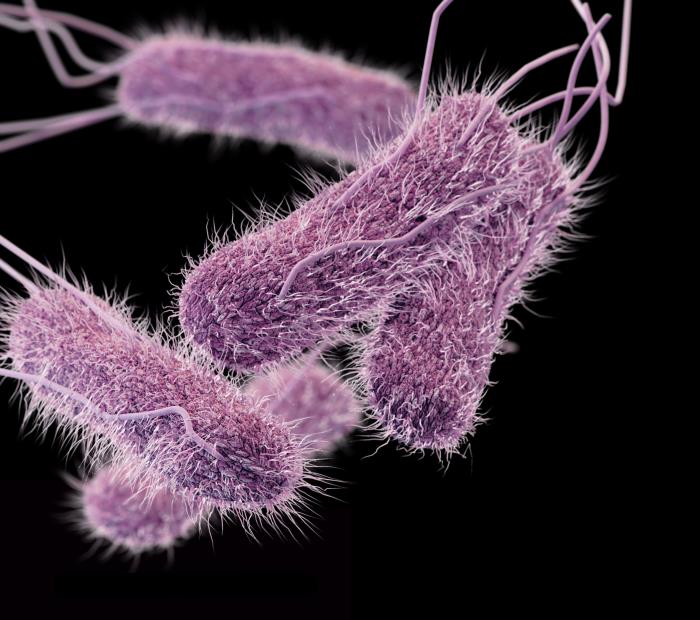
Pork head meat may harbor Salmonella and contaminate other carcass byproducts during harvest and fabrication. A large pork processing plant in the United States was sampled bimonthly for 11 months to determine the concentration, prevalence, seasonality, serotype diversity, and antimicrobial susceptibility of Salmonella enterica isolated from cheek meat and head trim of swine carcasses. Each collection consisted of 25 samples on 2 consecutive days in the morning and afternoon shifts, for a total of 100 cheek meat and 100 head trim samples each month. Tissues were cultured for Salmonella using restrictive media and enrichment techniques, and a subset of isolates was serotyped, analyzed for antimicrobial susceptibility, and genome sequenced. Salmonella post-enrichment prevalence did not differ ( P = 0.20) between cheek meat (63%) and head trim (66%). Post-enrichment prevalence differed ( P < 0.05) by month (January 94%; March 80%; May 54%; July 59%; September 47%; and November 55%), and by processing shift (morning 68%; afternoon 62%). The subset (n = 618) of isolates selected for serotyping yielded 21 distinct serotypes: Typhimurium (49%), Infantis (10%), Heidelberg (8%), I 4,[5],12:i- (8%), and 17 other types (≤ 5%). A total of 407 multidrug-resistant (MDR; resistance to 3 or more antibiotic classes) isolates were identified. There were 120 isolates that exhibited the penta-resistant ACSSuT phenotype. In addition, 113 isolates exhibited decreased susceptibility to ciprofloxacin (DSC; MIC ≥ 0.12 µg/mL). Resistance genes bla CARB , bla SHV , bla TEM , aac(6′)-Ib-cr , qnrB , sul2 , and dfrA were expressed in numerous MDR Salmonella isolates. The data from the present study suggest that pork products from the head, as compared to data reported for carcasses, may have a relatively high prevalence of Salmonella with diverse serotypes and MDR.
The purpose of this study was to determine the efficacy of spray application of chlorinated water before harvest on the population of Salmonella enterica Typhimurium and Escherichia coli O157:H7 on radish microgreens. The transfer of abiotic surrogate to radish microgreens was also evaluated to track possible pathogen contamination spread by inoculating seed and growth media. During growth, microgreens inoculated with strains of pathogens were sprayed with chlorinated water at three different concentrations (0.50, 1.00, and 2.00 ± 0.05 ppm free chlorine). Spray application of chlorinated water was performed on microgreens once (day 9), twice (day 8 and 9), three (day 7, 8, and 9), and four times (day 6, 7, 8, and 9). Microgreens were harvested 12 hr after the last application of chlorinated water. Salmonella and E. coli O157:H7 populations were reduced with the increase in chlorine concentration. Chlorinated water reduced Salmonella and E. coli O157:H7 populations up to 1.1 log CFU/g (p < .05) and 0.9 log CFU/g (p > .05), respectively. Images taken under UV illumination provided the visualization of abiotic surrogate spread on cotyledon and upper hypocotyl (all edible parts) of radish microgreen plants regardless of seed or growth media inoculation. Scanning Electron Microscopy showed the presence of abiotic surrogate and generic E. coli on microgreen leaves. Spray application of chlorinated water during microgreen growth may help to reduce microbial load but cannot be used as the only control measure.
Posted in Decontamination Microbial, E.coli O157, E.coli O157:H7, Food Micro Blog, Food Microbiology, Food Microbiology Blog, Food Microbiology Research, Food Microbiology Testing, Food Technology, microbial contamination, Microbiological Risk Assessment, Microbiology, Microbiology Investigations, Research, Salmonella, Technology
The aim of the present study was the determination of Listeria monocytogenes , competitive microbiota, microbial hygiene indicators and physico-chemical parameters in the typical Mediterranean Style fermented sausages “Salsiccia Sarda” . A batch of “Salsiccia Sarda” (25 samples) naturally contaminated by L. monocytogenes and vacuum packaged after 24 days of ripening was included in the study. Fifteen samples stored at 8° C were analysed after 13, 90 and lastly at the end of shelf-life, after 180 days from vacuum packaging. Ten vacuum packaged samples were stored at 12°C in a domestic fridge simulating temperature abuse and were evaluated at the end of the shelf-life. Samples were subjected to physico-chemical analysis (pH and aw) and investigated for the presence and enumeration of L. monocytogenes . Competitive microbiota, Lactic Acid Bacteria (LAB) and Coagulase negative Staphylococci (CNS), and microbial hygiene indicators (Total mesophilic bacterial counts, Enterobacteriaceae, Enterococcuss spp. and Staphylococcus aureus ) were determined in all the samples. Although a decreasing trend in L. monocytogenes prevalence was observed through the shelf-life, the detection of the pathogen in fermented sausages confirms the ability of L. monocytogenes to overcome the hurdles of the manufacturing process. The results of the present study highlight the importance to carefully evaluate the “Salsiccia Sarda” production process by Food Business Operators (FBOs) in order to maintain unfavourable conditions for the growth of L. monocytogenes .
Posted in Decontamination Microbial, Enterobacteriaceae, Enterococcus, Food Micro Blog, Food Microbiology, Food Microbiology Blog, Food Microbiology Research, Food Microbiology Testing, LAB, lactic acid bacteria, Listeria, Listeria monocytogenes, microbial contamination, Microbiological Risk Assessment, Microbiology, Microbiology Investigations, Research, Staphylococcus aureus


