Category Archives: Food Micro Blog

Research – Prevalence and levels of Campylobacter in broiler chicken batches and carcasses in Ireland in 2017–2018

Science Direct

Highlights

•

Provides valuable qualitative and quantitative data on Campylobacter in Irish Broilers.

•

Study demonstrates improvements and progress made in the Irish poultry industry.

•

Study provides indications of several factors on Campylobacter contamination rates.

Abstract

In 2008, an EU wide baseline survey of broilers revealed a high Campylobacter prevalence. To assist with industry-wide controls, updated data were required. The primary objective of this study was to establish up-to-date data on Campylobacter carriage and carcass contamination in Irish broilers. Monthly samples were collected from the three largest broiler processing plants in Ireland over a twelve-month period. Samples were taken from both first and final thin birds (partial and full depopulation) from 358 batches of broilers. From each batch, a composite sample of 10 caecal contents (n = 358) and 5 neck skins (n = 1790) were collected and numbers of Campylobacter in each sample were determined. Of the 1790 neck skin samples tested, 53% were Campylobacter positive. Campylobacter was detected in the caecal contents of 66% of all batches tested. Depopulation and/or age had a significant effect on Campylobacter prevalence with 67% of final thin broilers yielding Campylobacter-positive neck skin samples in contrast to 38% of first thin broilers that yielded positive neck skin samples (P ≤ 0.002). A significant seasonal variation was observed in the rate of Campylobacter-positive caecal samples with higher prevalence seen in July (85%) than the colder months of November (61%), December (50%), January (61%) March (57%) and April (59%). Neck skin samples were 7 times more likely to be Campylobacter positive if the caecal contents from the same batch were positive (odds ratio = 7.1; P ≤ 0.0001). The decrease in Campylobacter prevalence observed in neck skin and caecal contents demonstrates the improvements and progress made in reducing prevalences of this important enteropathogen in the Irish poultry industry since the 2008 EU baseline survey. It also provides further supporting data on the impact of thinning, the processing environment and season on Campylobacter prevalence.

Czech Republic – Scamorza bianca – Italian cheese with smoked flavor – Mould/Mold

Potravinynapranyri

Place of inspection:
Moravska Trebova ( Brnenska 1587/65, 57101 Moravska Trebova )
ID: 26178541
Food group: Milk and milk products / Cheese

Scamorza bianca – Italian cheese with smoked flavor
Category: Dangerous food
Unsatisfactory parameter:

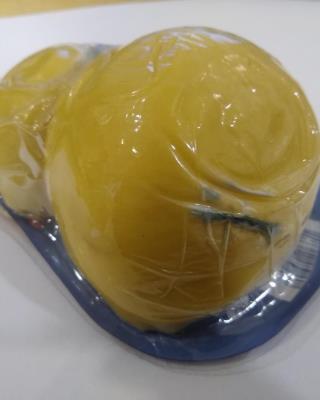
mold visible to the eye

In all inspected packages, the presence of mold visible to the naked eye was found under the intact packaging. Food is not considered safe if it shows signs of spoilage.

During the inspection, unsatisfactory storage temperatures of this product were not found. The product has not expired.

Lots: L22034
Date of minimum durability: 04/04/2022
Packaging: PP foil
Quantity of product in package: 300 g
Producer: Diano Casearia SpA, Via Cavarelli, 5, Sassano, Italy
Country of origin:  Italy
Sampling date: March 30, 2022
Reference number: 22-000133-CAFIA-CZ
The sample was found by an official inspection of the State Agricultural and Food Inspection Authority.

Czech Republic – Scamorza bianca – Italian cheese with smoked flavor – Mold/Mould

Potravinynapranyri

Illustration photo no. 1 Illustration photo no. 2

Place of inspection:
Moravska Trebova ( Brnenska 1587/65, 57101 Moravska Trebova )
ID: 26178541
Food group: Milk and milk products / Cheese

Scamorza bianca – Italian cheese with smoked flavor
Category: Dangerous food
Unsatisfactory parameter:

mold visible to the eye

In some of the inspected packages, the presence of mold visible to the naked eye was found under the intact packaging. Food is not considered safe if it shows signs of spoilage.

During the inspection, unsatisfactory storage temperatures of this product were not found. The product has not expired.

Lots: L22028
Date of minimum durability: 31/03/2022
Packaging: PP foil
Quantity of product in package: 300 g
Producer: Diano Casearia SpA, Via Cavarelli, 5, Sassano, Italy
Country of origin:  Italy
Sampling date: March 30, 2022
Reference number: 22-000135-CAFIA-CZ
The sample was found by an official inspection of the State Agricultural and Food Inspection Authority.

Czech Republic – Scamorza bianca – Italian cheese – Mold/Mould

Potravinynapranyri

Illustration photo no. 1  Illustration photo no. 2

Place of inspection:
Moravska Trebova ( Brnenska 1587/65, 57101 Moravska Trebova )
ID: 26178541
Food group: Milk and milk products / Cheese

Scamorza bianca – Italian cheese
Category: Dangerous food
Unsatisfactory parameter:

mold visible to the eye

In all inspected packages, the presence of mold visible to the naked eye was found under the intact packaging. Food is not considered safe if it shows signs of spoilage.

During the inspection, unsatisfactory storage temperatures of this product were not found. The product has not expired.

Lots: L22028
Date of minimum durability: 31/03/2022
Packaging: PP foil
Quantity of product in package: 300 g
Producer: Diano Casearia SpA, Via Cavarelli, 5, Sassano, Italy
Country of origin:  Italy
Sampling date: March 30, 2022
Reference number: 22-000136-CAFIA-CZ
The sample was found by an official inspection of the State Agricultural and Food Inspection Authority.

France- Chipolatas sold in the traditional butcher’s department – Salmonella

Gov france

Identification information of the recalled product

  • Product category Food
  • Product subcategory Meats
  • Product brand name Unbranded
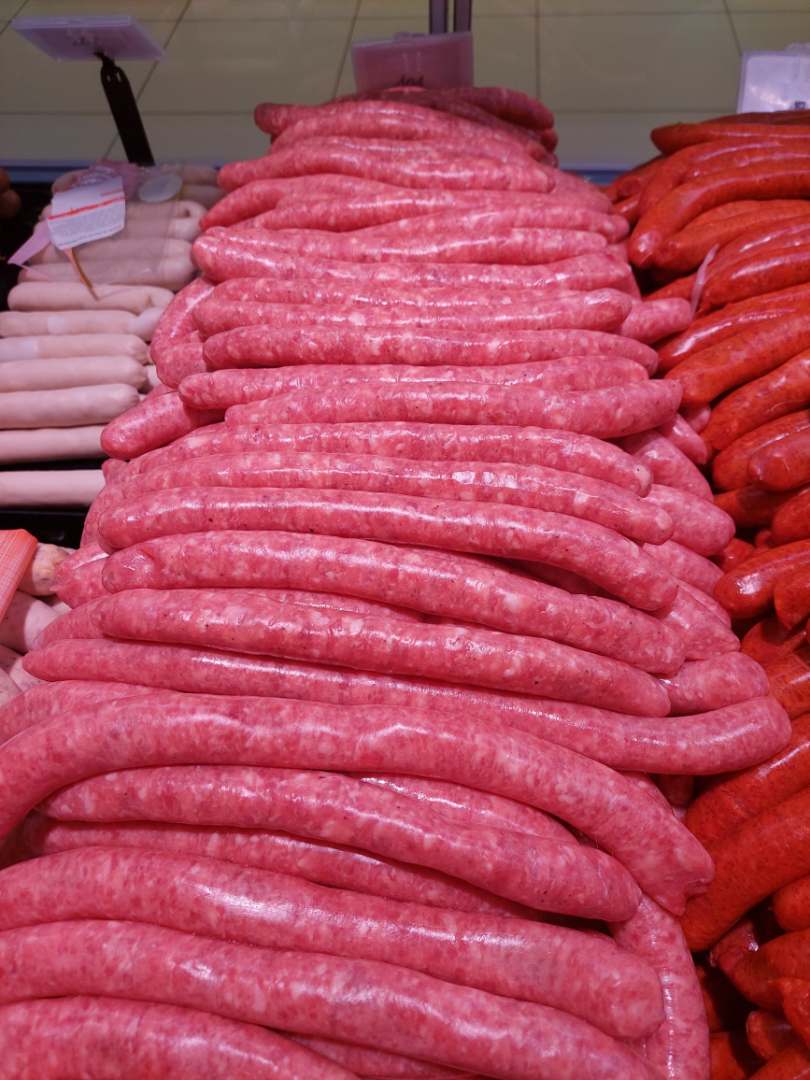
  • Model names or references Chipolatas sold in the traditional butcher’s department
  • Identification of products
    Batch Date
    chipolatas sold in the traditional department Use-by date 30/04/2022
  • Packaging assisted sale
  • Marketing start/end date From 04/26/2022 to 04/30/2022
  • Storage temperature Product to be stored in the refrigerator
  • Further information traditional chipolata
  • Geographic area of ​​sale51530 Pierry
  • Distributors Center E.leclerc Pierry

Practical information regarding the recall

  • Reason for recall Salmonella detection
  • Risks incurred by the consumer Salmonella spp (causative agent of salmonellosis)

France – TRADITIONAL BLACK PUDDING BREAST – Listeria monocytogenes

Gov france

Identification information of the recalled product

  • Product category Food
  • Product subcategory Meats
  • Product brand name ANDRE LOUSSOUARN
  • Model names or references TRADITIONAL BLACK PUDDING BREAST
  • Identification of products
    Batch Date
    22144 Use-by date between 04/24/2022 and 04/27/2022
  • Products List 2. CONSUMER_INFORMATION_Loussouarn.pdf Enclosed
  • PackagingPACKAGING X 1 PIECE OF APPROXIMATELY 0.93 KG – SALE AT THE CUTTING/TRAD DEPARTMENTS
  • Marketing start/end date From 04/14/2022 to 04/27/2022
  • Storage temperature Product to be stored in the refrigerator
  • Health mark FR 29.125.020 EC
  • Geographic area of ​​sale Departments: FINISTERE (29), ILLE-ET-VILAINE (35), LOIRE-ATLANTIQUE (44), MORBIHAN (56)
  • Distributors INTERMARCHE – SUPER U – LECLERC – CASINO – BUTCHERS/GROCERIES/CREPERIE – USEFUL – YOUR MARKET – NEARBY – CARREFOUR
  • List of points of sale06.05.2022.LIST_OF_POINTS_DE_VENTE_-_BOUDIN_NOIR_TRAD_BRASSE_LOT_22144.pdf

Practical information regarding the recall

  • Reason for recall Detection of Listeria monocytogenes
  • Risks incurred by the consumer Listeria monocytogenes (causative agent of listeriosis)

Sabah – Food poisoning: 10 clusters detected in Sabah during fasting month, only two linked to bazaars

The Star

KOTA KINABALU: Sabah recorded 10 food poisoning clusters involving 189 individuals throughout the fasting month, says Datuk Dr Rose Nani Mudin (pic).

The state Health director said from these cases reported between April 3 and May 1, only two clusters were related to Ramadan bazaars.

“The patients involved have mostly received treatment and recovered from food poisoning,” she said in a statement late Thursday (May 5).

She said none were hospitalised due to food poisoning.

Dr Rose said these cases were detected during ongoing integrated operations on bazaar stalls throughout the fasting month.

She said the main contributors to these cases were unhygienic food handling and food contamination.

“We also conducted activities and operations to monitor the spread of water and food borne transmittable diseases,” she said.

Research – Researchers study use of blue light technology for foodborne outbreaks

National Hog Farmer

Researchers from the University of Georgia Center for Food Safety are beginning a new study to investigate the effectiveness of antimicrobial blue light technology to reduce the foodborne pathogens that cause food poisoning.

When used as a means of disinfecting surfaces in a hospital setting, antimicrobial blue light technology has shown promising results, but little research has yet been done to explore its potential efficacy to control foodborne pathogens.

Through a three-year, $599,900 grant awarded by the U.S. Department of Agriculture’s National Institute of Food and Agriculture, UGA College of Agricultural and Environmental Sciences researchers will test the technology to uncover possible applications in the food production process.

Despite industry efforts, the number of foodborne infections has remained steady and, in some cases, has increased in recent years according to the Centers for Disease Control and Prevention (CDC).

Large-scale outbreaks and recalls still occur, particularly due to environmental contamination — like food preparation and processing surfaces — with Salmonella enterica and Listeria monocytogenes, both of which can cause illness and even death.

Most food manufacturers use chemical sanitizers on food preparation surfaces to help control the spread of foodborne pathogens.

This is typically effective in easy-to-reach areas, but areas that are hard to reach may not receive the same degree of sanitation.

These hard-to-reach places sometimes harbor biofilms, which are clusters of microorganisms such as bacteria that are hard to eliminate. The inadvertent spread of these microorganisms can occur during food production both by humans and machinery. Viruses pose a further challenge as many, such as norovirus, can survive on a variety of surfaces for long periods of time.

Belgium – Original Cracker Nuts from the Nagaraya brand – Aflatoxin

AFSCA

FASFC recall
Product: Original Cracker Nuts from the Nagaraya brand.
Problem: Aflatoxin content too high.
The FASFC is withdrawing the Original Cracker Nuts (160 g) of the Nagaraya brand from sale and recalling them from consumers due to an excessively high aflatoxin content.

This recall is being issued in response to a RASFF (Rapid Alert System for Food and Feed) alert.

The FASFC asks not to consume these products and to bring them back to the point of sale where they were purchased.


Product Description: Product

Name: Original Cracker Nuts
Brand: Nagaraya Best Before
Date (BDD): 18/07/2023
Batch Number: 000049798
Weight: 160g.
Type of packaging: plastic bag

This product was sold via several points of sale:

Kam Yuen Supermarket NV– Rue de la Vierge Noire 2-4, 1000 Brussels
Ofeljay Store – Sint-Salvatorstraat 61/2, 9000 Ghent
Sun Wah Supermarket – Van Wesenbekestraat 16-18, 2050 Antwerp

For any further information , you can contact the contact point FASFC for consumers: 0800/13.550 or pointdecontact@afsca.be .

Mallorca – Six hospitalised in Palma with Salmonella

Majorca Daily Bulletin

Six people have been hospitalised in Palma with salmonella.

The victims were infected after eating tortilla at a restaurant on the outskirts of the El Terreno neighbourhood of the city.

The Health department has launched an investigation to determine whether there are any other problems at the restaurant.

Hospitals and Health Centres must report all salmonella cases to the Ministry of Health, who carry out a survey to determine the source of the outbreak.

In August 2019, a Japanese restaurant in Calle Blanquerna was temporarily closed after a salmonella outbreak affected more than 100 people.