Category Archives: Food Micro Blog

Japan – Escherichia coli O157 outbreak in Kyoto Prefecture, Japan.

Minyu

Kyoto Prefecture announced on the 15th that a woman in her 90s who complained of diarrhea and abdominal pain after eating beef yukhoe sold by MEAT & FRESH TAKAMI, a meat dealer in Uji City, Kyoto Prefecture, died. Enterohemorrhagic E. coli O157 was detected in the woman’s stool.

In addition, 22 men and women between the ages of 9 and 87 who ate yukhoe and roast beef at this restaurant complained of similar symptoms, and O157 was detected in 12 people including asymptomatic people. The prefectural government determined that these foods were the cause of the food poisoning.

 On August 27, the deceased woman ate yukhoe sold as “rare steak” at home, and developed symptoms on September 2. She died in hospital on the 15th. Twenty-two ate from August 21-26.
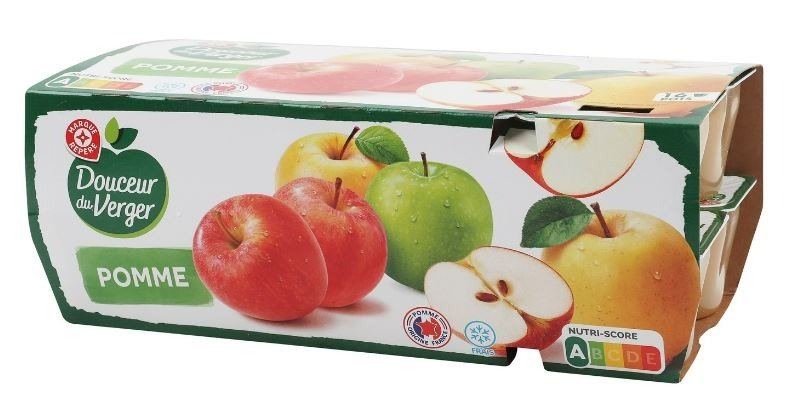
France – APPLE FRUIT DESSERT X16- Mycotoxin – Patulin

Gov france

Identification information of the recalled product

  • Product category Feed
  • Product subcategory Fruits and vegetables
  • Product brand name SWEETNESS OF THE ORCHARD
  • Model names or references APPLE FRUIT DESSERT X16
  • Identification of products
    GTIN Batch Date
    3564700198254 LF2205691 Date of minimum durability 01/25/2023
  • Products Listposter_reminder_DESSERT_DE_FRUIT_POMME_X16.pdfAttachment
  • Packaging16 CUPS OF 100G
  • Marketing start/end date From 05/08/2022 to 19/09/2022
  • Storage temperature Product to be stored in the refrigerator
  • Further information Only products bearing the additional code 08 following the barcode are affected by the recall.
  • Geographic area of ​​sale Whole France
  • Distributors E.LECLERC

Practical information regarding the recall

  • Reason for recall Presence of Patulin beyond regulatory limits
  • Risks incurred by the consumer Patulin
  • Additional description of the risk Mycotoxins are substances produced by microscopic fungi. These substances can present a health risk in the event of significant and repeated consumption over the long term.

France – 40 puffs 7cm with butter- Mold/Mould

Gov france

Identification information of the recalled product

  • Product category Feed
  • Product subcategory Others
  • Product brand name PIDY
  • Model names or references40 puffs 7cm with butter – REF 830.50.040
  • Identification of products
    GTIN Batch Date
    0020176830355 2022224945 Date of minimum durability 30/06/2023
  • Products List20220914_RECALL_for_moulds_v2.pdfAttachment
  • Packaging white cardboard with window 40x30x12.7cm
  • Marketing start/end date From 08/10/2022 to 09/13/2022
  • Storage temperature Product to be stored at room temperature
  • Geographic area of ​​sale Whole France
  • DistributorsPretagarnir.com
  • List of points of saleLIST_delivered_customers_EN.pdf

Practical information regarding the recall

  • Reason for recall Risk of presence of mold
  • Risks incurred by the consumer Manufacturing defect, sealing defect (eg: micro leaks, defective heat sealing) or packaging anomalies

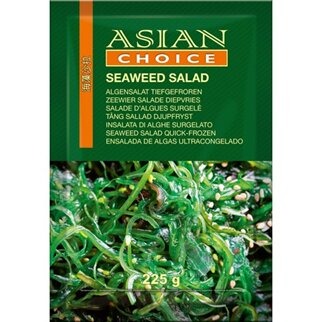
France – Wakame Salad- Hepatitis E

Gov france

Identification information of the recalled product

  • Product category Feed
  • Product subcategory Others
  • Product brand name asian choice
  • Model names or referencesDV8010 225g Expiry date:25-07-2023
  • Identification of products
    GTIN Batch Date
    8717677865734 2111040038 Use-by date 07/25/2023
  • Marketing start/end date From 06/12/2021 to 15/02/2022
  • Storage temperature Product to keep in the freezer
  • Geographic area of ​​sale Saint Etienne
  • Distributors international store

Practical information regarding the recall

  • Reason for recall Presence of type E hepatitis
  • Risks incurred by the consumer Hepatitis E virus
  • Additional description of the risk there is a limited health risk of contamination by the virus.

France – HELVA TAHIN PISTACHIO 300G- Slmonella

Gov france

Identification information of the recalled product

  • Product category Feed
  • Product subcategory Sweet products
  • Product brand name EKONOMIK
  • Model names or references EKONOMIK TAHIN HELVA PISTACHIO 300G
  • Identification of products
    Batch Date
    L16B22 Use-by date 02/29/2024
  • Packaging Transparent and plastic tray, lid of the packaging coloured in dark green background and the format is 300g
  • Marketing start/end date From 02/05/2022 to 15/09/2022
  • Storage temperature Product to be stored at room temperature
  • Further information Helva is a pastry composition that is made from tahini (sesame cream)
  • Geographic area of ​​sale Departments: ISERE (38)
  • Distributors IYI MARKET GRENOBLE (38100), IYI MARKET Saint Martin d’Hères (38400) and GANI MARKET Echirolles (38130)

Practical information regarding the recall

  • Reason for recall improper consumption due to Salmonella contamination
  • Risks incurred by the consumer Salmonella spp (causative agent of salmonellosis)

Research – Zearalenone and Its Masked Forms in Cereals and Cereal-Derived Products: A Review of the Characteristics, Incidence, and Fate in Food Processing

MDPI

Zearalenone (ZEA) is known as a Fusarium-produced mycotoxin, representing a risk to cereal food safety with repercussions for economies and worldwide trade. Recent studies have reported the co-occurrence of ZEA and masked ZEA in a variety of cereals and cereal-based products, which may exert adverse effects on public health due to additive/synergistic interactions. However, the co-contamination of ZEA and masked ZEA has received little attention. In order to minimize the threats of co-contamination by ZEA and masked ZEA, it is necessary to recognize the occurrence and formation of ZEA and masked ZEA. This review focuses on the characteristics, incidence, and detection of ZEA and its masked forms. Additionally, the fate of ZEA and masked ZEA during the processing of bread, cake, biscuits, pasta, and beer, as well as the ZEA limit, are discussed. The incidence of masked ZEA is lower than that of ZEA, and the mean level of masked ZEA varies greatly between cereal samples. Published data showed a considerable degree of heterogeneity in the destiny of ZEA during cereal-based food processing, mostly as a result of the varying contamination levels and complicated food processing methods. Knowledge of the fate of ZEA and masked ZEA throughout cereal-based food processing may reduce the likelihood of severe detrimental market and trade ramifications. The revision of legislative limits of masked ZEA may become a challenge in the future. View Full-Text

Canada – K-Fresh Fresh Produce brand Enoki Mushroom recalled due to Listeria monocytogenes

CFIA

Summary

Product
Enoki Mushroom
Issue
Food – Microbial Contamination – Listeria
What to do

Do not consume, use, sell, serve, or distribute recalled products

Affected products

The affected product is being recalled from the marketplace due to possible Listeria monocytogenes contamination.

The recalled product has been sold in British Columbia and may have been distributed in other provinces and territories.

What you should do

  • If you think you became sick from consuming a recalled product, contact your healthcare provider
  • Check to see if you have recalled products
  • Do not consume, serve, use, sell, or distribute recalled products
  • Recalled products should be thrown out or returned to the location where they were purchased

Food contaminated with Listeria monocytogenes may not look or smell spoiled but can still make you sick. Symptoms can include vomiting, nausea, persistent fever, muscle aches, severe headache and neck stiffness. Pregnant women, the elderly and people with weakened immune systems are particularly at risk. Although infected pregnant women may experience only mild, flu-like symptoms, the infection can lead to premature delivery, infection of the newborn or even stillbirth. In severe cases of illness, people may die.

France – Sesame Tahini (sesame paste)-Salmonella

Gov france

Identification information of the recalled product

  • Product category Feed
  • Product subcategory Soups, sauces and condiments
  • Product brand name ALGOTA
  • Model names or references Sesame Tahini (sesame paste)
  • Identification of products
    Batch Date
    P1/2021 Best before date 31/01/2023
  • Products ListStocks_Tahina_(sesame_cream)_Algota_400g.pdfAttachment
  • Packaging400 gr plastic jar with a screw cap
  • Marketing start/end date From 07/27/2021 to 08/12/2022
  • Storage temperature Product to be stored at room temperature
  • Geographic area of ​​sale Whole France
  • Distributors SEVERAL.. CONSULT THE FILE
  • List of points of saleTahina_(sesame_cream)_Algota_400g.pdf

Practical information regarding the recall

  • Reason for recall Detection of SALMONELLA
  • Risks incurred by the consumer Salmonella spp (causative agent of salmonellosis)

Research – Interactions Between Infectious Foodborne Viruses and Bacterial Biofilms Formed on Different Food Contact Surfaces

Springer

Bacterial biofilms contribute to contamination, spoilage, persistence, and hygiene failure in the food industry, but relatively little is known about the behavior of foodborne viruses evolving in the complex communities that make up biofilm. The aim of this study was to evaluate the association between enteric viruses and biofilms on food contact surfaces. Formed biofilms of mono- and multispecies cultures were prepared on glass, stainless steel, and polystyrene coupons and 105 pfu/ml of murine norovirus, rotavirus, and hepatitis A virus were added and incubated for 15 min, 90 min, and 24 h. The data obtained clearly demonstrate that the presence of biofilms generally influences the adhesion of enteric viruses to different surfaces. Many significant increases in attachment rates were observed, particularly with rotavirus whose rate of viral infectious particles increased 7000 times in the presence of Pseudomonas fluorescens on polystyrene after 24 h of incubation and with hepatitis A virus, which seems to have an affinity for the biofilms formed by lactic acid bacteria. Murine norovirus seems to be the least influenced by the presence of biofilms with few significant increases. However, the different factors surrounding this association are unknown and seem to vary according to the viruses, the environmental conditions, and the composition of the biofilm.

Research – Prevalence and Characterization of Shiga Toxin Producing Escherichia coli Isolated from Animal Feed in Croatia

MDPI

A survey on prevalence and number of Shiga toxin-producing Escherichia (E.) coli (STEC) in animal feed was carried out over a period of nine years in the Republic of Croatia. A total of 1688 feed samples were collected from feed factories and poultry farms. Analysis included two standard procedures: sample enrichment and (a) immunomagnetic separation and plating on two selective media; or (b) plating on two selective media. Confirmation of STEC included morphological examination, biochemical tests, serotyping, and polymerase chain reaction. Morphological and biochemical characterization revealed 629 E. coli strains. Further serological screening method revealed 78 STEC and EPEC serotypes, while only 27 strains were confirmed as STEC with PCR. All positive samples (1.6%) originated from poultry farms and contained combination of virulence genes: eaeA, stx1, and/or stx2. Since the presence of stx (especially stx2) and eae are identified as risk factors for development of severe diseases in humans, results of this survey indicate that avian sources of STEC infections might be one of those “undefined sources” of human illnesses. Further research is necessary for evaluation of risks posed by contaminated feed, poultry, and environment.