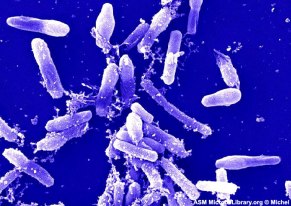
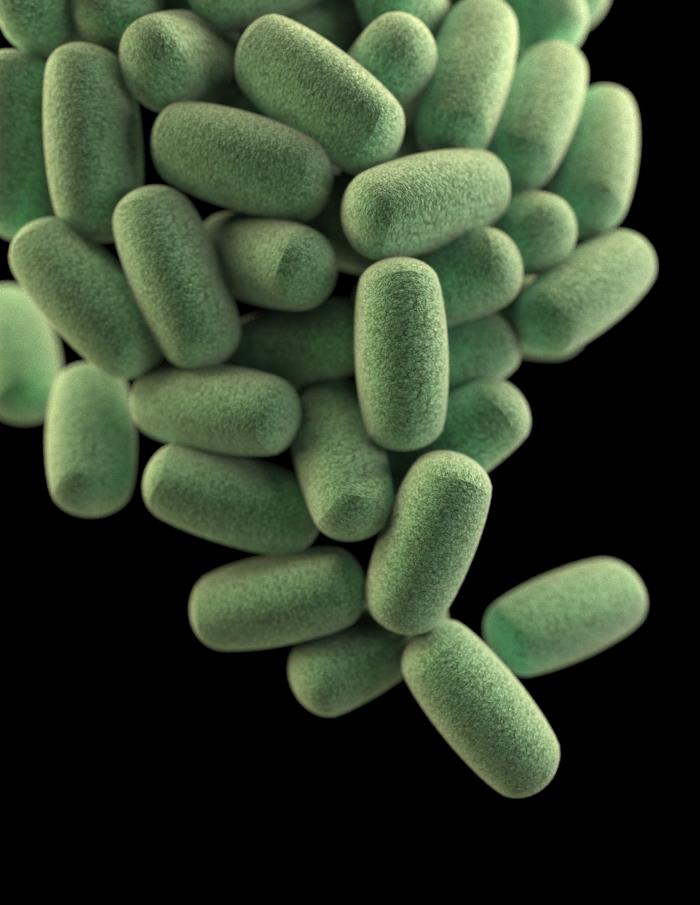
WASHINGTON, Oct. 29, 2021 – The U.S. Department of Agriculture’s Food Safety and Inspection Service (FSIS) is issuing a public health alert because Euro Foods, a Freeland, Penn. establishment, produced ready-to-eat (RTE) Italian-style salame stick products that may be contaminated with Salmonella. A recall was not requested because FSIS has not identified a specific contaminated lot or lots, and it is believed that potentially affected products are no longer available to be directly purchased by retail consumers.
The Italian-style salame stick items were produced prior to October 25, 2021. The following product is subject to the public health alert.
FSIS has been working with the Centers for Disease Control and Prevention (CDC) and state public health partners to investigate a multistate outbreak of 21 Salmonella I 4,[5],12:i:- illnesses in eight states with onset dates ranging from September 18, 2021 through October 3, 2021. The epidemiologic and traceback investigation identified that ill people consumed Citterio Italian-style Salame Sticks produced by Euro Foods Inc. FSIS continues to work with federal and state public health partners to determine if there are additional illnesses linked to these products.
Potential contamination with Listeria monocytogenes
Company Name:
Dole Fresh Vegetables, Inc.
Brand Name:
Dole & others
Product Description:
garden salad
Company Announcement
Monterey, CA–October 29, 2021–Dole Fresh Vegetables, Inc. is voluntarily recalling a limited number of cases of garden salad due to a possible health risk from Listeria monocytogenes. Dole Fresh Vegetables is coordinating closely with regulatory officials. No illnesses connected to any of the recalled lot codes have been reported to date. The products being recalled are:
Product Description
Lot Codes
UPC Code
Best If Used By
24 oz Dole™ Garden Salad
N28205A and N28205B
0-71430-01136-2
10-25-21
24 oz Marketside™ Classic Salad
N28205A and N28205B
6-81131-32895-1
10-25-21
12 oz Kroger™ Brand Garden Salad
N28211A and N28211B
0-11110-91036-3
10-25-21
12 oz Salad Classics™ Garden Salad
N28211A and N28211B
6-88267-18443-7
10-25-21
Listeria monocytogenes is an organism that can cause serious and sometimes fatal infections in young children, frail or elderly people, and others with weakened immune systems. Although healthy individuals may suffer only short-term symptoms such as high fever, severe headache, stiffness, nausea, abdominal pain and diarrhea, Listeria infection can cause miscarriages and stillbirths among pregnant women.
The lot code and Best if Used By date are located on the upper right corner of the bag and the UPC code is located on the bottom left corner of the back of the bag. The impacted products were distributed in AL, FL, GA, LA, MA, MD, NC, PA, SC, VA. This product is beyond its “Best If Used By” date and should no longer be on retail shelves. Consumers are advised to check product they have in their homes and discard any product matching these lot and UPC codes and Best if Used By dates.
This precautionary Recall notification is being issued due to a single sample of garden salad which yielded a positive result for Listeria monocytogenes in a random sample test conducted by the Department of Agriculture in Georgia.
No other Dole products (or products manufactured by Dole) are included in the recall. Only the specific garden salad products listed, with the exact Lot codes, UPC codes and Best if Used By dates identified above, are included in the recall. Consumers who have any remaining product with these Lot codes, UPC codes and Best if Used By dates should not consume it, but rather discard it. Retailers and consumers with questions may call the Dole Consumer Center at 1-800-356-3111, which is open 24 hours a day.
This afternoon, the Roanoke City and Alleghany Health Districts (RCAHD) announced that they learned that a third adult who was hospitalized with complications has died from hepatitis A. The RCAHD will disclose no further information about the individual to protect privacy and out of respect for the family.
“It is always with extreme sadness that we report the death of an individual,” said RCAHD health director, Cynthia Morrow, MD, MPH. “This heartbreaking loss of life illustrates how serious this outbreak is. Unfortunately, in this situation, we have seen many individuals experiencing severe disease, and in some cases, their symptoms have continued to progress over weeks.”
Hepatitis A is a preventable disease. RCAHD urges everyone to consistently practice good hand washing and to consider getting vaccinated, especially if they fall into a high-risk population.
At this time, RCAHD staff have identified a total of 49 confirmed primary cases, including 31 hospitalizations. A small number of cases are still under investigation. No new cases have been reported to RCAHD this week.
Ottawa, October 29, 2021 – The food recall warning issued on October 28, 2021 has been amended to correctly identify the affected products. The corrections for these products are marked by an asterisk (*). This additional information was identified during the Canadian Food Inspection Agency’s (CFIA) food safety investigation.
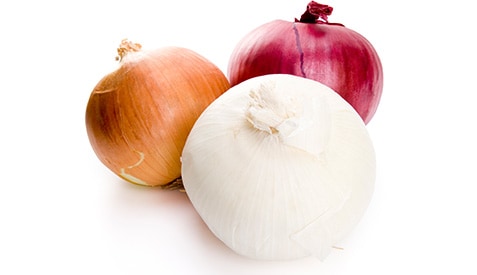
Industry is recalling Dorsey brand, MVP brand, Pier-C brand, and Riga Farms brand Onions, Product of Mexico from the marketplace due to possible Salmonella contamination. Consumers should not consume the recalled products described below or foods containing these raw onions. Retailers, distributors, manufacturers, and food service establishments such as hotels, restaurants, cafeterias, hospitals, and nursing homes should not serve, use, or sell the recalled products described below.
The following products have been sold in Ontario, Quebec, Nova Scotia, and may have been distributed in other provinces and territories.
These products may also have been sold in bulk or in smaller packages with or without a label and may not bear the same brand or product names as described below. The CFIA will continue its investigation into other possible importers and additional recalls may follow.
Recalled product
Brand
Product
Size
UPC
Codes
Additional information
Dorsey
Yellow Onions
Mesh sacks: 10 lb / 4.54 kg
0 33383 60004 8*
None – all products sold between July 7, 2021 and October 28, 2021, inclusively.
Product of Mexico
MVP
Yellow Onions
50 lb / 22.7 kg
None
197*
208*
221*
Product of Mexico
Pier-C
White Onions
2 lb / 0.907 kg
0 33383 60051 2
203*
209*
218*
228*
Product of Mexico. These onions may have been sold loose.
Pier-C
White Onions
25 lb
0 33383 45101 5*
214*
215*
217*
221*
223*
224*
228*
Product of Mexico. These onions may have been sold loose.
Pier-C
Yellow Onions
25 lb
0 33383 45095 7*
204*
210*
Product of Mexico. These onions may have been sold loose.
Pier-C
Yellow Onions
40 lb /18.15 kg
None
204*
208*
209*
210*
Product of Mexico. These onions may have been sold loose.
Riga Farms
Yellow Onions
3 lbs / 1.36 kg
0 33383 60002 4
321621
323521
323621*
Product is labelled as Product of USA, although the onions are Product of Mexico
What you should do
If you think you became sick from consuming a recalled product, call your doctor.
Check to see if you have the recalled products in your home or establishment. Recalled products should be thrown out or returned to the location where they were purchased. If you are unsure of the identity of the onions in your possession, check with your place of purchase.
Background
This recall was triggered by recalls in another country by Prosource Produce LLC of Hailey, Idaho and by Keeler Family Farms of Deming, NM. The CFIA is conducting a food safety investigation, which may lead to the recall of other products. If other high-risk products are recalled, the CFIA will notify the public through updated Food Recall Warnings.
The CFIA is verifying that industry is removing the recalled products from the marketplace.
Illnesses
There have been no reported illnesses in Canada associated with the consumption of these products.
The development of nitrite-free meat products is a current industrial concern. Many efforts have been attempted to replace the nitrite effect in cured meats colour formation and pathogens control. Our previous work evidenced that lactic acid and a cold ripening were the best hurdle technologies for nitrite-free fermented sausages from metabolomics. In the first part of this work, we investigated the effect of lactic acid compared with both two alternative additives (glucono-D-lactone and a mix of sodium di-acetate/sodium lactate) and with low-nitrite sausages, all of them following either cold or traditional ripening. For this purpose, microbiological analysis, pH, water activity (aw), and a sensory study were performed. All nitrite-free sausages (cold or traditional ripened) showed quality and safety traits similar to low-nitrite traditionally ripened ones used as control. In addition, sensory study revealed that sausages with lactic acid were the most preferred cold ripened samples, supporting that this is an optimal strategy for the production of nitrite-free sausages. We selected this product for further studies. Indeed, in the second part, we evaluated the impact of ripening, and other hurdle technologies as High Pressure Processing (HPP) and under-vacuum storage against Listeria innocua and Salmonella spp. by a challenge test. Maximal declines were obtained for ripening along with HPP (i.e., 4.74 and 3.83 log CFU/g for L. innocua and Salmonella spp., respectively), suggesting that HPP might guarantee nitrite-free sausages safety. Although the quality of raw materials remains essential, these hurdle strategies largely contributed to nitrite-free sausages safety, offering a promising tool for the meat industry.
The potential presence of spore-forming bacteria related to the Bacillus cereus group in Mexican chili powder elaborated from Capsicum annuum L. is of commercial and clinical interest, because chili powder is an essential spice in the Mexican diet and in diets around the globe. To facilitate detection and isolation of members of this group of spore-forming bacteria from Mexican chili powder samples, we identified colonies that grew on agar medium selective for Bacillus cereus sensu lato, supplemented with polymyxin B (10 µg/mL) and ampicillin (10 to 100 µg/mL). The presumptive B. cereus (s.l.) isolates were tested using a tRNACys-PCR-based approach and the results identified species related phylogenetically to B. cereus, B. thuringiensis, and B. toyonensis. Their toxigenic potential was assessed by serological tests to detect enterotoxins (Nhe and Hbl) and by PCR targeting the hemolysin BL (hbl) component C (hblC) and non-hemolytic enterotoxin component A (nheA). The antibiotic profiles of the isolates showed a high resistance to β-lactams (100% of the isolates), trimethoprim-sulfamethoxazole (100%), tetracycline (90%), erythromycin (77%), clindamycin (74%), and chloramphenicol (42%). Our results indicate the presence of B. cereus s.l. with toxigenic characteristics in Mexican chili powder. Because of the potential for these organisms to cause disease through their production of various toxins, and resistance to antibiotics, we recommend that a microbiological risk assessment must be considered in the Mexican regulatory requirements. View Full-Text
Compared to the period before the COVID-19 pandemic, the number of cases of almost all notifiable infectious diseases reported in 2020 decreased substantially. The most notable reduction was observed for human to human communicable diseases.
There was also a large reduction in gastrointestinal diseases. This was especially pronounced for rotavirus gastroenteritis, shigellosis and norovirus gastroenteritis
Despite the large decrease in the number of cases the gastrointestinal diseases norovirus, gastroenteritis, Campylobacter enteritis and rotavirus gastroenteritis, these infectious diseases continue to remain among the most frequently notified.
Sequencing helped to identify several listeriosis outbreaks across federal states through foodborne outbreak investigations. By comparing the isolates from the affected individuals and from the contaminated food, the probable vehicle of the outbreak could be identified.
Gram-positive bacteria are ancient organisms. Many bacteria, including Gram-positive bacteria, produce toxins to manipulate the host, leading to various diseases. While the targets of Gram-positive bacterial toxins are diverse, many of those toxins use a similar mechanism to invade host cells and exert their functions. Clostridial neurotoxins produced by Clostridial tetani and Clostridial botulinum provide a classical example to illustrate the structure–function relationship of bacterial toxins. Here, we critically review the recent progress of the structure–function relationship of clostridial neurotoxins, including the diversity of the clostridial neurotoxins, the mode of actions, and the flexible structures required for the activation of toxins. The mechanism clostridial neurotoxins use for triggering their activity is shared with many other Gram-positive bacterial toxins, especially molten globule-type structures. This review also summarizes the implications of the molten globule-type flexible structures to other Gram-positive bacterial toxins. Understanding these highly dynamic flexible structures in solution and their role in the function of bacterial toxins not only fills in the missing link of the high-resolution structures from X-ray crystallography but also provides vital information for better designing antidotes against those toxins. View Full-Text
Healthy cattle are considered the main reservoir of Shiga toxin-producing Escherichia coli (STEC) strains, so in some places in the world, products derived from beef are the most common source for disease outbreaks caused by these bacteria. Therefore, in order to guarantee that the beef produced by our slaughterhouses is safe, there is a need for continuous monitoring of these bacteria. In this study, 215 beef cuts were evaluated, including chilled vacuum-packed striploins (151 samples), rib eyes (30 samples), and knuckles (34 samples), from March to June, 2018. These meat samples were collected from the slaughter of unconfined cattle, being arbitrarily collected from eight meat-processing companies in São Paulo state, Brazil. Each sample was examined for the presence of STEC toxin type ( stx 1 and/or stx 2 genes) and also the E. coli attaching-and-effacing ( eae ) gene, which were determined by a multiplex PCR assay. Here we show that the major seven STEC strains (O serogroups O26, O45, O103, O111, O121, O145, and O157) are not detected in any of the analyzed beef cut samples; however, three of them presented the virulence eae gene. Therefore, the absence of STEC strains in the beef samples may be an indication of the low prevalence of this pathogen in the cattle herd on the farm, associated with good hygiene and handling practices adopted by the meat industry.