Research – What You Need to Know About Juice Safety -Microbiological Contamination

FDA

Juices provide many important nutrients, but consuming untreated juices can pose health risks to your family.

CFSAN Food Facts juice safety juicsaf2.jpg

Did You Know?

When fruits and vegetables are fresh-squeezed or used raw, bacteria from the produce can end up in your juice or cider. Unless the produce or the juice has been pasteurized or otherwise treated to destroy any harmful bacteria, the juice could be contaminated.

The U.S. Food and Drug Administration (FDA) has received in the past, reports of outbreaks of foodborne illness, often called “food poisoning,” that have been traced to drinking fruit and vegetable juice and cider that has not been treated to kill harmful bacteria.

While most people’s immune systems can usually fight off the effects of foodborne illness, children, older adults, pregnant women, and people with weakened immune systems (such as transplant patients and individuals with HIV/AIDS, cancer, or diabetes) risk serious illnesses or even death from drinking untreated juices.

Warning Labels

Most of the juice sold in the United States is pasteurized (heat-treated) to kill harmful bacteria. Juice products may also be treated by non-heat processes for the same purpose. However, some grocery stores, health food stores, cider mills, farmers’ markets, and juice bars sell packaged juice that was made on site that has not been pasteurized or otherwise treated to ensure its safety. These untreated products should be kept under refrigeration and are required to carry the following warning on the label:

WARNING: This product has not been pasteurized and therefore may contain harmful bacteria that can cause serious illness in children, the elderly, and persons with weakened immune systems. 

However, FDA does not require warning labels for juice or cider that is sold by the glass – for example, at apple orchards, farmers’ markets, roadside stands, juice bars, and some restaurants.


Follow These Simple Steps to Prevent Illness

When Purchasing Juice

  • Look for the warning label to avoid the purchase of untreated juices. You can find pasteurized or otherwise treated products in your grocers’ refrigerated sections, frozen food cases, or in non-refrigerated containers, such as juice boxes, bottles, or cans. Untreated juice is most likely to be sold in the refrigerated section of a grocery store.
  • Ask if you are unsure if a juice product is treated, especially for juices sold in refrigerated cases in grocery or health food stores, cider mills, or farmers’ markets. Also, don’t hesitate to ask if the labeling is unclear or if the juice or cider is sold by the glass.

When Preparing Juice At Home

  • Wash your hands for at least 20 seconds with soap and warm water before and after preparation.
  • Cut away any damaged or bruised areas on fresh fruits and vegetables. Throw away any produce that looks rotten.
  • Wash all produce thoroughly under running water before cutting or cooking, including produce grown at home or bought from a grocery store or farmers’ market. Washing fruits and vegetables with soap, detergent, or commercial produce wash is not recommended.
  • Scrub firm produce, such as melons and cucumbers, with a clean produce brush. Even if you plan to peel the produce before juicing it, wash it first so dirt and bacteria are not transferred from the surface when peeling or cutting into it.
  • After washing, dry produce with a clean cloth towel or paper towel to further reduce bacteria that may be present on the surface.

About Foodborne Illness

Know the Symptoms

Consuming dangerous foodborne bacteria will usually cause illness within 1 to 3 days of eating the contaminated food. However, sickness can also occur within 20 minutes or up to 6 weeks later. Although most people will recover from a foodborne illness within a short period of time, some can develop chronic, severe, or even life-threatening health problems.

Foodborne illness can sometimes be confused with other illnesses that have similar symptoms. The symptoms of foodborne illness can include:

  • Vomiting, diarrhea, and abdominal pain
  • Flu-like symptoms, such as fever, headache, and body ache

Research – The combined effect of green tea and peppermint oil against pathogenic bacteria to extend the shelf life of eggs at ambient temperature and the mode of action

Wiley Online

This work investigated the antimicrobial activities of green tea (GT) at 5 and 10.0% wt/vol and peppermint oil (PP) at 0.1, 0.15, and 0.2% wt/vol against major pathogen bacteria (Escherichia coli, Salmonella enteritidis, and Staphylococcus aureus) found on eggs at room temperature (30°C). The quality factors (weight loss, Haugh unit, albumen pH, egg yolk, and albumen index) of treated eggs were also measured while they were stored at room temperature for 14 days. A 9-point hedonic scale was used for sensory evaluation. Scanning electron microscopy was used to examine the morphology of bacteria cells to understand this study’s mechanism of action. It was found that combining 10% GT and 0.15% PP had complete antibacterial activity against all pathogenic bacteria investigated, and could extend the shelf life of treated eggs from 7 days (control) to at least 14 days. The treated egg’s coliforms (≤3.0 log10 colony-forming unit [CFU] g−1), E. coli (≤1.8 log10 CFU g−1), TVC (≤4.3 log10 CFU g−1), Salmonella spp., (not detected in 25 g), and S. aureus (not detected in 25 g) were better able to meet the microbiological criteria for egg after 14 days of storage, when compared to the control, which exceeded the criteria within 7 days. In addition, consumers rated egg acceptability as favorable by giving a sensory score ranging from like slightly to like moderately (~6.7). Furthermore, when compared to the control (6–7 days), all treated eggs retained their quality during storage for 14 days and met the microbiological criteria for egg in food standard (<4.7–6.0 log10 CFU g−1 for total visible count). Compound leakage from within the bacteria, which was the mode of action when GT and PP were combined, resulted in a wrinkled appearance of bacteria cells and serious defects in bacteria membrane morphology. These findings suggest that a sanitizing spray derived from GT and PP can extend the shelf life of eggs and ensure their safety for human consumption at room temperature without using a refrigerator.

France- Small Mixed Rouelle x8 – Listeria monocytogenes

Gov france

Identifying information for the recalled product

  • Product category Food
  • Product sub-category Milk and dairy products
  • Product brand name Peak
  • Names of models or references Small Mixed Rouelle x8 LOT: 20102114
  • Product identification
    GTIN Lot Dated
    3548780000386 20102114 Date of minimum durability 11/26/2021
  • Packaging bulk
  • Start date / End of marketing From 10/27/2021 to 10/27/2021
  • Storage temperature Product to be stored in the refrigerator
  • Health mark81,206,009
  • Further information4 units concerned Small Rouelle Blanche or Cendrée
  • Geographical sales area1 store concerned
  • Distributors Prim’Frais 44 avenue de Grésigne, 81170 Cordes-sur-Ciel

Practical information regarding the recall

  • Reason for recall Presence Listeria Monocytogenes
  • Risks incurred by the consumer Listeria monocytogenes (causative agent of listeriosis)

France- KIPPERS BY 2 EN 430 G UNDER AT – Listeria monocytogenes

Gov france

Identifying information for the recalled product

  • Product category Food
  • Product sub-category Fishery and aquaculture products
  • Product brand name Fournier son
  • Names of models or references Tray of kippers by 2 in 430gr under modified atmosphere
  • Product identification
    GTIN Lot Dated
    3324031661014 2128741 Use-by date 11/28/2021
  • Packaging430gr tray
  • Start date / End of marketing From 10/19/2021 to 10/30/2021
  • Storage temperature Product to be stored in the refrigerator
  • Health mark FR 62 193 100 EC
  • Geographical sales area Whole France
  • Distributors Leclerc, Uenseigne, CORA, DIS-FRAIS

Practical information regarding the recall

  • Reason for recall Listeria monocytogenes (causative agent of listeriosis)
  • Risks incurred by the consumer Listeria monocytogenes (causative agent of listeriosis)

USA – Salmonella Outbreak Linked to Italian-Style Meats – The Outbreak is Over

CDC

Cold smoked meat plate with pork chops, prosciutto, salami and bread sticks

Recalled Food

Fratelli Beretta brand prepackaged Uncured Antipasto trays

  • “Fratelli Beretta Uncured Antipasto prosciutto, soppressata, Milano salami, & coppa” 24-oz trays containing two 12-oz packages with “best by” dates on or before February 11, 2022 (UPC code 073541305316)

Products have the establishment number “EST. 7543B” inside the U.S. Department of Agriculture’s mark of inspection. See recall noticeexternal icon for more details.

Additionally, CDC continues to advise people not to eat any Fratelli Beretta brand Uncured Antipasto trays with “best by” dates on or before February 11, 2022.

What You Should Do

Check your fridge for recalled products or any other Fratelli Beretta brand Uncured Antipasto trays with “best by” dates on or before February 11, 2022. If you have any left:

  • Do not eat or cook them.
  • Throw them away or return them to where you bought them.
  • Wash surfaces and containers that may have touched the recalled product using hot soapy water or a dishwasher.

Always follow these four food safety steps to prevent getting sick from Salmonella: 

  • Clean: Wash your hands, utensils, and surfaces often.
  • Separate: Keep food that won’t be cooked separate from raw meat, poultry, and seafood.
  • Cook: Use a food thermometer to make sure you have cooked your food to a temperature high enough to kill germs.
  • Chill: Refrigerate perishable food (food that goes bad) within 2 hours. If the food is exposed to temperatures above 90°F (like a hot car or picnic), refrigerate it within 1 hour. Thaw food in the refrigerator, not on the counter.

Fast Facts

  • Illnesses: 40
  • Hospitalizations: 12
  • Deaths: 0
  • States: 17
  • Recall: Yes
  • Investigation status: Closed

USA – Core Investigation Tables – No new news!

FDA

Ukraine – Audit finds fruit contamination may go undetected in Ukraine – Microbial Contamination

Food Safety News

Microbiological contamination in fruit from Ukraine for export to Europe might not be detected, according to findings from an audit.

A DG Sante assessment in Ukraine in June 2021 focused on viruses and bacteria in fresh and frozen soft berries like raspberries and blueberries. DG Sante is the European Commission’s unit for food safety and health.

The audit found there was no official system for monitoring, sampling and analyzing fruit for export to the EU for microbial contaminants. This means any contamination during harvesting, handling and freezing will not be detected, said auditors.

The COVID-19 pandemic meant the audit was based on a review of documentation and control records, interviews with staff from the State Service of Ukraine for Food Safety and Consumer Protection plus presentations from the Ukrainian Berries Association.

Exports of soft fresh and frozen fruit from Ukraine to the EU included 18,266 tons of raspberries and 9,894 tons of cultivated blueberries in 2020. In the past year, only three border rejections for fruit from Ukraine have been raised on the RASFF portal – all were notified by Poland due to mold in frozen raspberries.

USA – Salmonella Outbreak Linked to Salami Sticks

CDC

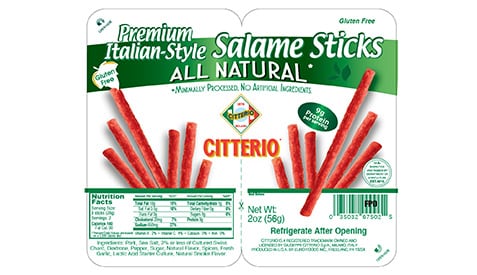
Do not eat, sell, or serve Citterio brand Premium Italian-Style Salame Sticks. They were sold at Trader Joe’s and Wegmans and may be sold at other grocery stores. This outbreak is especially concerning because most of the sick people are younger than 18.

Salami stick packaging


Fast Facts

  • Illnesses: 21  (1 new)
  • Hospitalizations: 6  (3 new)
  • Deaths: 0
  • States: 8
  • Recall: No
  • Investigation status: Active

Contaminated Food

Citterio brand Premium Italian-Style Salame Sticks

  • Sold at Trader Joe’s and Wegmans
  • May be sold at other stores

Fifteen people were interviewed about foods they ate before getting sick, and fourteen (93%) reported eating or maybe eating this product. Investigators are still working to determine if additional products may be contaminated.What You Should Do

  • Do not eat Citterio brand Premium Italian-Style Salame Sticks with any best-by date. Throw them away.
  • Wash items and containers that may have touched the product using hot soapy water or a dishwasher.
  • Call your healthcare provider if you have any of these severe Salmonella symptoms:
    • Diarrhea and a fever higher than 102°F
    • Diarrhea for more than 3 days that is not improving
    • Bloody diarrhea
    • So much vomiting that you cannot keep liquids down
    • Signs of dehydration, such as:
      • Not peeing much
      • Dry mouth and throat
      • Feeling dizzy when standing up

What Businesses Should Do

  • Do not sell or serve Citterio brand Premium Italian-Style Salame Sticks.
  • Wash and sanitize items and surfaces that may have come in contact with the product.

Symptoms of Salmonella

  • Most people infected with Salmonella experience diarrhea, fever, and stomach cramps.
    • Symptoms usually start 6 hours to 6 days after swallowing the bacteria.
    • Most people recover without treatment after 4 to 7 days.
  • Some people—especially children younger than 5 years, adults 65 years and older, and people with weakened immune systems—may experience more severe illnesses that require medical treatment or hospitalization.
  • For more information about Salmonella, see the Salmonella Questions and Answers page.

Germany – Organic tiger nut flour – Salmonella

LMW

Warning type: Food
Date of first publication: 10/28/2021
Product name: Organic tiger nut flour
Product pictures:

Organic tiger nut flour.JPG

ReformKontor GmbH & Co. KG

Manufacturer (distributor):

Distributor: ReformKontor GmbH & Co. KG, Ernst-Litfaß-Str. 16, 19246 Zarrentin

Reason for warning:

Detection of Salmonella spp.

Packaging Unit: 200 g
Durability: Best before May 20, 2022
Lot identification: 97269
Additional Information:

Salmonella disease manifests itself within a few days after infection with diarrhea, abdominal pain and occasionally vomiting and a slight fever. The symptoms usually subside on their own after several days. Infants, toddlers, the elderly and people with a weakened immune system in particular can develop more severe disease processes. People who have eaten this food and develop severe or persistent symptoms should seek medical attention and advise them of a possible salmonella infection. Seeking preventive medical treatment without symptoms does not make sense.

UK – Listeriosis associated with pre-prepared sandwich consumption in hospital in England, 2017

Cambridge Org

A case of listeriosis occurred in a hospitalised patient in England in July 2017. Analysis by whole genome sequencing of the Listeria monocytogenes from the patient’s blood culture was identified as clonal complex (CC) 121. This culture was indistinguishable to isolates from sandwiches, salads and the maufacturing environment of Company X which supplied these products widely to the National Health Service. Whilst an inpatient, the case was served sandwiches produced by this company on 12 occasions. No other cases infected by this type were detected in the UK between 2016 and 2020. Between 2016 and 2020, more than 3000 samples of food, food ingredients and environmental swabs from this company were tested. Listeria monocytogenes contamination rates declined after July 2017 from 31% to 0.3% for salads and 3% to 0% for sandwiches. A monophyletic group of 127 L. monocytogenes CC121 isolates was recovered during 2016–2019 and was used to estimate the time of the most recent common ancestor as 2014 (95% CI of between 2012 and 2016). These results represent persistent contamination of equipment, food contact surfaces and foods at a food manufacturer by a single L. monocytogenes strain. Colonisation and persistent contamination of food and production environments are risks for public health.