Category Archives: Salmonella

Research – Evaluation of microbial contamination in cold dishes and Prevalence of food-borne pathogens in the Jilin Province

Journal of Food Protection

In this study, we evaluated the microbial contamination status of cold dishes consumed by residents of Jilin Province and investigated to determine the incidence of four pathogenic bacteria in cold dishes. A total of 300 samples of cold dishes including meat, vegetable and mixed products, were collected from three different purchasing places: supermarkets, farmers’ markets and mobile vendors. Live bacteria were isolated using conventional culture methods. After separation, a quick and easy polymerase chain reaction (PCR) was used to detect Listeria monocytogenes , Staphylococcus aureus , Enterotoxic Escherichia coli and Salmonella . The results showed that the total number of microbial colonies in the vegetable samples exceeded the standard rate of 8%, and the total number of microbial colonies in the meat and mixed samples did not exceed the standard. The total microbial colony count exceeded the standard in all three different procurement sites, with the highest exceedance of 7.4% in the mobile vendor sites. The detection rates of Enterotoxigenic Escherichia coli , Staphylococcus aureus , L. monocytogenes and Salmonella among the four pathogenic bacteria detected in all samples were 4.3%, 3.3%; 3.0%; and 1.0%, respectively. This study can be used to qualitatively assess the microbiological quality associated with cold dishes. It provides data to support the detection of possible food safety problems.

Research -A trait-based framework for predicting foodborne pathogen risk from wild birds

Wiley Online

Recent foodborne illness outbreaks have heightened pressures on growers to deter wildlife from farms, jeopardizing conservation efforts. However, it remains unclear which species, particularly birds, pose the greatest risk to food safety. Using >11,000 pathogen tests and 1,565 bird surveys covering 139 bird species from across the western U.S.A., we examined the importance of 11 traits in mediating wild bird risk to food safety. We tested whether traits associated with pathogen exposure (e.g., habitat associations, movement, and foraging strategy) and pace-of-life (clutch size and generation length) mediated foodborne pathogen prevalence and proclivities to enter farm fields and defecate on crops. Campylobacter spp. were the most prevalent enteric pathogen (8.0%), while Salmonella and Shiga-toxin producing E. coli (STEC) were rare (0.46% and 0.22% prevalence, respectively). We found that several traits related to pathogen exposure predicted pathogen prevalence. Specifically, Campylobacter and STEC-associated virulence genes were more often detected in species associated with cattle feedlots and bird feeders, respectively. Campylobacter was also more prevalent in species that consumed plants and had longer generation lengths. We found that species associated with feedlots were more likely to enter fields and defecate on crops. Our results indicated that canopy-foraging insectivores were less likely to deposit foodborne pathogens on crops, suggesting growers may be able to promote pest-eating birds and birds of conservation concern (e.g., via nest boxes) without necessarily compromising food safety. As such, promoting insectivorous birds may represent a win-win-win for bird conservation, crop production, and food safety. Collectively, our results suggest that separating crop production from livestock farming may be the best way to lower food safety risks from birds. More broadly, our trait-based framework suggests a path forward for co-managing wildlife conservation and food safety risks in farmland by providing a strategy for holistically evaluating the food safety risks of wild animals, including under-studied species.

UK – Estimating deaths from foodborne disease in the UK for 11 key pathogens

NCBI

Objective

To estimate the number of deaths from foodborne disease in the UK from 11 key pathogens.

Design

Four different models were developed using data from a range of sources. These included enhanced surveillance, outbreaks, death certificates and hospital episode statistics data. For each model, median estimates were produced with 95% credible intervals (CrI). The results from the different models were compared.

Results

The estimates for foodborne deaths for each pathogen from the different models were consistent, with CrIs largely overlapping. Based on the preferred model for each pathogen, foodborne norovirus is estimated to cause 56 deaths per year (95% CrI 32 to 92), foodborne Salmonella 33 deaths (95% CrI 7 to 159), foodborne Listeria monocytogenes 26 deaths (95% CrI 24 to 28), foodborne Clostridium perfringens 25 deaths (95% CrI 1 to 163) and foodborne Campylobacter 21 deaths (95% CrI 8 to 47). The considerable overlap in the CrIs means it is not possible to make any firm conclusions on ranking. Most of these deaths occur in those aged over 75 years. Foodborne deaths from ShigellaCryptosporidiumGiardia, adenovirus, astrovirus and rotavirus are all rare.

Conclusions

We estimate that there are 180 deaths per year in the UK (95% CrI 113 to 359) caused by foodborne disease based on these 11 pathogens. While this is a small fraction of the estimated 2.4 million cases of foodborne illness per year it still illustrates the potential severity of these illnesses demonstrating the importance in continuing efforts to reduce these infections.

Keywords: infectious disease, CampylobacterSalmonella

Summary box

What is already known about this subject?

  • Foodborne disease is a common illness in the UK.

  • Previous research has estimated that there are 566 000 cases, 74 000 general practitioner presentations and 7600 hospital admissions related to foodborne disease from 13 known pathogens in UK; no estimate was made for deaths.

  • Campylobacter and norovirus are the most common foodborne pathogens in the UK.

  • Other common foodborne pathogens include Clostridium perfringens and Salmonella.

What are the new findings?

  • This study provides updated estimates of deaths for each of the 11 key foodborne pathogens considered; in total, these 11 pathogens cause 180 deaths per year in the UK (95% credible interval (CrI) 113 to 359).

  • Among them, Campylobacter, C. perfringens, Listeria monocytogenes, Salmonella and norovirus pathogens are responsible for over 98% of these deaths.

  • Ranking between these five is difficult due to overlapping CrIs.

How might it impact on clinical practice in the foreseeable future?

  • This highlights the potential severity of Salmonella, L. monocytogenesC. perfringensCampylobacter and norovirus, particularly in comparison with other infectious intestinal diseases that have a food source.

USA – FDA Core Outbreak Table Update

FDA

The FDA CORE Outbreak Table has six active food poisoning investigations this week; all but one has been identified or solved. The Salmonella Javiana outbreak, which was announced on November 24, 2021, is still not identified, and the number of people sickened in that outbreak has increased to 64.

Date
Posted
Reference
#
Pathogen
Product(s)
Linked to
Illnesses

(if any)
12/29/

2021

1052 E. coli
O157:H7
Packaged Salad
12/20/

2021

1039 Listeria
monocytogenes
Packaged Salad
12/15/

2021

1048 Listeria
monocytogenes
Packaged Salad
11/24/

2021

1044 Salmonella Javiana Not Yet
Identified
11/17/

2021

1043 E. coli
O157:H7
Spinach
9/15/

2021

1031 Salmonella
Oranienburg
Red, Yellow,
and White Onion

CPS – Research Project Funding 2022 – Bulb Onions

CPS

Assessing the potential for production practices to impact dry bulb onion safety

In 2020, the dry bulb onion industry faced their first significant outbreak of foodborne illness when red onions grown in California were epidemiologically linked to >1,000 cases of salmonellosis. Since then, industry and food safety experts have been scratching their heads to figure out how this could have happened. After review of outbreak data and consultation with various stakeholders, we have identified a small number of practices with the potential to contribute to a large-scale contamination event, through water or agricultural input contamination. We have designed field trials to determine the risks of using contaminated water source or other agricultural input when 1) applying crop protection sprays (pesticides and/or clay) and 2) during irrigation (overhead vs. drip). Our primary goal is to collect evidence demonstrating risks of these practices and to communicate our findings to relevant stakeholders to reduce the potential for outbreak like this from recurring in the future. We will share our findings via a broad outreach strategy that communicates with industry throughout the two-year study. Outreach activities culminate with the development and delivery of a workshop and best practices guide that enables growers to better understand risks and implement changes to minimize the likelihood of crop contamination.

CPS

Strategic approaches to mitigate Salmonella contamination of bulb onions

The proposal aims to address the recent multi-state Salmonella outbreak associated with red onion, resulting in nationwide recalls of onions and associated products. The outbreak highlights the pathogen’s ability to persist and survive on bulb onions during production, handling, or storage, causing significant concern to the onion produce industry. Although Salmonella’s persistence on other farm produce is documented, there is a general lack of knowledge on Salmonella’s behavior on bulb onions. We propose developing an onion-specific risk reduction plan by investigating Salmonella’s survival and growth on onion bulbs using different genetic backgrounds, nutritional compositions influenced by agronomic practices, seasons, and managed stress environments. Additionally, to understand the potential to serve as a transient host for transmission, we will investigate the effects of genetic, nutritional, and physiochemical characters on Salmonella survival and growth. This project will provide the industry with tools (1) to identify factors in the onion production and supply chain that may allow a Salmonella to persist, (2) identify varieties and agronomic practices that would minimize or eliminate its persistence, and (3) to help the produce industry in developing guidelines to manage risks of Salmonella in onions effectively.

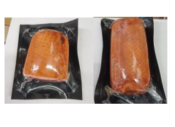
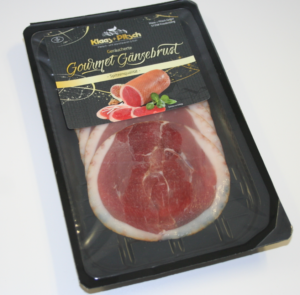
Luxembourg – GERÄUCHERTE GOURMET GÄNSEBRUST OF THE KLAAS + PITSCH BRAND – Salmonella

SAP

Last name Geräucherte Gourmet Gänsebrust
Brand Klaas + Pitsch Fleisch-und Wurstwaren
Unity 60 g
Date of Minimum Durability (DDM) 04/01/2022; 05/01/2022; 07/01/2022;

01/10/2022; 01/11/2022;

01/13/2022; 01/14/2022; 01/18/2022

Lot L457; L428; L429; L520
Last name Geräucherte Gourmet Gänsebrust
Brand Klaas + Pitsch Fleisch-und Wurstwaren
Unity 200 g
Date of Minimum Durability (DDM) 04/01/2022; 05/01/2022; 07/01/2022;

01/10/2022; 01/11/2022; 01/13/2022;

01/14/2022; 01/18/2022

Lot L447; L428; L448; L459; L510

Last name Gourmet Gänsebrust geräuchert ganze Stücke
Brand Klaas + Pitsch Fleisch-und Wurstwaren
Date of Minimum Durability (DDM) 04/01/2022; 05/01/2022;

07/01/2022; 01/10/2022;

01/11/2022; 01/13/2022;

01/14/2022; 01/18/2022

Lot L447; L520
Last name Gourmet Gänsebrust geräuchert halbe Stücke
Brand Klaas + Pitsch Fleisch-und Wurstwaren
Date of Minimum Durability (DDM) 04/01/2022; 05/01/2022;

07/01/2022; 01/10/2022;

01/11/2022; 01/13/2022;

01/14/2022; 01/18/2022

Lot L417; L447; L459

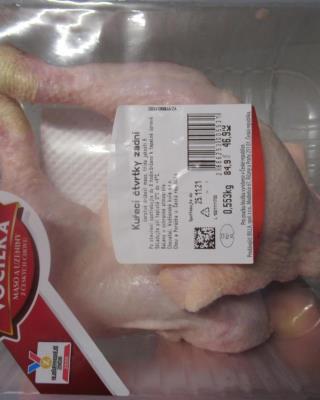
Czech Republic- Chicken quarters – Salmonella

Potravinynapranyri

Illustration photo no. 1

Place of inspection:
Prague 5 – Stodulky ( Jeremiasova 1239 / 7a, 155 00 Prague 5 – Stodulky )
ID: 00685976
Food group: Meat and meat products Packaged meat

Chicken quarters back
Category: Dangerous food
Unsatisfactory parameter:

Salmonella enteritidis

The product has detected the presence of the pathogenic bacterium  Salmonella enteritidis, which causes a disease called salmonellosis.

Lots: L 1001111700
Expiration date: 11/25/21
Packaging: Plastic tray with foil
Country of origin:  Czechia
Sampling date: Nov 23, 2021
Reference number: 21-000605-CAFIA-CZ
The sample was found by an official inspection of the State Agricultural and Food Inspection Authority.

Canada – Certain Save on Foods brand combo meals recalled due to Salmonella

CFIA

Summary

Product
Certain combo meals
Issue
Food » Microbial Contamination » Salmonella
What to do

Do not consume the recalled products

Affected products
Brand Product Size UPC Codes
Save on Foods Lemon chicken combo meal 450 g 0 056364 901057 Packed on 2021.DE.29
Best Before 2022.JA.02

Packed on 2021.DE.28
Best Before 2022.JA.01

Packed on 2021.DE.27
Best Before 2021.DE.31

Save on Foods Sweet & sour pork meal 450 g 0 056364 901064 Packed on 2021.DE.29
Best Before 2022.JA.02

Packed on 2021.DE.28
Best Before 2022.JA.01

Packed on 2021.DE.27
Best Before 2021.DE.31

Save on Foods Ginger beef combo meal 450 g 0 056364 901071 Packed on 2021.DE.29
Best Before 2022.JA.02

Packed on 2021.DE.28
Best Before 2022.JA.01

Packed on 2021.DE.27
Best Before 2021.DE.31

Save on Foods Honey garlic chicken combo meal 450 g 0 280155 908998 Packed on 2021.DE.29
Best Before 2022.JA.02

Packed on 2021.DE.28
Best Before 2022.JA.01

Packed on 2021.DE.27
Best Before 2021.DE.31

Issue

Save-on-Foods is recalling certain Save on Foods brand combo meals from the marketplace due to possible Salmonella contamination.

The recalled products have been sold in British Columbia, Alberta, Saskatchewan, Manitoba and Yukon.

What you should do

  • If you think you became sick from consuming a recalled product, call your doctor
  • Check to see if you have the recalled products in your home
  • Do not consume the recalled products
  • Recalled products should be thrown out or returned to the location where they were purchased

Research – Evaluation of Salmonella Biofilm Cell Transfer from Common Food Contact Surfaces to Beef Products

Journal of Food Protection

Meat contamination by Salmonella enterica is a serious public health concern. Available studies have suggested that biofilm formation at processing plants and the contaminated contact surfaces might contribute to meat contamination. Since bacteria transfer from contact surfaces to food products via direct contact has been deemed as the most common transmission route that could lead to contamination, we evaluated the effect of Salmonella biofilm forming ability, contact surface materials, and beef surface tissue types on Salmonella biofilm transfer from hard surfaces to beef products. Salmonella biofilms developed on common contact surface stainless steel (S.S) and polyvinylchloride (P.V.C) were transferred consecutively via direct contacts of 30 sec each to either lean muscle or adipose tissue surfaces of 15 pieces of beef trim. Our results showed that Salmonella biofilm cells could be effectively transferred multiple times from contact surface to beef trim as enumerable Salmonella cells could be detected on most of the meat samples. Bacterial biofilm forming ability had the most significant impact (p<0.05) on transfer efficiency as the strong biofilm forming strains not only transferred higher amounts of bacteria after each contact, but also contaminated more meat samples with enumerable Salmonella cells compared to the weak biofilm formers. Contact surface materials could affect transferability as Salmonella biofilms on S.S surface appeared to transfer more efficiently compared to those on P.V.C surface. Conversely, the two types of meat surface tissues showed no significant difference (p>0.05) on biofilm transfer efficiency. Furthermore, biofilm – contacted beef trim without enumerable Salmonella cells all exhibited positive Salmonella prevalence after enrichment. Our study demonstrated the high potential of Salmonella biofilms on common contact surfaces to cause product cross contamination in meat processing plants.

Research – Survival of Salmonella Typhimurium and Escherichia coli O157:H7 on blueberries and impacts on berry quality during 12 weeks of frozen storage after washing with combinations of sodium dodecyl sulfate and organic acids or hydrogen peroxide

Wiley Online

Salmonella spp. and Escherichia coli are well tolerant of freezing. This study was to investigate survival of the foodborne pathogens during storage at −18 ± 2°C for 12 weeks on blueberries after washing with: 500 ppm acetic acid plus 5,000 ppm sodium dodecyl sulfate (SDS) (AA/SDS), 20 ppm peroxyacetic acid plus 5,000 ppm SDS (PPA/SDS), or 200 ppm hydrogen peroxide plus 5,000 ppm SDS (H2O2/SDS), when compared with findings from no wash, or wash with water, 80 ppm PPA or 200 ppm chlorinated water. Following a 60 s contact with one of the three new solutions, the treatments showed 3.3–3.9 log10 CFU/g reductions in Salmonella Typhimurium and E. coli O157:H7 counts. After 2 weeks of frozen storage, 3.9–4.2 log10 CFU/g reductions of Salmonella and E. coli were observed. After 12 weeks of frozen storage, Salmonella and E. coli survivors were below detection limits (0.39 log10 CFU/g) in berries washed with new solutions. The frozen storage had a significant impact (p < .05) on microbial counts of both treated and nontreated blueberries. Although none of these washings decreased the total phenolic and anthocyanins contents and apparent quality at time 0, frozen storage caused significant damage on the texture of both treated and nontreated blueberries. Interestingly, no significant decrease in the total phenolic, anthocyanins content, and apparent quality was observed during the 12-week frozen storage. The counts of total bacteria, yeasts, and molds decreased throughout storage for treated and untreated berries. This demonstrates that the three wash solutions enhance the safety of frozen berries.