Category Archives: Research

Research – Australian breakthrough is the new alternative to milk pasteurisation

Food Safety News

From “down under” comes news that is said to be the biggest breakthrough in dairy safety since pasteurization. It has been accepted as “an alternative treatment to pasteurization of raw milk” by Dairy Food Safety Victoria (DFSV) with financial support from both the Queensland state government putting in $190,000 and the Australian Federal Government $761,700.

Australia-based Naturo plans to roll out its Wholey Milk Co. brand, using the new “Haelen” technology beginning in March and April, serving retail outlets in Queensland during 2021, and then expanding internationally in 2022.

Naturo CEO Jeff Hastings says Haelen is a “gentle alternative technology” that without heat kills pathogens while retaining higher levels of useful vitamins, proteins, and enzymes that under pasteurization are damaged or destroyed.

USA – Victims of 2015 Listeria outbreak involving Blue Bell invited to follow Kruse case

Food Safety News

Victims of foodborne illness are often so numerous that the government wants to cast the wide internet in contacting them about felony prosecutions that often occur years later.

Federal prosecutors who plan to take former Blue Bell Creameries president Paul Kruse to a jury trial in July are telling the judge this is just such a case. They filed a motion on Friday, Feb. 12, asking for a court order authorizing the Department of Justice (DOJ) to comply with the Crime Victims’ Rights Act “by using reasonable alternative measures for notifying potential unknown victims” in the Kruse case where the defendant is charged with multiple counts of fraud and conspiracy in relation to a deadly Listeria outbreak

Greece – Evidence for waterborne origin of an extended mixed gastroenteritis outbreak in a town in Northern Greece, 2019

Cambridge Core

We investigated a large gastroenteritis outbreak that occurred in Northern Greece in 2019. A case was defined as anyone presenting with diarrhoea and/or vomiting from 24/01/2019 to 04/02/2019. We conducted a case-control study (CCS) using random selection of participants >16 years of age, residents of town X, who visited the health care centre between 25-28/01/2019.

Moreover, we conducted a retrospective cohort study (CS) at the four elementary schools of the town. We collected clinical and water samples and the water supply system was inspected. In total, we recorded 638 cases (53% female; median age was 44 years (range 0-93)). Forty-eight cases and 52 controls participated in the CCS and 236 students in the CS. Both CCS and CS indicated tap water as the most likely source (OR=10, 95% CI, 2.09-93.4, explaining 95.7% of cases; RR= 2.22, 95% CI, 1.42-3.46, respectively).

More than one pathogen were detected from stool samples of 6 of the 11 cases tested (norovirus, Campylobacter jejuni, EHEC and EPEC). Water samples, collected after ad-hoc chlorination, tested negative. Technical failures of the water tanks’ status were identified. Our results suggested a waterborne outbreak. We recommended regular monitoring of the water supply system and immediate repair of technical failures.

Research – Characterization of Bacterial Communities of Cold-Smoked Salmon during Storage

MDPI

Cold-smoked salmon is a widely consumed ready-to-eat seafood product that is a fragile commodity with a long shelf-life. The microbial ecology of cold-smoked salmon during its shelf-life is well known. However, to our knowledge, no study on the microbial ecology of cold-smoked salmon using next-generation sequencing has yet been undertaken. In this study, cold-smoked salmon microbiotas were investigated using a polyphasic approach composed of cultivable methods, V3—V4 16S rRNA gene metabarcoding and chemical analyses. Forty-five cold-smoked salmon products processed in three different factories were analyzed. The metabarcoding approach highlighted 12 dominant genera previously reported as fish spoilers: Firmicutes Staphylococcus, Carnobacterium, Lactobacillus, β-Proteobacteria Photobacterium, Vibrio, Aliivibrio, Salinivibrio, Enterobacteriaceae Serratia,Pantoea, γ-Proteobacteria Psychrobacter, Shewanella and Pseudomonas. Specific operational taxonomic units were identified during the 28-day storage study period. Operational taxonomic units specific to the processing environment were also identified. Although the 45 cold-smoked salmon products shared a core microbiota, a processing plant signature was found. This suggest that the bacterial communities of cold-smoked salmon products are impacted by the processing environment, and this environment could have a negative effect on product quality. The use of a polyphasic approach for seafood products and food processing environments could provide better insights into residential bacteria dynamics and their impact on food safety and quality. View Full-Text

Research – Cross-Contamination on Atypical Surfaces and Venues in Food Service Environments

Journal of Food Protection

Cross-contamination of raw food to other surfaces, hands, and foods is a serious issue in foodservice.  With individuals eating more meals away from home, contracting a foodborne illness from a food service establishment is an increasing concern.  However, most studies have concentrated on hands or food contact surfaces and neglected atypical and unusual surfaces (surfaces that are not typically identified as a source of cross-contamination) and venues.  This review seeks to identify atypically cross-contaminated surfaces and atypical venues where cross-contamination could occur that have not been examined thoroughly in the literature.  Most surfaces that could be at risk for cross-contamination are frequently touched, rarely cleaned and sanitized, and can support the persistence and/or growth of foodborne pathogens.  These surfaces include, menus, spice and condiment containers, aprons and coveralls, mobile devices and tablets, and currency, among others.  Venues that are explored, temporary events, mobile vendors, and markets, are usually limited in space or infrastructure, have low compliance to proper handwashing, and provide the opportunity for raw and RTE foods to come into contact with one another. These factors all create an environment where cross-contamination can occur and potentially impact food safety.  A more comprehensive cleaning sanitizing regime encompassing these surfaces and venues could potentially help mitigate the cross-contamination described here.  This review highlights key surfaces and venues that have the potential to be cross-contaminated that have been underestimated in the past or are not fully explored in the literature.  These knowledge gaps demonstrate where further work is need to fully understand the role of these surfaces and venues in cross-contamination and how it can be prevented in the future.

Ireland – Survey of the Microbiological Safety of Refrigerated Ready-to-eat (RTE) Spreads and Dips

FSAI

Refrigerated/fresh spreads and dips such as hummus, guacamole, meat and fish pâtés are popular ready-to-eat food items. New products enter the market regularly to facilitate consumer’s lifestyles for on-the-go snacking and portion control.
However, many of these products are capable of supporting the growth of Listeria monocytogenes and undergo no further cooking by the consumer prior to consumption, making them high risk foods.Plant-based dips such as fresh salsa and guacamole contain raw produce.
These are often made in large batches and if made under poor hygienic conditions and poorly refrigerated area risk for the growth of foodborne pathogens (Kendall et al., 2013). Since those products are generally not cooked, their microbiological quality relies on the combination of several hurdles including pH, presence of organic acids, use of preservatives and storage temperature.
Ingredient quality also has a major effect on the final product safety. Chefs may choose to use lower grade ingredients (e.g. bruised tomatoes) reserving higher quality for foods in which they are visible to the consumer (Kendall et al., 2013). Dicing or pureeing produce, typical for preparation of salsa and guacamole, creates a large cut surface area that can spread contamination and increases availability of nutrients that can support the growth of pathogens (Asplund et al., 1991; Weissinger et al., 2000).
Plant-based food items are projected to become more and more popular with vegetarian and vegan consumers looking for a good source of protein in order to meet their nutritional needs. However, foodborne outbreaks particularly with Salmonella have been linked to these types of products worldwide (Appendix 1).
Meat and fish spreads, such as chicken liver pâté and smoked salmon pâté and pastes are popular spreads. Within the meat category, liver pâtés are amongst the most popular with chicken/duck livers being the major ingredient. There are multiple recipes for the manufacture of these types of spreads with the cooking of the livers being a critical control point. However, if appropriate cooking processes are not applied, pathogens if present can survive and potentially grow to harmful levels in these types of products. For example,smoked fish such as salmon, trout or mackerel, used in the production of fish spreads, have been occasionally contaminated with Listeria monocytogenes and can survive if the cooking process is insufficient (Rørvik et al.,2000).

USA – FDA Core Network

FDA

With CORE, FDA brought together expertise in medicine, public health and science to coordinate its efforts to find, stop, and prevent foodborne illness outbreaks. Since CORE was established in 2011, CORE teams have identified 959 potential outbreaks, responded to 234 outbreaks potentially linked to FDA regulated food products, identified a specific food in 100 outbreaks, and warned consumers to avoid those foods through more than 400 public notifications.

Outbreak Detection, Response, Prevention

On the Lookout

The CORE Signals and Surveillance Team evaluates emerging outbreaks and disease surveillance trends, working in collaboration with CDC, FDA field offices, and state agencies. The team reviews firm data including past inspections, sampling results, product distribution, and sourcing information. It also considers previous incidents involving similar pathogen and food pairs. This information is used to determine whether it can provide clues to understand emerging outbreaks. When an outbreak appears to be caused by an FDA-regulated food, this information is passed to a Response Team to coordinate FDA’s response efforts.

On the Hunt

Response Teams have one goal: to control and stop the outbreak. Response Teams work directly with FDA field offices, FDA subject-matter experts, the CDC, and state partners on a response strategy. The team coordinates investigations, inspections, sampling, and traces product distribution. Close coordination among the FDA, CDC, and state and local regulatory, public health and agriculture departments is crucial to stopping an outbreak.

Results of Response Activities

During or following an outbreak response several actions can be taken to either protect public health or inform public health efforts. Among the actions that have been taken as a result of CORE-coordinated investigations are:

  • More than 400 Public Advisories since 2011
  • At least 251 Recalls, including downstream recalls since 2011
  • 268 CORE-issued Assignments, including food facility/farm investigations/inspections, record collection, and sample collection related to outbreaks between 2016 – 2019
    • 106 Assignments with sample collection between 2016 – 2019

Communications

The CORE Communications Team monitors emerging and active incident investigations. If there is an ongoing risk to the public and actionable steps can be taken to reduce risk of illness, the FDA will issue public warning. This team also prepares responses to inquiries from FDA stakeholders and the media regarding outbreaks.

An Eye to Prevention

What did we learn? How can we prevent this from happening again? These questions guide the mission of the Outbreak Evaluation and the Outbreak Analytics Teams. These teams look at all aspects of the outbreak, from ingredient sourcing to production and distribution. They conduct data analyses to recommend ways to integrate preventative measures in food safety activities.

Results of Post-Response Activities

The CORE Outbreak Evaluation and Outbreak Analysis Teams have used data from CORE-coordinated outbreaks to contribute to:

  • The development of improved detection of the Cyclospora parasite in foods to improve outbreak detection and prevention efforts.
  • The development of the FDA Produce Safety Rule, aimed at reducing the risk of contamination of produce, and related documents.
  • The development of inspectional and sampling surveillance assignments to monitor firms and industries with foods associated with outbreaks and gather outbreak prevention data.
  • Providing resources to retailers, growers, shippers, and carriers on handling produce recalled after an outbreak and develop articles and presentations focused on past outbreak investigations to inform and educate the public and food industry professionals.
  • Communicating the results of outbreak analyses and prevention efforts through scientific journal articles and professional conferences focused on outbreak response and prevention.

More Information

USA Research – Sources and prevalence of Cyclospora cayetanensis in Southeastern US water sources and growing environments

Centre For Produce Safety

Summary

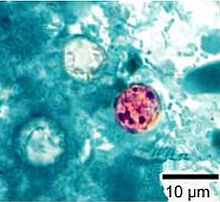
220px-Cyclospora_cayetanensis_stained

In 2018, a domestic-produce associated cyclosporiasis outbreak and the first Cyclospora detection on domestic produce demonstrated the need for a better understanding of Cyclospora prevalence in US produce growing environments. The Southeastern Coastal Plain growing region has several risk factors that warrant the evaluation of Cyclospora prevalence, including a farm worker population from Cyclospora-endemic areas, use of surface water for irrigation, and heavy rainfall that could transport Cyclospora into surface waters. The proposed study will assess Cyclospora prevalence in this region through two Georgia industry partners representing growing practices across the southeastern US. Human sewage samples from municipal wastewater influents and on-farm portable toilets will be tested to assess Cyclospora shedding in the region and on-farm, respectively. Cyclospora prevalence in the agricultural environment will be assessed in irrigation water and on produce (via a proxy measurement). Using newly developed tools, Cyclospora contamination found will be traced through the produce growing process by genetic typing to match detections between samples and by assessing parasite’s maturation state to approximate time since shedding. This study will add to the understanding of Cyclospora contamination in US produce growing environments and provide information about contamination routes to produce within the Southeastern US.

Technical Abstract

The increased frequency of produce-associated cyclosporiasis outbreaks highlights Cyclospora cayetanensis as an important emerging foodborne pathogen. Most produce associated cyclosporiasis outbreaks have implicated produce grown in areas where the disease is endemic. However, the 2018 detection of C. cayetanensis on US-grown produce and a cyclosporiasis outbreak associated with US-grown produce highlights the need for a better understanding of C. cayetanensis prevalence in US
agricultural environments and of the risks of oocyst contamination to domestically grown produce. The aims of the current study are to assess C. cayetanensis prevalence in irrigation water, harvested produce (via spent packing house water as a proxy), on-farm portable toilets, and municipal wastewater influents in the Southeastern Coastal Plain growing region in Georgia. Georgia vegetable growers produce a wide variety of ready-to-eat produce and utilize well water- and surface water-fed irrigation water holding ponds for produce irrigation, similar to other large agricultural regions in the US. Georgia growing regions are also subject to heavy rainfalls, which we have shown contributes to human fecal contamination of irrigation ponds in the region. Additionally, a majority of the farm workers harvesting
produce are from Cyclospora-endemic regions, representing a potential shedding source C. cayetanensis oocysts.

C. cayetanensis prevalence in the agricultural environment will be assessed by analyzing large-volume (50 L) irrigation water samples on eight farms monthly during non-harvesting periods and twice a month during harvest. At most, one additional irrigation water sample will be collected per month following heavy rainfall. The prevalence of C. cayetanensis from harvested produce will be assessed by analyzing large-volume (up to 50 L) of spent rinse and wash water from packing houses as a proxy measurement. Generic Escherichia coli and the human-specific Bacteroides HF183 fecal marker will be assessed to evaluate the overall and human-specific fecal contamination, respectively, in the water samples. Human sewage samples from municipal wastewater influents and on-farm portable toilets will be analyzed to assess the prevalence of C. cayetanensis shedding in the region generally and on the farm environment, respectively. C. cayetanensis detections will be subsequently analyzed to determine the genotype and sporulation state of detected oocysts, in order to estimate oocyst maturation level and compare the genetic relatedness of oocysts detected in various sample matrices. The typing information will allow for C. cayetanensis contamination to be traced through the growing process. The maturation data will allow for an estimate of the time spent in the environment after shedding from the human host and of potential health risks associated with consumption of contaminated produce, as maturation state determines infectivity of the parasite.

Data from this project will aid in the understanding of the domestic prevalence of C. cayetanensis in agricultural environments and provide the information needed to begin answering questions related to domestic C. cayetanensis produce contamination risks and identify best practices for risk reduction. Additionally, the evaluation of the human-specific fecal marker can provide insight into how Georgia vegetable growing practices are potentially preventing environmental and produce contamination.

New Zealand – Yersiniosis in New Zealand

MDPI

The rate of yersiniosis in New Zealand (NZ) is high compared with other developed countries, and rates have been increasing over recent years. Typically, >99% of human cases in NZ are attributed to Yersinia enterocolitica (YE), although in 2014, a large outbreak of 220 cases was caused by Yersinia pseudotuberculosis. Up until 2012, the most common NZ strain was YE biotype 4. The emergent strain since this time is YE biotype 2/3 serotype O:9. The pathogenic potential of some YE biotypes remains unclear. Most human cases of yersiniosis are considered sporadic without an identifiable source. Key restrictions in previous investigations included insufficient sensitivity for the isolation of Yersinia spp. from foods, although foodborne transmission is the most likely route of infection. In NZ, YE has been isolated from a variety of sick and healthy domestic and farm animals but the pathways from zoonotic reservoir to human remain unproven. Whole-genome sequencing provides unprecedented discriminatory power for typing Yersinia and is now being applied to NZ epidemiological investigations. A “One-Health” approach is necessary to elucidate the routes of transmission of Yersinia and consequently inform targeted interventions for the prevention and management of yersiniosis in NZ View Full-Text

Mozambique – Aflatoxins in Mozambican Online Mainstream Press

Intech Open

Aflatoxin

Image CDC

Aflatoxins gained increased recognition in Mozambique due to their negative impact on health, food security, and trade. Most contamination occurs in peanuts, maize, and their products. Nevertheless, there is little awareness, probably because the press and mass media do not disseminate enough information. This study analyzed the quantity and quality of information on aflatoxins in Mozambique’s leading online newspapers between 2009 and 2018. After analyzing articles using Atlas.ti, the information was synthesized and compared to scholarly sources. Mozambique requires more press and media coverage of aflatoxin research and development activities. Awareness campaigns should be reinforced, distribute information to multiple organizations, and use multiple means, including online mainstream press, spreading information to reach a broad range of people, given the diversity of cultures and villages’ remoteness. Organizations providing information, including universities, need to translate the highly technical information published in scientific journals to help reporters understand the research’s implications. Furthermore, there is a need to identify groups that do not receive messages from current campaigns and appropriate methods for reaching those populations.