Category Archives: microbial contamination

Research – Salmonella and Campylobacter continue to show high levels of antibiotic resistance

EFSA

Antibiotic resistance in Salmonella and Campylobacter bacteria is still high, says a report released today by the European Centre for Disease Prevention and Control (ECDC) and the European Food Safety Authority (EFSA).

Campylobacteriosis was the most reported zoonosis in the EU in 2020 and the most frequently reported cause of foodborne illness. Campylobacter bacteria from humans and poultry continues to show very high resistance to ciprofloxacin, a fluoroquinolone antibiotic, that is commonly used to treat some types of bacterial human infection.

Increasing trends of resistance against the fluoroquinolone class of antibiotics has been observed in humans and broilers for Campylobacter jejuni. In Salmonella Enteritidis, the most common type of Salmonella in humans, increasing trends of resistance to the quinolone/fluoroquinolone class of antibiotics were observed. In animals, resistance to these antibiotics in Campylobacter jejuni and Salmonella Enteritidis were generally moderate to high.

However, despite the increasing trends of resistance against certain antibiotics, simultaneous resistance to two critically important antibiotics – remains low for E. coliSalmonella and Campylobacter in bacteria from both humans and food-producing animals.

A decline in resistance to tetracyclines and ampicillin in Salmonella from humans was observed in nine and ten countries, respectively, over the period 2016-2020, and this was particularly evident in Salmonella Typhimurium. Despite the decline, resistance to these antibiotics still remains high in bacteria from both humans and animals.

Furthermore, in more than half of the European Union countries, a statistically significant decreasing trend in the prevalence of extended-spectrum β-lactamase (ESBL)-producing E. coli was observed in food-producing animals. This is an important finding as particular strains of ESBL-producing E. coli are responsible for serious infections in humans.

Carbapenem resistance remains extremely rare in E. coli and Salmonella from food-producing animals. Carbapenems are a class of last resort antibiotics and any findings showing resistance to these in zoonotic bacteria are concerning.

Although findings and trends are consistent with data reported in previous years, the COVID-19 pandemic had an impact on the amount of data reported, particularly with regards to public health.

An interactive data visualisation tool shows resistance levels in humans, animals and food, country-by-country in 2019 and 2020.

Additionally, the human food and waterborne antibiotic resistance data is published in ECDC’s Surveillance Atlas of Infectious Diseases (under the diseases campylobacteriosis, salmonellosis and shigellosis, respectively).

USA – District Court Orders New Jersey Company to Stop Distribution of Adulterated Pet Food Contaminated with Salmonella

Justice

This order is on the back of several recalls from this company for Salmonella

A federal court today ordered a Carneys Point, New Jersey company to stop distributing adulterated pet food in violation of the Federal Food, Drug and Cosmetic Act (FDCA).

In a complaint filed March 15, the United States alleged that Bravo Packing Inc., and its owners and operators, Joseph Merola and Amanda Lloyd, violated the FDCA by distributing adulterated animal food and by causing animal food to become adulterated while held for sale. The complaint alleged that samples collected during U.S. Food and Drug Administration (FDA) inspections of the Bravo facility in July 2019 and April 2021 contained Salmonella, a pathogenic microorganism that can cause the illness known as salmonellosis in both humans and animals. Salmonella can be transferred from animal food to humans through handling of the food, or directly from infected animals to humans. Salmonellosis can cause symptoms such as diarrhea, fever and abdominal cramps that last several days in healthy adults. Absent prompt treatment, salmonellosis can cause severe dehydration and even death in infants, young children, the elderly, transplant recipients, pregnant women and individuals with weakened immune systems.

“Animal food manufacturers must ensure that their products are safe,” said Principal Deputy Assistant Attorney General Brian M. Boynton, head of the Justice Department’s Civil Division. “The department will continue to work closely with the FDA to ensure that pet food is manufactured in compliance with the law.”

“The food we give our pets should be safe for them to eat and safe for people to handle,” said Director Steven Solomon, DVM, MPH of the FDA’s Center for Veterinary Medicine. “The FDA has taken this action to protect public health because, despite multiple inspections, notifications of violations and recalls, this firm continued to operate under insanitary conditions and produce pet food contaminated with harmful bacteria. We will not tolerate firms that put people or animals at risk and will take enforcement actions when needed.”

The defendants agreed to settle the suit and be bound by a consent decree of permanent injunction. The negotiated consent decree requires, among other things, that the defendants stop receiving, processing, manufacturing, preparing, packing, holding and distributing adulterated pet food until they take specific remedial measures and demonstrate to the FDA that they will comply with federal law.

The government was represented by Trial Attorney Noah T. Katzen of the Civil Division’s Consumer Protection Branch, with the assistance of Tara Boland of the FDA’s Office of Chief Counsel. The U.S. Attorney’s Office for the District of New Jersey also provided assistance.

Additional information about the Consumer Protection Branch and its enforcement efforts may be found at http://www.justice.gov/civil/consumer-protection-branch.

Norway – Analyzes of Pathogenic Escherichia coli in bacon sausages 2022

Mattilsynet

On behalf of the Norwegian Food Safety Authority, the Norwegian Veterinary Institute has examined 137 Norwegian bacon sausages for pathogenic E. coli bacteria (STEC). There was a discovery of such bacteria, but this type does not usually cause serious illness in humans. Although the sample was small, the conclusion is that the prevalence of STEC in Norwegian bacon sausages is low.

Mattilsynet

What we investigated: 137 Norwegian bacon sausages
Period: The samples were obtained in 2020 and analyzed in 2021
What we were looking for: E. coli and pathogenic STEC variants
What we found: A positive E. coli sample. This was not the type that usually causes serious illness in people, ie good results.
Who carried out the assignment: Veterinary Institute
Escherichia coli is present in the gastro intestinal tract of humans and warm-blooded animals, and are usually harmless. However, some groups of E.coli may cause infections in humans. Shiga toxin-producing E. coli (STEC) is one of the groups of pathogenic E. coli. Ruminants, in particular cattle, are assumed to be the main reservoir for STEC.
The results from previous surveys of cattle and sheep in Norway for the occurrence of STEC of the serogroups most often associated with infection, have indicated a low occurrence. Similar results were observed in a survey of minced meat from cattle, on the Norwegian market. The Norwegian Food Safety Authority commissioned a survey of STEC in domestically produced fermented sausages. The samples were collected in 2020 with subsequent analysis in 2021.
A total of 137 samples of domestically produced fermented sausage were collected and analysed. Enriched samples were examined for the presence of the genetic markers stx1, stx2 and eae. Attempts of isolation were carried out from samples that were positive for one or more of the virulence markers. Isolates identified as STEC were further characterized using whole genome sequencing.
STEC was isolated from only one sample, and the isolate was characterized as STEC O76:H19 harbouring stx1c, but did not carry eae. In the primary screening of enriched samples, only a few samples were positive for the virulence markers. The results from this study indicates that the occurrence of STEC in
Norwegian fermented sausages is low.
Although STEC was isolated, none of the serogroups associated with severe infections were isolated. It must be taken into account that a low number of samples were analysed. Since this type of products has not been analysed previously, the present survey provides knowledge for the industry, authorities and knowledge institutions. It is important to carry out similar surveys regularly to generate updated Norwegian data.

India – 300 fall ill due to food poisoning

The Times of India

Indore: Around 300 people were hospitalized on Thursday night in Khandwa with Food Poisoning

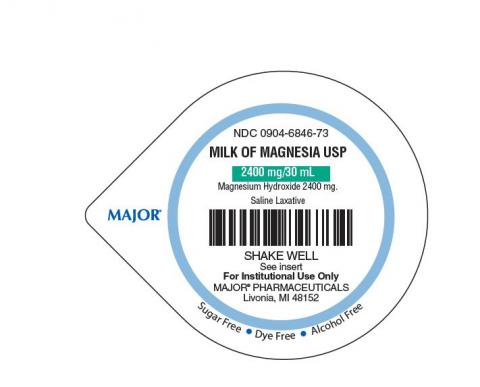
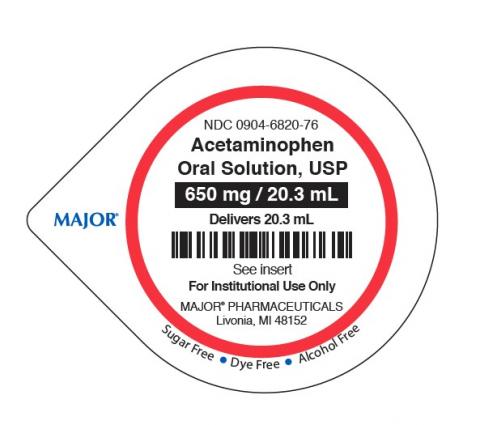
USA – Plastikon Healthcare Issues Voluntary Nationwide Recall of Milk of Magnesia Oral Suspension 2400 mg/30 mL, Magnesium Hydroxide 1200mg/Aluminum Hydroxide 1200mg/Simethicone 120mg per 30 mL, and Acetaminophen 650mg/ 20.3mL, Unit Dose Cups, Due to Microbial Contamination

FDA

Summary

Company Announcement Date: 
FDA Publish Date: 
Product Type: Drugs
Reason for Announcement:
Microbial Contamination
Company Name: Plastikon Healthcare, LLC
Brand Name: Major Pharmaceuticals
Product Description: Magnesia Oral Suspension 2400 mg/30 mL, Magnesium Hydroxide 1200mg/Aluminum Hydroxide 1200mg/Simethicone 120mg per 30 mL, and Acetaminophen 650mg/ 20.3mL

Company Announcement

3/24/2022 – Lawrence, KS, Plastikon Healthcare, LLC is voluntarily recalling three (3) lots of Milk of Magnesia 2400 mg/30 mL Oral Suspension, one (1) lot of Acetaminophen 650mg/ 20.3mL, and six (6) lots of Magnesium Hydroxide 1200mg/Aluminum Hydroxide 1200mg/Simethicone 120mg per 30 mL to the hospital, clinic and patient level.  The products are being recalled due to microbial contamination and failure to properly investigate failed microbial testing.

Risk Statement: This product potentially could result in illness due to intestinal distress, such as diarrhea or abdominal pain.  Individuals with a compromised immune system have a higher probability of developing a wide-spread, potentially life-threatening infection when ingesting or otherwise orally exposed to products contaminated by micro-organisms. To date, Plastikon has not received any customer complaints related to microbial concerns or reports of adverse events related to this recall.

Product indication, lot numbers, expiration dates and NDC information are listed in the table below. The product is packaged for institutional use and is sold to clinics and hospitals nationwide in single use cups with a foil lid.  The affected lots were distributed to Major Pharmaceuticals Distribution Center (wholesaler) between 5/1/2020 and 6/28/2021, who shipped to hospitals, nursing homes, and clinics nationwide.  The products are private labeled for Major Pharmaceuticals.

Product Name Milk of Magnesia 2400 mg/30 mL Oral Suspension Magnesium Hydroxide
1200mg/Aluminum
Hydroxide
1200mg/Simethicone
120mg per 30 mL
Acetaminophen 650mg/
20.3mL
Indications for use Milk of Magnesia 2400 mg/ 30 mL is indicated for the occasional relief of constipation
(irregularity) in adults and children 12 years and older or for children under 12 as recommended by a doctor.
Magnesium Hydroxide
1200mg/Aluminum
Hydroxide
1200mg/Simethicone 120mg per 30 mL is indicated for relief of acid indigestion, heartburn, sour stomach, upset stomach due to these symptoms, pressure and bloating commonly referred to as gas.
Acetaminophen 650mg/ 20.3mL indicated for temporarily relief of minor aches and pains due to, minor pain of arthritis, muscular aches, backache, premenstrual and menstrual cramps, the common cold, headache, toothache, and temporarily reduction of fever.
Lot/exp. 20024A/Mar 2022 20025A/Mar 2022
20041A/May 2022
20042A/May 2022 20043A/May 2022
20045A/May 2022
20046A/May 2022
20047A/May 2022
21067A/Jun 2023
20040A/May 2022
NDC 0904-6846-73 0904-6838-73 0904-6820-76
Type of Packaging Carton containing 100 single dose cups (10 trays x 10 cups) Carton containing 100 single dose cups (10 trays x 10 cups) Carton containing 100 single dose cups (10 trays x 10 cups)

Plastikon Healthcare places the utmost emphasis on patient safety and product quality at every step in the manufacturing and supply chain process.  Plastikon Healthcare has notified its direct customers via a recall letter to arrange for return of any recalled product.  Anyone with an existing inventory of the lots which are being recalled should stop use and distribution, and quarantine immediately.  Return all quarantined product to the place of purchase. For clinics, hospitals, or healthcare providers that have dispensed product to patients, please notify patients regarding the recall.

Consumers with questions regarding this recall can contact Plastikon by phone at 785-330-7109 or email address (sdixon@plastikon.com) Monday through Friday from 9 am to 4 pm CST.  Patients are advised to contact their doctor or healthcare provider if they have experienced any problems that may be related to taking or using this drug product.

Adverse reactions or quality problems experienced with the use of this product may be reported to the FDA’s MedWatch Adverse Event Reporting program either online, by regular mail or by fax.

  • Complete and submit the report Online
  • Regular Mail or Fax: Download form or call 1- 800-332-1088 to request a reporting form, then complete and return to the address on the pre-addressed form, or submit by fax to 1-800-FDA-0178

This recall is being conducted with the knowledge of the U.S. Food and Drug Administration.


Company Contact Information

Consumers:
Plastikon, Sandy Dixon
 785-330-7109
 sdixon@plastikon.com

Product Photos

USA – CDC – Lettuce, Other Leafy Greens, and Food Safety

CDC

Leafy greens arranged on a white background

Vegetables are an important part of a healthy diet. Leafy vegetables (called leafy greens on this page), such as lettuce, spinach, cabbage, kale, and bok choy, provide nutrients that help protect you from heart diseasestroke, and some cancers.

But leafy greens, like other vegetables and fruits, are sometimes contaminated with harmful germs. Washing leafy greens does not remove all germs. That’s because germs can stick to the surface of leaves and even get inside them. If you eat contaminated leafy greens without cooking them first, such as in a salad or on a sandwich, you might get sick.

Although anyone can get a foodborne illness, sometimes called food poisoning, some groups of people are more likely to get one and to have a serious illness. These groups include:

  • Adults aged 65 and older
  • Children younger than 5 years
  • People who have health problems or take medicines that lower the body’s ability to fight germs and sickness (a weakened immune system)external icon
  • Pregnant people

Eating Leafy Greens

Are leafy greens safe to eat?

Millions of servings of leafy greens are eaten safely every day in the United States. But leafy greens are occasionally contaminated enough to make people sick. To reduce your chance of getting sick, always follow the steps for safely handling and preparing leafy greens before eating or serving them.

Are leafy greens safe for my pet to eat?

Some animals can get sick from some germs that also make people sick. Always follow the steps for safely handling and preparing leafy greens before feeding them to pets and other animals. Never feed recalled food to pets or other animals.

Safely Handling and Preparing Leafy Greens

Do I need to wash all leafy greens?

Prewashed greens don’t need to be washed again. If the label on a leafy greens package says any of the following, you don’t need to wash the greens:

  • Ready-to-eat
  • Triple washed
  • No washing necessary

Prewashed greens sometimes cause illness. But the commercial washing process removes most of the contamination that can be removed by washing.

All other leafy greens should be thoroughly washed before eating, cutting, or cooking.

What is the best way to wash leafy greens?

The best way to wash leafy greens is by rinsing them under running water. Studies show that this step removes some of the germs and dirt on leafy greens and other vegetables and fruits. But no washing method can remove all germs.

Follow these steps to wash leafy greens that you plan to eat raw:

  • Wash your hands for 20 seconds with soap and water before and after preparing leafy greens.
  • Get rid of any torn or bruised leaves. Also, get rid of the outer leaves of cabbages and lettuce heads.
  • Rinse the remaining leaves under running water. Use your hands to gently rub them to help get rid of germs and dirt.
  • Dry leafy greens with a clean cloth or paper towel.

Should I soak leafy greens before washing them?

No. Do not soak leafy greens. If you soak them in a sink, germs in the sink can contaminate the greens. If you soak them in a bowl, germs on one leaf can spread to the other leaves. Rinsing leafy greens under running water is the best way to wash them.

Should I wash leafy greens with vinegar, lemon juice, soap, detergent, or produce wash?

Use plain running water to wash leafy greens and other produce. Kitchen vinegar and lemon juice may be used, but CDC is not aware of studies that show vinegar or lemon juice are any better than plain running water.

Do not wash leafy greens or other produce with soap, detergent, or produce wash. Do not use a bleach solution or other disinfectant to wash produce.

What other food safety steps should I keep in mind when I select, store, and prepare leafy greens and other produce?

  • Select leafy greens and other vegetables and fruits that aren’t bruised or damaged.
  • Make sure pre-cut produce, such as bagged salad or cut fruits and vegetables, is refrigerated or on ice at the store.
  • Separate produce from raw meat, poultry, seafood, and eggs in your shopping cart, grocery bags, and refrigerator.
  • Store leafy greens, salads, and all pre-cut and packaged produce in a clean refrigerator with the temperature set to 40°F or colder.
  • Use separate cutting boards and utensils for produce and for raw meat, poultry, seafood, and eggs. If that isn’t an option, prepare produce before working with raw meat.
  • Wash utensils, cutting boards, and kitchen surfaces with hot, soapy water after each use.
  • Cook thoroughly or throw away any produce that touches raw meat, poultry, seafood or their juices.
  • Refrigerate cooked or cut produce, including salads, within 2 hours (1 hour if the food is exposed to temperatures above 90°F, like a hot car or picnic).

Germs, Outbreaks, and Recalls

How do leafy greens get contaminated with germs?

Germs that make people sick can be found in many places, including in the soil, in the feces or poop of animals, in refrigerators, and on kitchen surfaces.

Germs can contaminate leafy greens at many points before they reach your plate. For example, germs from animal poop can get in irrigation water or fields where theexternal icon vegetables grow. Germs can also get on leafy greens in packing and processing facilities, in trucks used for shipping, from the unwashed hands of food handlers, and in the kitchen. To prevent contamination, leafy greens should be grown and handled safely at all points from farm to fork.

Read a study by CDC and partners on what we have learned from 10 years of investigating E. coli outbreaks linked to leafy greens.

How common are outbreaks linked to leafy greens?

In 2014–2018, a total of 51 foodborne disease outbreaks linked to leafy greens (mainly lettuce) were reported to CDC. Five of the 51 were multistate outbreaks that led CDC to warn the public. Among those five outbreaks, two were linked to packaged salads, two were linked to romaine lettuce, and one could not be linked to a specific type of leafy greens.

Most recently, in 2019–2021, CDC investigated and warned the public about nine multistate outbreaks linked to leafy greens. Among those outbreaks, six were linked to packaged salads, one was linked to romaine lettuce, one was linked to baby spinach, and one could not be linked to a specific type of leafy greens. Learn about these outbreaks.

Most foodborne illnesses are not part of a recognized outbreak. The nearly 2,000 illnesses reported in 2014–2020 outbreaks linked to leafy greens represent only a small part of illnesses caused by contaminated leafy greens during those years.

Does CDC warn the public about every foodborne disease outbreak?

No. CDC does not warn the public about every foodborne outbreak—including ones linked to leafy greens. Some reasons for this include:

  • Most sources of foodborne outbreaks are never identified.
  • By the time a source is identified, it might no longer be in stores, restaurants, or homes. This can happen with foods that are perishable (foods that spoil or go bad quickly), such as leafy greens.
  • Most outbreaks affect people in only one state, so local or state health departments lead the work to identify, investigate, and communicate about those outbreaks. CDC typically communicates only about outbreaks that affect people in more than one state.

Investigating outbreaks linked to leafy greensexternal icon can be especially challenging. These outbreaks often go unidentified or unsolved.

What should I do with leafy greens that are part of a recall?

  • Never eat, serve, or sell food that has been recalled, even if some of it was eaten and no one got sick.
  • Return the recalled food to the store or throw it away at home.
    • Throw out the recalled food and any other foods stored with it or that touched it.
    • Put it in a sealed bag in an outside garbage can with a tight lid (so animals cannot get to it).
    • If the recalled food was stored in a reusable container, wash the container in the dishwasher or with hot, soapy water.
  • Follow CDC’s instructions for cleaning your refrigerator after a food recall.

Organic, Hydroponic, and Home-Grown Leafy Greens

Are organic leafy greens less likely to be contaminated than non-organic ones?

All kinds of produce, including organic leafy greens, can be contaminated with harmful germs at any point from farm to fork. CDC is not aware of any evidence that organic greens are safer.

Learn about some outbreaks linked to organic foodsexternal icon.

Are hydroponic or greenhouse-grown leafy greens less likely to be contaminated?

Leafy greens grown using these methods also can be contaminated with harmful germs at any point from farm to fork.

Learn about an outbreak linked to greenhouse-grown leafy greens.

How do I keep leafy greens in my garden safe to eat?

Home gardens can be an excellent source of fruits and vegetables. Follow these tips to help prevent food poisoning:

  • Plant your garden away from animal pens, compost bins, and manure piles.
  • Water your garden with clean, drinkable water.
  • Keep dirty water, including storm runoff, away from the parts of plants you will eat.

Learn about raised bed gardening pdf icon[PDF – 1 page].

Looking to the Future

What steps are industry and the government taking to make leafy greens safer?

CDC is collaborating with FDA, academia, and industry to investigate the factors that contribute to leafy greens contamination.

The leafy greens industry, FDA, and state regulatory authorities have been implementing provisions of the Produce Safety Ruleexternal icon as part of the FDA Food Safety Modernization Act (FSMA).external icon They are considering what further measures can be taken. FDA’s 2020 Leafy Greens STEC Action Planexternal icon describes the agency’s plans to work with partners to make leafy greens safer.

RASFF Alert – Microbiological Contamination – Mould/Mold – White Beans

RASFF

Microbiological contamination (mould) of white beans from Poland in Slovakia

RASFF Alerts – Animal Feed – Salmonella – Frozen Cat 3 Chicken Meat – Dried Beef Larynx Treats for Dogs

RASFF

Salmonella infantis in frozen chicken meat cat. 3 from Netherlands in Italy

RASFF

Salmonella spp. in dried beef larynx treats for dogs from Albania via Belgium in Germany

Quebec – Update – Notice not to consume products packaged in glass jars and sold by Gourmand caterer (Des Côtés Gourmands inc.) – Food Safety

MAPAQ

WARNING TO THE POPULATION

QUEBEC CITY , March 22, 2022  /CNW Telbec/ – The food recall statement issued on March 18, 2022 has been updated to include additional information on the affected products.

The Ministry of Agriculture, Fisheries and Food (MAPAQ), in collaboration with the company Gourmand caterer (Des Côtés Gourmands inc.), located at 306, boulevard Yvon-L’Heureux Nord, in Beloeil, advises the population not to consume the products indicated in the table below, because they have not been packaged in such a way as to ensure their harmlessness.

Product name

Format

Affected lot

“Vegetable Soup”

(orange)

1 litre

Units sold until March 17, 2022

“Chorizo, potato and white bean soup”

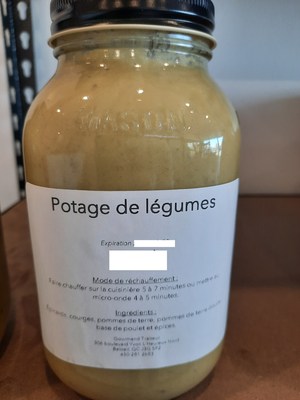
“Vegetable Soup”

(green)

473ml

1 litre

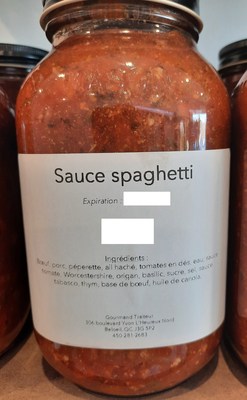
“Spaghetti Sauce”

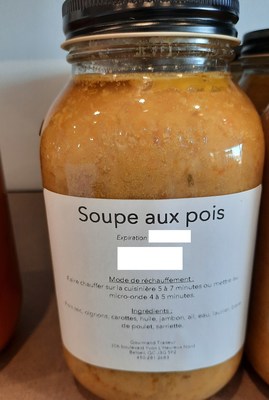
” Pea soup “

PRODUCT ADDED AS OF MARCH 22, 2022

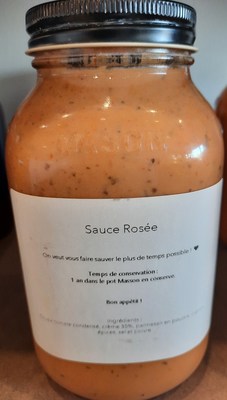
“Rosée Sauce”

1L

Units sold until March 17, 2022

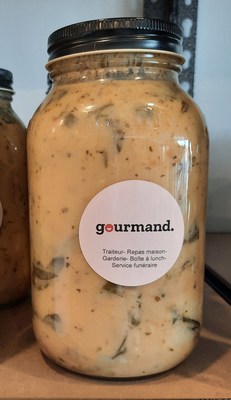
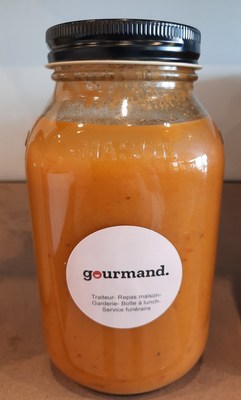
The products that are the subject of this warning were offered for sale until March 17, 2022, and this, only at the establishment designated above. They were packaged in Mason-type glass jars with black lids and sold at room temperature. The label of the products includes, in addition to their denomination, the mention “greedy”.

The operator is voluntarily recalling the products in question. It has agreed with MAPAQ to issue this warning as a precautionary measure. Also, people who have any of these products in their possession are advised not to consume it. They must return it to the establishment where they bought it or throw it away. Even if the affected products show no signs of tampering or suspicious odors, their consumption may represent a health risk. It should be noted that no case of illness associated with the consumption of these foods has been reported to MAPAQ to date.

Additional information

The Ministry publishes various information documents concerning food safety. Interested persons can consult them in the “Food Consumption” section of the MAPAQ website: www.mapaq.gouv.qc.ca/consommation  . They also have the possibility of registering online, by visiting www.mapaq.gouv.qc.ca/rappelsfoods  , to receive, by e-mail, the food recall press releases published by the Ministry. Finally, it is possible to follow “MAPAQfoods” on Twitter at the following address: www.twitter.com/MAPAQfoods  .

Chorizo ​​Soup (CNW Group/Ministry of Agriculture, Fisheries and Food) 

Vegetable soup (orange) (CNW Group/Ministry of Agriculture, Fisheries and Food) 

Spaghetti sauce (CNW Group/Ministry of Agriculture, Fisheries and Food) 

Pea soup (CNW Group/Ministry of Agriculture, Fisheries and Food) 

Vegetable soup (green) (CNW Group/Ministry of Agriculture, Fisheries and Food) 

Sauce Rosée (CNW Group/Ministry of Agriculture, Fisheries and Food) 

Hazard Classification: Class 1
Reference Number: 4518A

Source:
Media relations
Direction des communications
Ministry of Agriculture, Fisheries
and Food
Tel. : 418 380-2100, extension 3512
www.mapaq.gouv.qc.ca 

QuoteView original content to download multimedia: http://www.newswire.ca/en/releases/archive/March2022/22/c8827.html

USA – Webinar on the Foodborne Outbreak Response Improvement Plan – April 13th 2022

FDA

New Era for Smarter Food Safety

The U.S. Food and Drug Administration (FDA) is holding a webinar on the Foodborne Outbreak Response Improvement Plan that the agency released in early December 2021.

Deputy FDA Commissioner Frank Yiannas and FDA experts across agency’s human foods program will be available to explain and answer questions about the plan with the goal of raising awareness, enhancing understanding, and building support. Stakeholders are welcome to provide their insights as well as ask questions.

This response improvement plan focuses on tech-enabled product traceback, root cause investigations, analysis and dissemination of outbreak data, and operational improvements. It is intended to work in concert with FDA’s New Era of Smarter Food Safety Blueprint, which outlines specific approaches the FDA will take over the next decade to address food safety in the rapidly changing food system.

The plan was also informed by an independent review of the FDA’s structural and functional capacity to support, participate in, or lead multistate foodborne illness outbreak investigation activities. You will hear more about that review in this webinar.

The speakers will be:

  • Frank Yiannas, Deputy Commissioner for Food Policy and Response
  • RADM David Goldman, Chief Medical Officer, Office of Food Policy and Response
  • Stic Harris, Director, FDA’s Coordinated Response and Evaluation Network (CORE)
  • CDR Kari Irvin, Deputy Director, CORE
  • Scott MacIntire, Program Director, Office of Human and Animal Food Operations – West
  • Craig Hedberg, University of Minnesota, author of “An Independent Review of FDA’s Foodborne Outbreak Response Processes”

The webinar will also be recorded and posted to the FDA website.

You are also welcome to submit questions during the webinar to SmarterFoodSafety@fda.hhs.gov.

Registration

Registration is required. There will be an opportunity to ask questions in advance on the registration form.

REGISTERExternal Link Disclaimer

Additional Information