Archives
-
Join 341 other subscribers
KSWFoodWorld
Blog Stats
- 425,792 Views
Category Archives: fungi
Research – Recent Advances in Non-Contact Food Decontamination Technologies for Removing Mycotoxins and Fungal Contaminants
Agricultural food commodities are highly susceptible to contamination by fungi and mycotoxins, which cause great economic losses and threaten public health. New technologies such as gamma ray irradiation, ultraviolet radiation, electron beam irradiation, microwave irradiation, pulsed light, pulsed electric fields, plasma, ozone, etc. can solve the problem of fungal and mycotoxin contamination which cannot be effectively solved by traditional food processing methods. This paper summarizes recent advancements in emerging food decontamination technologies used to control various fungi and their associated toxin contamination in food. It discusses the problems and challenges faced by the various methods currently used to control mycotoxins, looks forward to the new trends in the development of mycotoxin degradation methods in the future food industry, and proposes new research directions.
Research – Analysis of flour and rice shows high levels of harmful fungal toxins
By analyzing samples of flour and rice stored in homes in Ribeirão Preto, in the interior of the state of São Paulo (Brazil), researchers from the University of São Paulo (USP) found the presence of high levels of fungal toxins (mycotoxins). The study is published in the journal Food Research International.
The six toxins of concern were found in all the food samples analyzed: aflatoxins (AFs), fumonisins (FBs), zearalenone (ZEN), T-2 toxin, deoxynivalenol (DON), and ochratoxin A (OTA). In the case of the mycotoxins FBs, ZEN, and DON, the levels were above the tolerance limit set by the health authorities. This study was the first in Brazil to use biomarkers to characterize the risk associated with mycotoxins in the diet of children and adolescents.
USA – Haleon Issues Voluntary Nationwide Recall of Robitussin Honey CF Max Day Adult and Robitussin Honey CF Max Night time Adult Products Due to Microbial Contamination
FOR IMMEDIATE RELEASE – January 24, 2024 – Warren, NJ, Haleon is voluntarily recalling eight lots of Robitussin Honey CF Max Day Adult and Robitussin Honey CF Max Night time Adult to the consumer level. The product is being recalled due to microbial contamination.
In immunocompromised individuals, the use of the affected product could potentially result in severe or life-threatening adverse events such as fungemia or disseminated fungal infection. In non-immunocompromised consumers, the population most likely to use the product, life-threatening infections are not likely to occur. However, the occurrence of an infection that may necessitate medical intervention cannot be completely ruled out.
To date, Haleon has not received any reports of adverse events related to this recall.
Robitussin Honey CF Max Day and Nighttime are cough syrups indicated for the temporary relief of symptoms occurring with cold or flu, hay fever, or other respiratory allergies. This recall covers only the following lots:
| Product | Lot Number | Expiry Date |
|---|---|---|
| ROBITUSSIN HONEY CF MAX DAY ADULT 4OZ |
T10810 | 31OCT2025 |
| ROBITUSSIN HONEY CF MAX DAY ADULT 8OZ |
T08730 T08731 T08732 T08733 T10808 |
31MAY2025 31MAY2025 31MAY2025 31MAY2025 30SEP2025 |
| ROBITUSSIN HONEY CF MAX NT ADULT 8OZ |
T08740 T08742 | 30JUN2026 30JUN2026 |
Haleon is notifying its distributors and customers directly and has provided them with instructions for the return of all recalled products. Consumers that have purchased the product listed should stop consumption immediately. Please call our Consumer Relations team at +1-800-245-1040 (Monday through Friday 8 AM to 6 PM Eastern Time) or reach out via email to mystory.us@haleon.com.
Consumers should contact their physician or healthcare provider if they have experienced any problems that may be related to taking or using this product.
Posted in FDA, food contamination, food handler, Food Hazard, Food Hygiene, Food Inspections, Food Micro Blog, Food Microbiology, Food Microbiology Blog, Food Microbiology Testing, Food Quality, food recall, Food Safety, Food Safety Alert, Food Safety Management, Food Safety Regulations, fungi, microbial contamination, Microbial growth, Microbial Spoilage, Mold/ MouldAscospores, Mould Toxin, Mould/Mold, Moulds, product recall, Recall
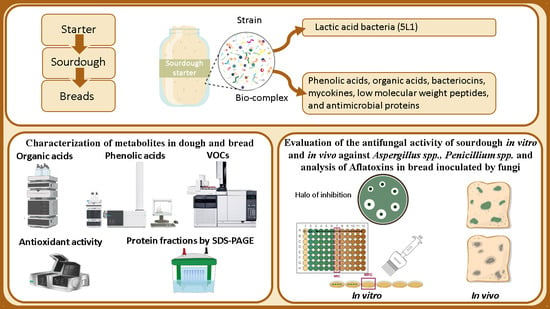
Research – Bread Biopreservation through the Addition of Lactic Acid Bacteria in Sourdough

Abstract
Nowadays, the consumer seeks to replace synthetic preservatives with biopreservation methods, such as sourdough in bread. Lactic acid bacteria (LAB) are used as starter cultures in many food products. In this work, commercial yeast bread and sourdough breads were prepared as controls, as well as sourdough breads with L. plantarum 5L1 lyophilized. The impact of L. plantarum 5L1 on the properties of bread was studied. Antifungal compounds and the impact on the protein fraction by the different treatments in doughs and breads were also analyzed. In addition, the biopreservation capacity of the treatments in breads contaminated with fungi was studied and the mycotoxin content was analyzed. The results showed significant differences with respect to the controls in the properties of the bread and a higher total phenolic and lactic acid content in breads with higher amounts of L. plantarum 5L1. In addition, there was a higher content of alcohol and esters. Furthermore, adding this starter culture produced hydrolysis of the 50 kDa band proteins. Finally, the higher concentration of L. plantarum 5L1 delayed fungal growth and reduced the content of AFB1 and AFB2 compared to the control.
Posted in antifungal, Decontamination Microbial, Food Micro Blog, Food Microbiology, Food Microbiology Blog, Food Microbiology Research, Food Microbiology Testing, fungi, LAB, lactic acid bacteria, Lactobacillus, Lactobacillus plantarum, microbial contamination, Microbial growth, Microbiological Risk Assessment, Microbiology, Microbiology Investigations, Microbiology Risk
Research – Major Soilborne Pathogens of Field Processing Tomatoes and Management Strategies
Abstract
Globally, tomato is the second most cultivated vegetable crop next to potato, preferentially grown in temperate climates. Processing tomatoes are generally produced in field conditions, in which soilborne pathogens have serious impacts on tomato yield and quality by causing diseases of the tomato root system. Major processing tomato-producing countries have documented soilborne diseases caused by a variety of pathogens including bacteria, fungi, nematodes, and oomycetes, which are of economic importance and may threaten food security. Recent field surveys in the Australian processing tomato industry showed that plant growth and yield were significantly affected by soilborne pathogens, especially Fusarium oxysporum and Pythium species. Globally, different management methods have been used to control diseases such as the use of resistant tomato cultivars, the application of fungicides, and biological control. Among these methods, biocontrol has received increasing attention due to its high efficiency, target-specificity, sustainability and public acceptance. The application of biocontrol is a mix of different strategies, such as applying antagonistic microorganisms to the field, and using the beneficial metabolites synthesized by these microorganisms. This review provides a broad review of the major soilborne fungal/oomycete pathogens of the field processing tomato industry affecting major global producers, the traditional and biological management practices for the control of the pathogens, and the various strategies of the biological control for tomato soilborne diseases. The advantages and disadvantages of the management strategies are discussed, and highlighted is the importance of biological control in managing the diseases in field processing tomatoes under the pressure of global climate change.
Posted in Food Pathogen, fungi, Fusarium Toxin, Mould/Mold, Moulds, Pathogen, pathogenic
Research – Insights into the Bacterial Diversity and Detection of Opportunistic Pathogens in Mexican Chili Powder
Abstract
Chili powder is the most frequently consumed spice in Mexican diets. Thus, the dissemination of microorganisms associated with chili powder derived from Capsicum annuum L. is significant during microbial quality analysis, with special attention on detection of potential pathogens. The results presented here describe the initial characterization of bacterial community structure in commercial chili powder samples. Our results demonstrate that, within the domain Bacteria, the most abundant family was Bacillaceae, with a relative abundance of 99% in 71.4% of chili powder samples, while 28.6% of samples showed an average relative abundance of 60% for the Enterobacteriaceae family. Bacterial load for aerobic mesophilic bacteria (AMB) ranged from 104 to 106 cfu/g, while for sporulated mesophilic bacteria (SMB), the count ranged from 102 to 105 cfu/g. Bacillus cereus sensu lato (s.l.) was observed at ca. ˂600 cfu/g, while the count for Enterobacteriaceae ranged from 103 to 106 cfu/g, Escherichia coli and Salmonella were not detected. Fungal and yeast counts ranged from 102 to 105 cfu/g. Further analysis of the opportunistic pathogens isolated, such as B. cereus s.l. and Kosakonia cowanii, using antibiotic-resistance profiles and toxinogenic characteristics, revealed the presence of extended-spectrum β-lactamases (ESBLs) and Metallo-β-lactamases (MBLs) in these organisms. These results extend our knowledge of bacterial diversity and the presence of opportunistic pathogens associated with Mexican chili powder and highlight the potential health risks posed by its use through the spread of antibiotic-resistance and the production of various toxins. Our findings may be useful in developing procedures for microbial control during chili powder production. View Full-Text
Posted in Bacillus, Bacillus cereus, Decontamination Microbial, Enterobacteriaceae, ESBL, Food Micro Blog, Food Microbiology, Food Microbiology Blog, Food Microbiology Research, Food Microbiology Testing, fungi, microbial contamination, Microbiological Risk Assessment, Microbiology, Microbiology Investigations, Microbiology Risk, Mould/Mold, Research, Yeasts
Research – Antifungal Preservation of Food by Lactic Acid Bacteria
Fungal growth and consequent mycotoxin release in food and feed threatens human health, which might even, in acute cases, lead to death. Control and prevention of foodborne poisoning is a major task of public health that will be faced in the 21st century. Nowadays, consumers increasingly demand healthier and more natural food with minimal use of chemical preservatives, whose negative effects on human health are well known. Biopreservation is among the safest and most reliable methods for inhibiting fungi in food. Lactic acid bacteria (LAB) are of great interest as biological additives in food owing to their Generally Recognized as Safe (GRAS) classification and probiotic properties. LAB produce bioactive compounds such as reuterin, cyclic peptides, fatty acids, etc., with antifungal properties. This review highlights the great potential of LAB as biopreservatives by summarizing various reported antifungal activities/metabolites of LAB against fungal growth into foods. In the end, it provides profound insight into the possibilities and different factors to be considered in the application of LAB in different foods as well as enhancing their efficiency in biodetoxification and biopreservative activities. View Full-Text
Posted in antifungal, Decontamination Microbial, Food Micro Blog, Food Microbiology, Food Microbiology Blog, Food Microbiology Research, Food Microbiology Testing, fungi, LAB, lactic acid bacteria, microbial contamination, Microbiological Risk Assessment, Microbiology, Microbiology Investigations, Probiotic, Research
RASFF Alert- Fungal Growth – SuperValu Still Lemon & Lime Flavoured Spring Water
Fungal Growth in and Off Taste from SuperValu Still Lemon & Lime Flavoured Spring Water from Ireland in Ireland and Belgium
RASFF Alert – Mycotoxins – Fumonsins – Maize Flour
Fumonisins in maize flour from Portugal in Luxembourg
Posted in food contamination, Food Hazard, Food Hygiene, Food Inspections, Food Micro Blog, Food Microbiology, Food Microbiology Blog, Food Microbiology Testing, Food Poisoning, food recall, Food Safety, Food Safety Alert, Food Testing, Food Toxin, Fumonsins, fungi, Fusarium Toxin, mold, Mold Toxin, Mould Toxin, Mould/Mold, Mycotoxin
Research – New infrared heat treatment approaches to dry and combat fungal contamination of shelled corn
Commercial application of infrared (IR) heat has been hampered by a lack of readily available data adaptable to high‐throughput (HT) drying requirements in the grain processing industry. This study evaluated the effectiveness of a continuous flow IR heating system to simultaneously dry and decontaminate corn over various drying bed thicknesses (1.5, 2.7, and 4.5 cm). Additionally, impacts of intermediate tempering treatment and variation of IR emitter angle (zero [E‐0] and 30 [E‐30] degrees) on drying and decontamination of the corn were determined. Although IR heating was able to dry and decontaminate corn at the initial moisture content (MC) of ≈21% wet basis (w.b.), moisture removal was most effective at the least bed thickness (1.5 cm). At 1.5 cm bed thickness, a safe storage MC (<14%) was achieved after 15 min of IR heating. At all the bed thicknesses, IR heating with intermediate tempering resulted in higher fungal inactivation than IR heating without tempering. Infrared heating of corn at 1.5 cm bed thickness plus tempering resulted in a total fungal count (TFC) reduction of 3.1 and 4.6 log CFU/g using IR emitters at E‐30 and E‐0° angles, respectively. However, increasing the bed thickness to 2.7 cm resulted in a TFC reduction of 4.8 and 4.6 log CFU/g using E‐30 and E‐0, respectively. Infrared heating using E‐0, compared to using E‐30, accelerated TFC reduction when corn samples were dried at 1.5 cm bed thickness. These results could help guide the design of HT corn drying and decontamination systems.

