Category Archives: Foodborne Illness

Research – A bacteriological survey of fresh minced beef on sale at retail outlets in Scotland in 2019: three food-borne pathogens, hygiene process indicators and phenotypic antimicrobial resistance.

Journal of Food Protection

The health and economic burden of foodborne illness is high, with approximately 2.4 million cases occurring annually in the United Kingdom. A survey to understand the baseline microbial quality and prevalence of food-related hazards of fresh beef mince on retail sale could inform risk assessment, management and communication to ensure the safety of this commodity. In such a survey, a two-stage sampling design was used to reflect variations in population density and the market share of five categories of retail outlets in Scotland.  From January to December 2019, 1009 fresh minced beef samples were collected from 15 Geographic Areas. The microbial quality of each sample was assessed using Aerobic Colony Count (ACC) and generic E. coli count. Samples were cultured for Campylobacter and Salmonella and PCR was used to detect target genes (stx1 all variants, stx2 a-g, and rfbO157) for Shiga toxin-producing Escherichia coli (STEC). The presence of viable E. coli O157 and STEC in samples with a positive PCR signal was confirmed via culture and isolation. Phenotypic antimicrobial sensitivity patterns of cultured pathogens and 100 generic E. coli isolates were determined, mostly via disc diffusion. The median ACC and generic E. coli counts were 6.4 x 10⁵ (Inter-quartile range (IQR):6.9 x 10⁴ to 9.6 x 10⁶) and <10 cfu per gram (IQR:<10 to 10) of minced beef respectively. The prevalence was 0.1% (95% confidence interval C.I. 0 to 0.7%) for Campylobacter, 0.3% (95% C.I. 0 to 1%) for Salmonella, 22% (95% C.I. 20% to 25%) for PCR positive STEC and 4% (95% C.I. 2 to 5%) for culture positive STEC. The evidence for phenotypic antimicrobial resistance (AMR) detected did not give cause for concern, mainly occurring in a few generic E. coli isolates as single non-susceptibilities to first-line active substances. The low prevalence of pathogens and phenotypic AMR is encouraging but ongoing consumer food-safety education is necessary to mitigate the residual public health risk.

Russia – Food poisoning outbreak linked to sushi rolls sickens 38 in Samara

Outbreak News Today

Russia: Food poisoning outbreak linked to sushi rolls sickens 38 in Samara

The number of people poisoned by rolls in the Samara region has grown to 38 people, according to Russian media. 

25 people were hospitalized in the Togliatti City Clinical Hospital No. 5 , including four children. The rest are being treated on an outpatient basis.

All patients were diagnosed with signs of food poisoning. Investigators examined the food point, identified food suppliers, and also interrogated the director of the restaurant, the investigative department said.

The mass poisoning became known on June 6 . Initially, it was reported that 22 people turned to doctors for help. According to a 63.RU source familiar with the situation, they all ordered rolls from the Kusai delivery service located in the Central District of Tolyatti. The power point has been suspended . Employees of Rospotrebnadzor, prosecutors and investigators were involved in the proceedings.

Canada – Two dead in Listeria outbreak at Ottawa retirement home

Ottawa Citizen

Two residents of a west-end Ottawa retirement home are dead after a Listeria outbreak, the source of which has not been identified.

Catherine Clausi, a spokesperson for the home on Meadowlands Drive, said it has worked with Ottawa Public Health and the regional infection prevention and control team to determine the source of listeria, but has been unable to do so.

“Despite a month of investigating the outbreak with Ottawa Public Health, no known source was identified,” she said.

She added that the home purchases all of its food “through reliable suppliers and requires staff to follow all food storage and handling procedures.

USA – FDA Core Outbreak Tabel Update

FDA

Date
Posted
Ref Pathogen
Product Total
Case Count

Status
6/8/

2022

1068 E. coli
O157:H7
Not Yet Identified 10 Active
6/1/

2022

1066 Hepatitis A Virus Strawberries See Outbreak
Advisory
Active
5/25/

2022

1067 Salmonella 
Senftenberg
Peanut Butter See Outbreak Advisory Active
4/20/

2022

1064 Not Yet
Identified
Dry Cereal 558 adverse
event reports
Active
4/13/

2022

1057 Listeria
monocytogenes
Not Yet
Identified
21 Active
3/30/

2022

1060 Not Yet
Identified
Meal Replacement
Drink
6 adverse
event reports
Closed
3/16/

2022

1055 Salmonella
Saintpaul
Not Identified 60 Closed
2/17/

2022

1056 Cronobacter
sakazakii
Powdered
Infant
Formula
See
Advisory
Active (IMG)
2/9/

2022

1040 Listeria
monocytogenes
Not Identified 20 Closed
2/2/

2022

1054 Enteroinvasive
E. coli
O143:H26
Not
Identified
16 Closed
1/10/

2022

1050 E. coli
O121:H19
Romaine 4 Closed

USA – Norovirus implicated in Carnival Splendor outbreak

Outbreak News Today

In a follow-up on the gastrointestinal outbreak that affected 93 people (passengers and crew) onboard a recent voyage of Carnival Cruise Line’s, Carnival Splendor, the Centers for Disease Control and Prevention (CDC) now states that norovirus was the causative agent of the outbreak.

Seventy-seven passengers and 16 crew members suffered with symptoms of vomiting and diarrhea during the May 24–31, 2022 voyage.

Research – France and UK most affected in Ferrero Salmonella outbreak; one case in U.S.

Food Safety News

France and the United Kingdom have the most patients in the Ferrero chocolate Salmonella outbreak that has sickened almost 450 people.

The UK has 122 monophasic Salmonella Typhimurium patients.

Santé publique France reported that as of June 2, there were 118 sick people in the country. This is up from the 81 cases reported on May 4.

French patients have a median age of 4 years old and includes 57 girls and 61 boys. Onset of symptoms occurred between Jan. 20 and April 4, 2022.

Twenty-two people were hospitalized because of salmonellosis but they have since been discharged and no deaths were reported.

Fifty-one cases have been interviewed by Santé publique France and all of them, except one, reported consumption of Kinder chocolates.

Nicolas Neykov, the head of Ferrero France, told the newspaper Le Parisien in May that more than 3,000 tons of Kinder products have been withdrawn and the incident will cost the company “tens of millions of Euros.”

Research – Salmonella Newport Outbreaks Associated with Ground Beef Outbreak Investigation After-Action Report, 2016-2019

FSIS USDA

Outbreaks at a Glance
Illnesses 542 States included 36 Hospitalizations 163 Deaths 1
Response at a Glance
Ill people with 40 documentation to identify foods
Recall or Public Health Alert Yes Process improvement – Yes
•This Salmonella Newport strain associated with ground beef has been characterized as a reoccurring strain because it has caused repeated outbreaks of human illnesses with similar epidemiologic characteristics. Every month, FSIS monitors selected Salmonella serotypes, including Newport, for directional changes and trends, and compares them to a 3-year historical average for that particular serotype.

Highlights

•A strain of Salmonella Newport caused reoccurring human infections and two outbreaks associated with ground beef.

•There were over 100 illnesses for each outbreak (106 in outbreak 1 and 436 in outbreak 2), which is unusual for ground beef outbreaks.

•The investigations prompted a government-industry collaboration on innovative methods of obtaining shopper history. Shopper history best practices and success stories are highlighted in an article on the Association of Food and Drug Officials webpage.

What Happened?

From 2016 to 2019, in collaboration with public health partners, the Food Safety and Inspection Service (FSIS) investigated two Salmonella Newport outbreaks:

•The majority of reported ill people lived in the Southwestern area of the United States.

•The analyzed isolates did not show any predicted antimicrobial resistance.

•At least 80% of the ill people had eaten ground beef in the week before illness. At least one ground beef sample tested positive for Salmonella Newport and was closely related by whole genome sequencing (WGS) to clinical isolates.

•Ill people reported eating or possibly eating undercooked ground beef.

India – 12 Sick After After Suspected Food Poisoning In Madhya Pradesh

NDTV

Gwalior: 

At least 12 people fell sick after consuming food at a wedding function in Madhya Pradesh’s Gwalior district, a health official said on Sunday.

The victims, all adults, reached the Civil Hospital in Dabra town on Saturday evening with complaints of vomiting and diarrhoea, Gwalior’s Chief Medical and Health Officer Manish Sharma said.

All of them had food at the marriage function in Chhapra village, the official said.

They are undergoing treatment and are out of danger, he said, adding that it was a suspected case of food poisoning.

A team of doctors was sent to the village on Sunday to find out if any other person had fallen ill after consuming food at the wedding, he said.

Libya – 53 cases of food poisoning arrive at Kufra Teaching Hospital

Libya Observer

The emergency department of Kufra Teaching Hospital received 53 cases of food poisoning on Saturday, including women and children, due to eating rotten food in a restaurant in the city.

Patients have received the necessary treatment, awaiting to for the preliminary results of the laboratory, the hospital’s media office said, adding that all measures will be taken towards the responsible party.

Research – International outbreak of salmonellosis in young children linked to the consumption of Kinder brand products. Update in France as of June 2, 2022.

Sante Publique

Following the investigations carried out by the Belgian health authorities, together with their English, European and in particular French counterparts, the company Ferrero proceeded on April 5, 2022 to the recall of several Kinder range products manufactured in a factory in Belgium due to suspected contamination by Salmonella Typhimurium . On April 8, 2022, the recall finally affected all Kinder products from this factory, regardless of their expiry date. On April 14, 2022, an update of the recalled products, including the 2021 Christmas Advent Calendars, was released.

Case of salmonellosis in France: update on June 2, 2022

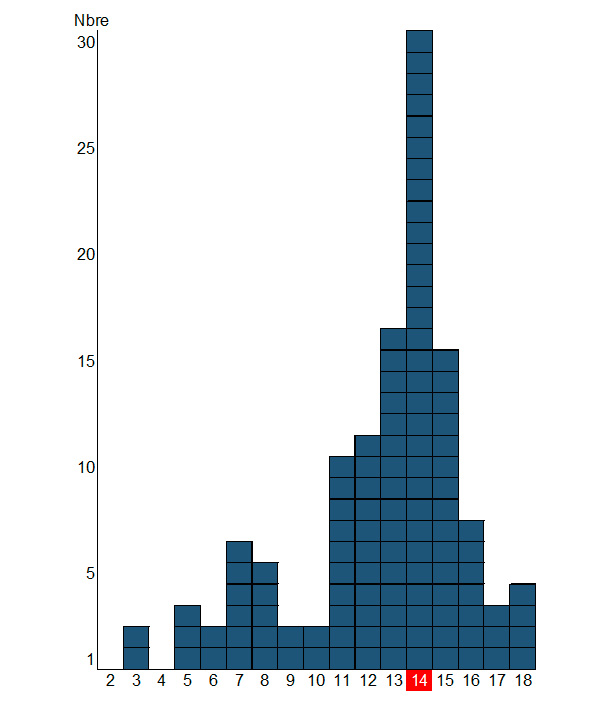
In total, as of 02/06/2022: 118 cases of salmonellosis with a strain belonging to the epidemic have been identified by the National Reference Center (CNR) for salmonella at the Institut Pasteur in France (figure 1) .

Figure 1 – Epidemic curve: number of confirmed cases of salmonellosis caused by Salmonella Typhimurium, monophasic variant (cluster 1 HC5_296366 and cluster 2 HC5_298160), by week of isolation (with in red the week corresponding to the recall of products from the production plant) ‘Arlon in Belgium) – Metropolitan France, weeks 2 to 18, 2022 (N=118)
Figure 1 - Epidemic curve: number of confirmed cases of salmonellosis caused by Salmonella Typhimurium, monophasic variant (cluster 1 HC5_296366 and cluster 2 HC5_298160), by week of isolation (with in red the week corresponding to the recall of products from the production plant) 'Arlon in Belgium) - Metropolitan France, weeks 2 to 18, 2022 (N=118)

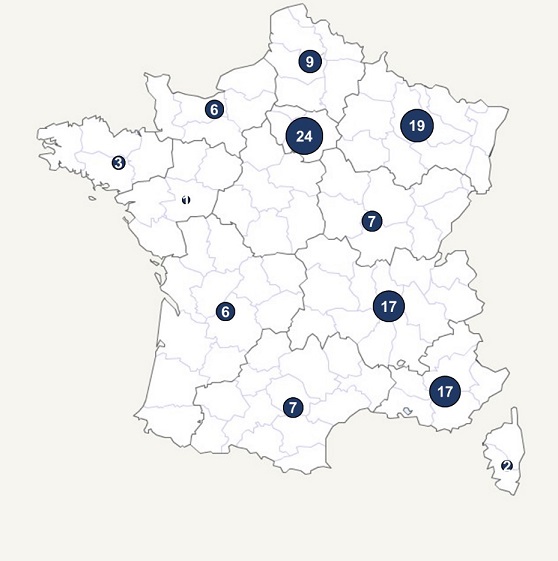
The 118 cases are spread over 12 metropolitan regions (Ile-de-France (24 cases), Grand-Est (19 cases), Auvergne-Rhône-Alpes (17 cases), Provence-Alpes-Côte d’Azur (17 cases) , Hauts-de-France (9 cases), Bourgogne-Franche-Comté (7 cases), Occitanie (7 cases), Normandy (6 cases), New Aquitaine (6 cases), Brittany (3 cases), Corsica (2 cases) and Pays de la Loire (1 case)) with a median age of 4 years, and concern 57 girls and 61 boys.

Figure 2 – Geographical distribution of confirmed cases of salmonellosis due to Salmonella Typhimurium, monophasic variant (cluster 1 HC5_296366 and cluster 2 HC5_298160), by region of residence – metropolitan France, weeks 2 to 18, 2022
Figure 2 - Geographical distribution of confirmed cases of salmonellosis due to Salmonella Typhimurium, monophasic variant (cluster 1 HC5_296366 and cluster 2 HC5_298160), by region of residence - metropolitan France, weeks 2 to 18, 2022

Fifty-one cases were questioned by Public Health France. All the cases, except 1, report, before the onset of their symptoms (which occurred between 20/01 and 04/04/2022), the consumption of chocolates of the brand cited here.

Twenty-two people were hospitalized for their salmonellosis, all since discharged. No deaths were reported.

The foods in question having been identified and the management measures taken, the weekly situation updates are drawn up. Public Health France continues to monitor the reporting of cases by the NR, which are expected due to the different delays inherent in monitoring ( see the infographic dedicated to food alerts ).

The successive withdrawals and recalls of the Kinder brand products concerned, produced by the Belgian factory with its closure by the Belgian authorities, should limit the occurrence in France of new cases of salmonellosis in connection with these chocolates.

The possible identification of new cases with dates of isolation at a distance from the recall withdrawal measures will be the subject of investigations if necessary.

To find out the list of products concerned by the withdrawal-recall: https://rappel.conso.gouv.fr/

People who have consumed the products mentioned above and who present symptoms (gastrointestinal disorders, fever within 72 hours of consumption), are invited to consult their doctor without delay, notifying him of this consumption.

In order to limit person-to-person transmission (especially in households with young children), it is recommended to wash your hands well with soap and water after using the toilet, after changing your child, and before to cook.