Category Archives: Food Microbiology

Research – Evaluation of Hygiene Practice for Reducing Campylobacter Contamination on Cutting Boards and Risks Associated with Chicken Handling in Kitchen Environment

MDPI

Abstract

Campylobacter kswfoodworld

Cutting boards can serve as potential carriers for the cross-contamination of pathogens from chicken to other surfaces. This study aimed to assess chefs’ handling practices of cutting boards across five provinces in China and identify the key factors contributing to unsafe cutting board usage, including cleaning methods and handling practices. Handling practices associated with cutting boards were examined through a web-based survey (N = 154), while kitchen environment tests were conducted to investigate the splashing or survival of Campylobacter, inoculated in chicken or on cutting boards, to mimic the practices of chefs. Among chefs in the five provinces of China, wood and plastic cutting boards were the most commonly used for preparing chicken meat. Approximately 33.7% of chefs washed boards with running tap water, 31.17% of chefs washed boards with detergent, and 24.03% of chefs cleaned boards by scraping them with a knife after preparing other meats or chicken. The study tested 23 cutting boards from commercial kitchens for Campylobacter presence before and after chicken preparation and cleaning. Among these, 17 were cleaned with a knife, 5 with running tap water, and only 1 with disinfectant. Results showed that cleaning with a knife significantly reduced Campylobacter presence on cutting boards (p < 0.05), while the three main cleaning methods were inadequate in eliminating contamination to a safe level. In kitchen environment tests, contaminated chicken was chopped on cutting boards, with a maximum distance of 60 cm for low contamination, and 120 cm for medium and high contamination levels. This suggested a contamination risk exposure area ranging from 60 cm to 120 cm. Campylobacter survival on surfaces of wood, plastic, and stainless steel was also tested, with plastic surfaces showing the longest survival time (4.5 h at 15 °C and 3.5 h at 25 °C) In comparison, survival time on stainless steel or wood surfaces was only 3 h, implying a cross-contamination risk exposure period of 3 to 4.5 h after chicken preparation. In conclusion, based on the current study data, the practices employed by chefs play an important role in Campylobacter transfer in the kitchen environment. The presence of Campylobacter on cutting boards even after wiping or droplet splashing highlights its potential as a source of cross-contamination in the kitchen environment. So, chefs in China should reinforce their hygiene culture and adopt effective cutting board cleaning practices to prevent pathogen contamination.

Research – Utilization of Algae Extracts as Natural Antibacterial and Antioxidants for Controlling Foodborne Bacteria in Meat Products

MDPI

Abstract

Padina pavonicaHormophysa cuneiformis, and Corallina officinalis are three types of algae that are assumed to be used as antibacterial agents. Our study’s goal was to look into algal extracts’ potential to be used as food preservative agents and to evaluate their ability to inhibit pathogenic bacteria in several meat products (pastirma, beef burger, luncheon, minced meat, and kofta) from the local markets in Alexandria, Egypt. By testing their antibacterial activity, results demonstrated that Padina pavonica showed the highest antibacterial activity towards Bacillus cereusStaphylococcus aureusEscherichia coliStreptococcus pyogenesSalmonella spp., and Klebsiella pneumoniaePadina pavonica extract also possesses most phenolic and flavonoid content overall. It has 24 mg gallic acid equivalent/g and 7.04 mg catechol equivalent/g, respectively. Moreover, the algae extracts were tested for their antioxidant activity, and the findings were measured using ascorbic acid as a benchmark. The IC50 of ascorbic acid was found to be 25.09 μg/mL, while Padina pavonica exhibited an IC50 value of 267.49 μg/mL, Corallina officinalis 305.01 μg/mL, and Hormophysa cuneiformis 325.23 μg/mL. In this study, Padina pavonica extract was utilized in three different concentrations (Treatment 1 g/100 g, Treatment 2 g/100 g, and Treatment 3 g/100 g) on beef burger as a model. The results showed that as the concentration of the extract increased, the bacterial inhibition increased over time. Bacillus cereus was found to be the most susceptible to the extract, while Streptococcus pyogenes was the least. In addition, Padina pavonica was confirmed to be a safe compound through cytotoxicity testing. After conducting a sensory evaluation test, it was confirmed that Padina pavonica in meat products proved to be a satisfactory product.

Research – Reoccurring Escherichia coli O157:H7 Strain Linked to Leafy Greens–Associated Outbreaks, 2016–2019

CDC

Abstract

Genomic characterization of an Escherichia coli O157:H7 strain linked to leafy greens–associated outbreaks dates its emergence to late 2015. One clade has notable accessory genomic content and a previously described mutation putatively associated with increased arsenic tolerance. This strain is a reoccurring, emerging, or persistent strain causing illness over an extended period.

Research – Cyclospora cayetanensis: A Perspective (2020–2023) with Emphasis on Epidemiology and Detection Methods

MDPI

Abstract

Cyclospora cayetanensis infections are prevalent worldwide, and the parasite has become a major public health and food safety concern. Although important efforts have been dedicated to advance toward preventing and reducing incidences of cyclosporiasis, there are still several knowledge gaps that hamper the implementation of effective measures to prevent the contamination of produce and water with Cyclospora oocysts. Some of these data gaps can be attributed to the fact that access to oocysts is a limiting factor in C. cayetanensis research. There are no animal models or in vivo or in vitro culture systems to propagate the oocysts needed to facilitate C. cayetanensis research. Thus, researchers must rely upon limited supplies of oocysts obtained from naturally infected human patients considerably restricting what can be learnt about this parasite. Despite the limited supply of C. cayetanensis oocysts, several important advances have happened in the past 3 years. Great progress has been made in the Cyclospora field in the areas of molecular characterization of strains and species, generation of genomes, and development of novel detection methods. This comprehensive perspective summarizes research published from 2020 to 2023 and evaluates what we have learnt and identifies those aspects in which further research is needed.

Norway – Smoked salmon from Troll Salmon is withdrawn due to the discovery of Listeria

Matportalen

The lot of approx. 200 kg have been sold to Oda.no and Norgesgruppen respectively. Troll Salmon reports that the lot sold to Oda.no should not have gone out to the consumer.

Troll Salmon asks consumers who have purchased the affected products to return them to the store for a refund, or throw the product away.

Listeria can cause serious illness in pregnant women and people with compromised immune systems.

Listeria can grow at low temperatures and in foods with a long shelf life, it can grow to high numbers. The bacterium survives freezing.

Contact:
Arve Iversen, Troll Salmon AS, telephone 900 22 091

Hong Kong – Not to consume a kind of baby snack imported from UK suspected to be contaminated with Aflatoxin

CFS

Issue Date 4.9.2023
Source of Information Routine Food Surveillance Programme
Food Product Baby snack
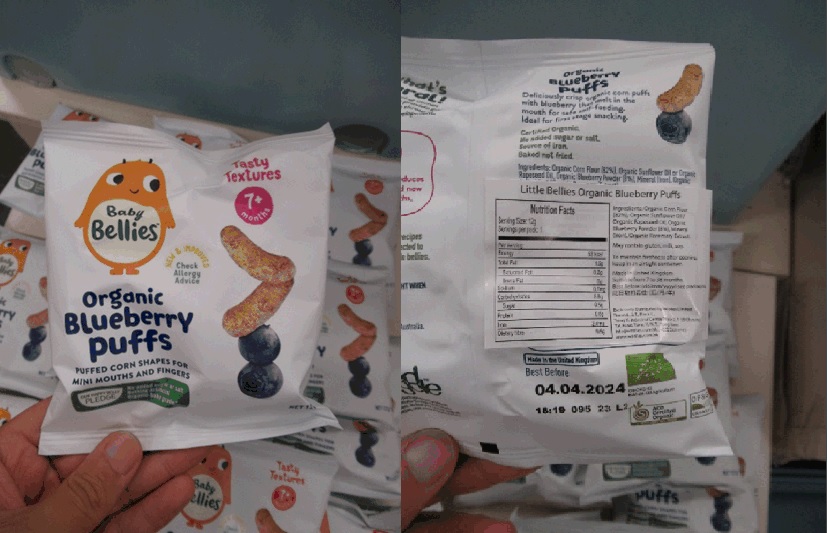
Product Name and Description Product name: Organic Blueberry Puffs (Little Bellies Organic Blueberry Puffs)
Brand: Baby Bellies
Place of origin: United Kingdom
Net Weight: 12 grams
Best-before date: April 4, 2024
Distributor: Woolies Limited
Reason For Issuing Alert
  • The Centre for Food Safety (CFS) collected the above-mentioned sample from an online vendor for testing under its routine Food Surveillance Programme. The test result showed that it contained aflatoxin B1 at a level of 0.14 micrograms per kilogram.
  • Under the Harmful Substances in Food Regulation (Cap 132AF), the maximum concentration for aflatoxin B1 in any other food intended to be consumed principally by persons under the age of 36 months other than infant formula and follow-up formula manufactured from milk protein is 0.1 micrograms per kilogram.
  • The World Health Organization (WHO)’s International Agency for Research on Cancer classified naturally occurring aflatoxins as carcinogenic to humans, and the Joint Food and Agriculture Organization/WHO Expert Committee on Food Additives advised that intake of aflatoxins should be reduced to levels as low as reasonably possible although no health-based guidance value has been set. Aflatoxins can lead to liver cancer after long-term ingestion, and the risk for hepatitis B carriers is relatively high.
Action Taken by the Centre for Food Safety
  • The CFS has informed the online vendor and distributor concerned of the unsatisfactory test result.
  • The concerned vendor has stopped sales and removed the affected batch of product from shelves. The concerned distributor has initiated a recall according to the CFS’s instructions.
  • The CFS has alerted the trade and will continue to follow up on the incident and take appropriate action. Investigation is ongoing.
Advice to the Trade Stop using or selling the product concerned immediately.
Advice to Consumers
  • Not to consume the affected batch of the product if they have bought it.
  • To avoid excessive intake of mycotoxins, people should maintain a balanced and varied diet to minimise the risk from a small range of food items, and to avoid consuming food that looks mouldy or damaged.
Further Information The CFS press release

Members of the public may call its hotline at 2335 0511 during office hours for enquiries about the recall.

Luxembourg – Medium and large tellines sold in bulk on fish stalls – Presence of lipophilic toxins (DSP) exceeding the regulatory health threshold

SAP

The following product is recalled in Luxembourg:

Consumption reminder
Name Medium and large tellina
Brand Bulk sale on Auchan fish market stall
Sales period 08/29/2023 – 09/01/2023

Danger  : Presence of lipophilic toxins (DSP) exceeding the regulatory health threshold

DSP toxins cause intoxication in consumers, the effects of which appear within 2 to 18 hours after ingestion of contaminated shellfish. The main symptoms are gastrointestinal: diarrhea, nausea, vomiting, abdominal pain, and chills.

Sale confirmed in Luxembourg by: Auchan on fish stall .

A sale by other operators cannot be excluded.

Information Source: Recall Notification

Ireland – Recall of some batches of Lidl McEnnedy Corn Dogs due to Listeria monocytogenes

FSAI

Alert Summary
Category 1: For Action
Alert Notification: 2023.24
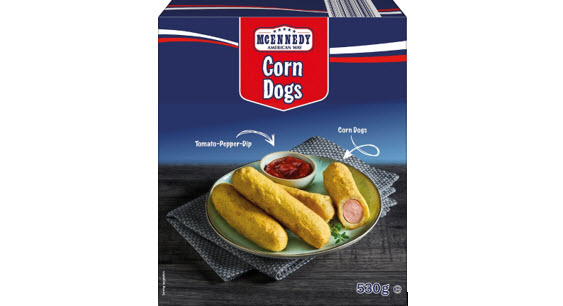
Product Identification: McEnnedy Corn Dogs; pack size: 530g
Batch Code Use by dates: 28.04.2024, 10.06.2024 and 10.08.2024
Country Of Origin: Germany

Message:

The above batches of McEnnedy Corn Dogs are being recalled by Lidl due the presence of Listeria monocytogenes. Recall notices will be displayed at point-of-sale in Lidl stores.

Nature Of Danger:

Symptoms of Listeria monocytogenes infection can include mild flu-like symptoms, or gastrointestinal symptoms such as nausea, vomiting and diarrhoea.  In rare cases, the infection can be more severe, causing serious complications. Some people are more vulnerable to Listeria monocytogenes infections, including pregnant women, babies, and people with weakened immune systems, including the elderly.  The incubation period (time between initial infection and first symptoms appearing) is on average 3 weeks but can range between 3 and 70 days.

Action Required:

Consumers:

Consumers are advised not to eat the implicated batches

The Netherlands – Safety warning ‘Corndogs’ from the MCennedy brand from Lidl (alert)- Listeria monocytogenes

NVWA

Safety warning ‘Corndogs’ from the MCennedy brand from Lidl

Lidl warns against ‘Corndogs’ from the MCennedy brand. The bacterium Listeria monocytogenes has been found in corn dogs. This bacterium can pose serious health risks to people with low resistance, such as the sick, pregnant women, young children and the elderly. Do not eat the product!
See the Lidl website
Which product is it?

  • Corn dogs from the MCennedy brand
  • Expiration dates: 28-04-2024, 10-06-2024 and 10-08-2024

Yours sincerely

The Dutch Food and Consumer Product Safety Authority

Research – Vital Surveillances: Epidemiological Evaluation of Bacillus cereus-Induced Foodborne Outbreaks — China, 2010–2020

China CDC

Abstract

IntroductionBacillus cereus (B. cereus) is a common gram-positive bacterium that contaminates starch-rich food and can cause outbreaks of foodborne diseases. This study describes the characteristics of outbreaks caused by B. cereus in China during 2010–2020 and explore the possible reasons for changes in the number of outbreaks over time. Results of this analysis can efficiently help guide and allocate public resources to prevent B. cereus-caused foodborne diseases