Category Archives: Food Microbiology Research

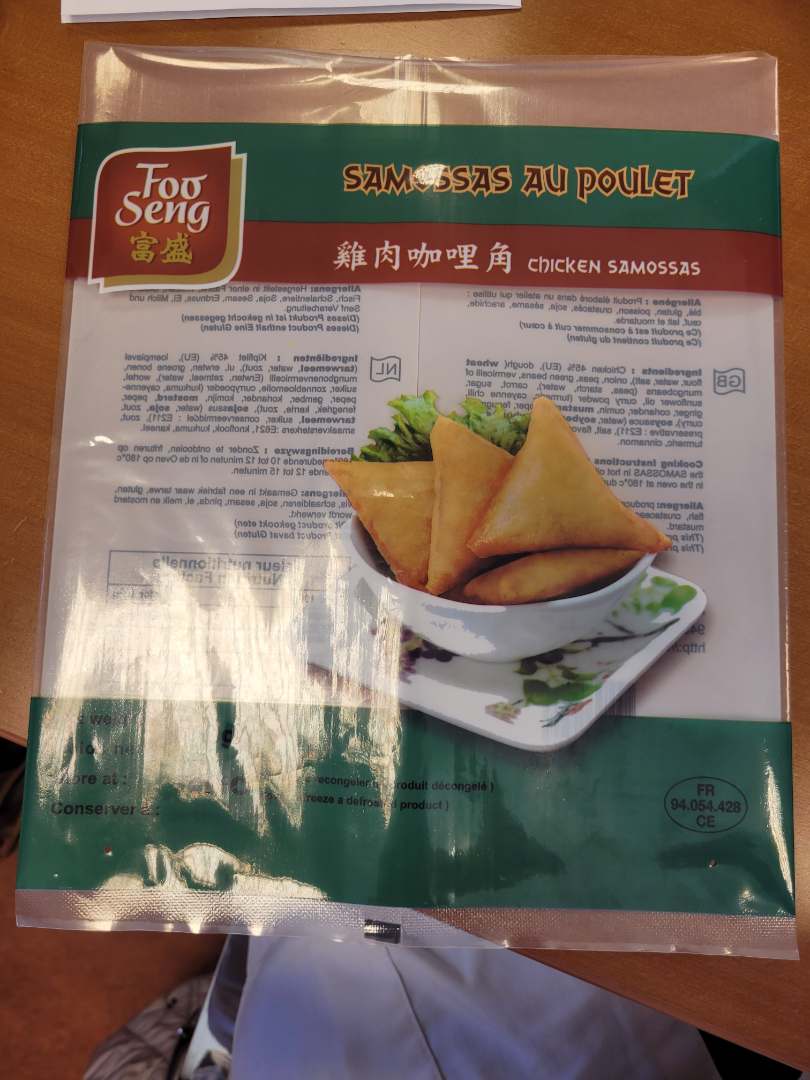
France – CHICKEN SAMOSSAS – Salmonella

Gov France

Product category
Food
Product subcategory
Prepared meals and snacks
Product brand name
FOOSENG
Model names or references
HALAL CHICKEN SAMOSSAS 1,450KG / 580G CHICKEN SAMOSSAS 580G
Product identification
GTIN Batch Date
3760195545225 CHICKEN SAMOSSAS 580G Minimum durability date 05/01/2025
3760195545553 HALAL CHICKEN SAMOSSAS 1,450G Minimum durability date 05/01/2025
3760195545553 HALAL CHICKEN SAMOSSAS 580G Minimum durability date 05/01/2025
Packaging
BAGS OF 580G AND 1450G
Start/end date of marketing
From 11/13/2023 to 12/05/2023
Storage temperature
Product to keep in the freezer
Geographical sales area
Departments: VAL-DE-MARNE (94)
Distributors
NGUYEN ORIENTAL FOODS/VILLETTE FOOD DISTRIBUTION/PARIS STORE CASH/TIA SARAN (ST45) / TIA TOURS / CHINA MARKET (CAMPAIGN PLAN) / BAO CERGY / BAO ST DENIS BASILIQUE / FLANDERS DISTRIBUTION / VENISSIEUX FOOD DISTRIBUTION (see list of sales points)

UK – FSA alerts consumers on Salmonella and Polish poultry

FSA

Following a rise in cases of Salmonella linked to poultry products imported from Poland, the FSA is reminding consumers of its safe handling and cooking advice.

The Food Standards Agency (FSA) along with Food Standards Scotland (Opens in a new window) (FSS) and the UK Health Security Agency (Opens in a new window) (UKHSA) is reminding consumers to take care when handling and cooking poultry products at home, including chilled and frozen chicken and turkey drumsticks, breasts, thighs and chicken pieces. This is because of a recent rise in cases of food poisoning caused by Salmonella Enteritidis linked to poultry products imported from Poland.

Our advice is to:

  • Follow cooking and storage instructions on the product label, including the cooking time and temperature – this is important to ensure that the food is safe when consumed
  • Use or freeze products by their use-by date
  • Wash hands thoroughly after handling raw poultry products
  • Never wash raw poultry products
  • Clean all surfaces and utensils with hot soapy water after contact with raw poultry
  • Only reheat cooked and frozen meat once

An investigation is ongoing into multiple strains of Salmonella linked to poultry products imported to the UK from Poland. There have been over 200 human cases of salmonellosis caused by specific genetic strains of Salmonella Enteritidis that have been linked to poultry products such as meat and eggs, this year.

The FSA is in discussion with officials in Poland and the EU to ensure all necessary steps are taken to improve the safety of poultry and eggs imported from Poland. The forthcoming import controls on food and feed coming into the UK from the EU will also allow us to check these controls are in place and help to uphold the UK’s high food and feed standards and to protect public health.

Our advice is to always take care when storing, handling, and cooking poultry products such as chicken, turkey and duck to help reduce the risk of food poisoning to you and your family.

You should always check the cooking instructions on food packaging, as different brands of the same type of product might have different instructions. Cooking food at the right temperature and for the correct length of time will ensure that any harmful bacteria are killed. At the same time, make sure that any surfaces and equipment that come into contact with food are clean to avoid risks from cross contamination and always wash your hands before and after handling food.

A number of the cases have involved the consumption of eggs produced in Poland and used in meals in restaurants and cafes. We are therefore asking local authorities to remind food businesses about the importance of good hygiene practices.

Tina Potter, Head of Incidents – Food Standards Agency

Salmonella is a type of stomach bug that causes stomach pain, vomiting and diarrhoea. Symptoms typically resolve themselves within a few days, however, they can be more severe with fever and dehydration, especially in young children, those who are pregnant and those with weakened immune systems.

Salmonella can be spread from person to person as well as from food, so anyone affected should follow good hygiene practices, such as washing hands thoroughly after using the bathroom and avoiding handling food for others where possible, if you have symptoms.

Lesley Larkin, Deputy Director for Gastrointestinal Infections – UKHSA

Salmonella is a common bacteria that can cause food poisoning. Salmonella can be found in a variety of different foods but raw meat (processed and unprocessed), undercooked poultry, eggs and unpasteurised milk are the most commonly reported foods causing salmonellosis. Inadequate cooking and cross-contamination in the kitchen during food preparation can lead to salmonellosis. The bacteria can also spread from person to person.

Babies, children, pregnant women, and older people should only eat runny or raw eggs if they have a British Lion mark (Opens in a new window) or are produced under the Laid in Britain egg assurance scheme (Opens in a new window). This advice does not apply to individuals who are severely immunocompromised.

Please see our Salmonella guidance and the NHS Choices page on food poisoning (Opens in a new window) for more information on this foodborne disease. Our Home food fact checker also has advice on how to store, cook and reheat food at home.

Research – Sweet and sour synergy: exploring the antibacterial and antibiofilm activity of acetic acid and vinegar combined with medical-grade honeys

Microbiology Society

ABSTRACT

, a combination of honey and vinegar, has been used as a remedy for wounds and infections in historical and traditional medical settings. While honey is now clinically used to treat infected wounds, this use of a complex, raw natural product (NP) mixture is unusual in modern western medicine. Research into the antimicrobial activity of NPs more usually focuses on finding a single active compound. The acetic acid in vinegar is known to have antibacterial activity at low concentrations and is in clinical use to treat burn wound infections. Here, we investigated the potential for synergistic activity of different compounds present in a complex ingredient used in historical medicine (vinegar) and in an ingredient mixture (). We conducted a systematic review to investigate published evidence for antimicrobial effects of vinegars against human pathogenic bacteria and fungi. No published studies have explicitly compared the activity of vinegar with that of a comparable concentration of acetic acid. We then characterized selected vinegars by HPLC and assessed the antibacterial and antibiofilm activity of the vinegars and acetic acid, alone and in combination with medical-grade honeys, against and . We found that some vinegars have antibacterial activity that exceeds that predicted by their acetic acid content alone, but that this depends on the bacterial species being investigated and the growth conditions (media type, planktonic vs. biofilm). Pomegranate vinegars may be particularly interesting candidates for further study. We also conclude that there is potential for acetic acid, and some vinegars, to show synergistic antibiofilm activity with manuka honey.

Italy – Fresh free-range eggs – Salmonella

Salute

Brand : Avicola Valle Santa

Name : Fresh free-range eggs

Reason for reporting : Recall due to microbiological risk

Publication date : 4 December 2023

Documentation

Documentation

Italy – 6 BIG FRESH EGGS WITH ANCIENT FLAVOR FROM FREE-STANDING – Salmonella

Salute

Brand : ANTIGA

Name : 6 BIG FRESH EGGS WITH ANCIENT FLAVOR FROM FREE-STANDING

Reason for reporting : Recall due to microbiological risk

Publication date : 4 December 2023

Documentation

Documentation

Research – High-Pressure Inactivation of Bacillus cereus in Human Breast Milk

MDPI

Abstract

Although Holder pasteurization is the recommended method for processing breast milk, it does affect some of its nutritional and biological properties and is ineffective at inactivating spores. The aim of this study was to find and validate an alternative methodology for processing breast milk to increase its availability for newborn babies and reduce the financial loss associated with discarding milk that has become microbiologically positive. We prepared two series of breast milk samples inoculated with the Bacillus cereus (B. cereus) strain to verify the effectiveness of two high-pressure treatments: (1) 350 MPa/5 min/38 °C in four cycles and (2) cumulative pressure of 350 MPa/20 min/38 °C. We found that the use of pressure in cycles was statistically more effective than cumulative pressure. It reduced the number of spores by three to four orders of magnitude. We verified that the method was reproducible. The routine use of this method could lead to an increased availability of milk for newborn babies, and at the same time, reduce the amount of wasted milk. In addition, high-pressure treatment preserves the nutritional quality of milk.

Research – Fungal and Toxin Contaminants in Cereal Grains and Flours: Systematic Review and Meta-Analysis

MDPI

Abstract

Cereal grains serve as the cornerstone of global nutrition, providing a significant portion of humanity’s caloric requirements. However, the presence of fungal genera, such FusariumPenicilliumAspergillus, and Alternaria, known for their mycotoxin-producing abilities, presents a significant threat to human health due to the adverse effects of these toxins. The primary objective of this study was to identify the predominant fungal contaminants in cereal grains utilized in breadmaking, as well as in flour and bread. Moreover, a systematic review, including meta-analysis, was conducted on the occurrence and levels of mycotoxins in wheat flour from the years 2013 to 2023. The genera most frequently reported were Fusarium, followed by PenicilliumAspergillus, and Alternaria. Among the published reports, the majority focused on the analysis of Deoxynivalenol (DON), which garnered twice as many reports compared to those focusing on Aflatoxins, Zearalenone, and Ochratoxin A. The concentration of these toxins, in most cases determined by HPLC-MS/MS or HPLC coupled with a fluorescence detector (FLD), was occasionally observed to exceed the maximum limits established by national and/or international authorities. The prevalence of mycotoxins in flour samples from the European Union (EU) and China, as well as in foods intended for infants, exhibited a significant reduction compared to other commercial flours assessed by a meta-analysis investigation.

Research – Validation of a Bacteriophage Hide Application to Reduce STEC in the Lairage Area of Commercial Beef Cattle Operations

MDPI

Abstract

Finalyse, a T4 bacteriophage, is a pre-harvest intervention that utilizes a combination of bacteriophages to reduce incoming Escherichia coli O157:H7 prevalence by destroying the bacteria on the hides of harvest-ready cattle entering commercial abattoirs. The objective of this study was to evaluate the efficacy of Finalyse, as a pre-harvest intervention, on the reduction in pathogens, specifically E. coli O157:H7, on the cattle hides and lairage environment to overall reduce incoming pathogen loads. Over 5 sampling events, a total of 300 composite hide samples were taken using 25 mL pre-hydrated Buffered Peptone Water (BPW) swabs, collected before and after the hide wash intervention, throughout the beginning, middle, and end of the production day (n = 10 swabs/sampling point/timepoint). A total of 171 boot swab samples were also simultaneously taken at the end of the production day by walking from the front to the back of the pen in a pre-determined ‘Z’ pattern to monitor the pen floor environment from 3 different locations in the lairage area. The prevalence of pathogens was analyzed using the BAX® System Real-Time PCR Assay. There were no significant reductions observed for Salmonella and/or any Shiga toxin-producing E. coli (STEC) on the hides after the bacteriophage application (p > 0.05). Escherichia coli O157:H7 and O111 hide prevalence was very low throughout the study; therefore, no further analysis was conducted. However, boot swab monitoring showed a significant reduction in E. coli O157:H7, O26, and O45 in the pen floor environment (p < 0.05). While using Finalyse as a pre-harvest intervention in the lairage areas of commercial beef processing facilities, this bacteriophage failed to reduce E. coli O157:H7 on the hides of beef cattle, as prevalence was low; however, some STECs were reduced in the lairage environment, where the bacteriophage was applied. Overall, an absolute conclusion was not formed on the effectiveness of Finalyse and its ability to reduce E. coli O157:H7 on the hides of beef cattle, as prevalence on the hides was low.

Research – Occurrence of Mycotoxins in Foods: Unravelling the Knowledge Gaps on Their Persistence in Food Production Systems

MDPI

Abstract

In this review, the intricate issue about the occurrence levels of mycotoxins in foods is discussed aiming to underline the main knowledge gaps on the persistence of these toxicants in the food production system. Mycotoxins have been a key challenge to the food industry, economic growth, and consumers’ health. Despite a breadth of studies over the past decades, the persistence of mycotoxins in foods remain an overlooked concern that urges exploration. Therefore, we aimed to concisely underline the matter and provide possible biochemical and metabolic details that can be relevant to the food sector and overall public health. We also stress the application of computational modeling, high-throughput omics, and high-resolution imaging approaches, which can provide insights into the structural and physicochemical characteristics and the metabolic activities which occur in a stored cereal grain’s embryo and endosperm and their relationship with storage fungi and mycotoxins on a cellular level. In addition, there is a need for extensive collaborative network and funding, which will play a key role in finding effective solutions against the persistence of mycotoxins at the genetic and molecular to metabolic levels in the food system.

Research – How to deal with feed ingredients prone to Aflatoxin contamination

Pet Food Industry

Find out which animal feed ingredients are more prone to aflatoxin contamination, when the risk of contamination is higher and strategies to mitigate its effects on animals.

Aflatoxins are naturally occurring mycotoxins produced by certain molds, primarily Aspergillus flavus and Aspergillus parasiticus. These toxic compounds can contaminate animal feed, posing significant health risks to livestock and poultry. In this article, we will discuss which animal feed ingredients are more prone to aflatoxin contamination, when the risk of contamination is higher and strategies to mitigate its effects on animals.