Category Archives: Food Microbiology Research

Research – FDA Publishes Landmark Final Rule to Enhance the Safety of Agricultural Water

FDA

Today, the U.S. Food and Drug Administration (FDA) published a final rule on agricultural water that represents an important step toward enhancing the safety of produce. The revised requirements are intended to enhance public health by improving the safety of water used in produce cultivation. The revisions are also designed to be practical across various agricultural water systems, uses, and practices, while remaining adaptable to future advancements in agricultural water quality science.

The final rule replaces certain pre-harvest agricultural water requirements for covered produce (other than sprouts) in the 2015 produce safety rule with requirements for systems-based agricultural water assessments to determine and guide appropriate measures to minimize potential risks associated with pre-harvest agricultural water. Specifically, this rule:

  • Establishes requirements for agricultural water assessments that evaluate a variety of factors that are key determinants of contamination risks associated with pre-harvest agricultural water. This includes an evaluation of the water system, water use practices, crop characteristics, environmental conditions, potential impacts on water from adjacent and nearby land, and other relevant factors.
  • Includes testing pre-harvest agricultural water as part of an assessment in certain circumstances.
  • Requires farms to implement effective mitigation measures within specific timeframes based on findings from their assessments. Hazards related to certain activities associated with adjacent and nearby land uses are subject to expedited mitigation.
  • Adds new options for mitigation measures, providing farms with additional flexibility in responding to findings from their pre-harvest agricultural water assessments.

Farms are required to conduct assessments of their pre-harvest agricultural water annually, and whenever a significant change occurs, to identify any conditions likely to introduce known or reasonably foreseeable hazards into or onto covered produce or food contact surfaces.

These revised requirements reflect recent science, findings from investigations of several produce-related outbreaks, and feedback from a variety of stakeholders on the agricultural water requirements in the Produce Safety Rule, which were previously published in 2015. These revisions will more comprehensively address a known route of microbial contamination that can lead to preventable foodborne illness.

Research – Opportunistic Pathogens in Drinking Water Distribution Systems—A Review

MDPI

Abstract

In contrast to “frank” pathogens, like Salmonella entrocoliticaShigella dysenteriae, and Vibrio cholerae, that always have a probability of disease, “opportunistic” pathogens are organisms that cause an infectious disease in a host with a weakened immune system and rarely in a healthy host. Historically, drinking water treatment has focused on control of frank pathogens, particularly those from human or animal sources (like Giardia lambliaCryptosporidium parvum, or Hepatitis A virus), but in recent years outbreaks from drinking water have increasingly been due to opportunistic pathogens. Characteristics of opportunistic pathogens that make them problematic for water treatment include: (1) they are normally present in aquatic environments, (2) they grow in biofilms that protect the bacteria from disinfectants, and (3) under appropriate conditions in drinking water systems (e.g., warm water, stagnation, low disinfectant levels, etc.), these bacteria can amplify to levels that can pose a public health risk. The three most common opportunistic pathogens in drinking water systems are Legionella pneumophilaMycobacterium avium, and Pseudomonas aeruginosa. This report focuses on these organisms to provide information on their public health risk, occurrence in drinking water systems, susceptibility to various disinfectants, and other operational practices (like flushing and cleaning of pipes and storage tanks). In addition, information is provided on a group of nine other opportunistic pathogens that are less commonly found in drinking water systems, including Aeromonas hydrophilaKlebsiella pneumoniaeSerratia marcescensBurkholderia pseudomalleiAcinetobacter baumanniiStenotrophomonas maltophiliaArcobacter butzleri, and several free-living amoebae including Naegleria fowleri and species of Acanthamoeba. The public health risk for these microbes in drinking water is still unclear, but in most cases, efforts to manage Legionella, mycobacteria, and Pseudomonas risks will also be effective for these other opportunistic pathogens. The approach to managing opportunistic pathogens in drinking water supplies focuses on controlling the growth of these organisms. Many of these microbes are normal inhabitants in biofilms in water, so the attention is less on eliminating these organisms from entering the system and more on managing their occurrence and concentrations in the pipe network. With anticipated warming trends associated with climate change, the factors that drive the growth of opportunistic pathogens in drinking water systems will likely increase. It is important, therefore, to evaluate treatment barriers and management activities for control of opportunistic pathogen risks. Controls for primary treatment, particularly for turbidity management and disinfection, should be reviewed to ensure adequacy for opportunistic pathogen control. However, the major focus for the utility’s opportunistic pathogen risk reduction plan is the management of biological activity and biofilms in the distribution system. Factors that influence the growth of microbes (primarily in biofilms) in the distribution system include, temperature, disinfectant type and concentration, nutrient levels (measured as AOC or BDOC), stagnation, flushing of pipes and cleaning of storage tank sediments, and corrosion control. Pressure management and distribution system integrity are also important to the microbial quality of water but are related more to the intrusion of contaminants into the distribution system rather than directly related to microbial growth. Summarizing the identified risk from drinking water, the availability and quality of disinfection data for treatment, and guidelines or standards for control showed that adequate information is best available for management of L. pneumophila. For L. pneumophila, the risk for this organism has been clearly established from drinking water, cases have increased worldwide, and it is one of the most identified causes of drinking water outbreaks. Water management best practices (e.g., maintenance of a disinfectant residual throughout the distribution system, flushing and cleaning of sediments in pipelines and storage tanks, among others) have been shown to be effective for control of L. pneumophila in water supplies. In addition, there are well documented management guidelines available for the control of the organism in drinking water distribution systems. By comparison, management of risks for Mycobacteria from water are less clear than for L. pneumophila. Treatment of M. avium is difficult due to its resistance to disinfection, the tendency to form clumps, and attachment to surfaces in biofilms. Additionally, there are no guidelines for management of M. avium in drinking water, and one risk assessment study suggested a low risk of infection. The role of tap water in the transmission of the other opportunistic pathogens is less clear and, in many cases, actions to manage L. pneumophila (e.g., maintenance of a disinfectant residual, flushing, cleaning of storage tanks, etc.) will also be beneficial in helping to manage these organisms as well.

Research – Biological Control of Escherichia coli O157:H7 in Dairy Manure-Based Compost Using Competitive Exclusion Microorganisms

MDPI

Abstract

Background: Animal manure-based compost is a valuable organic fertilizer and biological soil amendment. To ensure the microbiological safety of compost products, the effectiveness of competitive exclusion microorganisms (CE) in reducing Escherichia coli O157:H7 in dairy manure-based compost was evaluated. Methods: A cocktail of E. coli O157:H7 strains were inoculated into dairy compost along with CE strains isolated from compost, and the reduction in E. coli O157:H7 by CE was determined in compost with 20%, 30%, and 40% moisture levels at 22 °C and 30 °C under laboratory conditions, as well as in fall, winter, and summer seasons under greenhouse settings. Results: Under lab conditions, CE addition resulted in 1.1–3.36 log reductions in E. coli O157:H7 in compost, with enhanced pathogen reduction by higher moisture and lower temperature. In the greenhouse, >99% of the E. coli O157:H7 population in compost with ≥30% moisture due to cross-contamination can be effectively inactivated by CE within 2 days during colder seasons. However, it took ≥8 days to achieve the same level of reduction for heat-adapted E. coli O157:H7 cells. Conclusions: Our results demonstrated that the competitive exclusion of microorganisms can be an effective tool for controlling foodborne pathogens in compost and reducing the potential for soil and crop contamination.

Research – Exploring Propolis as a Sustainable Bio-Preservative Agent to Control Foodborne Pathogens in Vacuum-Packed Cooked Ham

MDPI

Abstract

The search for natural food additives makes propolis an exciting alternative due to its known antimicrobial activity. This work aims to investigate propolis’ behaviour as a nitrite substitute ingredient in cooked ham (a ready-to-eat product) when confronted with pathogenic microorganisms of food interest. The microbial evolution of Listeria monocytogenesStaphylococcus aureusBacillus cereus, and Clostridium sporogenes inoculated at known doses was examined in different batches of cooked ham. The design of a challenge test according to their shelf life (45 days), pH values, and water activity allowed the determination of the mesophilic aerobic flora, psychotropic, and acid lactic bacteria viability. The test was completed with an organoleptic analysis of the samples, considering possible alterations in colour and texture. The cooked ham formulation containing propolis instead of nitrites limited the potential growth (δ < 0.5 log10) of all the inoculated microorganisms until day 45, except for L. monocytogenes, which in turn exhibited a bacteriostatic effect between day 7 and 30 of the storage time. The sensory analysis revealed the consumer’s acceptance of cooked ham batches including propolis as a natural additive. These findings suggest the functionality of propolis as a promising alternative to artificial preservatives for ensuring food safety and reducing the proliferation risk of foodborne pathogens in ready-to-eat products.

Research – Enhancing Escherichia coli Inactivation: Synergistic Mechanism of Ultraviolet Light and High-Voltage Electric Field

MDPI

Abstract

This study investigated the bactericidal effects of ultraviolet (UV) radiation, a high-voltage electric field (HVEF), and their combination on Escherichia coli. The results indicated that UV and combined disinfection were more effective with longer exposure, leading to significant reductions in microbial activity. Specifically, the single UV disinfection alone reduced activity by 3.3 log after 5 min, while combined disinfection achieved a 4.2 log reduction. In contrast, short-term HVEF treatment did not exhibit significant bactericidal effects, only achieving a reduction of 0.17 log in 5 min. Furthermore, prolonged exposure to both UV disinfection and an HVEF was found to damage cell membranes, ultimately causing cell death, while shorter durations did not. Despite rapid cell count decreases, flow cytometry did not detect apoptotic or necrotic cells, likely due to rapid cell rupture. This study suggests that combining UV radiation and an HVEF could be a promising approach for inhibiting bacterial reproduction, with HVEF enhancing UV effects. These findings provide insights for using combined HVEF and UV disinfection in food safety and preservation.

RASFF Alert – Staphylococcus aureus – Raw Milk Cheese – Sucuk

RASFF

Coagulase Staphylococcus in raw milk cheese, from France in the Netherlands

RASFF

Staphylococci in Sucuk from Austria in Germany

France- Rolled Head – Listeria monocytogenes

Gov France

Product category
Food
Product subcategory
Meats
Product brand name
FARM DELICES
Model names or references
Rolled Head Lot GDF2503
Product identification
Batch
GDF2503
Start/end date of marketing
From 04/08/2024 to 05/02/2024
Storage temperature
Product to keep in the refrigerator
Geographical sales area
Regions: Auvergne-Rhône-Alpes
Distributors
Supermarkets Restaurants Groceries Direct sales
List of points of sale
LIST_ENSEIGNES_CONCERNEES.pdf

Catalonia- Microbiological criteria for Vibrio cholerae applicable to imported frozen fishery products

ACSA

The Spanish Agency for Food Safety and Nutrition (AESAN) has published a new report from its Scientific Committee on the microbiological criteria for Vibrio cholerae applicable as additional measures of border controls on imported frozen prawns and other fishery products.

In recent years, an increase in the presence of Vibrio species in products derived from fishing has been detected as a consequence of phenomena associated with climate change, international trade and the development of new detection and diagnosis methods, specifically, serogroups of V . cholerae O1 and O139, as well as strains carrying the gene that codes for cholera toxin (ctx positive strains), which pose a risk to the consumer through the ingestion of contaminated fish foods. Regulation (EC) 2073/2005, relating to microbiological criteria applicable to foodstuffs, does not establish criteria at European Union level for any species of Vibrio , so there is no harmonized criterion on border controls.

Based on the literature analyzed, the Scientific Committee report concludes that the prevalence of V. cholerae O1 and O139, as well as ctx-positive strains in imported frozen shrimp and other fishery products, is low, so that the risk to the consumer would be, mainly, associated with poor handling and storage practices.

Regarding the risk to the consumer derived from the presence of V. cholerae in raw frozen prawns and other fish products, the report indicates that the previous phases of washing and putting on ice, together with the application of a freezing process, can reduce the concentration of the pathogen, and cooking treatments at 70ºC for 2 minutes in the center of the product guarantee the elimination of V. cholerae .

The risk associated with ingesting ready-to-eat cooked frozen prawns and other fishery products is related to post-cooking contamination, according to the report’s conclusions. Given that the product does not undergo any inactivation treatment after cooking and prior to consumption, it is necessary to follow Good Hygiene Practices and the principles of Hazard Analysis and Critical Control Points to reduce the risk. of product contamination.

The report also indicates that the pathogenicity of non-toxigenic V. cholerae serogroups is not yet well defined, and there is no solid evidence about foodborne infection.

V. cholerae is transmitted from person to person via the fecal-oral route or indirectly through contaminated food or water. Among different foods, fishery products are the main source of V. cholerae infection in the world. V. cholerae infection can be asymptomatic or present with severe clinical forms. Cholera can occur as a sporadic, epidemic or endemic disease, known to cause severe diarrhea and dehydration that can lead to death in the absence of medical treatment.

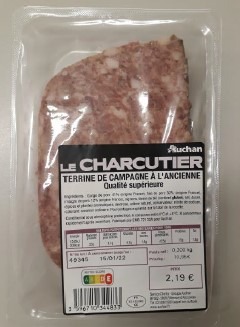
France – AUCHAN LE CHARCUTIER OLD-FASHIONED COUNTRY TERRINE – Listeria monocytogenes

Gov France

Product category
Food
Product subcategory
Meats
Product brand name
AUCHAN
Model names or references
AUCHAN LE CHARCUTIER OLD-FASHIONED COUNTRY TERRINE 200G
Product identification
GTIN Batch Date
3596710344833 15102 Use-by date 05/16/2024
Products List
Consumer_poster_-Prestige_de_la_Sarthe.pdfAttachment
Packaging
200G
Start/end date of marketing
From 04/20/2024 to 04/30/2024
Storage temperature
Product to keep in the refrigerator
Health mark
FR 72 132 002 CE
Geographical sales area
Whole France
Distributors
Auchan and any brand distributing Auchan branded products

New Zealand – New reports highlight food recall system at work

MPI

A new report by New Zealand Food Safety identifies Salmonella in imported sesame seed-based products as the most significant food safety event of 2023, resulting in 14 recalls affecting 65 food products.

The ‘Consumer-level food recalls annual report for 2023’, one of 2 recall reports published by New Zealand Food Safety today, says the recalls were initiated after Salmonella was detected during routine testing by a New Zealand business making products containing tahini.

Consumer-level food recalls annual report for 2023 [PDF, 3.2 MB]

“A complex investigation by our Food Compliance Services team – involving product testing and tracing of ingredients through the domestic market – found the contamination was from tahini imported from a Turkish manufacturer,” says New Zealand Food Safety deputy director-general Vincent Arbuckle.

“The team dug deeper and subsequent online surveillance and scanning of international food safety issues also identified concerns with products from a manufacturer in Jordan.

“By the time all the sesame seed-based products were tracked down and removed from sale, we had supported 14 recalls affecting 65 products. And, most importantly, we had no confirmed reports of related illness.”

The annual reports are a new initiative by New Zealand Food Safety to share information on consumer-level recalls with the public.

“Our priority is to protect consumers, and these reports help identify trends and find ways to prevent food safety incidents,” says Mr Arbuckle.

“New Zealand’s food safety system has a strong track record of keeping people safe and – given the volumes of food being produced, manufactured and imported – incidences of related illness remain rare.

“However, there are occasions when food safety issues occur, and that’s when we work quickly with food businesses to recall the affected product, removing it from the food supply chain and promoting public awareness.”

The 2023 report shows New Zealand Food Safety supported food businesses to conduct 70 consumer-level food recalls.

“It’s important to note that the number of recalls is not an accurate indicator of the level of risk to consumers. Numbers are dependent on many factors, including regulatory changes, business and public awareness of food-related problems, and reporting of those problems,” says Mr Arbuckle.

Of the 70 recalls, 48 were initiated for domestically produced foods and 22 were for imported foods.

“Another food safety event to highlight from 2023 was the possible presence of Listeria and Campylobacter in raw milk, which led to 3 recalls.

“Drinking raw milk carries inherent risks as it may contain harmful bacteria that would normally be killed through the pasteurisation process.

“In this case, there were fortunately no associated reports of Listeriosis, which can be very serious for vulnerable people like the very young, pregnant, older and those with low immunity. But we were notified of 3 related cases of Campylobacter, which causes vomiting, diarrhoea, abdominal pain, fever, headache, and body aches.”

Allergens in food were the leading cause for recalls in 2023, with milk being the allergen that triggered the most recalls.

“Food recalls are a sign that our food safety system is working to protect consumers,” says Mr Arbuckle. “You can help keep yourself and your family safe by subscribing to our recall alerts from the New Zealand Food Safety food recall page.”

Recalled food products list

By the numbers:

  • 70 consumer-level recalls in 2023
  • 48 recalls for domestically produced foods
  • 22 recalls for imported foods
  • 26 recalls for allergens (the leading cause for recalls)
  • 12 recalls for milk (the allergen triggering the most recalls)
  • 23 recalls due to microbiological contamination
  • 14 recalls due to physical contamination.