Category Archives: Food Microbiology Research

Research – Mycotoxin survey: Watch out for exposure from dirty maize

Irish Examiner

If you’re feeding maize, you likely have a mycotoxin problem on your farm, delegates at a recent ruminant nutrition were told.

Breaking down the results of this year’s mycotoxin survey, Laura Quinn, Ruminant Technical Species Expert at DSM, said: “When plants get stressed – whether that be drought, weather-related or disease – they can be vulnerable to being attacked by fungi, and mycotoxins are toxic secondary metabolites which are released by the fungi.

“They are in almost all agricultural commodities worldwide. They are very stable, can persist in heat and are resistant to any processing at feed mills.”

Biomin and DSM have run the survey since 2004.

The firm analyses over 20,000 samples a year and offers localised predictions for mycotoxins based on weather patterns.

“Mycotoxins are anti-protozoal, anti-bacterial and anti-fungal, which is great for disinfectant, but considering in the rumen we are trying to use these to break down feed materials to produce milk, we don’t want them having that effect in the cow.”

In dairy animals, mycotoxins have been linked with reduced feed intake, lower milk yields, liver inflammation, lower vaccine efficacy, and lower fatty acid production, among other production and health issues.

There are currently more than 1,000 mycotoxins identified, with more being discovered by scientists all the time.
Ireland – More than 7,000 birds on eight poultry farms in Ireland to be culled due to salmonella outbreak

Irish Times

A large salmonella outbreak on eight poultry farms around the country has resulted in more than 7,000 birds having to be culled to ensure potentially-infected chicken products do not enter the food chain.

Due to the risk to human health from the bacteria, restrictions have been applied in the vicinity of the farms, most of which are in Co Cavan.

The Food Safety Authority of Ireland (FSAI) is working with the Department of Agriculture, Food and the Marine (DAFM) in an effort to curb the outbreak and to determine its cause.

The FSAI has confirmed that incidences of salmonella infection in broiler flocks were linked to a raw-chicken food recall it issued last week, when some poultry products were removed from supermarket shelves.

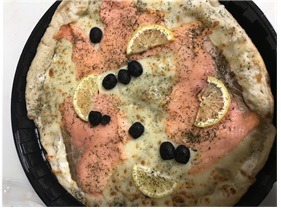
France – SMOKED SALMON PIZZA – Listeria monocytogenes

Gov france

Identification information of the recalled product

  • Product category Feed
  • Product subcategory Prepared meals and snacks
  • Product brand name Center E.Leclerc Blois
  • Model names or references SMOKED SALMON PIZZA
  • Identification of products
    GTIN Lot Date
    0201788000000 LOTS : 010 + 011 + 012 Use-by date between 01/14/2023 and 01/16/2023
  • Marketing start/end date From 10/01/2023 to 16/01/2023
  • Storage temperature Product to be stored in the refrigerator
  • Health mark presence of Listeria monocytogenes in salmon
  • Further information The pizzas were sold in self-service at the rotisserie in our store
  • Geographic area of ​​sale BLOIS and its surroundings
  • Distributors E.Leclerc Blois

Practical information regarding the recall

  • Reason for recall presence of Listeria monocytogenes (in salmon)
  • Risks incurred by the consumer Listeria monocytogenes (causative agent of listeriosis)

Research – How Does Hepatitis A Spread Through Food?

Food Poisoning News

In a developed country such as the United States, outbreaks of Hepatitis A (HAV) from contaminated food are not common but are still possible and have occurred in the past. Some outbreaks have been linked to thousands of cases. It can be difficult, however, to pinpoint the source of infection because of the late onset of symptoms especially when the victims are geographically scattered. A food product can become contaminated at any step during the process of harvesting, distribution, preparation, etc…  When the problem occurs at one of the early stages, say during production, this can lead to a wide-spread outbreak, such as recent outbreaks of HAV linked to imported pomegranates or HAV linked to imported strawberries.

However, most recorded HAV outbreaks in the United States have occurred at the point of sale when food is handled and served in a restaurant. While most food handlers with HAV do not transmit the virus because they practice proper personal hygiene, all an infected person has to do to spread the virus is touch food after failing to wash their hands. These “establishment” HAV outbreaks are usually in a single geographic location tied to a particular restaurant, like the relatively recent Burger King or Famous Anthony’s outbreaks.

New Zealand – National Microbiological Database Programme

MPI

Introduction

This introduction is not part of the Animal Products Notice, but is intended to indicate its general effect.

Purpose

This notice supplements the requirements of the Animal Product Regulations 2021 and sets requirements for microbiological sampling and testing of animal material and animal products intended for human consumption.

Background

The National Microbiological Database (NMD) Programme is a standardised microbiological sampling and testing programme to provide ongoing monitoring of microbiological process control across all industry participants.

Who should read this Animal Products Notice?

You should read this notice if you are:

•an operator who processes red meat or poultry intended for human consumption; or

•a recognised laboratory that tests red meat or poultry intended for human consumption

Why is this important?

A failure to comply with this notice may be an offence under section 135(1)(c) of the Animal Products Act 1999 and may result in further action by an animal products officer.

Irish officials search for the source of the Salmonella outbreak

Food Safety News

Health officials in the Republic of Ireland are investigating a Salmonella outbreak that has sickened more than 20 people.

The number of laboratory-confirmed cases associated with the epidemic is 26 and people fell ill between Nov. 30 and Dec. 25, 2022.

Patients range in age from 10 to 91 years old; 14 are male and 12 are female, according to the Health Service Executive (HSE).

The Salmonella Typhimurium outbreak was identified through routine whole genome sequencing.

The outbreak control team includes the HSE Health Protection Surveillance Centre (HPSC), regional departments of public health, HSE environmental health officers, the National Salmonella, Shigella, and Listeria Reference Laboratory, the Food Safety Authority of Ireland (FSAI), the Department of Agriculture Fisheries and the Marine (DAFM), and colleagues from Northern Ireland.

The source of the infection remains under investigation. Officials would not say if the outbreak was linked to a recall of raw chicken products in late January.

Research – Zoonoses, foodborne outbreaks and antimicrobial resistance guidance for reporting 2022 data

EFSA

Abstract

This technical report of the European Food Safety Authority (EFSA) presents the guidance to reporting European Union (EU) Member States and non‐Member States in data transmission using extensible markup language (XML) data transfer covering the reporting of isolate‐based quantitative antimicrobial resistance data, as well as reporting of prevalence data on zoonoses and microbiological agents and contaminants in food, foodborne outbreak data, animal population data and disease status data. For data collection purposes, EFSA has created the Data Collection Framework (DCF) application. The present report provides data dictionaries to guide the reporting of information deriving from 2022 under the framework of Directive 2003/99/EC, Regulation (EU) 2017/625, Commission Implementing Regulation (EU) 2019/627 and Commission Implementing Decision (EU) 2020/1729. The objective is to explain in detail the individual data elements that are included in the EFSA data models to be used for XML data transmission through the DCF. In particular, the data elements to be reported are explained, including information about the data type, a reference to the list of allowed terms and any additional business rule or requirement that may apply.

Research – Manual for reporting on zoonoses and zoonotic agents, within the framework of Directive 2003/99/EC, and on some other pathogenic microbiological agents for information derived from the year 2022

EFSA

Abstract

This reporting manual provides guidance to European Union (EU) Member States (MSs) for reporting on zoonoses and zoonotic agents in animals, food and feed under the framework of Directive 2003/99/EC, Regulation (EU) 2017/625, Commission Implementing Regulation (EU) 2019/627 and of Commission Delegated Regulation (EU) 2018/772 and also on the reporting of other pathogenic microbiological agents or contaminants in food. The objective of this manual is to harmonise and streamline reporting by MSs to ensure that the data collected are relevant and comparable for analysis at the EU level. This manual covers all the zoonoses and zoonotic agents included under the current data collection system run by the European Food Safety Authority (EFSA). Detailed instructions are provided on the reporting of data in tables and information in text forms. The instructions given relate to the description of the sampling and monitoring schemes applied by the MSs, as well as the monitoring results. Special reference is made to data elements which allow trend watching over time and the analysis of sources of zoonotic agents at the EU level. This manual is specifically aimed at guiding the reporting of information deriving from the year 2022.

Research – Campylobacter, the bacterium that causes most foodborne outbreaks in Spain

World Nation News

There were 11,244 cases of Campylobacteriosis in 2021, almost double the 6,891 cases reported in 2020

Campylobacter is the bacterium that causes most gastrointestinal infections in humans. According to the latest report on zoonotic diseases (infections from animals to humans) published by the European Food Safety Authority (EFSA), Campylobacter was the most common cause of infection in the EU accounting for 62% of the cases registered in 2021. and the European Center for Disease Prevention and Control (ECDC).

In Spain, there were 11,244 cases of campylobacteriosis in 2021, almost double the 6,891 cases recorded in 2020. The incidence of this bacterium has a marked seasonal pattern, with the highest figures being found in summer, with a rebound in January. The most frequently implicated food as confirmed by the Consumers’ and Users’ Organization (OCU) is poultry meat (turkey and chicken).

India – 36 School Students Fall Sick Due To Food Poisoning In Maharashtra

NDTV

Sangli: 

Thirty-six students in Sangli in Maharashtra on Friday fell ill due to suspected food poisoning, an official said.

All of them were shifted to a hospital, where 35 were discharged post treatment, while one has been kept under observation, he said.

“Food samples from the school and the central kitchen have been sent to a lab for tests. A three-member committee has been formed to probe the matter,” Gaikwad added.