Category Archives: Food Microbiology Blog

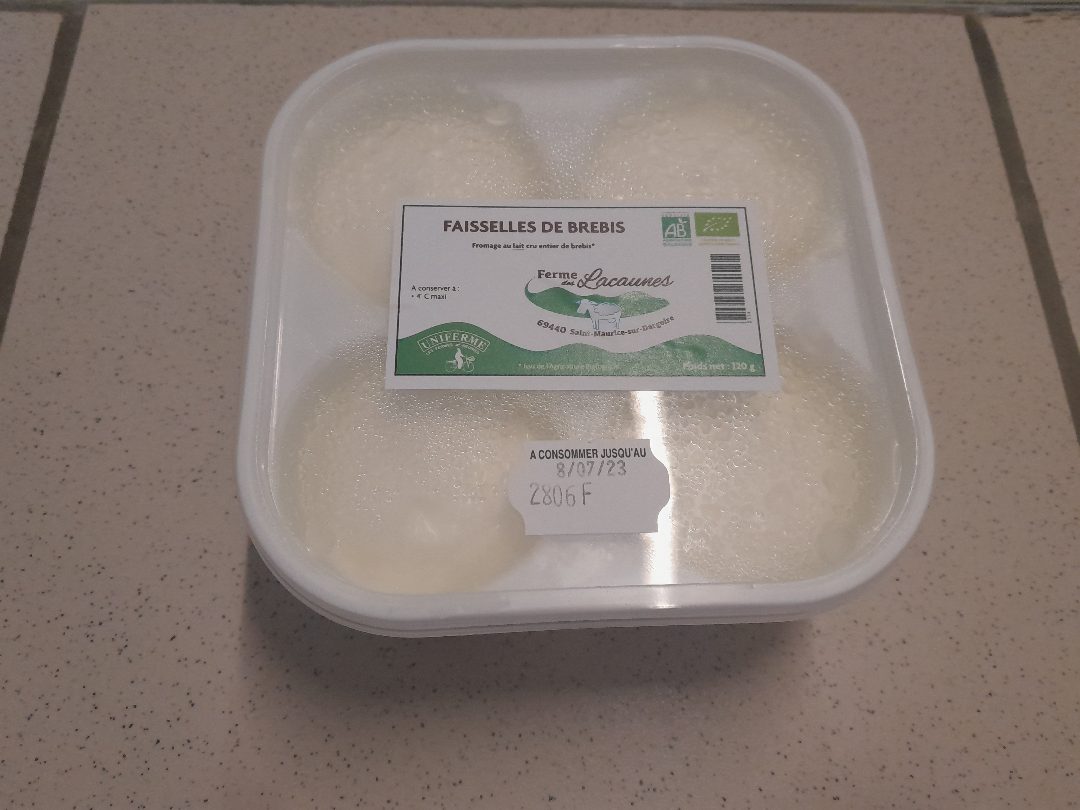
France – SPICY SHEEP CHEESE X2 – Salmonella

Gov france

Identification information of the recalled product

  • Product category Feed
  • Product subcategory Milk and dairy products
  • Product brand name THE LACAUNES FARM
  • Model names or references SPICY SHEEP CHEESE X2
  • Identification of products
    Batch Date
    2606F Use-by date 07/09/2023
  • Marketing start/end date From 06/27/2023 to 07/01/2023
  • Storage temperature Product to be stored in the refrigerator
  • Geographic area of ​​sale Departments: RHONE (69)
  • Distributors UNIFARM

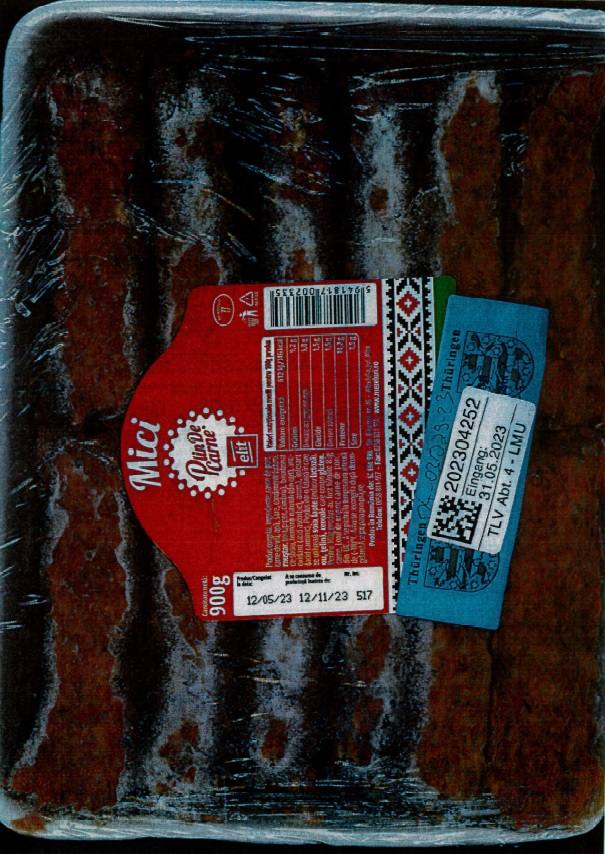
France – Mici – Carne Pine -Salmonella

Gov france

Identification information of the recalled product

  • Product category Feed
  • Product subcategory Meats
  • Product brand name elect
  • Model names or references Mici (Romanian sausages without skin)
  • Identification of products
    GTIN Batch Date
    3941817002335 517 Date of minimum durability 12/11/2023
  • Packaging 900g
  • Storage temperature Product to keep in the freezer
  • Geographic area of ​​sale Departments: SEINE-SAINT-DENIS (93)
  • Distributors Dana & Pop

France – SHEEP CHEESE 4x 100g – Salmonella

Gov france

Identification information of the recalled product

  • Product category Feed
  • Product subcategory Milk and dairy products
  • Product brand name THE LACAUNES FARM
  • Model names or references SHEEP CHEESE 4X 100g
  • Identification of products
    Batch Date
    2606F Use-by date 07/09/2023
  • Marketing start/end date From 06/27/2023 to 07/01/2023
  • Storage temperature Product to be stored in the refrigerator
  • Geographic area of ​​sale Departments: RHONE (69)
  • Distributors UNIFARM

Sweden – Increase in cases of illness with Campylobacter infection

Folkhalsomyndigheten

Campylobacter kswfoodworld

In recent weeks, there has been an increase in the number of people who have contracted campylobacter infection. The rise in the number of cases is preceded by an increase in campylobacter in broiler flocks. Good hygiene when handling raw chicken reduces the risk of becoming infected.

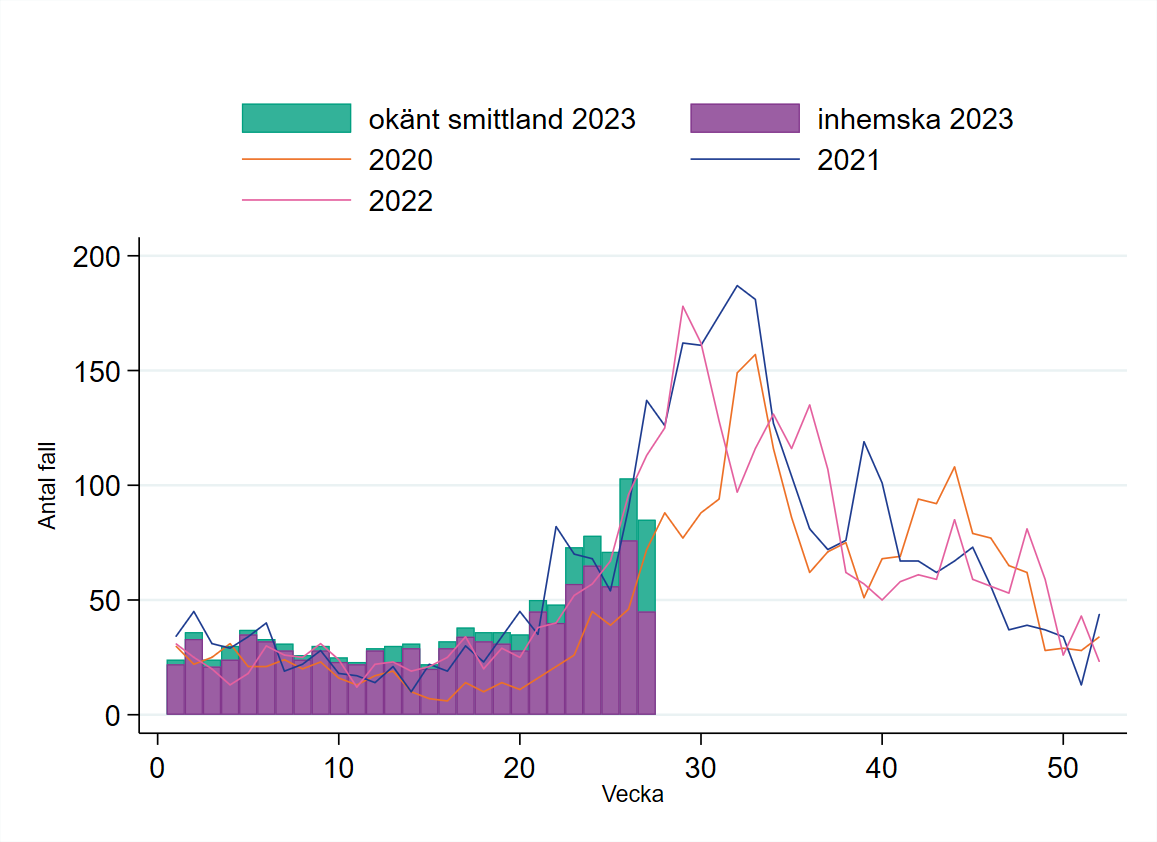
There has been an increase in the number of people who have been infected by the intestinal bacteria campylobacter in recent weeks. During week 26, the number of reported cases increased further compared to previous weeks and the increase looks set to continue.

Figure: The number of reported cases of campylobacter per week infected in Sweden or with an unknown country of infection (230706). Week 27 is not yet complete.

The number of sick people increased from week 21 to 60 cases per week from 30 cases.  In week 26, the cases increased further, a similar increase is seen in 2020-2022.

From mid-June, an increase in the occurrence of campylobacter in Swedish broiler flocks has also been observed. Previous studies have shown a connection between campylobacter infection and the consumption of fresh chicken, where around a third of those who have contracted the disease have been linked to fresh chicken. Campylobacter infection in humans is more common in summer as is the presence of campylobacter in broiler flocks.

RASFF Alerts – Aflatoxin – Indian Peanuts – Shelled Pistachios – Basmati Rice – Groundnut Kernels – Dried Figs

RASFF

Aflatoxin B1 in Indian peanuts in the Netherlands and Switzerland

RASFF

Aflatoxins above legal limits in shelled pistachios from USA via Turkey in Italy

RASFF

Aflatoxin in basmati rice from Pakistan in the Netherlands

RASFF

Aflatoxin B1 in Indian peanut in the Netherlands and Switzerland

RASFF

Aflatoxins in Egyptian groundnut kernels in the Netherlands

RASFF

Aflatoxins above maximum level in groundnuts from Nicaragua in Poland

RASFF

Aflatoxin in dried figs from Turkey in Romania and Bulgaria

RASFF Alerts – Salmonella – Polish Chicken Products – Sesame Seeds – Sausage Sticks – Cheese

RASFF

Salmonella spp. in dried fish from Thailand via the Netherlands in Germany

RASFF

SALMONELLA IN SESAME SEEDS FROM Mali in Greece

RASFF

Salmonella spp. in a chicken quarter from Poland in Germany

RASFF

Salmonella Infantis in chicken breast fillets from Poland in the UAE and Lithuania

RASFF

Salmonella in sausage sticks from the Netherlands in Belgium

RASFF

Salmonella Enteritidis in chick fillet from Poland in Belgium, UK, France and the Netherlands

RASFF

Salmonella in cheese made with pasteurized cow and goat milk from Spain in Portugal

RASFF

Salmonella in sesame seeds from India in Poland

RASFF Alert- Vibrio vulnificus – Frozen Prawns from Ecuador

RASFF

Presence of vibrio vulnificus in frozen prawns of Ecuador in Italy

RASFF Alerts – Ochratoxin A – Raisins – Crunchy Muesli with Nuts and Almonds

RASFF

Ochratoxin A (16±3,8µg/kg) in raisins from China in Latvia and Poland

RASFF

Ochratoxin a in crunchy muesli with nuts and almonds from Germany in the Netherlands

RASFF Alert- STEC E.coli – Feta Cheese

RASFF

Shigatoxin-producing E. coli (STEC) in feta from Greece in Austria and Germany

RASFF Alerts – Histamine – Salted Sardines – Sardines – Tuna – Outbreak from Tuna

RASFF

Presence of histamine in salted sardines in Croatia

RASFF

 Histamine in sardines from France in Poland and the Czech Republic

RASFF

Suspicion of histamine poisoning due to tuna consumption from Columbia in Italy, Spain and Slovakia

RASFF

Histamine in Tuna from India in Belgium, Denmark, Germany and the Netherlands