Category Archives: Food Micro Blog

USA – Patient dies in hepatitis A outbreak traced to restaurants in Virginia

Food Safety News

One person has died in a hepatitis A outbreak associated with three restaurants in the Roanoke, VA, area, according to state officials, and two more people have been added to the patient list.

“We don’t believe there is an ongoing threat to the public,” said Christ Wills of the Roanoke City and Alleghany Health Districts, which is a subagency of the Virginia health department.

However, Wills told Food Safety News today there will likely be more sick people than the 37 who have been identified because of the long incubation time for the virus. As of today, 26 of the patients have been so sick they had to be admitted to hospitals. The age range of patients is now trending to include younger patients with people from 31 to 79 years old now infected. 

USA – Salmonella Outbreak Linked to Raw Frozen Breaded Stuffed Chicken Products is over.

CDC

CDC, public health and regulatory officials in several states, and the U.S. Department of Agriculture’s Food Safety and Inspection Service (USDA-FSIS) investigated a multistate outbreak of Salmonella Enteritidis infections.

Epidemiologic, laboratory, and traceback data showed that raw frozen breaded stuffed chicken products produced at the P-2375 Serenade Foods facility in Milford, Indiana, made people sick.

As of October 13, 2021, this outbreak is over.

Epidemiologic Data

A total of 36 people infected with the outbreak strain of Salmonella Enteritidis were reported from 11 states (see map). The true number of sick people in an outbreak is likely much higher than the number reported, and the outbreak may not be limited to the states with known illnesses. This is because many people recover without medical care and are not tested for Salmonella.

Illnesses started on dates ranging from February 21, 2021, to August 16, 2021 (see timeline). Sick people ranged in age from 1 to 83 years, with a median age of 38 years, and 57% were female. Of 32 people with information available, 12 were hospitalized. No deaths were reported.

State and local public health officials interviewed people about the foods they ate in the week before they got sick. Of the 27 people interviewed, 14 (52%) reported preparing and eating frozen breaded stuffed chicken products. They bought different brands of raw frozen breaded stuffed chicken products from multiple stores.

Singapore – Recall of “Ceres 100% Apple Juice” products due to Patulin contamination

Click to access sfa-media-release-recall-of-ceres-100-apple-juice-products-due-to-patulin-contamination.pdf

France- GROUND BEEF STEAK PREPARED ON THE SITE TRAD BUTCHERY RAY – Listeria monocytogenes

Gov france

Identifying information for the recalled product

  • Product category Food
  • Product sub-category Meats
  • Product brand name E.Leclerc
  • Names of models or references ground beef steak
  • Product identification
    GTIN Lot
    020151000000 ULF2779609
  • Packaging Food packaging
  • Start date / End of marketing From 05/10/2021 to 11/10/2021
  • Storage temperature Product to be stored in the refrigerator
  • Further information/
  • Geographical sales area BURGUNDY (33)
  • Distributors E.LECLERC BRUGES

Practical information regarding the recall

  • Reason for recall An analysis reveals the presence of Listeria Monocytogenes in a minced steak prepared on site at the Traditional Butchery department.
  • Risks incurred by the consumer Listeria monocytogenes (causative agent of listeriosis)

Germany – TAHIN HELVA HALVA, FISTIKLI / PISTACHIO, brand: KOSKA 1907 – Salmonella

LMW

Warning type: Food
Date of first publication: 10/15/2021
Product name:

TAHIN HELVA HALVA, FISTIKLI / PISTACHIO, brand: KOSKA 1907

Product pictures:

Produktbild.jpeg

Company KERVAN GMBH, FLOHRSTRAßE 26, 13507 BERLIN / DE / BE.

Manufacturer (distributor): Company KERVAN GMBH, FLOHRSTRAßE 26, 13507 BERLIN / DE / BE.
Reason for warning:

Salmonella

Packaging Unit: 200 g
Durability: 10/26/2022
Lot identification: Barcode number: 8 6907 10 009442, lot number: 212-300F / 20
Contact to the responsible authorities:
Berlin:poststelle@senjustva.berlin.de
Saxony:poststelle@sms.sachsen.de
Saxony-Anhalt:poststelle@ms.sachsen-anhalt.de

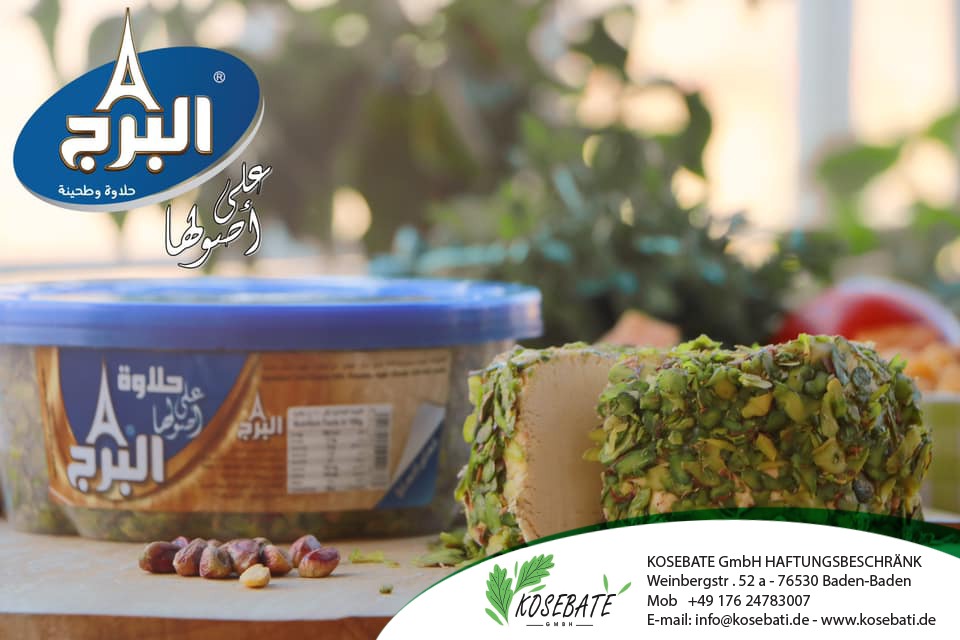
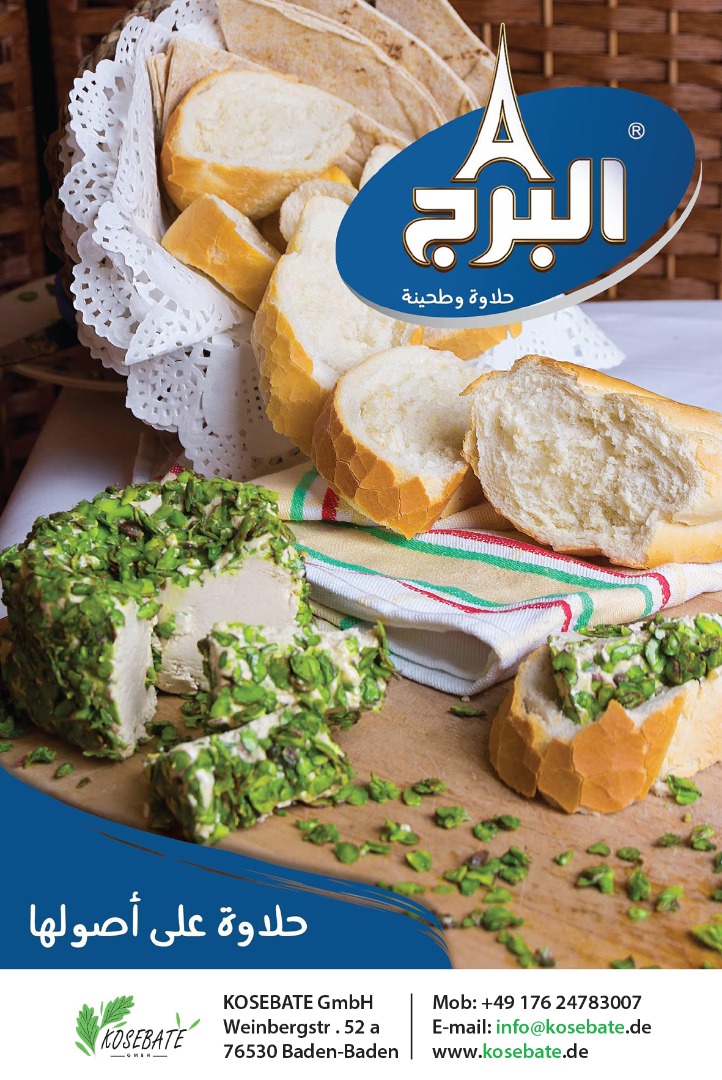
Germany – Alburj – Halva with pistachios 400 g & 800 g – Salmonella

LMW

Warning type: Food
Date of first publication: 10/15/2021
Product name:

Alburj – Halva with pistachios 400 g & 800 g

Product pictures:

Halva with pistachio.jpg
Halva with pistachio2.jpg
Manufacturer (distributor): Distributor: Kosebate GmbH
Reason for warning:

Salmonella was detected in a sample from batch 07/2022.

Packaging Unit: 400 g and 800 g
Lot identification: Batch 07/2022
Additional Information: Reference is made to the company’s customer information sheet attached.
Contact to the responsible authorities: 
Baden-Württemberg:poststelle@mlr.bwl.de
Bavaria:poststelle@lgl.bayern.de
Hesse:Schnellwarnung@rpda.hessen.de
Lower Saxony:poststelle@ml.niedersachsen.de
North Rhine-Westphalia:poststelle@mulnv.nrw.de
Rhineland-Palatinate:Poststelle.Referat22@lua.rlp.de
Thuringia:LM-Ueberendung@tlv.thueringen.de

Jordan – Shigella outbreak rises to 80, Source still not identified

Outbreak News Today

Shigella - kswfoodworld

Image CDC

In a follow-up on the shigella outbreak in Jerash, Jordan, the Director of Jerash Governmental Hospital, Sadiq Al-Atoum, said the number of shigellosis cases recorded in Jerash has risen by 22 cases, bringing the total number to 80.

At least 16 people are still being treated.

The Director of Communicable Diseases, Ali Zitawi, said that all of the patients are under the age of 12 and suffered from the same symptoms: abdominal pain, fever, diarrhea and vomiting.

Health authorities in Jordan continue to collect samples from water sources, restaurants and bakeries in Jerash and Ajloun to determine the source of the Shigella bacteria.

Australia – Banks and Burbidge Alcohol Free Gin 700ml – Microbial Contamination

FSANZ

Product informationWaterloo Bay Distilling Company is conducting a recall of Banks and Burbidge Alcohol Free Gin 700ml. The product has been available for sale at Dan Murphy’s selected stores and stores online in NSW, ACT, QLD, VIC, TAS, SA, NT, WA.

Date markings

Best Before 11 May 2023

​

Problem

The recall is due to a potential for microbial contamination.

Food safety hazard

Food products with potential microbial contamination may cause illness if consumed.​

Country of origin

Australia

What to do​

Any consumers concerned about their health should seek medical advice. Consumers should not drink this product, and should dispose of it safely. Consumers seeking a full refund should contact the place of purchase for instructions.​​
For further information please contact:​​​

Waterloo Bay Distilling Company

0429 773 743

contact@waterloobaydistilling.com

www.banksandburbidge.com

​​​Related links:

Research – Nisin-based antimircobial combination with cold plasma treatment inactivate Listeria monocytogenes on Granny Smith apples

Science Direct

Abstract

A nisin-based antimicrobial and cold plasma combination treatments in reducing Listeria monocytogenes inoculated on apple surfaces purchased from a New Jersey farm and a supermarket in Philadelphia area was investigated. All apples were spot inoculated or by submersion in 107 CFU/ml L. monocytogenes inoculum. Populations of L. monocytogenes recovered on farm and supermarket apples after spot inoculation averaged 5.8 ± 0.24 log CFU/g and 4.6 ± 0.12 log CFU/g, respectively and 4.1 ± 0.22 log CFU/g and 3.6 ± 0.12 log CFU/g, respectively on submerged apples. All apples were treated with antimicrobial solution for 30 s, 40 s, 3 min (180s) and 1 h (3600 s), cold plasma treatments for 30 and 40s, and a combination of antimicrobial and cold plasma treatments and the surface structure of apples were examined using scanning electron microscopy (SEM). Cold plasma treatment at 40s, followed immediately with antimicrobial treatments at 180s and 3600 s led to 2.5 and 4.6 log CFU/g inactivation of L. monocytogenes, respectively. SEM observation showed changes on apple surface structures but not on bacterial cell structure. This result suggests that this combination treatments is effective in killing L. monocytogenes on apple surfaces.

Research – Heatwave-associated Vibrio infections in Germany, 2018 and 2019

Eurosurveillance

Food Illness

The genus , which belongs to the family  and the class , includes many species that are potential human pathogens [1].  is a highly diverse species that consists of more than 200 serogroups [2]. Strains within the serogroups O1 and O139 produce cholera toxin and are the causative agents of endemic and epidemic cholera, which represent an important cause of morbidity and mortality in countries with inadequate access to clean water and sanitation facilities [3].  strains not included in these serogroups as well as other  spp. are referred to as non-cholera  spp. and are ubiquitous aquatic bacteria with a worldwide distribution, especially in warm estuarine and marine ecosystems [2]. These halophilic bacteria prefer low to moderate salinity (less than 25 parts per thousand (ppt) NaCl) [4]. The abundance of  spp. in marine and estuarine waters closely corresponds with the sea surface temperatures (SSTs) since they proliferate in warm water [5]. Thus, regional variations in environmental conditions are paramount importance in understanding the ecology of  spp.

Human infections with non-cholera  spp. can manifest as wound infections, ear infections, gastroenteritis, and primary septicaemia and have been predominantly reported in tropical and subtropical regions [6]. In Europe, cases are rare, and infections associated with the Mediterranean Sea [7–9], the Atlantic Ocean [10–12], or the Baltic Sea [13,14] have only been sporadically reported. However, a rapidly warming marine environment accompanied by an increase in extreme weather events such as heatwaves has resulted in unprecedented peak SSTs favouring the spread of  spp. worldwide. Recently, larger  spp. outbreaks have been reported in temperate regions such as Spain [15], Sweden, and Finland [16]. In Germany,  spp. other than toxigenic .  strains were not classified as reportable pathogenic agents before March 2020; to date, only a few cases have been reported and few case series of autochthonous infections have been published [17–20]. Over the last decades, resistance to various antibiotics, including to ampicillins, tetracyclines, and carbapenems, has emerged among  spp [21,22]. As a result of resistant isolates, the monitoring of antibiotic profiles of clinical and environmental  spp. has become of increasing importance. However, information on the number of human cases and the abundance of  spp. in coastal waters is scarce in most other European countries.

When we became aware of a high number of human infections with virulent  strains contracted in the Baltic Sea during the summer months of 2018 and 2019 (data not shown), we decided to conduct an observational retrospective multi-centre cohort study of domestically-acquired  infections. This study describes the epidemiology and the clinical impact of those infections and assesses antibiotic resistance patterns and phylogenetic relationships among clinical isolates. To determine the association between  infections and SST anomalies, we analysed the degree of warming in the south-western Baltic Sea, where the majority of the infections occurred.