High content of Ochratoxin A in dried figs from Turkey in Italy
Ochratoxin A in Basmati rice from the Netherlands in Belgium and Denmark

High content of Ochratoxin A in dried figs from Turkey in Italy
Ochratoxin A in Basmati rice from the Netherlands in Belgium and Denmark
Posted in food contamination, Food Hazard, Food Hygiene, Food Inspections, Food Micro Blog, Food Microbiology, Food Microbiology Blog, Food Microbiology Testing, Food Poisoning, food recall, Food Safety, Food Safety Alert, Food Safety Management, Food Testing, Food Toxin, Mold Toxin, Mould Toxin, Mycotoxin, Ochratoxin, Ochratoxin A
Aflatoxin B1 in rice protein from Pakistan in Spain
Posted in Aflatoxin, Aflatoxin B1, Animal Feed Mould Toxin, Animal Feed Testing, Aspergillus Toxin, Food Micro Blog, Food Microbiology Blog, Food Toxin, microbial contamination, Microbial growth, Microbiological Risk Assessment, Microbiology, Microbiology Investigations, Microbiology Risk, Mold Toxin, Mould Toxin, Mycotoxin
Salmonella spp. in soybean meal from Germany in Switzerland and the UK
Salmonella spp. in soybean meal from Germany in Denmark and Switzerland
August 08, 2022
RE: CMS #: 630545
WARNING LETTER
Dear Mr. Anchirayco:
The United States Food and Drug Administration (FDA) inspected your ready-to-eat (RTE) dips, soups, salad bases, burritos, entrée style meals, and seafood products manufacturing facility located at 2700 Westinghouse Blvd, Charlotte, NC, 28273-0113, on February 7-11, 15, and 23, 2022. During our inspection, we collected environmental samples (swabs) from various areas in your facility. FDA laboratory analyses found the presence of Listeria monocytogenes (L. monocytogenes), a human pathogen, in your facility. Additionally, FDA found serious violations of the Current Good Manufacturing Practice, Hazard Analysis, and Risk-Based Preventive Controls for Human Food regulation (CGMP & PC rule), Title 21, Code of Federal Regulations, Part 117 (21 CFR Part 117) and Seafood Hazard Analysis and Critical Control Point (HACCP) regulation, Title 21, Code of Federal Regulations, Part 123 (21 CFR Part 123).
Based on FDA’s inspectional findings and the analytical results for the environmental swabs, we have determined that the ready-to-eat products manufactured in your facility are adulterated within the meaning of section 402(a)(4) of the Federal Food, Drug, and Cosmetic Act (the Act) [21 U.S.C. § 342(a)(4)], in that they were prepared, packed, or held under insanitary conditions whereby they may have been rendered injurious to health. Furthermore, in accordance with 21 CFR 123.6(g), failure of a processor of fish or fishery products to have and implement a HACCP plan that complies with this section or otherwise operate in accordance with the requirements of Part 123, renders the fish or fishery products adulterated within the meaning of Section 402(a)(4) of the Act, 21 U.S.C. § 342(a)(4). In addition, failure of the owner, operator, or agent in charge of a covered facility to comply with the preventive controls provisions of the CGMP & PC rule (located in Subparts A, C, D, E, F, and G of Part 117) is prohibited by section 301(uu) of the Act (21 U.S.C. § 331(uu)). You may find the Act, further information about the CGMP & PC rule, and the seafood HACCP regulation through links in FDA’s home page at http://www.fda.gov.External Link Disclaimer
At the conclusion of the inspection, the FDA investigators issued your facility a Form 483 (FDA-483), Inspectional Observations. You provided responses to the inspection and sample findings on March 16, April 16, May 13, and June 15, 2022, describing corrective actions taken by your firm. Based on our review of the inspectional findings and the responses that your firm provided, we are issuing this letter to advise you of FDA’s continuing concerns and to provide detailed information describing the findings at your facility.
Posted in Decontamination Microbial, FDA, Food Micro Blog, Food Microbiology, Food Microbiology Blog, Food Microbiology Research, Food Microbiology Testing, Listeria, Listeria monocytogenes, microbial contamination, Microbial growth, Microbiological Risk Assessment, Microbiology, Microbiology Investigations, Microbiology Risk
Posted in Decontamination Microbial, E.coli, food bourne outbreak, Food Illness, Food Micro Blog, Food Microbiology, Food Microbiology Blog, Food Microbiology Research, Food Microbiology Testing, Foodborne Illness, foodborne outbreak, foodbourne outbreak, Illness, Listeria, Listeria monocytogenes, microbial contamination, Microbial growth, Microbiological Risk Assessment, Microbiology, Microbiology Investigations, Microbiology Risk, outbreak
Posted in Bacteria, bacterial contamination, Decontamination Microbial, Food Micro Blog, Food Microbiology, Food Microbiology Blog, Food Microbiology Research, Food Microbiology Testing, Food Pathogen, Food Technology, Listeria, Listeria monocytogenes, microbial contamination, Microbial growth, Microbiological Risk Assessment, Microbiology, Microbiology Risk, Microwave Plasma Treatment, Pathogen, pathogenic, Research, Salmonella, Technology
Posted in Campylobacter, Campylobacter jejuni, Decontamination Microbial, Food Micro Blog, Food Microbiology, Food Microbiology Blog, Food Microbiology Research, Food Microbiology Testing, microbial contamination, Microbial growth, Microbiological Risk Assessment, Microbiology, Microbiology Investigations, Microbiology Risk
Aldi recall
Product: Marinated wild boar steak (300g) from the Belgian Quality brand.
Problem: Possible presence of Salmonella.

PRODUCT DESCRIPTION
Name: Marinated wild boar steak (300g)
Brand: Belgian Quality
Batch number 22297 with expiry date (DLC) 09/11/2022
Period of sale: from 29/10/2022 to 02/11/2022
EAN code : 2007030009926
Type of packaging: plastic tray
Points of sale: ALDI stores
NATURE OF THE PROBLEM
Possible presence of Salmonella in the article above.
ALDI has therefore decided to withdraw this product from the market and to recall it from consumers.
DESCRIPTION OF THE RISK
Possible symptoms of salmonella poisoning are: fever, abdominal cramps and diarrhea within 12 to 48 hours of eating the contaminated food. The risk of infection is higher in the elderly, children, pregnant women and immunocompromised people.
If you have consumed this product and if you have these types of symptoms, consult your doctor and inform him that you have consumed this product.
CONSUMER ADVICE
Please do not consume this product and return it to the store.
Returned products will be refunded (also without receipt).
For any additional information, you can contact ALDI via serviceclients@aldi.be.
Reported by Mr. Kenneth Yung, Research Officer,
Risk Assessment Section, Centre for Food Safety
Fish is an important part of many types of cuisine that we savour. However, the consumption of fish and fish products containing high level of histamine may cause scombrotoxin fish poisoning (SFP), also called histamine poisoning. In Hong Kong, the Centre for Health Protection of the Department of Health recorded a total of 26 local SFP cases, affecting 45 persons from 2009 to 2018. In this article, we discuss how histamine is formed and the ways to control level of histamine in fish and fish products..
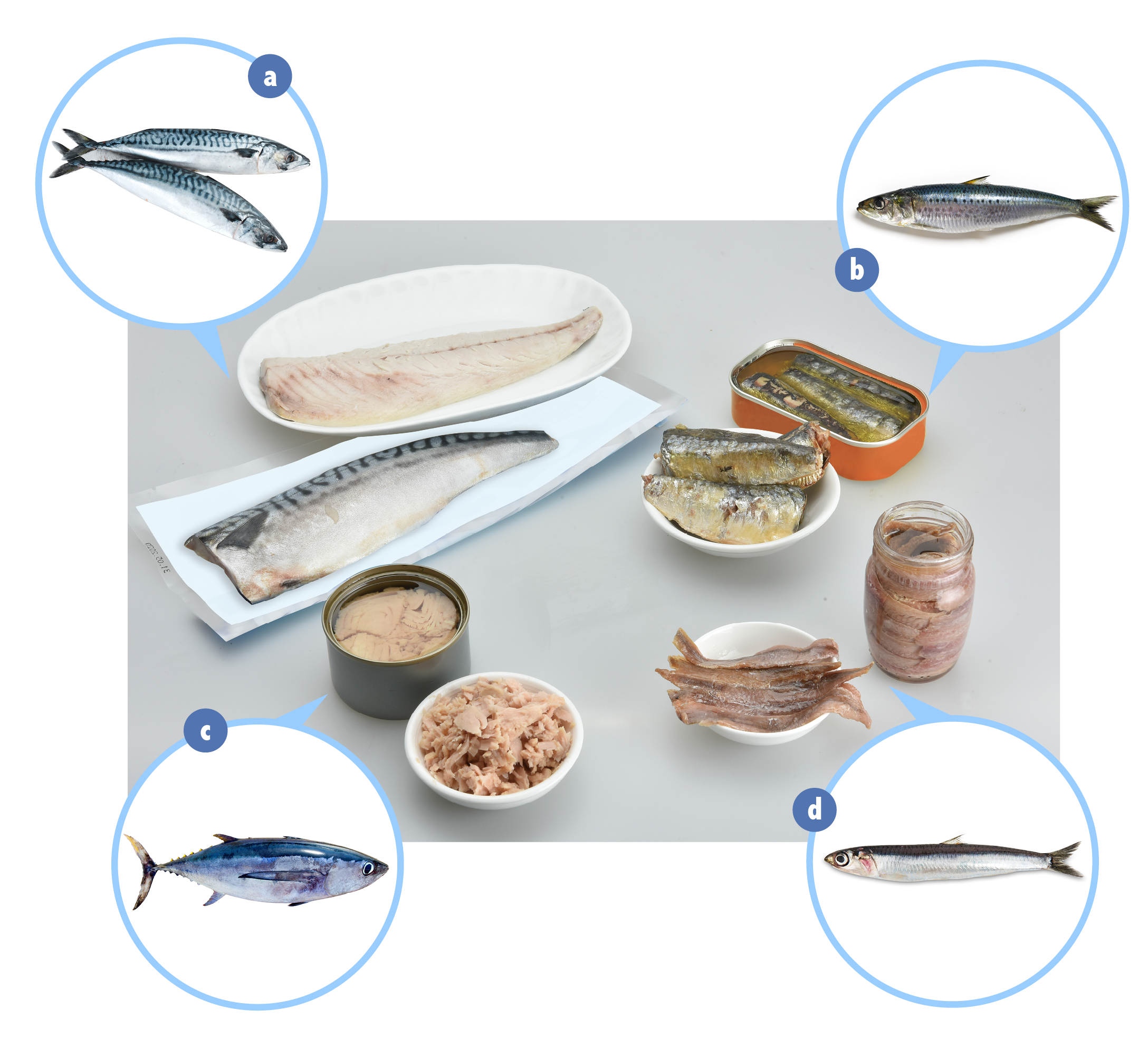
Examples of fish which contain elevated levels of naturally occurring histidine: (a) mackerel, (b) sardine, (c) tuna and (d) anchovy. Some of their respective products have also been found to contain high levels of histamine.
Histamine is a toxic metabolite produced by histamine-producing bacteria during spoilage and fermentation of fish and fish products. Many histamine-producing bacteria are part of the natural microflora of the skin, gills and gut of freshly caught fish. Histidine decarboxylase (HDC) enzymes, synthesized by histamine-producing bacteria when they multiply, convert the amino acid histidine that are naturally present in fish into histamine.
The level of histamine in fish and fish products mainly depends on species of fish and time-temperature control. Certain fishes like mackerel, sardine, tuna and anchovy naturally contain high amount of histidine and have been associated with SFP cases in Hong Kong and/or other places.
Time and temperature control is the most effective method for ensuring food safety for fish species prone to histamine production. In the absence of proper time-temperature control such as refrigeration and freezing, formation of histamine may occur at any point throughout the supply chain. Previous study conducted jointly by the Food and Environmental Hygiene Department and the Consumer Council revealed that high levels of histamine (up to 2600 mg/kg) that can cause SFP were detected in opened canned fish samples that were left at room temperature for 24 hours. However, histamine was not detected in samples that were kept at 2°C for up to 168 hours.
SFP is caused by the ingestion of food containing high levels of histamine i.e. consuming a serving size of 250g fish or fish product with histamine level exceeding 200 mg/kg may cause symptoms in healthy individuals. Symptoms of SFP include tingling and burning sensation around the mouth, facial flushing and sweating, nausea, vomiting, headache, palpitations, dizziness and rash. Exacerbation of asthma and more serious cardiac manifestations were reported in more severe cases. The onset of symptoms is within a few hours after consumption and these symptoms will normally disappear in 12 hours without long term effect.
High levels of histamine can build up in fish and fish products before any signs of spoilage (e.g. bad smell or taste) develop. Therefore, measures for control of histamine should be taken along the food chain from harvest to consumption.
Care should be taken that the cold chain is maintained at or below 4°C along the supply chain, including points of transfer such as offloading of fish from the vessel and processing procedures. Frozen fish and fish products should be kept at or below -18°C. Transport vehicles or vessels should be adequately equipped to keep fish cold and pre-chilled before loading fish where applicable. Adequate heat treatment (e.g. cooking, hot smoking) can kill histamine-producing bacteria and inactivate HDC enzymes, but cannot destroy pre-formed histamine. Recommendations in the Code of Practice for Fish and Fishery Products (CAC/RCP 52-2003), issued by Codex Alimentarius Commission, should be observed to ensure food safety.
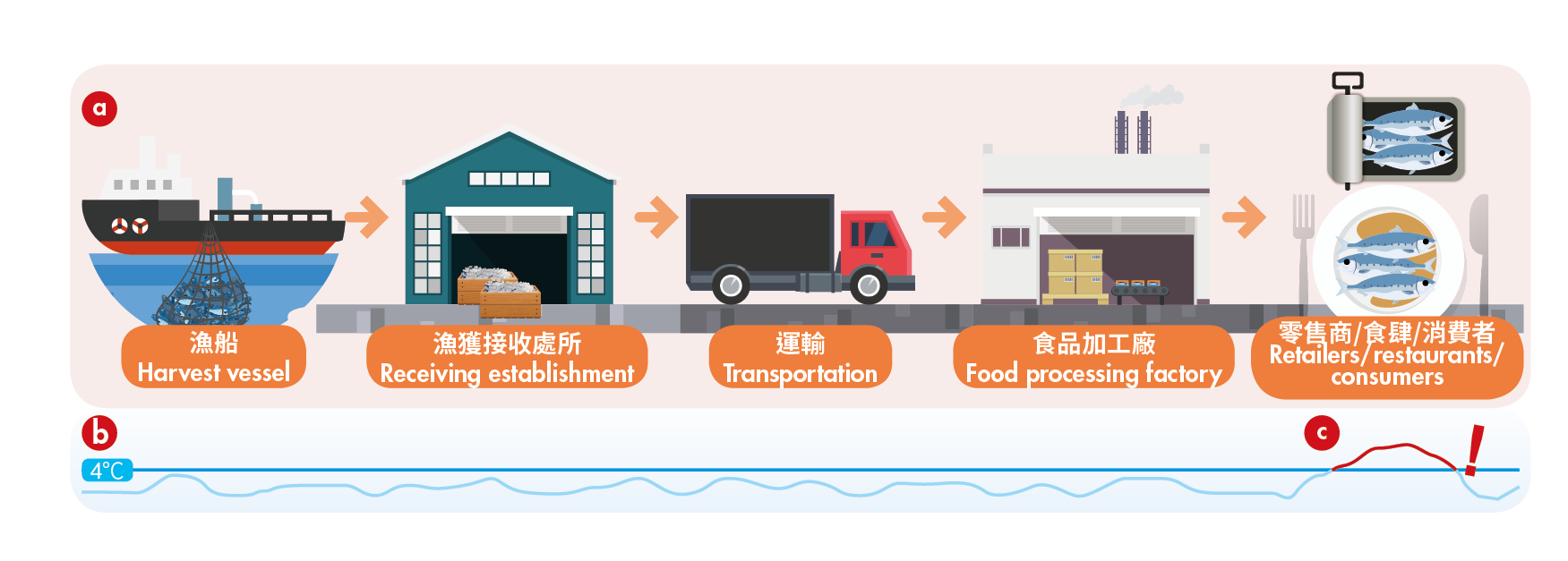
(a) Cold chain should be maintained throughout the whole supply chain. (b) Refrigerated fish and fish products should be kept at or below 4°C. (c) The time which fish products are kept under ambient temperature should be minimised.
At the consumer level, fish should be chilled rapidly after purchase. For pre-packaged fish and fish products, store according to the instructions of the manufacturer (e.g. keep refrigerated). If cooked fish and ready-to-eat fish products (e.g. tuna fish sandwiches and opened canned fish) are placed at room temperature all day long, they can be re-contaminated and histamine can form. Therefore, if these foods are not being eaten immediately, they should be kept under refrigeration and be finished as soon as possible.
Posted in CFS, Decontamination Microbial, Food Micro Blog, Food Microbiology, Food Microbiology Blog, Food Microbiology Research, Food Microbiology Testing, Histamine, microbial contamination, Microbial growth, Microbiological Risk Assessment, Microbiology, Microbiology Investigations, Microbiology Risk, Scombroid, scombroid poisoning

| Last name | Marinated wild boar steak |
| Mark | Belgian Quality |
| Unity | 300g |
| bar code | 2007030009926 |
| Use-by date (DLC) | 09/11/2022 |
| Batch | 22297 |
Danger : Possible presence of salmonella
Salmonella can cause symptoms such as nausea, vomiting, abdominal cramps, diarrhea, fever and headache within 6 to 72 hours after consumption. These symptoms may be aggravated in young children, immunocompromised subjects and the elderly. People who have consumed these products and have these symptoms are invited to consult a doctor and report this consumption to him.


