Category Archives: Food Illness

New Zealand – New Zealand Food Safety warns consumers not to eat raw mussels

MPI

New Zealand Food Safety is advising people to stay safe from food poisoning by cooking mussels thoroughly before eating them.

Dr Paul Dansted, director of food regulation at New Zealand Food Safety, says Vibrio parahaemolyticus are naturally occurring bacteria that are found in seawater and occur when warmer temperatures during summer are favourable for growth.

“We expect to see an increase in incidence of Vibrio parahaemolyticus in the warmer months. However, statistics from the Institute of Environmental Science and Research (ESR) show a recent spike in cases, with 22 since the beginning of the year. This compares with 14 for the first 3 months of 2020, and 4 for the same period in 2019.

“Symptoms of Vibrio parahaemolyticus may include watery or bloody diarrhoea, abdominal cramps, nausea, vomiting, fever, and/or headache. The consequences can be more serious for people with weakened immunity, the young, the elderly and frail, and pregnant women.

“As undercooked mussels can be a risk factor, it’s important to take care with their preparation. To be safe to eat, thoroughly cook mussels at above 65oC for one minute. This will ensure that any Vibrio parahaemolyticus present in the mussels will be destroyed.

“One good way to know when mussels are fully cooked is that their shells pop open when boiled or steamed, and the mussel inside is firm to the touch.

“If you get sick, phone Healthline for advice on 0800 61 11 16 or seek medical attention immediately. If possible, store and refrigerate any leftover food for testing.”

Take care when handling, preparing and consuming mussels. Follow this simple food safety guidance to avoid getting Vibrio parahaemolyticus: Clean, Cook, Chill.

“It is raw mussels that we are advising against consuming. They are not the mussels that can be bought in plastic pottles. Those mussels are cooked and marinated and are not affected,” Dr Dansted says.
Find out more

USA – Southwest District Health investigating 25 cases of foodborne illness linked to Caldwell Subway – Norovirus

KIVITV

Norovirus Food Safety kswfoodworld

Southwest District Health is investigating around two dozen known cases of reported foodborne illness linked to a Caldwell Subway.

Around 25 people reported experiencing gastro-intestinal illness symptoms since March 19 with a link to Subway located at 319 N. 10th Avenue in Caldwell. The health district says there has been one confirmed positive case of Norovirus. Southwest District Health says the people reporting symptoms went to the Subway between March 16-19.

Norway – Children sick in Norway after drinking raw milk

Food Safety News

Almost 20 children in Norway have fallen sick after a farm visit that included drinking unpasteurized, raw milk.

Health officials reported 17 people became ill after the farm trip, including 16 children aged 3 to 5 years old. Most were infected with Campylobacter but a few patients were also diagnosed with infections from the parasite Cryptosporidium after contact with animals.

The children fell ill after the farm visit in Viken, a county in Eastern Norway, where they were served raw, unpasteurized milk as part of their packed lunch. Pasteurization kills bacteria, viruses and parasites often found in raw milk.

The Norwegian Food Safety Authority (Mattilsynet) and the Norwegian Institute of Public Health (Folkehelseinstituttet) recommend that children, pregnant women, the elderly and those with weakened immune systems avoid drinking raw milk, because infections can have serious consequences for them.

USA – Rare Norovirus GIV Foodborne Outbreak, Wisconsin, USA

CDC

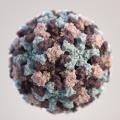
Food Borne Illness - Norovirus -CDC Photo

We report a norovirus GIV outbreak in the United States, 15 years after the last reported outbreak. During May 2016 in Wisconsin, 53 persons, including 4 food handlers, reported being ill. The outbreak was linked to individually prepared fruit consumed as a fruit salad. The virus was phylogenetically classified as a novel GIV genotype.

Norovirus is the leading cause of epidemic and endemic acute gastroenteritis globally. The virus can be transmitted through person-to-person contact, consumption of fecally contaminated food or water, or self-contamination after touching contaminated environmental surfaces (1,2). Noroviruses are divided into at least 10 genogroups (G), and viruses in GI, GII, GIV, GVIII, and GIX cause illness in humans (3). More than 99% of all norovirus outbreaks are caused by GI and GII viruses in the United States (4). GVIII includes 2 strains that have been detected in Japan during 2004 and 2011 (3), and GIX has caused 11 reported outbreaks in the United States since 2013 (https://www.cdc.gov/norovirus/reporting/calicinet/data.html).

GIV is divided into 2 recognized genotypes: GIV.1, which infects humans (5), and GIV.2, which infects canines and felines (6). GIV viruses were reported in humans in the Netherlands during 1998 and the United States during 1999 (7,8) and have since been sporadically reported in clinical and environmental samples (5,911). An outbreak linked to a GIV norovirus in the United States has not been reported since 2001 (4,8). In this article, we describe a 2016 foodborne norovirus outbreak associated with a novel GIV strain (tentatively GIV.NA).

France – Product recall: Brittany oysters and special hollow oysters from QUIBERON brand MYTILIMER PRODUCTION – Norovirus

Oulah

Product recall: Brittany oysters from MYTILIMER PRODUCTION

ENCOUNTERED PROBLEM

The relaying area for these oysters, located in the Crac’h river (Morbihan-56) is the subject of a prefectural closure order dated March 19, 2021 for the presence of norovirus in oysters having caused Food Toxi Infection. Collective. (Order N ° 19.03.2021, prefecture of Morbihan).

PROPOSED SOLUTION

People who still hold these products are asked not to consume them and to return them to the point of sale for destruction.

Foodborne illnesses (TIAC) ​​caused by Noroviruses result in gastrointestinal disorders often accompanied by symptoms of acute gastroenteritis (sudden onset of
vomiting, nausea and / or diarrhea sometimes associated with abdominal cramps, moderate fever, chills, etc. stiffness and headache). These symptoms appear after an incubation period of between 10 and
50 hours following consumption of the products. Pregnant women should pay special attention to these symptoms, as well as immunocompromised people, young children and the elderly.

FURTHER INFORMATION

▸ Huitre Bretagne N ° 2 5KG 48P
• Barcode: 3760 116 23048 3
• Lot: 15032021 – 16032021 – 17032021 – 18032021 – 19032021
• Packaging date : 03/15/2021 – 03/16/2021 – 03/17 / 2021 – 03/18/2021 – 03/19/2021

▸ Huitre Bretagne N ° 3 6KG 72P
• Barcode: 3760 116 23049 0
• Lot: 19032021
• Packaging date : 03/19/2021

▸ Huitre Bretagne N ° 4 1.5KG 24P
• Barcode: 3760 116 23039 1
• Lot: 16032021 – 17032021 – 18032021 – 19032021
• Packaging date: 03/16/2021 – 03/17/2021 – 03/18/2021 – 03/19/2021

▸ Huitre Bretagne N ° 2 2,5KG 24P
• Barcode: 3000 046 26851 5
• Lot: 08032021 – 09032021 – 10032021 – 11032021 – 12032021
• Packaging date: 08/03/2021 – 09/03/2021 – 10 / 03/2021 – 03/11/2021 – 03/12/2021

▸ Huitre Bretagne N ° 2 2KG 18P
• Barcode: 3760 116 23039 1
• Lot: 10032021 – 11032021 – 12032021
• Packaging date : 03/10/2021 – 03/11/2021 – 03/12/2021

▸ Huitres Bretagne N ° 3 2Kg 24P
• Barcode: 3000 046 12912 0
• Lot: 17032021 – 18032021 – 19032021
• Packaging date : 03/17/2021 – 03/18/2021 – 03/19/2021

▸ Special hollow oysters from QUIBERON N ° 2 1.2KG 12P
• Barcode: 3000 045 26881 3
• Lot: 05032021 – 08032021 – 09032021 – 10032021 – 11032021 – 12032021 – 15032021 – 16032021 – 17032021 – 18032021 – 19032021
• Packaging date 03/05/2021 – 03/08/2021 – 03/09/2021 – 03/10/2021 – 03/11/2021 – 03/12/2021 – 03/15/2021 – 03/16/2021 – 17 / 03/2021 – 03/18/2021 – 03/19/2021

▸ Health
stamp FR 35-132-018 CE

▸ Consumer service contact
For any questions, you can contact MYTILIMER on 0 801 800 820 (free service and call)

▸ Source
https://www.coursesu.com/
https://www.auchan.fr/
https://www.geantcasino.fr/

Denmark -Catfish eggs are probably the cause of outbreaks of botulism

SSI

kswfoodworld

Studies of a number of foods have led to toxins from the botulism bacterium being found in catfish eggs. That batch of roe has been recalled.

In the past week, the Statens Serum Institut (SSI) has described an outbreak of botulism. It occurred after six people had eaten together at a private party in early March. SSI has now examined a number of leftovers from the food that the Danish Veterinary and Food Administration had collected in the home where the company was held. In an almost emptied glass with rockfish roe, SSI’s laboratory tests were able to detect toxin (toxin). However, did not find toxin in any of the other foods. Nor in two other glasses with catfish roe.

At the same time, studies show that three out of the five people who developed symptoms after joining the company had botulism. The two patients for whom it could not be confirmed simply had quite mild symptoms of botulism.

Research – UK – 2018 Shigella Outbreak – Coriander

Cambridge Org

In April 2018, Public Health England was notified of cases of Shigella sonnei who had eaten food from three different catering outlets in England. The outbreaks were initially investigated as separate events, but whole-genome sequencing (WGS) showed they were caused by the same strain. The investigation included analyses of epidemiological data, the food chain and microbiological examination of food samples. WGS was used to determine the phylogenetic relatedness and antimicrobial resistance profile of the outbreak strain. Ultimately, 33 cases were linked to this outbreak; the majority had eaten food from seven outlets specialising in Indian or Middle Eastern cuisine. Five outlets were linked to two or more cases, all of which used fresh coriander although a shared supplier was not identified. An investigation at one of the venues recorded that 86% of cases reported eating dishes with coriander as an ingredient or garnish. Four cases were admitted to hospital and one had evidence of treatment failure with ciprofloxacin. Phylogenetic analysis showed that the outbreak strain was part of a wider multidrug-resistant clade associated with travel to Pakistan. Poor hygiene practices during cultivation, distribution or preparation of fresh produce are likely contributing factors.

Canada – Public Health Notice: Outbreak of Salmonella infections linked to eggs

PHAC

This notice has been updated to reflect seven additional cases that have been reported in the ongoing outbreak investigation. There are now 64 Salmonella illnesses reported across two provinces. Canadians are advised to always follow safe food-handling tips if you are buying, cleaning, chilling, cooking and storing any type of eggs or egg-based foods.

The Public Health Agency of Canada (PHAC) is collaborating with provincial public health partners, the Canadian Food Inspection Agency (CFIA) and Health Canada to investigate an outbreak of Salmonella infections involving Newfoundland and Labrador, and Nova Scotia. The outbreak appears to be ongoing, as recent illnesses continue to be reported to PHAC.

Based on the investigation findings to date, exposure to eggs has been identified as a likely source of the outbreak. Many of the individuals who became sick reported consuming, preparing, cooking and baking at home with eggs. Some individuals reported exposure to eggs at an institution (including nursing homes and hospitals) where they resided or worked before becoming ill.

Eggs can sometimes be contaminated with Salmonella bacteria on the shell and inside the egg. The bacteria are most often transmitted to people when they improperly handle, eat or cook contaminated foods.

Illnesses can be prevented if proper safe food handing and cooking practices are followed. PHAC is not advising consumers to avoid eating properly cooked eggs, but this outbreak serves as a reminder that Canadians should always handle raw eggs carefully and cook eggs and egg-based foods to an internal temperature of at least 74°C (165°F) to ensure they are safe to eat.

PHAC is issuing this public health notice to inform Canadians of the investigation findings to date and to share important safe food handling practices to help prevent further Salmonella infections.

As the outbreak investigation is ongoing, it is possible that additional sources could be identified, and food recall warnings related to this outbreak may be issued. This public health notice will be updated as the investigation evolves.

Canada -CBC – B.C. boy permanently brain damaged after eating lettuce contaminated with E. coli – STEC

CBC

E. coli outbreaks used to mainly be linked to hamburgers, but the last decade has seen recall after recall of tainted romaine lettuce coming into Canada from the United States. At least seven people have died, and hundreds have been sickened or hospitalized in both countries.

Toddler Lucas Parker was one of them.

In the fall of 2018, his parents, Nathan Parker and Karla Terry of Richmond, B.C., took Lucas and his siblings to Disneyland, their first trip outside Canada. But what they couldn’t know at the time was that a few bites of romaine salad Lucas ate one night at a small California roadside restaurant would change their lives forever.

Soon after that dinner, an outbreak of E. coli O157: H7 contamination spread across both Canada and the United States — eventually leaving 35 people hospitalized.

Like most people who get sick from this strain of E. coli, Lucas, then two years old, didn’t show symptoms right away. When he started feeling unwell, the family headed out for the long drive home. By the time he was in a Canadian hospital, the E. coli had shut down one of his kidneys and led to two brain injuries. There are no current treatments for E. coli that can help alleviate infections or prevent complications.

Lucas can no longer walk, talk or see.

Madagascar – Nineteen die in Madagascar after eating turtle – Algal Toxin

CG

Nineteen people, nine of them children, have died from food poisoning in Madagascar after eating a turtle, sources said Thursday.

Thirty-four people were hospitalized on Monday in Vatomandry, in the east of the island, after eating the protected species, the Health and Food Safety Control Agency said.

Ten of them died, it said.

Another nine people, all of them children, died at home after eating meat from the same turtle, region’s governor said.

Health authorities have warned against eating turtles, as well two dozen species of fish, which feed on algae that can be toxic during the November-March hot season.

Dozens of food poisonings occur each year in coastal Madagascar and deaths are common.

Sixteen fatalities were recorded in two incidents in the 2017-18 hot season.