Category Archives: E.coli

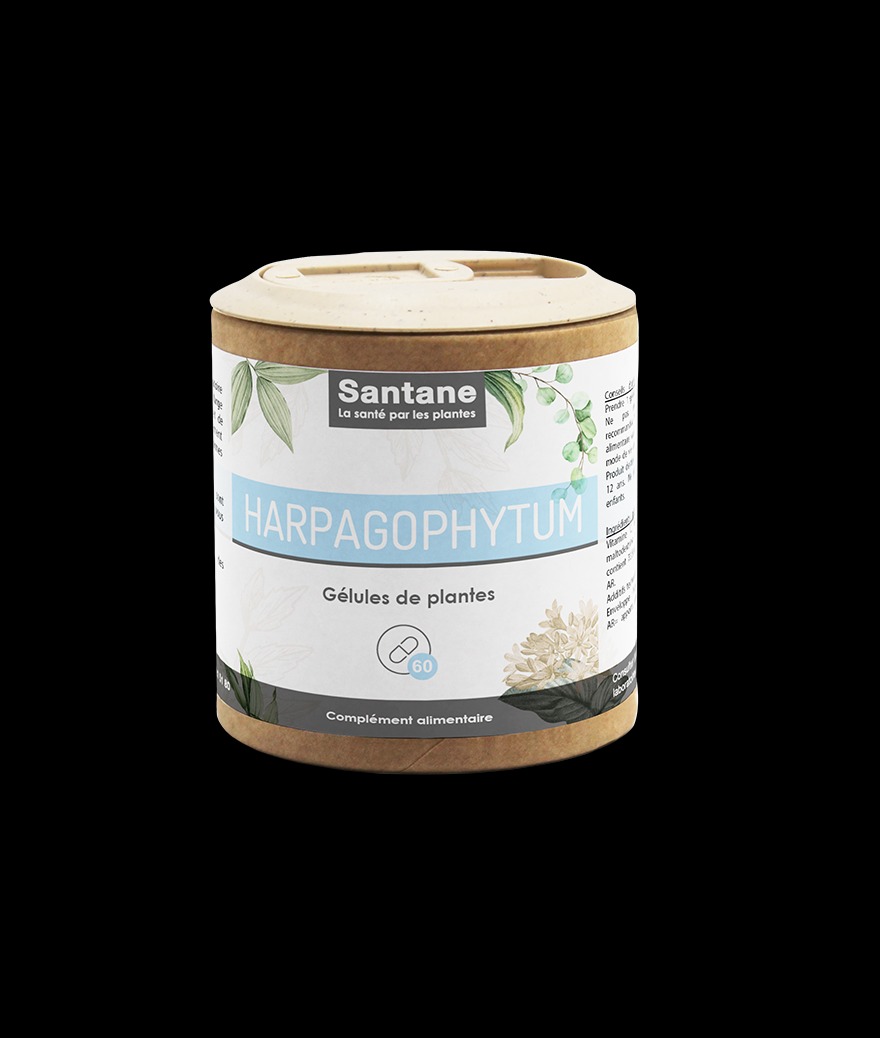
France – SANTANA HARPAGOPHYTUM 160 Capsules – E.coli

Gov france

Identification information of the recalled product

  • Product category Feed
  • Product subcategory Diet foods and nutrition
  • Product brand name SANTANA
  • Model names or references SANTANE HARPAGOPHYTUM 160 CAPSULES
  • Identification of products
    GTIN Batch Date
    3701142814490 23-108944 Use-by date 31/01/2027
    3701142814490 23-109618 Use-by date 31/01/2027
  • Packaging PILL BOX OF 160 CAPSULES
  • Marketing start/end date From 07/03/2023 to 21/04/2023
  • Storage temperature Product to be stored at room temperature
  • Geographic area of ​​sale Whole France
  • Distributors Product sold in Pharmacy

Practical information regarding the recall

  • Reason for recall Suspicion of Escherichia coli
  • Risks incurred by the consumer Escherichia coli

Research – Nestlé strikes settlement deal over France E. coli scandal

Just Food

Nestlé has agreed to a settlement with victims of a fatal E. coli outbreak last year.

Dozens of children fell sick after eating contaminated food – and two died. In April last year, the Paris prosecutor’s office opened an investigation into alleged involuntary manslaughter. Health officials ordered production at the Caudry factory to cease five days later.

The company told Just Food today (18 April) it had settled with “the vast majority of claimants”, who are represented by lawyer Pierre Debuisson

Kenya – Mukumu girls deaths linked to E.coli, Salmonella from contaminated water

KBC

Three students and a teacher at Sacred Heart Mukumu Girls in Kakamega died as a result of contaminated water.

The Ministry of Health Friday said preliminary findings had revealed E. coli and Salmonella typhi, a bacterium that is responsible for typhoid fever as the causes of the illness initially suspected to be cholera.

“The Ministry wishes to inform the general public that this disease is likely to be a mixture of E. coli and Salmonella typhi which usually occurs if water sources are contaminated with these micro-organisms” Ag. Director General for Health Dr. Patrick Amoth said.

A comprehensive investigation is however underway even as the top health official ruled out aflatoxin.

Several learning institutions including, Mukumu Girls and Butere Boys in Kamamega and the latest being Mukuuni Boys High School in Chuka, Tharaka Nithi County have been closed after students were taken ill.

“The Ministry of Health has taken several water, food, and human tissue samples, from which preliminary laboratory investigations undertaken have revealed Enterotoxigenic E. coli and Salmonella typhi as the causes of the illness,” he said

“Further laboratory investigations carried out on the grains and pulses for aflatoxin have turned negative for aflatoxicosis- a dangerous fungal infection from poorly stored cereal grains” he added.

New Zealand – Dannevirke water supply on boil water notice due to E.coli

Stuff

Tararua District Council has issued a boil water notice for residents on the Dannevirke water supply due to a detection of E.coli.

A council spokesperson said the boil water notice would continue for three days while further testing is under way.

The council is testing in partnership with Taumata Arowai to ensure testing is accurate and done as quickly as possible.

An update would be provided on April 27, the spokesperson said.

Research Imported spring onions related to the first recorded outbreak of enteroinvasive Escherichia coli in Denmark, November to December 2021

Eurosurveillance

Enteroinvasive  (EIEC) is a Gram-negative bacteria causing diarrhoeal disease. EIEC is transmitted via the faecal–oral route, with a usual incubation period of 1–3 days; infections are frequently related to contaminated food and water [1,2]. In Denmark, disease caused by EIEC is mostly observed in returning travellers, but secondary transmission from person-to-person may occur [3]. In Europe, outbreaks of EIEC in 2012, 2014 and 2017 have been reported and, for all of these, contaminated vegetables were suspected as the source [46].

Clinically, EIEC infections present either with watery diarrhoea or dysentery. EIEC invade the epithelial cells of the large intestine in the same manner as  and symptoms resulting from EIEC infection are clinically indistinguishable from shigellosis [7]. Studies have shown that  and  species have high genomic and phenotypic similarity, leading to propose that  species should be reclassified as a subspecies of  [8,9].

Diagnostics of EIEC in Denmark are done locally through 10 different clinical microbiology laboratories situated at hospitals in the five Danish regions. The criteria for carrying out an EIEC diagnostic vary. Some laboratories test all faecal samples for diarrhoeagenic  including EIEC, while others test only faecal samples from suspected patients, based on their age, travel history and presence of bloody diarrhoea. The PCR diagnostic assays target the invasive plasmid gene () shared by both  spp. and EIEC [10]. Culture is required to differentiate the two species, and if culture is not possible or unsuccessful, faecal specimens are considered positive for the combination /EIEC. Detection of /EIEC is voluntarily notified as part of the Danish laboratory surveillance, where episodes are irregularly reported by the clinical microbiology laboratories to Statens Serum Institut (SSI), the national public health institute. All isolates from successfully cultured samples are furthermore routinely sent on a voluntary basis to SSI for further characterisation.

Outbreak detectionOn 10 December 2021, the clinical microbiology laboratory at Slagelse hospital in Region Zealand reported observing an increase between 5 and 8 December of patients diagnosed with domestically-acquired EIEC. During this period, this laboratory had detected a total of five such patients. On the same day (10 December), SSI identified one EIEC isolate with serotype O96:H- and three with serotype O136:H7 (two of which originated from Slagelse hospital), the latter a type never found in human samples from Denmark before. In total, between 6 and 10 December, SSI had received six EIEC isolates from three different regions of Denmark, exceeding the total number of EIEC isolates that were received in the months of December of the 2 previous years. A national outbreak was therefore declared on 13 December.

Research – How to deal with food poisoning while traveling—and how to avoid it altogether

National Geographic

Some countries have a reputation for putting travelers at a higher risk for gastrointestinal illnesses. But you can get sick from an improperly handled meal anywhere in the world.

Pad thai from a Bangkok street vendor or raw milk cheese from a bistro in France taste delicious in the moment. But for many travelers, the local dishes that make trips meaningful sometimes give them food poisoning—and the wrong sort of vacation memories.

By some metrics, gastrointestinal infections related to food or water affect 30 to 70 percent of all travelers during or immediately after their trips, according to a 2015 study in BMJ Clinical Evidence. Each year, one in six Americans and nearly one in 10 people worldwide suffer from such illnesses caused by bacteria (E. coli, salmonella, listeria), viruses (norovirus, hepatitis A), or parasites (giardiasis, roundworms, tapeworms).

Lower-income countries have a reputation for putting travelers at a higher risk for food poisoning, but people are just as likely to be sickened from an improperly handled meal in Italy or Australia—or from some sushi at their local supermarket.

Here’s why people get food poisoning, what to do if it strikes, and how to (maybe) prevent it, read at the link above.

Research – Microbiological Risk Assessment in Foods: Background and Tools, with a Focus on Risk Ranger

MDPI

Risk assessment is an important phase of the food production path; it is strictly related to the processing chain as a necessary step for safe foods. This paper represents a contribution to understanding what is and how risk assessment could be conducted; it aims to provide some information on the structure of risk assessment, the tools for its identification and measurement and the importance of risk assessment for correct communication. In this context, after a focus on the background and on some commonly used tools (Risk Ranger, FDA-iRisk, decision tree, among others), the paper describes how to perform risk assessment through three case studies: lettuce (for Listeria monocytogenes), chicken salad (for Escherichia coli), and fresh egg pasta (for Staphylococcus aureus) in the first step, and then a comparison of risk for chicken salad contaminated by different pathogens (E. coli O157:H7, Campylobacter spp. and Salmonella sp.). As a final step, a critical evaluation of Risk Ranger was carried out, pointing out its pros and cons.

RASFF Alert- E.coli – Clams

RASFF

Too high count of Escherichia coli (4800 /100g) in live clams from the Netherlands in Austria, Belgium, Czech Republic, France, Germany, Luxembourg, Netherlands, Poland, Slovakia

Research – Major pathogens rise in Ireland in 2022

Food Safety News

Campylobacter, Salmonella, E. coli, and Listeria infections all increased in Ireland in 2022, according to the latest figures.

Data from the Health Protection Surveillance Centre (HPSC), which is part of the Health Service Executive (HSE), shows the number of reports for the four pathogens rose compared to 2021.

Notifications of Salmonellosis doubled and the number of E. coli infections passed 1,000.

Full reports on these four pathogens and for outbreaks have not been published since 2018 because of the impact of the COVID-19 pandemic response and limited capacity at HPSC.

Campylobacter infections went up from 3,147 in 2021 to 3,619 in 2022.

Salmonella cases doubled from 173 in 2021 to 342 in 2022 but this is similar to 2018 and 2019 levels.

More than 1,000 Shiga toxin-producing E. coli (STEC) notifications were noted. Up from 962 in 2021.

A total of 18 listeriosis cases were recorded, up from 15 in 2021. Fourteen were men and four were women. Fifteen cases were in the over-65 age group while two were less than 1 to 4 years old.

Figures also show three cases of Bacillus cereus foodborne infection or intoxication compared to none in 2021.

The published data, which covers 2018 to 2022, reveals two cases of botulism, although it is unclear if food was the cause. There was also one report of brucellosis in 2022. All other years reported no notifications of these diseases.

There were 17 yersiniosis cases in 2022 compared to 18 in 2021. Cryptosporidiosis declined from 845 in 2021 to 566 in 2022.

Shigellosis went up from 70 in 2021 to 157 in 2022. Norovirus also increased from 439 in 2021 to 990 in 2022.

France – DRY GOAT CHEESE – STEC E.coli

Gov france

Identification information of the recalled product

  • Product category Feed
  • Product subcategory Milk and dairy products
  • Product brand name CHEVRIGNY CHEVENET
  • Model names or references Churns Mini Churns
  • Identification of products
    GTIN Batch Date
    3503963014208 087 Date of minimum durability 05/15/2023
    3503965270008 065 Date of minimum durability 04/24/2023
  • Packaging plastic tray
  • Marketing start/end date From 06/03/2023 to 29/03/2023
  • Storage temperature Product to be stored in the refrigerator
  • Health mark FR-71-235-001-CE
  • Further information Dry goat cheese
  • Geographic area of ​​saleRegions: Auvergne-Rhône-Alpes, , , , , , , Burgundy-Franche-Comté, , , , , , , Grand-Est, , , , , , , New-Aquitaine, , , , , , , Occitanie, , , , , , , Provence-Alpes-Côte d’Azur
  • Distributors FROMAGER des HALLES SOUTH EAST INTERMARCHE St Quentin Fallavier BUTCHERS ANDRE

Practical information regarding the recall

  • Reason for recall Recall for health reasons
  • Risks incurred by the consumer Toxigenic Shiga Escherichia coli (STEC)