Author Archives: KSW

USA – FDA – Warning Letter – Agila Corporation dba Woody’s Pet Food Deli

FDA

The U.S. Food and Drug Administration (FDA) conducted an inspection of your pet food manufacturing facility located at 1245 Trapp Road, Suite 160, Eagan, Minnesota, on August 29 through September 12, 2023, in follow-up to an Untitled Letter issued to you on September 2, 2022.

During the inspection FDA collected a sample (FDA sample #1214888) of your in-process Woody’s Pet Food Deli Raw Free Range Turkey with Supplements pet food for dogs and cats, lot code 08/31/24, from your facility. FDA laboratory analysis revealed this product was contaminated with Salmonella Reading and Listeria monocytogenes. Based on the analytical results, FDA considers the sampled product lot to be adulterated in that it bears or contains a poisonous or deleterious substance which may render it injurious to health.1 On September 19, 2023, you voluntarily disposed of Woody’s Pet Food Deli Raw Free Range Turkey with Supplements pet food for dogs and cats, lot code 08/31/24.

Also, during the inspection FDA’s investigators found evidence of a significant violation of the Current Good Manufacturing Practice, Hazard Analysis, and Risk-Based Preventive Controls for Food for Animals requirements, Title 21, Code of Federal Regulations (21 CFR), Part 507, which causes your raw pet food products to be adulterated.2

USA – FDA Warning Letter – Barsotti Juice Company, Inc.

FDA

We inspected your juice processing facility, located at 2239 Hidden Valley Lane, Camino, CA on November 20, November 21 and December 1, 2023. We found that you have serious violations of the juice Hazard Analysis and Critical Control Point (HACCP) regulation, Title 21, Code of Federal Regulations, Part 120 (21 CFR part 120), and the Current Good Manufacturing Practice, Hazard Analysis, and Risk-Based Preventive Controls for Human Food regulation (CGMP & PC rule) in Title 21, Code of Regulations, Part 117 (21 CFR part 117). In accordance with 21 CFR 120.9, failure of a processor of juice products to have and implement a HACCP plan that complies with this section or otherwise operate in accordance with the requirements of Part 120, renders the juice products adulterated within the meaning of Section 402(a)(4) of the Federal Food, Drug, and Cosmetic Act (the Act), 21 U.S.C. § 342(a)(4). Accordingly, your organic carrot juice is adulterated, in that it has been prepared, packed, or held under insanitary conditions whereby it may have been rendered injurious to health. You may find the Act, the juice HACCP regulation and the Juice HACCP Hazards and Controls Guidance through links in FDA’s home page at http://www.fda.gov.

USA- FDA – Investigations of Foodborne Illness Outbreaks

FDA

Date
Posted
Ref Pathogen
or
Cause of
Illness
Product(s)
Linked to
Illnesses

(if any)
Total
Case
Count

Status
2/20/

2024

1215 E. coli
O157:H7
Raw cheddar
cheese
See
Advisory
Active
1/24/

2024

1214 Listeria
monocytogenes
Queso Fresco
and
Cotija Cheese
See
Advisory
Active
11/8/

2023

1198 Elevated
Lead &
Chromium
Levels
Apple
Cinnamon
Puree
See
Advisory
Active

Denmark – Risk of bacteria and mold/mould in organic food supplements (plant powder) – Bacillus cereus

Foedevarestyrelsen

Image of the product - Dragon Superfoods - Organic In Shape Mix

Coalas Naturprodukter is recalling the plant powder Dragon Superfoods – Organic In Shape Mix, which is used as a dietary supplement, as there is a risk that the product contains the bacterium Bacillus cereus and mould.

If you have the product, you should discard it or return it to the store where it was purchased.

Image of the product – Dragon Superfoods – Organic In Shape Mix
Image of the product: Dragon Superfoods – Organic In Shape Mix
Which food is recalled
Dragon Superfoods – Organic In Shape Mix, 200g

Origin: Bulgaria
Lot number: 23275

EAN barcode: 3800233685510
Best-before date: 02.04.2024

Where is the product sold
The product is sold through Salling grocery stores and on Matas.dk, as well as via a number of other web shops for food supplements under the company Firtal, e.g. Helsebixen.dk, made4men.dk or well.dk

Why is the product being recalled?
There is a risk that the product contains too high a content of the bacterium Bacillus cereus. The bacterium is found naturally in soil and on plants, but can cause illness such as vomiting and diarrhea in humans.

The risk of an increased content of mold does not constitute a health risk in the same way, but alone makes the product unsuitable for human consumption.

What should you do as a consumer?
The Danish Veterinary and Food Administration advises consumers to return the product to the store where it was purchased or to discard it.

If you experience symptoms in connection with consuming the product, you should contact your own doctor.

Who recalls the product
Koala’s Natural Products

AC Illumsvej

12, 8600 Silkeborg

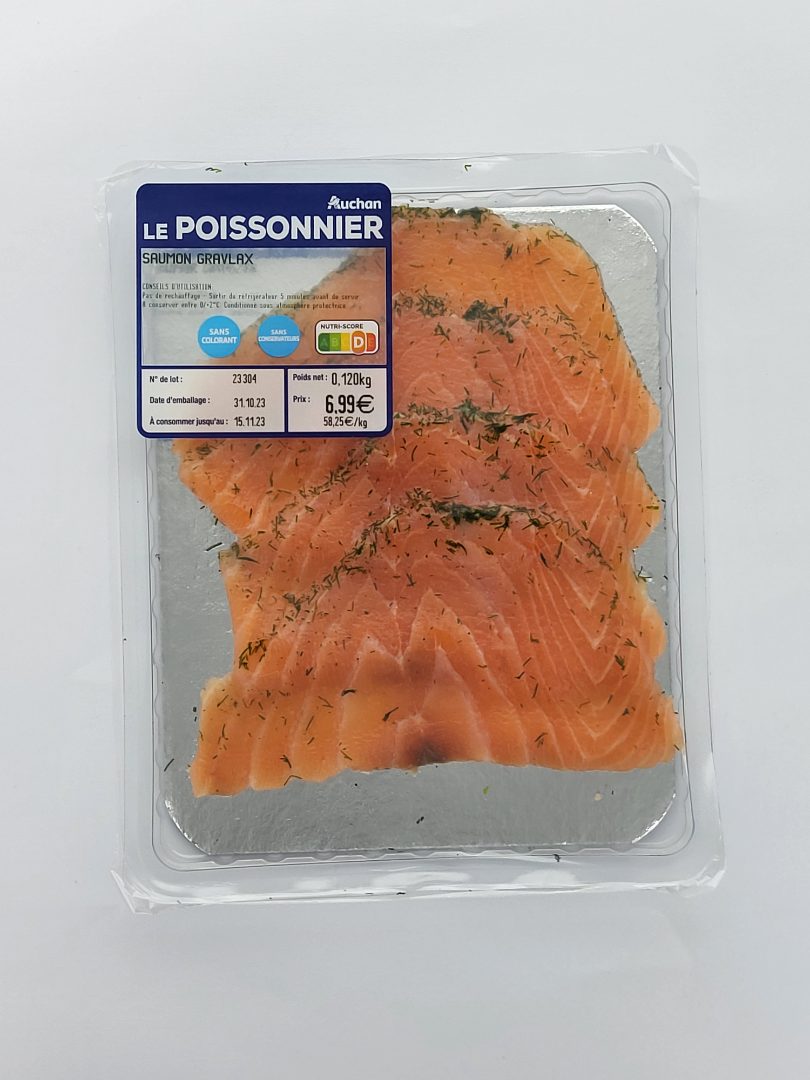
France – Marinated salmon and salmon tartare – Salmonella

Gov France

Product category
Food
Product subcategory
Fishing and aquaculture products
Product brand name
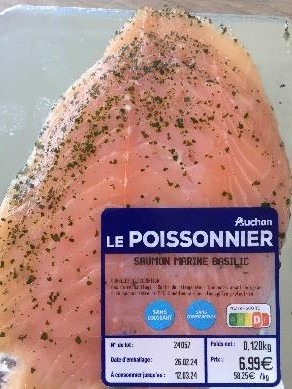
AUCHAN
Model names or references
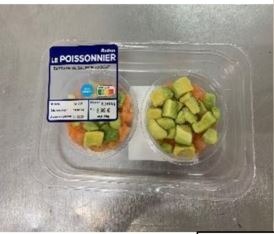
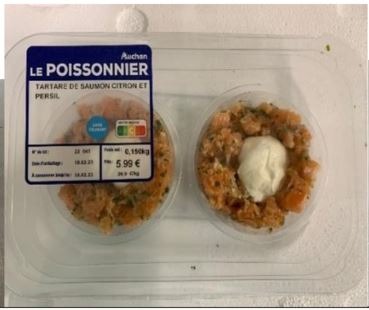
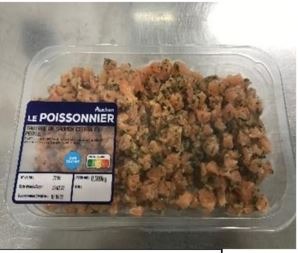
Marinated salmon and salmon tartare
Product identification
GTIN Batch Date
3760105174484 24057 Use-by date 03/02/2024
3254560238404 24057 Use-by date 03/03/2024
3254560238404 24057 Use-by date 03/04/2024
3254560741416 24057 Use-by date 03/10/2024
3254560741416 24057A Use-by date 03/11/2024
3254560741416 24057AAA Use-by date 03/13/2024
3254566435111 24057 Use-by date 03/05/2024
3254562307856 24057 Use-by date 03/03/2024
3254560741416 24057AA Use-by date 03/12/2024
3254560780774 24057 Use-by date 03/11/2024
3254560780774 24057 Use-by date 03/12/2024
Products List
New_posterette_auchan.pdfAttachment
Start/end date of marketing
From 02/27/2024 to 03/05/2024
Storage temperature
Product to keep in the refrigerator
Health mark
FR 62.160.128 EC
Geographical sales area
Whole France
Distributors
Auchan stores and any other brand selling Auchan branded products

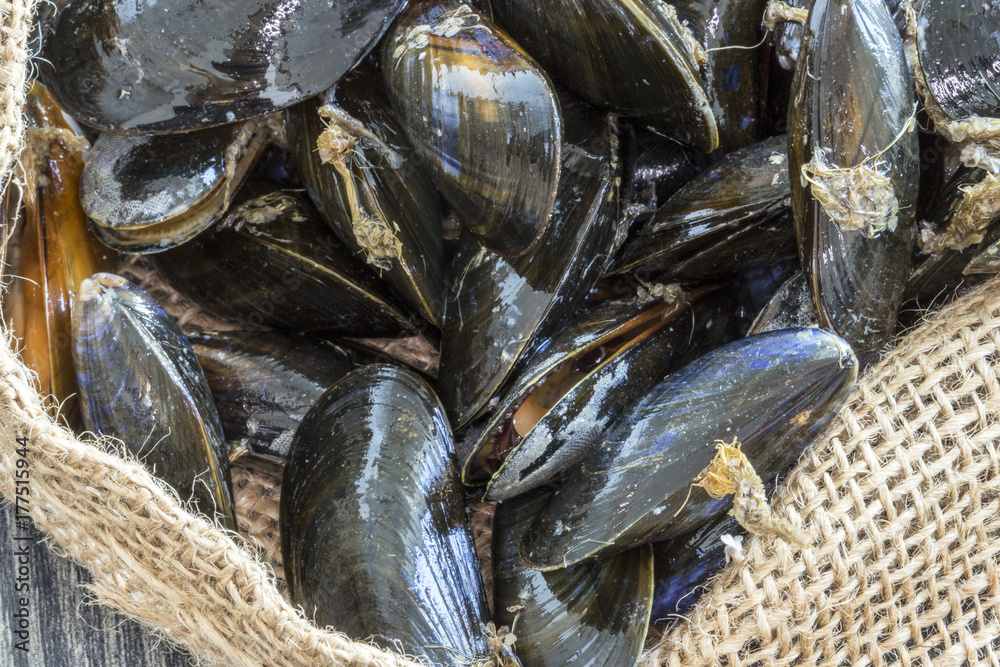
France – PEACH MUSSELS – E.coli

Gov France

Product category
Food
Product subcategory
Fishing and aquaculture products
Product brand name
Unbranded
Model names or references
Peach mussels
Product identification
GTIN Batch Date
102172702 – 079.30.27.02 – 102.17.27.02 – 016.21.27.02 – 090.23.27.02 – 017.45.27.02 – 331.76.27.02 Use-by date 06/03/2024
Packaging
15kg bag
Start/end date of marketing
From 02/28/2024 to 03/02/2024
Storage temperature
Product to keep in the refrigerator
Further information
Label number: 483 to 496
Geographical sales area
Pas-de-Calais
Distributors
– Ms. PONT Myriam – Ms. MARTIN Nicole – Ms. MONIER Marie-louise – Mr. COUSIN Alain – MR. SUEUR Emmanuel

Austria – Smoothie bowl with strawberry, banana, aronia and linseed – Mycotoxin – Patulin

Ages

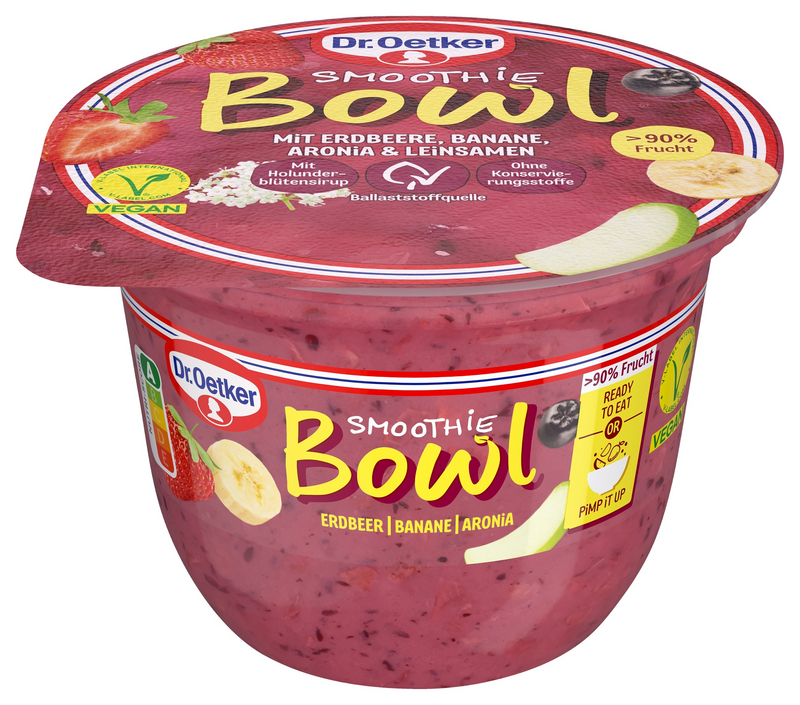
AGES informs about a recall from Dr. Oetker GmbH. The company issued a recall of the product Smoothie Bowl with strawberry, banana, aronia and linseed on March 6, 2024:
© Dr. Oetker GmbH
Reason for recall
Patulin residues
Marketed by
Dr. Oetker GmbH
Manufacturer
Dr. Oetker GmbH
Expiry Date
April 23, 2024

Due to patulin residue, the Dr. As a precautionary measure, Oetker GmbH is returning the product “Smoothie Bowl with strawberry, banana, aronia and linseed”. Affected are 200g cups with the following information:

  • “Smoothie bowl with strawberry, banana, aronia and linseed”
  • Expiry date/best before: all until April 23, 2024

Patulin is a harmful substance (mycotoxin) produced by mold that can cause nausea, vomiting and indigestion. Therefore, customers should definitely pay attention to the recall and not consume the product mentioned.

To avoid health risks, consumers are asked to return the recalled goods to the store where the product was purchased. The purchase price will be refunded.

Original recall

Research FSIS Foodborne Illness Outbreak Investigations, Fiscal Year 2023

FSIS USDA

The U.S. Department of Agriculture’s Food Safety and Inspection Service (FSIS), Office of
Public Health Science, Applied Epidemiology Staff, coordinates the FSIS response to
foodborne illness outbreaks that may involve FSIS-regulated products. This includes outbreaks that involve four foodborne pathogens that most frequently contaminate FSIS-regulated products: Salmonella, Shiga toxin-producing Escherichia coli (STEC), Listeria monocytogenes, and Campylobacter.

A foodborne outbreak occurs when two or more persons experience a similar illness after ingestion of a common food, and epidemiologic analysis implicates the
food as the source of the illness. FSIS may investigate illnesses associated with other, less
common, foodborne pathogens (e.g., Clostridium botulinum) if they are potentially associated with FSIS-regulated products. FSIS collects and evaluates epidemiologic, laboratory, and traceback information to determine if there is an association between an FSIS-regulated product and human illnesses. Epidemiologic information can include details like which foods ill people ate, where they purchased these foods, and where they live. Laboratory information can include comparing bacteria from FSIS samples and ill people to see if they are genetically similar or have similar characteristics. Traceback activities may include determining the location where the product was sold (e.g., grocery store, deli counter, or restaurant) or the source of a product (e.g., the federally inspected slaughter or processing facility). Depending on the evidence collected during an investigation, FSIS may have enough detailed exposure and product information to take one or more actions to prevent additional illnesses. These actions may include requesting that a company remove product from commerce and FSIS issuing a press release announcing that a firm is recalling meat, poultry, or egg products linked to human illnesses or FSIS notifying the public of potential food safety concerns through the issuance of a Public Health Alert (PHA).
This report summarizes outbreaks that FSIS investigated from October 1, 2022, to September
30, 2023, Fiscal Year 2023 (FY 2023). This report also highlights key lessons learned from
outbreak investigations in FY 2023.

USA – NY cheese manufacturer pleads guilty for adulterated raw cheese linked to deadly Listeria outbreak

Food Safety News

Pursuit to a 16-page plea agreement that leaves little to the imagination, a former raw milk cheese manufacturer and the company he owned and managed pleaded guilty today to charges related to cheese that was linked to a deadly outbreak of listeriosis.

Johannes Vulto and his company, Vulto Creamery LLC, are scheduled for sentencing on July 9 at the U.S. Courthouse in Syracuse, NY. The maximum sentence for the single misdemeanor count is one year imprisonment, a fine of $250,000, and one year of supervised release plus a 5-year term of court supervision.

The plea agreement requires a payment of $100,000 from Vulto and a one-year supervised release to begin after any imprisonment.

Research – 2016 Vulto Cheese Listeria Outbreak – What is Listeria and why is it so Deadly

Food Poison Journal

In early March 2017, public health and regulatory officials in several states, the Centers for Disease Control and Prevention (CDC), and the US Food and Drug Administration (FDA) investigated an outbreak of Listeria monocytogenes(Listeria) infections. Investigators used epidemiologic evidence and laboratory results from the PulseNet system to identify case patients who were part of the outbreak. Eight people infected with outbreak strain of Listeria were reported from four states, New York, Connecticut, Vermont and Florida. The Florida case had traveled to New York in the month before illness onset. Whole genome sequencing (WGS) performed on clinical isolates from all 8 case-patients showed that the isolates were closely related genetically, providing strong support that illnesses were linked to a common source.