Monthly Archives: April 2023

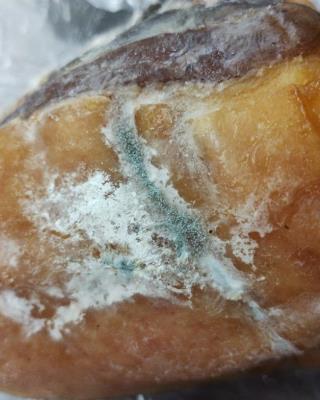
Czech Republic – Prosciutto crudo tuttafetta (cured ham) – Mold/Mould

Potravinynapranyri

Illustrative photo #1

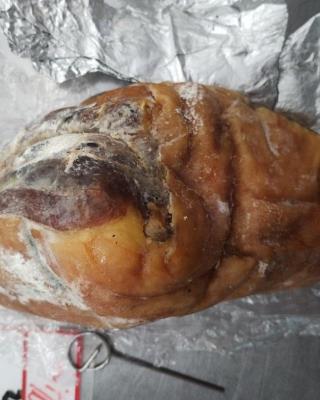
Illustrative photo #2

Place of inspection:
Přerov ( Čechova 970/17, 750 02 Přerov )
ID: 07707754
Food group: Meat and meat products Durable fermented products

Prosciutto crudo tuttafetta (cured ham)
Category: Dangerous foods
Invalid parameter:

fungi visible to the eye

There were white and green mold colonies on the surface of the product. Food is not considered safe if it shows signs of spoilage.

The sample was taken from the loaded package. Unsuitable storage temperatures of this product were not detected during the inspection. 

Best before date: 01 04 23
Packaging: unpacked PP packaging
Date of sample collection: 27/02/2023
Reference number: 23-000198-SZPI-CZ
The sample was detected by the official control of the State Agricultural and Food Inspection.

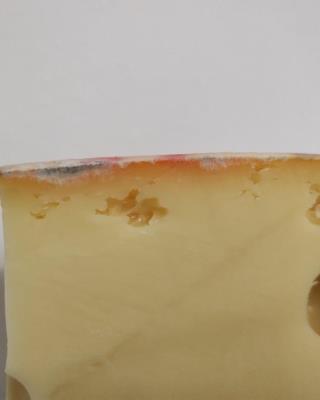
Czech Republic – Maasdamer – Mould/Mold

Potravinynapranyri

Illustrative photo #1

Place of inspection:
Přerov ( Čechova 970/17, 750 02 Přerov )
ID: 07707754
Food group: Milk and milk products Cheese

Maasdamer
Category: Dangerous foods
Invalid parameter:

fungi visible to the eye

There were white and green fungal colonies at the site of the cut. Food is not considered safe if it shows signs of spoilage.

The sample was taken from the loaded package. Unsuitable storage temperatures of this product were not detected during the inspection.

Best before date: 23/05/2023
Packaging: Sliced ​​cheese wax
Date of sample collection: 4/3/2023
Reference number: 23-000199-SZPI-CZ
The sample was detected by the official control of the State Agricultural and Food Inspection.

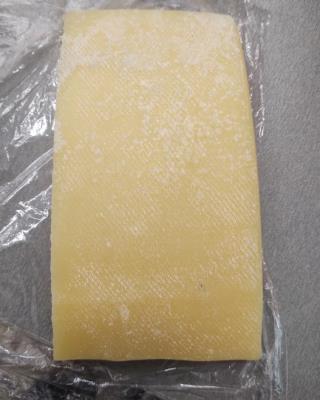
Czech Republic – Frans Emmentaler 45+ – Mould/Mold

Potravinynapranyri

Illustrative photo #1

Illustrative photo #3

Place of inspection:
Přerov ( Čechova 970/17, 750 02 Přerov )
ID: 07707754
Food group: Milk and milk products Cheese

Frans Emmentaler 45+
Category: Dangerous foods
Invalid parameter:

fungi visible to the eye

There were white and green fungal colonies at the site of the cut. Food is not considered safe if it shows signs of spoilage.

The sample was taken from the loaded package. Unsuitable storage temperatures of this product were not detected during the inspection.

Best before date: 07-05-2023
Packaging: Sliced ​​cheese wax
Date of sample collection: 4/3/2023
Reference number: 23-000200-SZPI-CZ
The sample was detected by the official control of the State Agricultural and Food Inspection.

Austria – BILLA Ham Egg Wrap 170G – Listeria monocytogenes

AGES

AGES informs about a recall of the company BILLA. The company recalled the product BILLA Ham Egg Wrap 170G on April 28th, 2023:
recall reason
Listeria
Marketed by
BILLA
Manufacturer
Wojnar’s Viennese delicacies
Expiry Date
05/08/2023

Due to the possible presence of Listeria monocytogenes, a potential health hazard cannot be ruled out. It is therefore not recommended to consume this product!

Product data: BILLA SCHINKEN EGG WRAP 170G (V-EAN: 9002233059979)
Best before date: MHD 08.05.2023

For safety reasons, the entire inventory – i.e. all batches and best-before dates – of the product has been withdrawn from sale.

Affected products that have already been purchased can now be returned without a receipt.

If you have any questions, please send
an email to Wojnar’s Wiener Leckerbissen Delikatessenproduktion GmbH to office@wojnar.at

The supplier Wojnar’s Wiener Leckerbissen Delikatessenproducer GmbH regrets the incident and apologizes to all customers for the inconvenience caused.

original recall

USA – FDA Issues Report Highlighting Salmonella Outbreak in Cantaloupe During Summer of 2022

FDA

Constituent Updates

April 27, 2023

The U.S. Food and Drug Administration (FDA) has released a report on its investigation of the Salmonella Typhimurium outbreak that caused 88 reported illnesses and 32 hospitalizations in the U.S. between July and September 2022. The FDA worked with the U.S. Centers for Disease Control and Prevention (CDC) and state partners to investigate the outbreak, which was linked through epidemiology and traceback to cantaloupe grown in Southwest Indiana during the summer of 2022. The report released today includes an overview of the traceback investigation, investigation results, and various factors that potentially contributed to the contamination of cantaloupe with Salmonella.

As a result of the traceback, FDA conducted investigations in Indiana at three farms, their common packinghouse and nearby public lands. Salmonella positive environmental samples were found at each location, but none of the resulting Salmonella isolates conclusively matched the outbreak strain by whole genome sequencing (WGS). Although the investigation did not result in identification of a specific microbial source or route that resulted in this outbreak, the agency identified Salmonella spp. in on-farm, post-harvest, and off-farm environments.

In light of the investigational findings, FDA highlights the following recommendations and requirements applicable to firms, such as growers of melons and similar produce:

  • Review current conditions and practices to determine whether they are adequate or if additional prevention measures are warranted.
  • Understanding previous land use can help farms identify and address potential sources of pathogens that may affect their farming operations.
  • Be cognizant of and assess risks that may be posed by adjacent and nearby land uses, especially as it relates to the presence of livestock, including poultry, and the interface between farmland, and other agricultural areas.
  • Consider additional tools such as pre-harvest and/or post-harvest sampling and testing of products to help inform the need for specific prevention measures.
  • Poultry manure, while valued for its fertilizer value, is a known reservoir for Salmonella spp.  Proper application of a manure that has been treated with a validated and verified process to reduce pathogens (e.g. composting with time and temperature measurements) can significantly reduce the potential for the integration of Salmonella or other human pathogens into soils (as compared to the use of raw manures).
  • Inspect, maintain, and clean and, when necessary and appropriate, sanitize all food contact surfaces of equipment and tools used as frequently as reasonably necessary to protect against contamination.
  • When appropriate, use EPA-approved products according to the label for cleaning and sanitizing.
  • Inconsistent adherence to or deviation from existing SOPs for cleaning and sanitizing by farms can affect produce safety. Effective communication on farms about SOPs and any changes to those SOPs can help ensure that food safety practices are being followed.
  • Root cause analyses may be useful in identifying for growers how human pathogen sources in the broader agricultural environment may contribute to contamination.
  • Improve traceability through increased digitization, interoperability, and standardization of traceability records which would expedite traceback and help remove contaminated product from the marketplace more quickly, thereby preventing further illnesses. This is not only important for growers, but also critical for shippers, manufactures, and retailers as well, to improve overall traceability throughout the supply chain.

FDA will work in conjunction with the Indiana State Department of Health to increase awareness amongst the melon growing industry of pathogenic environmental strains in the region to develop and promote risk reduction strategies related to melon growing and harvesting to minimize the impact of these strains.

Food safety is a shared responsibility that involves food producers, distributors, manufacturers, retailers, and regulators. Recognizing the interconnection between people, animals, plants, and their shared environment when it comes to public health outcomes, we encourage collaboration among various groups in the broader agricultural community (i.e., produce growers, state government and academia) to address this issue.

RASFF Alerts – Aflatoxin – Pistachios

RASFF

Aflatoxin in Pistachio from IRAN/high content of aflatoxins in pistachios from Iran in Italy and Germany

RASFF

Aflatoxin in Pistachio from IRAN in Italy and Germany

RASFF Alerts – Salmonella – Polish Chicken – Sesame Seeds – Chilled Chicken Meat – Onion Powder – Beef Trimmings – Chicken Quarter – Aniseed – Raw Duck Foie Gras

RASFF

Salmonella group 0:8 (C2-C3) in chilled chicken meat from Ukraine in Poland and Slovakia

RASFF

Suspicion of Salmonella Newport in spice mixtures from Germany using onion powder from Germany in Austria, Denmark, Netherlands, Poland Romania and Russia

RASFF

Salmonella in beef trimmings from Netherlands in Germany and Sweden

RASFF

Salmonella C1 in chicken quarter from Ukraine in Poland, Germany and Austria

RASFF

Salmonella in ground aniseed from the Netherlands in Switzerland

RASFF

Salmonella spp. in sesame seeds from India in Germany

RASFF

Salmonella Senftenberg in poultry legs from Poland in Bulgaria

RASFF

Salmonella spp. O:8 group (C2-C3) in poultry meat from the Ukraine in Poland

RASFF

Salmonella spp in Slices of raw duck foie gras from Bulgaria in France

RASFF Alert- Vibrio cholerae – Shrimp

RASFF

Vibrio cholerae in Penaeus (Litopenaeus) vannamei from Ecuador in Spain

RASFF Alert- Enterobacteriaceae – Cheese

RASFF

Enterobacteriaceae in cheese from France via Denmark in Finland

RASFF Alerts – Mycotoxin – Ochratoxin A – Raisins – Chilli Spice Preparation – Sultana Raisins – Dehydrated Barley Malt Syrup

RASFF

Ochratoxin A (15 μg/kg) in raisins from China, via Lithuania in Latvia and Estonia

RASFF

Ochratoxin A in chili spice preparation from Germany, with raw material from China in Austria, Czech Republic, Denmark, Germany and Slovakia

RASFF

OCHRATOXIN A IN SULTANA RAISINS FROM TURKEY in Italy

RASFF

Ochratoxin A in dehydrated barley malt syrup from Belgium in  Czech Republic, France, Italy, Poland, Portugal, Switzerland