Monthly Archives: July 2022

Australia – Harris Smokehouse Smoked Fish – Listeria monocytogenes

FSANZ

Harris Smokehouse is conducting a recall of:
Hot Smoked Barramundi 150g Use by 28/7/2022 through to 4/8/2022
Hot Smoked Trout Blackening Spice 150g Use by 1/8/2022 through to 4/8/2022
Everyday Smashed Smoked Salmon 150g Use by 20/7/2022 through to 28/7/2022
Premium Smoked Salmon 100g, 250g, 500g, 1kg. Use by 18/7/2022 through to 8/8/2022​
Smoked Salmon Trimmings 250g Use by 25/7/2022 through to 29/7/2022
The products have been available for sale at independent food retailers including IGAs in QLD, NSW, ACT, VIC, NT, SA and WA.

Date markings

Use by as listed above

Problem

The recall is due to possible Listeria monocytogenes contamination.

Food safety hazard

Listeria monocytogenes may cause illness in pregnant women and their unborn babies, the elderly and people with low immune systems.

Country of origin

Australia

What to do​

Consumers should not eat these products. Any consumers concerned about their health should seek medical advice.
Customers should return the products to the place of purchase for a full cash refund.

For further information please contact:

Harris Smokehouse

08 8388 7000​

Related links:

Research – Epidemiological and microbiological investigation of a large increase in vibriosis, northern Europe, 2018

Eurosurveillance

Food Illness

The habitat of  spp. bacteria is fresh and brackish water with moderate salinity. Non-toxigenic , as well as several human pathogenic non-cholera  species, including  and , cause vibriosis after seawater exposure or consumption of contaminated seafood [1]. Clinical manifestations range from mild gastroenteritis and otitis to wound infections that may lead to severe necrotising fasciitis and septicaemia with a potentially fatal outcome [25].

The Baltic Sea region is one of the areas where increasing numbers of cases related to  species causing vibriosis (VCV) have been reported in the last decades [6]. Several studies have shown how the occurrence of heatwaves, which lead to an increase in sea surface temperature, are linked with an increase in the number of reported vibriosis cases [4,712]. For instance, the years with an especially warm summer in the Baltic Sea region, 2006, 2010 and particularly 2014 (the warmest year in historical records at the time), were also the years with the largest number of vibriosis cases reported [6,11].

However, there is a notable gap in surveillance data for vibriosis since it is not a notifiable disease in the majority of European countries [1,6]. Therefore, the aim of this multi-country study was to describe the epidemiology of vibriosis cases in countries bordering the North and Baltic Seas area during the exceptionally warm year of 2018 [13,14], in order to investigate the extent of these infections in the study countries, map their genetic diversity, understand the predictors for developing severe vibriosis, and propose recommendations for public health measures.

Finland – Food Safety in Finland 2021

This report presents the 2021 results of regulatory control related to food safety, official controls and monitoring programmes on food and feed, as well as research and risk assessments.
The report also assesses, based on the results, the status of food safety and future needs for regulatory activities in Finland.
The report extends the annual report referred to in the EU Control Regulation (EU) No. 2017/625 on official control with respect to food safety; the annual report describes the results of the control in the various sectors of the food supply chain as a whole.
The results of official controls and investigations from 2021 indicate that the control works well and the level of food safety is good. The investigation of epidemics has developed, and the number of epidemics caused by unknown reasons was the smallest in years.
The export controls required by export countries were continued in accordance with the programmes. The number of food recalls has continued to increase dramatically. In 2021, more than 19,000 Oiva reports were published, which is an increase of 19 per cent from the previous year. Control was carried out through prioritised work. The new Food Act and the decrees issued under it entered into force in April 2021.

Switzerland – Swiss outbreaks triple in 2021; illnesses also rise

Food Safety News

The number of foodborne outbreaks almost tripled in Switzerland in 2021 compared to the year before.

This past year, 37 outbreaks were reported with 540 people sick and 40 hospitalized versus 13 outbreaks in 2020.

Officials at the Federal Food Safety and Veterinary Office said the increase could be random, it could be due to better reporting and data collection or it could show the food safety situation has gotten worse, possibly because of the COVID-19 pandemic and other challenges facing businesses.

The agent was unknown in 17 outbreaks but Salmonella caused seven, norovirus four, Campylobacter three, two were due to Bacillus cereus and one each because of Shiga toxin-producing E. coli, Clostridium perfringens and hepatitis E.

Research – WHO Seeks Experts on Microbial Hazards

Food Safety News

The World Health Organization (WHO) is looking for people with experience on risk assessment of microbiological hazards.

The call comes as the Joint FAO/WHO Expert Meeting on Microbiological Risk Assessment (JEMRA) is renewing its expert roster for January 2023 to December 2027.

JEMRA is an international scientific expert group run by the Food and Agriculture Organization of the United Nations (FAO) and WHO. Meetings are convened on an ad-hoc basis, depending on requests from Codex.

One of the main aims is to provide a review of scientific advice on the state of microbiological risk assessment, and to develop the means of achieving risk assessments for specific pathogen -commodity combinations. Work often includes an evaluation of the impacts of different risk management options in the reduction or control of microbiological risks in food based on an analysis of the available knowledge.

LINK

USA – Investigation of Adverse Event Reports: French Lentil & Leek Crumbles (June 2022)

FDA

Daily Harvest French Lentil and Leek Crumbles

The FDA, along with CDC and state and local partners, is investigating consumer complaints of gastrointestinal illness and abnormal liver function that may be attributable to eating Daily Harvest French Lentil & Leek Crumbles frozen product.

On June 17, 2022, in response to consumer complaints submitted to the company, Daily Harvest voluntarily initiated a recall of their French Lentil & Leek Crumbles. In response to Consumer Adverse Event Reports (CAERS) and Consumer Complaints submitted to the FDA, the FDA has initiated an investigation, including an inspection and sample collection in an effort to determine the cause of illnesses. As of July 14, 2022, the FDA has received 277 CAERS reports and Consumer Complaints related to this product.

FDA’s investigation is ongoing, and more information will be provided as it becomes available.

Recommendation

Consumers should not eat, sell, or serve recalled products. Consumers who may still have the recalled product in their freezers should throw it away.

Product was sold through online sales and in two retail locations; the Daily Harvest store in Chicago, IL, and a “pop-up” store in Los Angeles, CA. French Lentil + Leek Crumbles is a frozen product packaged in a 12oz white pouch with the words “Daily Harvest” at the top, a large “CRUMBLES” immediately below the top and the words “French Lentil + Leek” in bold, as shown below. All lot codes of the French Lentil + Leek Crumbles are affected. At this time, no other Daily Harvest products are affected or part of this recall.

If you experience symptoms including yellowing of the skin and eyes (jaundice), dark urine, itching with no rash, gastrointestinal illness, nausea, fatigue, body aches, severe abdominal pain and/or fever after consuming this product, please consult with your healthcare provider. Let your healthcare provider know you have recently consumed the recalled Daily Harvest French Lentil & Leek Crumbles. Healthcare providers should report these illnesses to their health department.

China – In China’s Wuhan, cholera-causing bacteria in turtles strikes nerve

Reuters

Detection in the Chinese city of Wuhan of a bacteria that caused cholera in a student and was separately found in samples from softshell turtles at a food market has struck a sensitive nerve with ordinary Chinese people, with some relating it to COVID-19.

The food market where samples from softshell turtles tested positive of the pathogen capable of causing cholera has been disinfected, local authorities said late on Thursday.

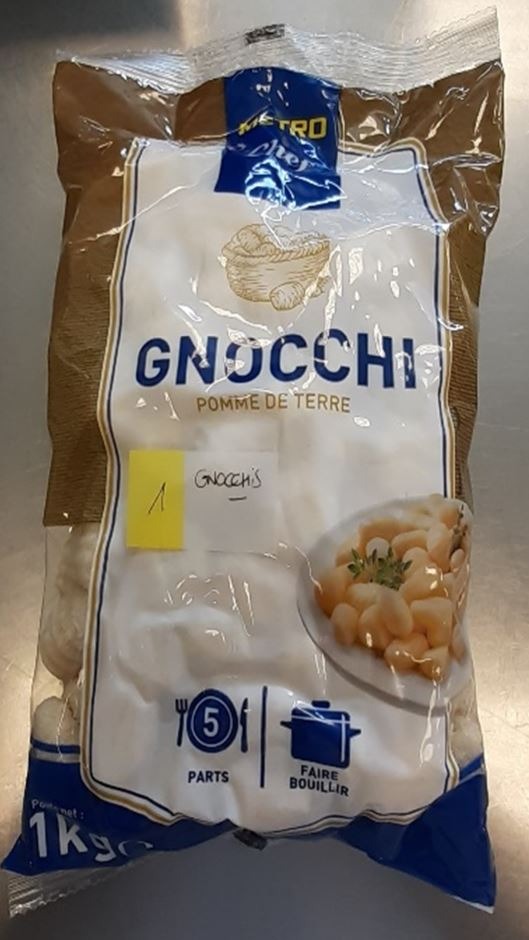
France – Potato gnocchi 1kg METRO CHEF – Bacillus cereus

Gov france

Identification information of the recalled product

  • Product category Feed
  • Product subcategory Prepared meals and snacks
  • Product brand name METRO CHEF
  • Model names or references Potato gnocchi 1kg METRO CHEF
  • Identification of products
    GTIN Batch Date
    3439496603001 1442 Use-by date 07/23/2022
  • Marketing start/end date From 02/06/2022 to 12/07/2022
  • Storage temperature Product to be stored in the refrigerator
  • Geographic area of ​​sale Whole France
  • Distributors SUBWAY

Practical information regarding the recall

  • Reason for recall Presumed presence of Bacillus cereus above the alert threshold
  • Risks incurred by the consumer Bacillus cereus

Israel – SFS pastries – Ogle brand – Mould

GovIL

See link above for the recall

USA – Florida officials order Big Olaf Creamery to stop all activities as part of outbreak investigation – Listeria monocytogenes

Food Safety News

State officials have ordered Big Olaf Creamery to stop use of processing equipment in a plant associated with a deadly outbreak of Listeria monocytogenes infections.

The Florida Department of Agriculture & Consumer Services (FDACS) is still waiting for results of product sampling, but the evidence of Listeria in the production plant is enough for the state to take action.

Twenty-three people have been infected with Listeria and one has died. One pregnant women suffered a miscarriage.

A spokesman with the Florida Department of Health told Food Safety News today that the agency has been investigating the outbreak for a year.

The agriculture and consumers services department took more than 100 samples at the manufacturing plant of Big Olaf Creamery and nine came back positive, including one from a transfer pipe from pre mix to an ice cream machine.

“FDACS has issued a stop use order of the processing equipment where the Listeria monocytogenes was found. This will effectively shut down all operations at this processing facility, which had already been done voluntarily by the company,” according to a statement today from the department.