Monthly Archives: March 2022

Research – Salmonella and Campylobacter continue to show high levels of antibiotic resistance

EFSA

Antibiotic resistance in Salmonella and Campylobacter bacteria is still high, says a report released today by the European Centre for Disease Prevention and Control (ECDC) and the European Food Safety Authority (EFSA).

Campylobacteriosis was the most reported zoonosis in the EU in 2020 and the most frequently reported cause of foodborne illness. Campylobacter bacteria from humans and poultry continues to show very high resistance to ciprofloxacin, a fluoroquinolone antibiotic, that is commonly used to treat some types of bacterial human infection.

Increasing trends of resistance against the fluoroquinolone class of antibiotics has been observed in humans and broilers for Campylobacter jejuni. In Salmonella Enteritidis, the most common type of Salmonella in humans, increasing trends of resistance to the quinolone/fluoroquinolone class of antibiotics were observed. In animals, resistance to these antibiotics in Campylobacter jejuni and Salmonella Enteritidis were generally moderate to high.

However, despite the increasing trends of resistance against certain antibiotics, simultaneous resistance to two critically important antibiotics – remains low for E. coliSalmonella and Campylobacter in bacteria from both humans and food-producing animals.

A decline in resistance to tetracyclines and ampicillin in Salmonella from humans was observed in nine and ten countries, respectively, over the period 2016-2020, and this was particularly evident in Salmonella Typhimurium. Despite the decline, resistance to these antibiotics still remains high in bacteria from both humans and animals.

Furthermore, in more than half of the European Union countries, a statistically significant decreasing trend in the prevalence of extended-spectrum β-lactamase (ESBL)-producing E. coli was observed in food-producing animals. This is an important finding as particular strains of ESBL-producing E. coli are responsible for serious infections in humans.

Carbapenem resistance remains extremely rare in E. coli and Salmonella from food-producing animals. Carbapenems are a class of last resort antibiotics and any findings showing resistance to these in zoonotic bacteria are concerning.

Although findings and trends are consistent with data reported in previous years, the COVID-19 pandemic had an impact on the amount of data reported, particularly with regards to public health.

An interactive data visualisation tool shows resistance levels in humans, animals and food, country-by-country in 2019 and 2020.

Additionally, the human food and waterborne antibiotic resistance data is published in ECDC’s Surveillance Atlas of Infectious Diseases (under the diseases campylobacteriosis, salmonellosis and shigellosis, respectively).

USA – District Court Orders New Jersey Company to Stop Distribution of Adulterated Pet Food Contaminated with Salmonella

Justice

This order is on the back of several recalls from this company for Salmonella

A federal court today ordered a Carneys Point, New Jersey company to stop distributing adulterated pet food in violation of the Federal Food, Drug and Cosmetic Act (FDCA).

In a complaint filed March 15, the United States alleged that Bravo Packing Inc., and its owners and operators, Joseph Merola and Amanda Lloyd, violated the FDCA by distributing adulterated animal food and by causing animal food to become adulterated while held for sale. The complaint alleged that samples collected during U.S. Food and Drug Administration (FDA) inspections of the Bravo facility in July 2019 and April 2021 contained Salmonella, a pathogenic microorganism that can cause the illness known as salmonellosis in both humans and animals. Salmonella can be transferred from animal food to humans through handling of the food, or directly from infected animals to humans. Salmonellosis can cause symptoms such as diarrhea, fever and abdominal cramps that last several days in healthy adults. Absent prompt treatment, salmonellosis can cause severe dehydration and even death in infants, young children, the elderly, transplant recipients, pregnant women and individuals with weakened immune systems.

“Animal food manufacturers must ensure that their products are safe,” said Principal Deputy Assistant Attorney General Brian M. Boynton, head of the Justice Department’s Civil Division. “The department will continue to work closely with the FDA to ensure that pet food is manufactured in compliance with the law.”

“The food we give our pets should be safe for them to eat and safe for people to handle,” said Director Steven Solomon, DVM, MPH of the FDA’s Center for Veterinary Medicine. “The FDA has taken this action to protect public health because, despite multiple inspections, notifications of violations and recalls, this firm continued to operate under insanitary conditions and produce pet food contaminated with harmful bacteria. We will not tolerate firms that put people or animals at risk and will take enforcement actions when needed.”

The defendants agreed to settle the suit and be bound by a consent decree of permanent injunction. The negotiated consent decree requires, among other things, that the defendants stop receiving, processing, manufacturing, preparing, packing, holding and distributing adulterated pet food until they take specific remedial measures and demonstrate to the FDA that they will comply with federal law.

The government was represented by Trial Attorney Noah T. Katzen of the Civil Division’s Consumer Protection Branch, with the assistance of Tara Boland of the FDA’s Office of Chief Counsel. The U.S. Attorney’s Office for the District of New Jersey also provided assistance.

Additional information about the Consumer Protection Branch and its enforcement efforts may be found at http://www.justice.gov/civil/consumer-protection-branch.

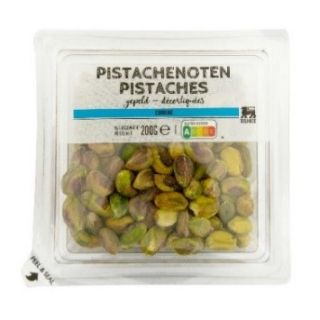
Belgium – “Shelled pistachios”, “Luxury nut mix” and “Dried olive nut mix” – Aflatoxin

AFSCA

Recall from Spar Colruyt Group
Product: “Shelled pistachios”, “Luxury nut mix” and “Dried olive nut mix”.
Problem: too high aflatoxin content.


Spar is recalling the products ‘Pistachio Shells’, ‘Luxury Nut Mix’ and ‘Dried Olive Nut Mix’.

During an internal check, too high aflatoxin B1 content was found in shelled pistachios, Luxe nut mix and dried olive nut mix. In consultation with the FASFC, Spar has therefore decided to withdraw the products concerned from sale.

Customers who have purchased these products are invited not to consume them and to return them to the store, where they will be reimbursed. In the meantime, all stores have removed the affected products from the shelves.

Description of products:

Spar – shelled pistachios (150 g)
Dates of minimum durability (MDD): between 3/7/2022 and 30/8/2022 Period of sale: from 28/12/2021 to
25/3/2022 inclusive
Item: 44056

Spar – mix of nuts with dried olives (160 g)
Date of minimum durability (MDD): 16/6/2022
Period of sale: from 28/12/2021 to 25/3/2022 inclusive
Article number: 6158

Spar – Luxe nut mix (175 g)
Dates of minimum durability (MDD): between 16/6/2022 and 30/8/2022
Period of sale: from 28/12/2021 to 25/3/2022 inclusive
Number no.: 43935

These products were offered for sale in the following stores: Spar Colruyt Group and general food stores.

For more information , customers can contact Colruyt Group Customer Service on 0800 99 124.

Finland – Suspicion of salmonella in beef strips

Ruokavirasto

Lidl has announced the withdrawal of beef strips. The company is withdrawing from Bergmann bovine minute strip 300g with an expiration date of 21/03/2022 and a batch number of 9068062103322113 32 . Suspicion of salmonella has been detected in self-monitoring samples from this batch.

The product has been on sale in all Lidl stores in Finland from March 15 to March 19. between. The recall does not apply to other product items.

Lidl asks those who have purchased and frozen the product to check the date of the product and return the products in question to the Lidl store. The price of the product will be refunded.

For more information, please contact Lidlin Customer Service, tel. 0800-0-5435 or asiakaspalvelu@lidl.fi

The matter is handled by the Finnish Inspector General Paula Hietanen, tel. +358 50 5969 637, firstname.lastname@ruokavirasto.fi .

Picture of the product
(Image: Lidl Finland)

Bergmann beef minute strip pack.

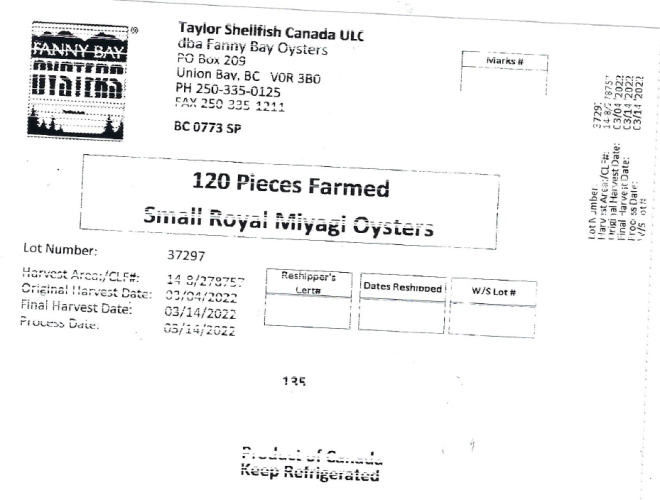
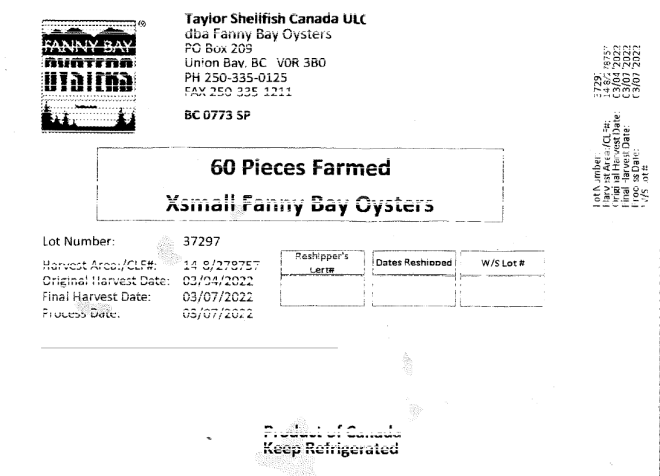
Canada – Correction – Certain Taylor Shellfish Canada ULC brand Oysters recalled due to Norovirus

CFIA

Summary

Product
Certain oysters
Issue
Food – Microbial Contamination – Norovirus
What to do

Do not consume, use, sell, serve, or distribute the recalled products

Luxembourg – MIXED NUTS & SHELLED PISTACHIOS FROM THE DELHAIZE BRAND – Aflatoxin

SAP

Delhaize recalls the following products:

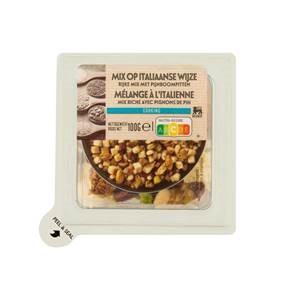
name Italian mix
Mark Delhaize
EAN code 5400112326770
Date of minimum durability (MDD) All dates between 06/16/2022 and 08/27/2022
Sale period from 29/12/2021 to 25/03/2022
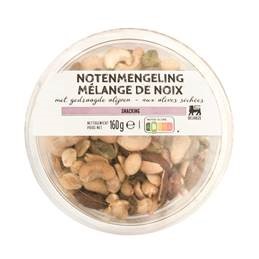
name Mix of nuts with dried olives
Mark Delhaize
EAN code 5400113689720
Date of minimum durability (MDD) All dates between 06/12/2022 and 08/18/2022
Sale period from 29/12/2021 to 25/03/2022
name Shelled pistachios
Mark Delhaize
EAN code 5400112508633
Date of minimum durability (MDD) All dates between 06/21/2022 and 09/11/2022
Sale period from 29/12/2021 to 25/03/2022

Danger  : Too high aflatoxin content

Aflatoxins are mycotoxins produced by certain species of Aspergillus molds which develop when the degree of temperature and humidity of the food is high. Aflatoxins are considered genotoxic and carcinogenic by the European Food Safety Authority and can be dangerous with high and repeated consumption.

Sale in Luxembourg by: Delhaize

Source of Information: Delhaize Recall Notification

Communicated by: Government Commission for Quality, Fraud and Food Safety .

Click to access Communique-de-presse-Recall-Delhaize-Luxembourg.pdf

France – Dairy products from raw cow’s milk – Listeria monocytogenes

Gov france

Identification information of the recalled product

  • Product category Food
  • Product subcategory Milk and dairy products
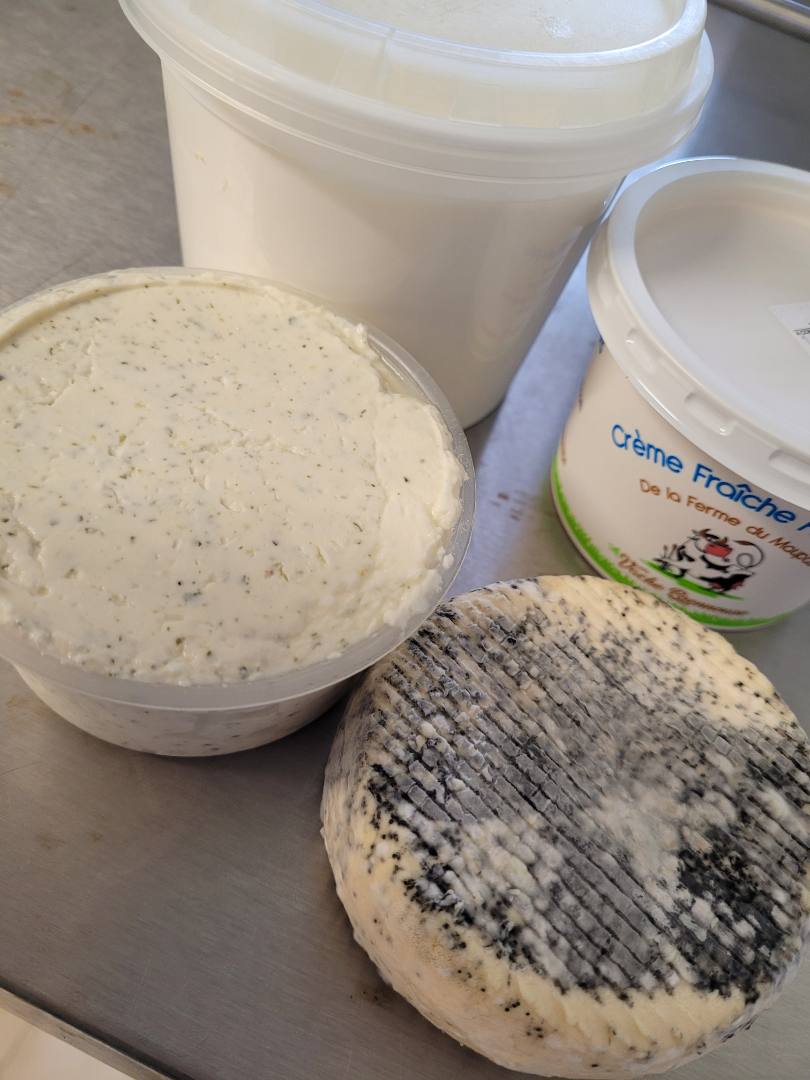
  • Product brand name GAEC du Maupas The Brennouse cow
  • Model names or references Crème fraîche Fromage blanc Spreadable cheese, ash and flavored
  • Identification of products
    Lot Dated
    Fresh cream Use-by date between 03/11/2022 and 03/22/2022
    White Cheese Use-by date between 08/03/2022 and 22/03/2022
    Spreadable cheese, Ash cheese, Flavored cheese Use-by date between 03/15/2022 and 03/22/2022
  • Marketing start/end date From 08/03/2022 to 28/03/2022
  • Storage temperature Product to be stored in the refrigerator
  • Health mark36,113,001
  • Geographic area of ​​sale Departments: INDRE (36), INDRE-ET-LOIRE (37)
  • Distributors Leclerc, Grocery Brennouse, Market of the halls, House of cheese, Provencal market, EARL darchis, Cécibon, Bulk workshops, Berry bulk, Grocery Berrichone, Producers corner 36, Le Blanc Cabri.

Practical information regarding the recall

  • Reason for recall Potential presence of listeria monocytogenes
  • Risks incurred by the consumer Listeria monocytogenes (causative agent of listeriosis)

France – Yellowfin Tuna Loin – Histamine

Gov france

Identification information of the recalled product

  • Product category Food
  • Product subcategory Fishery and aquaculture products
  • Product brand name unbranded (sold in the traditional department with service)
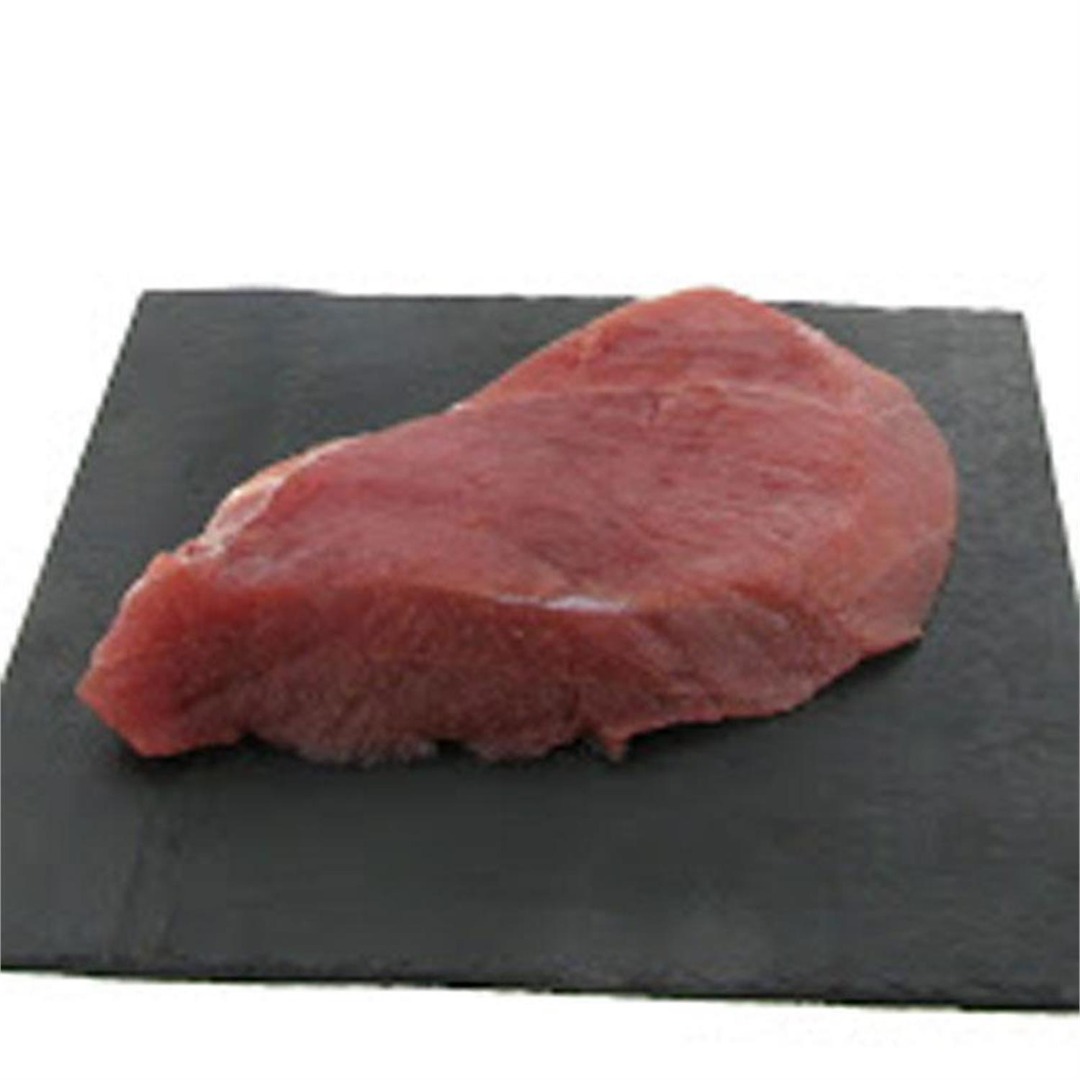
  • Model names or references albacore tuna loin sliced ​​on demand at the fishmonger’s stall
  • Identification of products
    Lot
    product sold between 01/03/22 and 06/03/22
  • Marketing start/end date From 03/01/2022 to 03/06/2022
  • Storage temperature Product to be stored in the refrigerator
  • Health mark/
  • Further information Albacore tuna loin sold on the fish counter between 03/01/2022 and 03/06/2022
  • Geographic area of ​​sale Cora Dorlisheim
  • Distributors cora store dorlisheim

Practical information regarding the recall

  • Reason for recall Presence of histamine
  • Risks incurred by the consumer Endogenous toxins: histamine (fish, cheese, alcoholic beverages, meats)

Norway – Analyzes of Pathogenic Escherichia coli in bacon sausages 2022

Mattilsynet

On behalf of the Norwegian Food Safety Authority, the Norwegian Veterinary Institute has examined 137 Norwegian bacon sausages for pathogenic E. coli bacteria (STEC). There was a discovery of such bacteria, but this type does not usually cause serious illness in humans. Although the sample was small, the conclusion is that the prevalence of STEC in Norwegian bacon sausages is low.

Mattilsynet

What we investigated: 137 Norwegian bacon sausages
Period: The samples were obtained in 2020 and analyzed in 2021
What we were looking for: E. coli and pathogenic STEC variants
What we found: A positive E. coli sample. This was not the type that usually causes serious illness in people, ie good results.
Who carried out the assignment: Veterinary Institute
Escherichia coli is present in the gastro intestinal tract of humans and warm-blooded animals, and are usually harmless. However, some groups of E.coli may cause infections in humans. Shiga toxin-producing E. coli (STEC) is one of the groups of pathogenic E. coli. Ruminants, in particular cattle, are assumed to be the main reservoir for STEC.
The results from previous surveys of cattle and sheep in Norway for the occurrence of STEC of the serogroups most often associated with infection, have indicated a low occurrence. Similar results were observed in a survey of minced meat from cattle, on the Norwegian market. The Norwegian Food Safety Authority commissioned a survey of STEC in domestically produced fermented sausages. The samples were collected in 2020 with subsequent analysis in 2021.
A total of 137 samples of domestically produced fermented sausage were collected and analysed. Enriched samples were examined for the presence of the genetic markers stx1, stx2 and eae. Attempts of isolation were carried out from samples that were positive for one or more of the virulence markers. Isolates identified as STEC were further characterized using whole genome sequencing.
STEC was isolated from only one sample, and the isolate was characterized as STEC O76:H19 harbouring stx1c, but did not carry eae. In the primary screening of enriched samples, only a few samples were positive for the virulence markers. The results from this study indicates that the occurrence of STEC in
Norwegian fermented sausages is low.
Although STEC was isolated, none of the serogroups associated with severe infections were isolated. It must be taken into account that a low number of samples were analysed. Since this type of products has not been analysed previously, the present survey provides knowledge for the industry, authorities and knowledge institutions. It is important to carry out similar surveys regularly to generate updated Norwegian data.

India – 300 fall ill due to food poisoning

The Times of India

Indore: Around 300 people were hospitalized on Thursday night in Khandwa with Food Poisoning