Monthly Archives: March 2022

Research – Vehicle Windshield Wiper Fluid as Potential Source of Sporadic Legionnaires’ Disease in Commercial Truck Drivers

CDC

Abstract

Sporadic Legionnaires’ disease is frequently detected in commercial truck drivers. We report 2 sporadic cases of this disease in Barcelona, Spain, that occurred during December 2019 and September 2020. Laboratory findings were consistent with windshield wiper fluid without added screen wash as a possible source of infection for both cases.

Legionnaires’ disease is a severe form of acute pneumonia caused by inhalation of aerosols containing Legionella bacteria. Most Legionella infections are related to contaminated artificial water systems. Systems with warm water (35°C), stagnation, and lack of disinfection and maintenance can lead to proliferation of Legionella spp. . Cooling towers, warm water systems, and whirlpool spas are well-established sources of infection . However, in most sporadic cases, the source of infection remains unknown.

Commercial truck drivers are at increased risk for Legionnaires’ disease. Exposures related to the vehicle are usually considered secondary to outside sources in industrial areas, such as cooling towers, and are seldomley investigated, despite some studies suggesting them as potential sources. Using windshield wiper fluid without added screen wash has been identified as a risk factor for Legionnaires’ disease in commercial drivers in a previous case‒control study. In addition, Legionella spp. can grow in windshield wiper fluid that does not contain screen wash. However, no studies have epidemiologically confirmed the fluid as the source of infection. We report 2 cases of Legionnaires’ disease cases diagnosed by urine antigen testing (UAT) linked to detection of the bacteria in the windshield wiper fluid.
Research – Inhibition of Listeria monocytogenes by Phage Lytic Enzymes Displayed on Tailored Bionanoparticles

MDPI

The high mortality rate associated with Listeria monocytogenes and its ability to adapt to the harsh conditions employed in food processing has ensured that this pathogen remains a serious problem in the ready-to-eat food sector. Bacteriophage-derived enzymes can be applied as biocontrol agents to target specific foodborne pathogens. We investigated the ability of a listeriophage endolysin and derivatives thereof, fused to polyhydroxyalkanoate bionanoparticles (PHA_BNPs), to lyse and inhibit the growth of L. monocytogenes. Turbidity reduction assays confirmed the lysis of L. monocytogenes cells at 37 °C upon addition of the tailored BNPs. The application of BNPs also resulted in the growth inhibition of L. monocytogenes. BNPs displaying only the amidase domain of the phage endolysin were more effective at inhibiting growth under laboratory conditions (37 °C, 3 × 10⁷ CFU/mL) than BNPs displaying the full-length endolysin (89% vs. 83% inhibition). Under conditions that better represent those found in food processing environments (22 °C, 1 × 10³ CFU/mL), BNPs displaying the full-length endolysin demonstrated a greater inhibitory effect compared to BNPs displaying only the amidase domain (61% vs. 54% inhibition). Our results demonstrate proof-of-concept that tailored BNPs displaying recombinant listeriophage enzymes are active inhibitors of L. monocytogenesView Full-Text

Research – Enhanced antimicrobial effectiveness of synergistic mixtures of rambutan peel extract and cinnamon essential oil on food spoilage bacteria and bio-based food packaging

Wiley Online

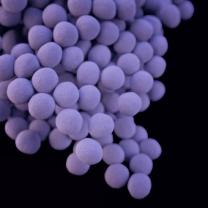
Staph

This research aims to enhance antimicrobial activity of rambutan peel extract (RPE), by mixing with cinnamon essential oil (CEO). The mixture of RPE and CEO with different weight ratios (10:0, 9:1, 8:2, 7:3, 6:4, 5:5, 4:6, 3:7, 2:8, 1:9, and 0:10) had been prepared and the antimicrobial efficacy was tested. Nine strains of bacteria: Gram-positive bacteria (Bacillus sp., Enterococcus faecalisLeuconostoc sp., Micrococcus luteusStaphylococcus aureus, and Streptococcus sp.) and Gram-negative bacteria (Escherichia coliPseudomonas fluorescens, and Salmonella typhimurium) were selected as the representative of pathogenic and food spoilage bacteria. Mixing RPE with CEO in a ratio of 5:5 showed the best synergistic effect against those bacteria. Addition of RPE/CEO in a weight ratio of 5:5 improved the antimicrobial activity of whey protein isolated (WPI) films, and enhanced strength, stiffness, and water resistance of the film.

Research – Impact of the COVID-19 pandemic on gastrointestinal infection trends in England, February–July 2020

bmj

Abstract

Objective To establish the impact of the first 6 months of the COVID-19 outbreak response on gastrointestinal (GI) infection trends in England.

Design Retrospective ecological study using routinely collected national and regional surveillance data from seven UK Health Security Agency coordinated laboratory, outbreak and syndromic surveillance systems using key dates of UK governmental policy change to assign phases for comparison between 2020 and historic data.

Results Decreases in GI illness activity were observed across all surveillance indicators as COVID-19 cases began to peak. Compared with the 5-year average (2015–2019), during the first 6 months of the COVID-19 response, there was a 52% decrease in GI outbreaks reported (1544 vs 3208 (95% CI 2938 to 3478)) and a 34% decrease in laboratory confirmed cases (27 859 vs 42 495 (95% CI 40 068 to 44 922)). GI indicators began to rise during the first lockdown and lockdown easing, although all remained substantially lower than historic figures. Reductions in laboratory confirmed cases were observed across all age groups and both sexes, with geographical heterogeneity observed in diagnosis trends. Health seeking behaviour changed substantially, with attendances decreasing prior to lockdown across all indicators.

Conclusions There has been a marked change in trends of GI infections in the context of the COVID-19 pandemic. The drivers of this change are likely to be multifactorial; while changes in health seeking behaviour, pressure on diagnostic services and surveillance system ascertainment have undoubtably played a role, there has likely been a true decrease in the incidence for some pathogens resulting from the control measures and restrictions implemented. This suggests that if some of these changes in behaviour such as improved hand hygiene were maintained, then we could potentially see sustained reductions in the burden of GI illness.

Research – Prevalence, serovar distribution, and antibiotic resistance of Salmonella spp. isolated from pork in China: A systematic review and meta-analysis

Science Direct

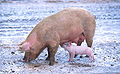
120px-Sow_with_piglet

Highlights

A meta-analysis of epidemiological characteristics of Salmonella isolated from pork in China was performed.

Explored the source of heterogeneity by subgroup analysis and meta-regression.

Confirmed an alarming prevalence of Salmonella in pork, and an increasing trend over time.

Derby, Typhimurium, and London dominate most regions; high antibiotic resistance aggravates public health burden.

Improvement of the prevention and control strategies of Salmonella in pork is necessary.

Abstract

The epidemiological characteristics of Salmonella spp. in pork have been widely studied in China, but the results remain inconsistent. This study aimed to summarize the epidemiological characteristics of Salmonella spp. isolated from pork, including its prevalence, serovar distribution, and antibiotic resistance rate. We systematically reviewed published studies on Salmonella spp. isolated from pork in China between 2000 and 2020 in two Chinese and three English databases and quantitatively summarized its prevalence, serovar distribution, and antibiotic resistance using meta-analysis methods. Furthermore, we conducted subgroup analysis and meta-regression to explore the source of the heterogeneity from historical changes and regional difference perspectives. Ninety-one eligible studies published between 2000 and 2020 were included. The meta-analysis showed that the pooled prevalence of Salmonella isolated from pork was 0.17 (95% CI: 0.14, 0.20), with a detected growing trend over time. For the proportions of serovars, Derby (0.32, 95% CI: 0.26, 0.38), Typhimurium (0.10, 95% CI: 0.07, 0.15) and London (0.05, 95% CI: 0.03, 0.08) were dominant in these studies. The antibiotic resistance rates were high for tetracycline (0.68, 95% CI: 0.59, 0.77), sulfisoxazole (0.65, 95% CI: 0.45, 0.83), ampicillin (0.43, 95% CI: 0.34, 0.53), streptomycin (0.42, 95% CI: 0.29, 0.56), and sulfamethoxazole (0.42, 95% CI: 0.25, 0.60). The results of this study revealed a high prevalence, the regional characteristics of serovar distribution, and the severe challenges of antibiotic resistance of Salmonella originating from pork in China, suggesting the potential increasing risk and disease burden. Therefore, it is necessary to improve the prevention and control strategies of Salmonella in pork.

USA – A Decade of E. coli Outbreaks in Leafy Greens in the U.S. and Canada – Podcast

CDC

Katherine Marshall, an epidemiologist at CDC, and Sarah Gregory discuss E. coli outbreaks in leafy greens in the United States and Canada from 2009 to 2018.

More info on this topic
Topics: E. coli InfectionFoodborne DiseasePodcasts
Published: 9/24/2020
Last Updated: 9/24/2020

This podcast belongs to the Emerging Infectious Diseases series.

Subscribe to this Series

Press Play to listen to this CDC Podcast

Running time = 28:10
To save the Podcast, right click the “Save this file” link below and select the “Save Target As…” option.
Save This File (25.8 MB) [right click]

Other Formats: https://tools.cdc.gov/podcasts/media/pdf/EID_10_20_EcoliLeafyGreens.pdf

Research – Zoonotic Pathogens in Wildlife Traded in Markets for Human Consumption, Laos

CDC

Abstract

We tested animals from wildlife trade sites in Laos for the presence of zoonotic pathogens. Leptospira spp. were the most frequently detected infectious agents, found in 20.1% of animals. Rickettsia typhi and R. felis were also detected. These findings suggest a substantial risk for exposure through handling and consumption of wild animal meat.

Consumption of wildlife meat drives emerging infectious diseases , often amplified by human encroachment into natural areas and changes in land use. Wildlife trade and consumption have been responsible for outbreaks of diseases such as HIV-1 , Ebola , and monkeypox and possibly for the coronavirus disease pandemic . Wildlife markets bring diverse species into contact, usually in dense and unsanitary conditions, enabling mixing, amplification, and transmission of pathogens among species, including humans . Small mammals host diverse pathogenic bacteria and viruses , but little investigation of endemic bacteria transmission has occurred. Determining pathogens present in traded wildlife is vital to guide appropriate measures to combat zoonotic diseases and document societal and environmental costs of wildlife trade.

Research – Development of Desiccation-Tolerant Probiotic Biofilms Inhibitory for Growth of Foodborne Pathogens on Stainless Steel Surfaces

MDPI

Lactic acid bacteria biofilms can be used to reduce foodborne pathogen contamination in the food industry. However, studies on growth inhibition of foodborne pathogens by inducing biofilm formation of antagonistic microorganisms on abiotic surfaces are rare. We developed a desiccation-tolerant antimicrobial probiotic biofilm. Lactobacillus sakei M129-1 and Pediococcus pentosaceus M132-2 isolated from fermented Korean foods were found to exhibit broad-spectrum antibacterial activity against Bacillus cereusEscherichia coli O157:H7, Staphylococcus aureusListeria monocytogenes, and Salmonella enterica. Their biofilm levels were significantly (p < 0.05) higher on stainless steel than on polyethylene or ceramic. Biofilms of both isolates showed significantly (p < 0.05) enhanced resistance against desiccation (exposure to 43% atmospheric relative humidity) as compared with the isolates not in the biofilm form. The antimicrobial activity of the isolates was sustained in dried biofilms on stainless steel surface; the initial number of foodborne pathogens (average 7.0 log CFU/mL), inoculated on stainless steel chips containing L. sakei M129-1 or P. pentosaceus M132-2 biofilm decreased to less than 1.0 log CFU within 48 h. The lactic acid bacteria antibacterial biofilms developed in this study may be applied to desiccated environmental surfaces in food-related environments to improve microbiological food safety. View Full-Text

UK – Several supermarkets improve Campylobacter in chicken results

Food Safety News

The supermarket Marks and Spencer has reported better results for Campylobacter in chicken in the latest quarterly figures from the United Kingdom.

The data covers October to December 2021 for nine retailers on high levels of Campylobacter in fresh, shop-bought, UK-produced chickens.

Results at Morrisons, Lidl, Waitrose and Sainsbury’s went up while Marks and Spencer, Tesco, Co-op, Aldi and Asda recorded lower levels of contamination compared to the previous quarter.

The Food Standards Agency (FSA) maximum level is 7 percent of birds with more than 1,000 colony forming units per gram (CFU/g) of Campylobacter.

Czech Republic – BAKERY SPICY SALAD SPICY – Mold/Mould

Potravinynapranyri

Illustration photo no. 1

Place of inspection:
Bílina ( Nábřeží 463, 418 01 Bílina )
Company ID: 44012373
Food group: Meat and meat products Heat-treated non-perishable products

BAKERY SPICY SALAD SPICY
Category: Dangerous food
Unsatisfactory parameter:

mold visible to the eye

The product had a damaged packaging. Mold colonies were visible on the surface of the food, visible to the naked eye, and the product was dry at the point of damage to the packaging.

Food is not considered safe if it shows signs of spoilage.

Expiration date: 11/03/2022
Packaging: FIVE
Quantity of product in package: 2,138 kg
Sampling date: Feb 25, 2022
Reference number: 22-000109-CAFIA-CZ
The sample was found by an official inspection of the State Agricultural and Food Inspection Authority.