Monthly Archives: March 2021

Research – Acoustic Water Could Cut Salad-Related Food Poisoning

Technology Networks

Eurofins Food Testing UK

A new study has shown that gentle streams of water carrying sound and microscopic air bubbles can clean bacteria from salad leaves more effectively than current washing methods used by suppliers and consumers. As well as reducing food poisoning, the findings could reduce food waste and have implications for the growing threat of anti-microbial resistance.

A diet containing uncooked salad, fruit and vegetables is key to reducing a range of conditions, including cardiovascular diseases, Type II diabetes and certain types of cancer.

However, salad and leafy green vegetables may be contaminated with harmful bacteria during growing, harvesting, preparation and retail leading to outbreaks of food poisoning which may be fatal in vulnerable groups.

Because there is no cooking process to reduce the microbial load in fresh salads, washing is vital by the supplier and the consumer.

Washing with soap, detergent bleach or other disinfectants is not recommended and the crevices in the leaf surface means washing with plain water may leave an infectious dose on the leaf. Even if chemicals are used, they may not penetrate the crevices.

In this new study, published in the journal Ultrasound in Medicine and Biology, scientists used acoustic water streams to clean spinach leaves directly sourced from the field crop, then compared the results with leaves rinsed in plain water at the same velocity.

Research – Persistence of Leptospira borgpetersenii Serovar Hardjo in Refrigerated Raw Milk: A Transmission Risk of Leptospirosis to Humans

MDPI

Leptospira borgpetersenii serovar Hardjo (LH) is an important infectious agent of reproduction pathologies and lactation decline in cattle, with a possible zoonotic role. To figure out the potential zoonotic risk for human raw-milk consumption, the present study aims at assessing the persistence and viability of LH in refrigerated raw milk over a 10-day period, which is set as the maximum time range for raw-milk domestic consumption. A negative sample of fresh raw milk was contaminated with an LH strain (2 × 10⁸ Leptospires/mL) and analyzed by a rrs (16S) gene targeting real-time PCR (rPCR) protocol for LH DNA at days 1, 2, 3, 6, 7, 9, and 10. Seven aliquots of the same sampling time were inoculated into a semisolid EMJH media for bacterial culture. All aliquots tested positive in both rPCR and culture, which demonstrates that raw milk does not alter the detectability and viability of LH, respectively. The analytical sensitivity (LoD, limit of detection) determined for the rPCR (103 Leptospires/mL) was repeatable during the study, whereas it gradually decreased when it came to the bacterial culture. This study demonstrates that bovine raw milk might be a potential vehicle of infection by LH, even when storage conditions are strictly respected. View Full-Text

USA – NJDOH Investigates Legionnaires’ Cluster in Union County

NBC

Legionella A

The New Jersey Department of Health (NJDOH) is investigating a cluster of Legionnaires’ disease — a bacteria-triggered form of pneumonia — in Union County in which at least 14 cases, including one death, were confirmed.

The cases were reported to the state’s Department of Health between Feb. 3 and Feb. 26, according to officials.

Health officials are working with the local health departments in Union County to investigate this cluster. The individual who died was a male resident of Union County in his late 60s.

Taiwan – CDC issues Norovirus warning after Taiwan sees surge in cases

Taiwan News

Food Borne Illness - Norovirus -CDC Photo

The health authorities are sounding the alarm over norovirus-induced gastroenteritis, with cases soaring over the past week.

Taiwan recorded over 138,000 cases of diarrhea between Feb. 21 and 27, reflecting an uptick in stomach illnesses following the Lunar New Year. Over the past four weeks, 87 diarrhea clusters have been reported nationwide, and 97 percent of the 58 cases where pathogens were identified pointed to norovirus as the culprit, according to the Taiwan Centers for Disease Control (CDC).

Members of the public are urged to improve their hygiene, as the virus is transmitted via the fecal-oral route, which involves contaminated food or water or contact with infected persons.

Research – Does Norovirus cause a sore throat? Other symptoms and more

Medical News Today

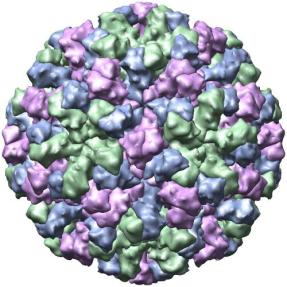
Norwalk_Caspid

The norovirus is a foodborne illness that causes a variety of symptoms, including vomiting, diarrhea, and stomach pain. It does not cause a sore throat directly, but a sore throat could come as a result of vomiting or happen due to another condition altogether.

CDC Norovirus Information

USA -Core Table Updates

aa

FDA

USA – FSIS Issues Public Health Alert for Raw Ground Beef Product Due to Possible E. Coli O157:H7 Contamination

FSIS USDA

The U.S. Department of Agriculture’s Food Safety and Inspection Service (FSIS) is issuing a public health alert because raw beef product produced by Greater Omaha Packing Co. Inc., an Omaha, Neb. establishment, may be contaminated with E. coli. O157:H7. A recall was not requested because the affected product is no longer available for purchase.

FSIS is concerned that some ground beef products may be in consumers’ refrigerators or freezers. Consumers who have purchased these products should not consume them. These products should be thrown away or returned to the place of purchase.

The raw beef item was produced by Greater Omaha Packing Co. Inc. on January 14, 2021, further processed into ground beef and sold by Art’s Food Market located in Sandwich, Illinois. The following product is subject to the public health alert:

  • 2-lb (approximately) trays containing raw ground beef labeled with a retail label with “PACKED” dates ranging from JAN 28 2021 through JAN 31 2021.

This item was sold by the single retail location in Sandwich, Illinois.

The problem was discovered when Greater Omaha Packing Co. Inc. determined that they inadvertently distributed product associated with a sample that was positive for E. coli O157:H7. The company then notified FSIS about the affected product.

There have been no confirmed reports of adverse reactions due to consumption of these products. Anyone concerned about an injury or illness should contact a healthcare provider.

E. coli O157:H7 is a potentially deadly bacterium that can cause dehydration, bloody diarrhea and abdominal cramps 2–8 days (3–4 days, on average) after exposure the organism. While most people recover within a week, some develop a type of kidney failure called hemolytic uremic syndrome (HUS). This condition can occur among persons of any age but is most common in children under 5-years old and older adults. It is marked by easy bruising, pallor, and decreased urine output. Persons who experience these symptoms should seek emergency medical care immediately.

FSIS advises all consumers to safely prepare their raw meat products, including fresh and frozen, and only consume raw ground beef product that has been cooked to a temperature of 160°F. The only way to confirm that raw ground beef products are cooked to a temperature high enough to kill harmful bacteria is to use a food thermometer that measures internal temperature, https://www.fsis.usda.gov/safetempchart.

Consumers and members of the media with questions about the public health alert can contact Angel Besta, VP of Technical Resources, Greater Omaha Packing Co. Inc. at abesta@greateromahs.com.

Canada – Undeclared presence of unpasteurized milk and raw milk in various cheeses sold by Les Gourmandises de Justin inc.

MAPAQ

MAPAQ, in collaboration with Les Gourmandises de Justin inc., located at 856A avenue Taniata, in Lévis , is notifying people considered vulnerable (namely pregnant women, people whose immune system is weakened, children and the elderly) that the products indicated in the table below have been made from unpasteurized milk and raw milk, without the retailer having mentioned it on the label . The products were offered for sale without the retailer having affixed the prescribed endorsement. 

Product name Format Targeted lot
“Macpherson de L’Isle” In addition to this, you need to know more about it.

In addition to this, you need to know more about it.

Variable

Units sold until March 2, 2021

“Cure Quertier de L’Isle”
“Tomme de Grosse-Île”
“Chemin Hatley”
“Alfred the farmer”
“Elizabeth Blue”
“Le Riopelle de l’Isle”
“Le Louis d’Or”

The products that are the subject of this warning were offered for sale until March 2, 2021 inclusive , and only at the establishment designated above. They were wrapped in clear plastic wrap and sold refrigerated.

The retailer is voluntarily recalling the products in question. He agreed with MAPAQ to disseminate this warning as a precautionary measure. Also, people deemed vulnerable (previously designated) who have one of these products in their possession are advised not to consume it. They must return it to the establishment where they bought it, use it in a ready-cooked meal that will be cooked until it reaches a safe cooking temperature of 74 ° C or else throw it out. It should be noted that no case of illness associated with the consumption of these foods has been reported to MAPAQ so far.

Additional information

Media relations
Communications
Department Ministry of Agriculture, Fisheries
and Food
Tel. : 418 380-2100, extension 3512
www.mapaq.gouv.qc.ca

Examples of products

Ireland – Recall of a Batch of The Real Olive Company Basil Pesto due to the Presence of Listeria monocytogenes

FSAI

Summary
Category 1: For Action
Alert Notification: 2021.22
Product: The Real Olive Company Basil Pesto
Batch Code: Use by: 04.03.2021
Country Of Origin: Ireland

Message:

The Real Olive Company is recalling the above batch of its basil pesto due to the presence of Listeria monocytogenes. The implicated batch was sold to caterers. It was also dispensed and sold in unlabelled pots from The Real Olive Company’s shop in Dublin and stalls at the Limerick Milk Market and Cork English Market between 19th and 25th February 2021.

Nature Of Danger:

Symptoms of Listeria monocytogenes infection can include mild flu-like symptoms, or gastrointestinal symptoms such as nausea, vomiting and diarrhoea.  In rare cases, the infection can be more severe, causing serious complications. Some people are more vulnerable to Listeria monocytogenes infections, including pregnant women, babies, and people with weakened immune systems, including the elderly.  The incubation period (time between initial infection and first symptoms appearing) is on average 3 weeks but can range between 3 and 70 days.

Action Required:

Manufacturers, wholesalers, distributors, caterers & retailers:

Retailers are requested to remove the implicated batch from sale and to display a point-of-sale recall notice in stores where the affected batch was sold.

Caterers should not use the implicated batch.

Consumers:

Consumers are advised not to eat the implicated batch.

France – Product recall: Carrefour brand basmati rice 1kg bag – Ochratoxin A

Oulah

Product recall: Carrefour brand basmati rice 1kg bag

ENCOUNTERED PROBLEM

Presence of Ochratoxin A

PROPOSED SOLUTION

Do not consume and return to the point of sale for reimbursement.

Ochratoxin A is a mycotoxin produced by several microscopic fungi (genera Penicillium and Aspergillus) and is naturally present in many plant products around the world, such as cereals, coffee beans, cocoa and dried fruits.

FURTHER INFORMATION

▸ Barcode
3560070837984

▸ Lot

▸ DDM
11/21/2022

▸ Consumer service contact
For any further information, you can contact the Carrefour consumer service by dialing N ° Cristal 09 69 39 7000 – non-surcharged call from Monday to Saturday from 9 am to 7 pm.

▸ Source
https://www.carrefour.fr/