Category Archives: Salmonella

Belgium – Barry Callebaut detected Salmonella positive production lot in Wieze

Barry Callebaut

  • Barry Callebaut detected a salmonella positive production lot manufactured in the chocolate factory in Wieze/Belgium
  • All chocolate products manufactured in Wieze since June 25 were placed on hold
  • As precautionary measure, Barry Callebaut stopped chocolate production in Wieze, while continuing the root cause analysis and risk assessment
  • When the analyses is completed, all chocolate production lines will be cleaned and disinfected before resuming the production process

On Monday June 27, Barry Callebaut detected a salmonella positive production lot manufactured in Wieze, Belgium. For Barry Callebaut food safety is paramount. Our robust food safety programs in place allowed us to quickly identify lecithin as the source of the contamination. Barry Callebaut informed the Belgian food authorities (FAVV) about the incident and has taken the precautionary measure to stop all chocolate production lines and to block all products manufactured since the time of testing. We are currently reaching out to all customers who may have received impacted products. The chocolate production in Wieze will remain suspended until further notice.

Our quality experts identified lecithin as the source of the contamination. As lecithin is used in all chocolate production, we have taken the precautionary measure to stop all production lines and to block all products manufactured since the time of testing, while we continue the root cause analysis and risk assessment. Out of precaution, we have also asked our customers to block any shipped products.

Food Safety is paramount for Barry Callebaut and this is a very exceptional case. Not only do we have a Food Safety charter and procedure in place, we also have over 230 people working on food safety and quality in Europe. In our local site in Wieze, we train our people to recognize food safety risks. This allowed us to quickly identify the risk and successfully start the root cause analysis.

Barry Callebaut will now take the time to continue with the very diligent root cause analysis – keeping the FAVV informed in the process. When that is completed the lines will be cleaned and disinfected before resuming the production process.

Research – Effect of Biltong Dried Beef Processing on the Reduction of Listeria monocytogenes, E. coli O157:H7, and Staphylococcus aureus, and the Contribution of the Major Marinade Components

MDPI

Biltong is a dry beef product that is manufactured without a heat lethality step, raising concerns of whether effective microbial pathogen reduction can occur during biltong processing. Raw beef inoculated with 4-strain cocktails of either E. coli O157:H7, Listeria monocytogenes, or Staphylococcus aureus, and processed with a standard biltong process, were shown to incur a >5-log reduction in 6–8 days after marination by vacuum-tumbling for 30 min in vinegar, salt, spices (coriander, pepper) when dried at 23.9 °C (75 °F) at 55% relative humidity (RH). Pathogenic challenge strains were acid-adapted in media containing 1% glucose to ensure that the process was sufficiently robust to inhibit acid tolerant strains. Internal water activity (Aw) reached < 0.85 at 5-log reduction levels, ensuring that conditions were lower than that which would support bacterial growth, or toxin production by S. aureus should it be internalized during vacuum tumbling. This was further confirmed by ELISA testing for staphylococcal enterotoxins A and B (SEA, SEB) after marination and again after 10 days of drying whereby levels were lower than initial post-marination levels. Comparison of log reduction curves obtained for E. coli O157:H7, L. monocytogenesS. aureus, and Salmonella (prior study) showed that microbial reduction was not significantly different (p < 0.05) demonstrating that even without a heat lethality step, the biltong process we examined produces a safe beef product according to USDA-FSIS guidelines.

RASFF Alerts – Salmonella – Black Pepper – Polish Chicken – Turkey Meat

RASFF

Salmonella in Brazilian black pepper in the Netherlands

RASFF

Detection of Salmonella in frozen poultry meat from Spain in France

RASFF

Salmonella typhimurium in turkey meat from Poland in Belgium

RASFF Alert – Animal Feed – Salmonella

RASFF

Salmonella in dried porcine haemoglobin from the UK in Spain and the Netherlands

USA – Salmonella By the Numbers

FSIS USDA

kswfoodworld salmonella

The Centers for Disease Control and Prevention estimates that Salmonella is responsible for 1.35 million infections, 26,500 hospitalizations, and 420 deaths in the United States every year. Food is the source of most of these illnesses, and the Interagency Food Safety Analytics Collaboration estimates that over 23% of foodborne Salmonella illnesses are due to eating chicken and turkey.

FSIS testing data show that Salmonella contamination on poultry has been going down, but this has not translated into a reduction in human illnesses. Rates of human illness have remained stagnant over the last two decades, and we have not moved any closer to the national goal of a 25% reduction in Salmonella illnesses.

All of this data points toward the need for a new approach to controlling Salmonella in poultry in a way that reduces human Salmonella illnesses. These are just a few of the references and research articles we are considering as we look to develop a revised framework for Salmonella control in poultry.

USA – FDA Core Outbreak Table

FDA

Date
Posted
Ref Pathogen or
Cause of Illness

Product(s)
Linked to
Illnesses

(if any)
Total
Case Count

Status
6/29/

2022

1076 Not Yet Identified Frozen Food 107 adverse event reports Active
6/22/

2022

1075 Salmonella
Braenderup
Not Yet Identified 42 Active
6/22/

2022

1072 Salmonella
Paratyphi B var. L(+) tartrate+
Not Yet Identified 14 Active
6/15/

2022

1070 Listeria
monocytogenes
Not Yet Identified 12 Active
6/8/

2022

1068 E. coli
O157:H7
Not Yet Identified 10 Active
6/1/

2022

1066 Hepatitis A Virus Strawberries See Outbreak
Advisory
Active
5/25/

2022

1067 Salmonella 
Senftenberg
Peanut Butter See Outbreak Advisory Active
4/20/

2022

1064 Not Yet
Identified
Dry Cereal 558 adverse
event reports
Active
4/13/

2022

1057 Listeria
monocytogenes
Not Yet
Identified
22 Active
3/30/

2022

1060 None
Identified
Meal Replacement
Drink
6 adverse
event reports
Closed
3/16/

2022

1055 Salmonella
Saintpaul
Not Identified 60 Closed
2/17/

2022

1056 Cronobacter
sakazakii
Powdered
Infant
Formula
See
Advisory
Active (IMG)
2/9/

2022

1040 Listeria
monocytogenes
Not Identified 20 Closed
2/2/

2022

1054 Enteroinvasive
E. coli
O143:H26
Not
Identified
16 Closed
1/10/

2022

1050 E. coli
O121:H19
Romaine 4 Closed

UK – Retired retail manager, 63, died of Salmonella after eating four fried duck eggs he had bought at country show, inquest hears

Daily Mail

A retired retail manager sadly died from one of the worst salmonella infections a consultant had seen in his career after eating four duck eggs bought at a country show.

Niptoon Tavakoli, 65, died in hospital two months after he was taken ill in June 2019, an inquest jury heard today.

Mr Tavakoli’s wife Cheryl told Doncaster Coroner’s Court that they had bought six eggs from the Melton Mowbray Deli stall at Messingham Show, in North Lincolnshire, during a family day out on Sunday, June 2, 2019.

Research – Sink survey to investigate multidrug resistance pattern of common foodborne bacteria from wholesale chicken markets in Dhaka city of Bangladesh

Nature.com

Antimicrobial resistance (AMR) among foodborne bacteria is a well-known public health problem. A sink survey was conducted to determine the AMR pattern of common foodborne bacteria in cloacal swab of broiler chickens and sewage samples from five wholesale chicken markets of Dhaka city in Bangladesh. Bacteria were identified by culture-based and molecular methods, and subjected to antimicrobial susceptibility testing. Resistance genes were identified by multiplex PCR and sequencing. Multidrug resistance (MDR) was observed in 93.2% of E. coli, 100% of Salmonella spp., and 97.2% of S. aureus from cloacal swab samples. For sewage samples, 80% of E. coli, and 100% of Salmonella and S. aureus showed MDR. Noteworthy, 8.3% of S. aureus from cloacal swab samples showed possible extensively drug resistance. Antimicrobial resistance genes (beta-lactamase—blaTEM, blaSHV; quinolone resistance gene—qnrS) were detected in a number of E. coli and Salmonella isolates from cloacal swab and sewage samples. The methicillin resistance gene (mecA) was detected in 47.2% and 25% S. aureus from cloacal swab and sewage samples, respectively. The findings envisage the potential public health risk and environmental health hazard through spillover of common foodborne MDR bacteria.

Research – Peanut Butter Food Safety Concerns—Prevalence, Mitigation and Control of Salmonella spp., and Aflatoxins in Peanut Butter

MDPI

Peanut butter has a very large and continuously increasing global market. The food safety risks associated with its consumption are also likely to have impacts on a correspondingly large global population. In terms of prevalence and potential magnitude of impact, contamination by Salmonella spp., and aflatoxins, are the major food safety risks associated with peanut butter consumption. The inherent nature of the Salmonella spp., coupled with the unique chemical composition and structure of peanut butter, present serious technical challenges when inactivating Salmonella spp. in contaminated peanut butter. Thermal treatment, microwave, radiofrequency, irradiation, and high-pressure processing all are of limited efficacy in inactivating Salmonella spp. in contaminated peanut butter. The removal of aflatoxins in contaminated peanut butter is equally problematic and for all practical purposes almost impossible at the moment. Adopting good manufacturing hygiene practices from farm to table and avoiding the processing of contaminated peanuts are probably some of the few practically viable strategies for minimising these peanut butter food safety risks. The purpose of this review is to highlight the nature of food safety risks associated with peanut butter and to discuss the effectiveness of the initiatives that are aimed at minimising these risks.

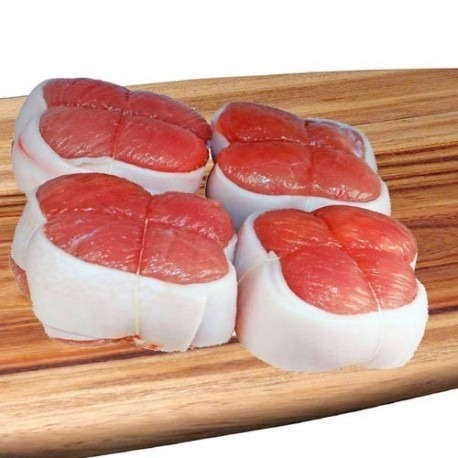
France – Stuffed Veal – Salmonella

Gov france

Identification information of the recalled product

  • Product category Feed
  • Product subcategory Meats
  • Product brand namebi1
  • Model names or references Veal paupiettes made in store and sold in the traditional department
  • Identification of products
    Batch
    All lots
  • Packaging Traditional spoke belly
  • Marketing start/end date From 06/13/2022 to 06/17/2022
  • Storage temperature Product to be stored in the refrigerator
  • Geographic area of ​​sale Departments: COTE-D’OR (21)
  • Distributors bi1 toutry

Practical information regarding the recall

  • Reason for recall Presence of Salmonella
  • Risks incurred by the consumer Salmonella spp (causative agent of salmonellosis)