Category Archives: Microbiology

RASFF Alerts – Animal Feed – Aflatoxin – Peanut Kernels

RASFF

Aflatoxin B1 in peanut kernels from Argentina in Germany

RASFF Alerts – Animal Feed – Salmonella – Rapeseed Meal – Rape Seed Expeller – Soy Bean Meal

RASFF

Salmonella spp. in rapeseed meal from Germany in Germany and Austria

RASFF

Salmonella ssp. in rape seed expeller from Germany in Germany, Austria, France and Switzerland

RASFF

Salmonella spp. in soy bean meal from Germany in Poland

Research – Thermosonication Combined with Natural Antimicrobial Nisin: A Potential Technique Ensuring Microbiological Safety and Improving the Quality Parameters of Orange Juice

MDPI

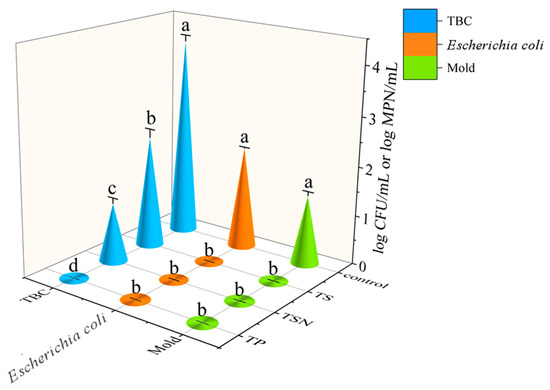
Currently, thermal pasteurisation (TP) remains the most widely applied technique for commercial orange juice preservation; however, a high temperature causes adverse effects on the quality attributes of orange juice. In order to explore a novel non-thermal sterilization method for orange juice, the impacts of thermosonication combined with nisin (TSN) and TP treatments on the quality attributes including microbial and enzyme inactivation and the physicochemical, nutritional, functional, and sensory qualities of orange juice were studied. Both TP and TSN treatments achieved desirable bactericidal and enzyme inactivation effects, and nisin had a significant synergistic lethal effect on aerobic bacteria in orange juice (p < 0.05). Additionally, TSN treatment significantly improved the color attributes of orange juice and well maintained its physicochemical properties and sensory quality. More importantly, TSN treatment significantly increased the total polyphenols content (TPC) and total carotenoids (TC) by 10.03% and 20.10%, increased the ORAC and DPPH by 51.10% and 10.58%, and the contents of total flavonoids and ascorbic acid were largely retained. Correlation analysis of antioxidant activity showed that the ORAC and scavenging ability of DPPH radicals of orange juice are mainly attributed to TC and TPC. These findings indicate that TSN shows great potential application value, which could guarantee the microbiological safety and improve the quality attributes of orange juice. View Full-Text

▼ Show Figures

Research – Mycotoxins in aquaculture: A mitigation approach in turbot

All About Feed

Aquaculture is the fastest-growing food production industry in the world. Due to concerns about sustainability, the need to replace fish meal with plant-based protein alternatives becomes more urgent. However, plant-based ingredients are often contaminated with mycotoxins, increasing the health risks to fish.

Plant-based ingredients in commercial fish diets include maize, soybean meal and various cereal grains, each representing a potential source of mycotoxins.

Mycotoxins in fish feed a widespread problem

Mycotoxin-contaminated fish feed is a widespread problem, especially in tropical regions and developing countries where the farmers themselves often make fish feeds under inappropriate conditions with improper milling and/or storage. In addition to their impact on fish health, some mycotoxins can also accumulate in fish tissue, thereby posing a possible food safety risk.

About mycotoxins in aquaculture

According to a recent risk assessment study on mycotoxin contamination in fish feeds in Europe, deoxynivalenol (DON) is one of the primary mycotoxins present. DON is produced by over 50 species of Fusarium fungi, which mainly infect crops such as wheat and maize before harvest. Fusarium fungi produce a range of mycotoxins, such as fumonisins, the trichothecenes — most strongly associated with chronic and fatal toxic effects in animals and humans — and zearalenone, which is known to affect the fertility of many animal species, including aquatic species such as fish and shrimp.

The impact of mycotoxins depends on several factors including:

  • The type and quantity of mycotoxins in the feed,
  • Feeding level,
  • Duration of exposure
  • The species of fish

Most common issues include:

  • Reduced growth performance,
  • Immune suppression
  • Increased mortality

These are often associated with other on-farm concerns, so the mycotoxin risk is currently underestimated.


Ireland – Legionnaires’ disease

HSE

CDC legionella

Legionnaires’ disease is a lung infection you can catch by inhaling droplets of water from things like air conditioning or hot tubs. It’s uncommon but can be very serious.

How you get Legionnaires’ disease

You can catch Legionnaires’ disease if you breathe in tiny droplets of water containing bacteria that cause the infection.

It’s usually caught in places like hotels, hospitals or offices where the bacteria have got into the water supply. It’s very rare to catch it at home.

You can catch it from things like:

  • air conditioning systems
  • spa pools and hot tubs
  • showers, taps and toilets

You cannot usually get it from:

  • drinking water containing the bacteria
  • other people with the infection
  • places like ponds, lakes and rivers

When to get medical help

Urgent advice:Get advice from your GP now if

you have a bad cough and:

  • it does not go away
  • you cannot breathe properly
  • you have severe chest pain
  • you have a high temperature or feel hot and shivery
  • you feel like you have severe flu

These could be symptoms of Legionnaires’ disease.

You should contact your GP and tell them where you have been in the past 10 days, such as if you stayed in a hotel, spa or hospital. Your GP will assess and advise you.

If you are unable to contact a GP and you are very unwell, you may need to go to your emergency department (ED).

Research – Reduction of Salmonella enterica in Turkey breast slices kept under aerobic and vacuum conditions by application of lactic acid, a bacteriophage, and ultrasound

Wiley Online

The effects of different antimicrobial applications against Salmonella enterica subs. enterica DSM 18522 strain in turkey breast slices kept under either aerobic or anaerobic-vacuum conditions for different keeping times of 30 min and 6 hr at 4°C were evaluated. In this study, it was aimed to compare chemical (lactic acid, 3%), biopreservation (bacteriophage Felix O1, 1 × 108 pfu/ml), and physical (ultrasound, 20 kHz) antimicrobial applications in reducing a high initial S. enterica DSM 18522 count (~6 log cfu/g) in turkey breast slices at different conditions. The highest reduction in S. enterica DSM 18522 counts (1.62 log units) was observed in turkey breast slices kept under aerobic condition for 6 hr after being treated with lactic acid. The bacteriophage application significantly (p < .05) reduced S. enterica DSM 18522 counts 1.22 and 1.41 log cfu/g in turkey breast slices that kept under aerobic and anaerobic-vacuum conditions for 30 min, respectively. There was no significant effect of keeping time under aerobic or anaerobic-vacuum conditions on S. enterica DSM 18522 counts in turkey breast slices treated with bacteriophage or ultrasound. However, the reduction of S. enterica DSM 18522 counts in turkey breast slices treated with lactic acid increased with keeping time under aerobic or anaerobic-vacuum conditions. Regardless of keeping conditions, the lowest reductions in S. enterica DSM 18522 counts were detected in turkey breast slices treated with ultrasound. The results of this study show that lactic acid and bacteriophage applications are effective in reducing S. enterica DSM 18522 counts in turkey breast slices.

Research – Effects of Combined Aerosolization with Ultraviolet C Light-Emitting Diode on Enterohemorrhagic Escherichia coli and Staphylococcus aureus Attached to Soft Fresh Produce

MDPI

Washing soft fresh produce such as strawberries, baby leaves, and sliced onions with sanitizing agents is challenging due to their fragile texture. Thus, treatments like aerosolization using slightly acidic electrolyzed water (SAEW) and ultraviolet C light-emitting diode (UVC LED) irradiation may be good alternatives. In the present study, the reduction effects of a combined treatment of aerosolization using SAEW and UVC LED irradiation on enterohemorrhagic Escherichia coli (EHEC) and Staphylococcus aureus attached to strawberries, baby leaves, and sliced onions were investigated. The behaviours of EHEC and S. aureus, moisture loss, colour measurement, and visual appearance were also analyzed at 10 and 15 °C for 7 days. The reduction effect of the combined treatment with 100 SAEW and UVC LED was higher (0.53–0.92 log CFU g−1) than a single aerosolization treatment (0.11–0.41 log CFU g−1), regardless of samples or pathogens. A greater effect on EHEC and S. aureus reduction was observed in strawberries (0.74 and 0.92 log CFU g−1) than in baby leaves (0.62 and 0.53 log CFU g−1) and sliced onions (0.55 and 0.62 log CFU g−1). The combined treatment further reduced the EHEC and S. aureus populations in strawberries during 7 days of storage at 10 and 15 °C. However, the EHEC and S. aureus populations were maintained in baby leaves and sliced onions at 10 °C for 7 days. Additionally, the greatest effect on the maintenance of colour and appearance was obtained in the combined treatment. Since the combined treatment reduces EHEC and S. aureus populations and preserves visual quality, it could be expected to extend the shelf life of soft fresh produce at the retailer stage of the supply chain. View Full-Text

Research – Foodborne Botulism in Ukraine from 1955 to 2018

Mary Anne Liebert

kswfoodworld

We aim to identify possible biological, social, and economic factors that could influence the prevalence of foodborne botulism (FB). The objective of this article is to assess epidemiological peculiarities of FB in Ukraine from 1955 to 2018 using national epidemiological surveillance data. This article presents an epidemiological descriptive population-based study of the epidemiology of FB using correlation analysis. From 1955 to 2018, 8614 cases of botulism were recorded in Ukraine causing 659 deaths. The distribution of types of botulism toxins is represented by type A (7.97%), B (59.64%), suspected as C (0.56%), E (25.47%), others (5.33%), and unidentified (1.04%). From 1990 to 2015, the rate correlation between Human Development Index (HDI) and incidence of botulism was −0.75 ± 0.20. Homemade canned meat and fish continue to be the leading causes of botulism in Ukraine. Cases related to commercial food were rare or absent, but in recent years (2017–2018), their percentage has increased to 32.56%. The HDI and botulism have an inverse mathematical correlation and predictable logical relationship: with an HDI increase, the incidence of FB decreased. In general, food botulism in Ukraine is related to traditional socioeconomic factors related to cultural food habits. In the face of declining living standards and uncertainty that food products will be physically or economically available, homemade preservation increases. Home food preservation is a major cause of botulism in Ukraine. The elimination of FB is possible in Ukraine only with the complete cessation of home canning and state control over the manufacture and sale of commercial canned products.

Research – Fate of Salmonella and Enterohemorrhagic Escherichia coli on Wheat Grain

Journal of Food Protection

Wheat flour has been connected to outbreaks of foodborne illnesses with increased frequency in recent years, specifically, outbreaks involving Salmonella enterica and enterohemorrhagic Escherichia coli (EHEC). However, there is little information regarding the survival of these pathogens on wheat grain during long-term storage in a low-moisture environment. This study aims to evaluate the long-term survival of these enteric pathogens on wheat grain over the course of a year. Hard red spring wheat was inoculated with strains of four serovars of Salmonella enterica (Enteritidis , Agona, Tennessee, and Montevideo) and six serotypes of EHEC (O157:H7, O26:H11, O121:H19, O45:NM, O111:H8, and O103:H2) in triplicate, sealed in Mylar bags to maintain the water activity, and stored at room temperature (22 ± 1°C). The survival of each pathogen was evaluated by plating onto differential media . Viable counts of strains from all four serovars of Salmonella (Enteritidis , Agona, Tennessee, and Montevideo) were detected on wheat grain stored at room temperature (22 ± 1°C) for the duration of the study (52 weeks). Viable counts of strains from EHEC serotypes O45:NM, O111:H8, and O26:H11 were only detected for 44 weeks and strains from serotypes O157:H7, O121:H19, and O103:H2 were only detected for 40 weeks until they passed below the limit of detection (2.0 log CFU/g). D -values were found to be significantly different between Salmonella and EHEC (adj. p ≤ 0.05) with Salmonella D -values ranging from 22.9 ± 2.2 to 25.2 ± 1.0 weeks and EHEC D -values ranging from 11.4 ± 0.6 to 13.1 ± 1.8 weeks. There were no significant differences amongst the four Salmonella strains or amongst the six EHEC strains (adj. p > 0.05). These observations highlight the wide range of survival capabilities of enteric pathogens in a low-moisture environment and confirm these pathogens are a food safety concern when considering the long shelf life of wheat grain and its products.

Research – Application of chitosan microparticles against human Norovirus

Journal of Food Protection

Human norovirus (HuNoV) is the leading causative agent of foodborne outbreaks and is associated with the second most prevalent cause of waterborne infections in the United States. The goal of this research was to investigate the antiviral activity of chitosan microparticles (CM) against HuNoV GII.4 Sydney and its cultivable surrogate, Tulane virus (TuV), in suspensions mimicking fecally-contaminated water. CM was prepared by crosslinking chitosan molecules with sodium sulfate, and then its anti-noroviral activity was assessed using infectivity assay on TuV and RT-qPCR on TuV and HuNoV. A 3% CM suspension in PBS (pH 7.2) showed binding to TuV particles but with a negligible impact on virus infectivity (p>0.05). TuV and HuNoV suspended in fecal suspensions showed a 1.5-log10 reduction in genomic copies per ml following a 10-min contact time (p<0.05). Despite the negligible impact on viral infectivity, CM moderately binds to virus particles and helps purify environmental water by removing infectious virus particles. In this study, TuV served as a suitable surrogate for HuNoV by showing a similar log10 reduction in fecal suspension. Overall, the outcomes of thisresearch highlight the potential application of CM as a novel, natural treatment to minimize the spread of water-transmitted viral pathogens.