Category Archives: Microbiology

Research – A Strong Evidence Outbreak of Salmonella enteritidis in Central Italy Linked to the Consumption of Contaminated Raw Sheep Milk Cheese

MDPI

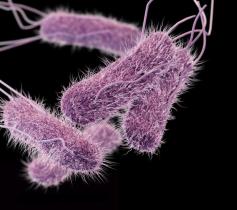
Salmonellaa

Salmonellosis is the second most commonly reported gastrointestinal infection in humans after campylobacteriosis, and an important cause of foodborne outbreaks in the EU/EEA. The vast majority (72.4%) of the salmonellosis foodborne outbreaks reported in EU in 2019 were caused by Salmonella enteritidis, even if their total number due to this serovar decreased. In spring 2020, a foodborne outbreak of S. enteritidis occurred in the Marche region (Central Italy), involving 85 people. The common exposure source was a cheese, pecorino “primo sale”, produced with raw sheep milk. The cheese batches were produced by two local dairies, with a livestock production facility, also including a sheep farm, being part of one dairy. Bacteriological analysis of samples collected allowed the detection of S. enteritidis in animal faeces, environmental samples, raw-milk bulk tanks and milk taken from single animals. These data confirm that, despite the scarce scientific evidence, S. enteritidis can infect sheep and be shed into the animals’ milk. Hence, this is a real risk for public health when unpasteurized milk is used in production of such cheese. The present paper describes the results of the investigations conducted to clarify this outbreak. View Full-Text

RASFF Alert – Animal Feed – Aflatoxin – Peanut Kernels

RASFF

Aflatoxin B1 in peanut kernels from the United States in Germany

RASFF Alerts – Animal Feed -Salmonella – Rice Bran – Organic Soya Bean Cake -Toasted Soya Bean – Ornamental Fish Food

RASFF

Salmonella in rice bran from Bulgaria in Croatia

RASFF

Salmonella (presence /25g) in organic soybean cake from Italy in Germany, France, Belgium and Sweden

RASFF

Salmonella Agona in toasted soy bean from Belgium in France

RASFF

Salmonella spp. and enterobacteria in frozen ornamental fish food from Thailand in the Netherlands and Germany

USA – Core Outbreak Table Update

FDA

Date Ref Pathogen Product(s) Total Investigation Status
11/24/2021 1044 Salmonella     Javiana Not Yet Identified 19 Active
11/17/2021 1043 E. coli O157:H7 Spinach See Outbreak Advisory Active
9/15/2021 1031 Salmonella Oranienburg Red, Yellow, and White Onions See Outbreak Advisory Active
9/15/2021 1025 Salmonella Thompson Seafood See Outbreak Advisory Active


USA – Preparing Your Holiday Turkey Safely

CDC

Are you preparing a turkey for your holiday meal? Turkey and its juice can be contaminated with germs that can make you and your family sick. For example, turkey can contain SalmonellaClostridium perfringensCampylobacter, and other germs. Whether you’re cooking a whole bird or a part of it, such as the breast, you should take special care. Follow the steps below to safely store, thaw, handle, and cook your turkey.

1. Store Turkey Properly

  • Frozen raw turkey should be stored in the freezer until you are ready to thaw it. Make sure your freezer is at 0˚F or below. Don’t store a turkey in a place where you can’t closely monitor the temperature, such as in a car trunk, a basement, the back porch, or in snow.
  • Fresh raw turkey can be stored in the refrigerator 1 to 2 days before cooking.

2. Thaw Turkey Safely

Use one of these methods to thaw your turkey.

  • Thaw your turkey in the refrigerator.
    • Keep your turkey in its original wrapping and place it in a container before putting it in the refrigerator. The container will prevent the turkey’s juice from dripping on other food.
    • Allow about 24 hours of thawing for each 4 to5 pounds of turkey.
    • A turkey thawed in the refrigerator can remain in the refrigerator for 1 to 2 days before cooking.
  • Thaw your turkey in cold water.
    • Be sure your turkey is in a leak-proof plastic bag before you place it in the sink. The bag will prevent the turkey’s juice from spreading in the kitchen. It will also prevent the turkey from absorbing water, which can make your cooked turkey runny.
    • Make sure your turkey is fully covered with the cold tap water.
    • Change the water every 30 minutes.
    • Allow about 30 minutes of thawing for each pound of turkey.
    • A turkey thawed in cold water must be cooked immediately after thawing.
  • Thaw your turkey in the microwave.
    • Follow the microwave manufacturer’s instructions for thawing turkeys.
    • A turkey thawed in the microwave must be cooked immediately after thawing.

Never thaw your turkey by leaving it out on the counter. A turkey must thaw at a safe temperature. When a turkey stays out at room temperature for more than 2 hours, its temperature becomes unsafe even if the center is still frozen. Germs can grow rapidly in the “danger zone” between 40°F and 140°F.

Get more information about thawing turkeys.external icon

3. Handle Turkey Correctly to Prevent the Spread of Germs

Raw turkey and its juice can contaminate anything they touch. Be sure to handle your turkey correctly to prevent harmful germs from spreading to your food, family, and friends.

  • Wash your hands with soap and water for 20 seconds before and after handling turkey.
  • Use a separate cutting board for raw turkey.
  • Never place cooked food or fresh produce on a plate, cutting board, or other surface that held raw turkey.
  • Wash cutting boards, utensils, dishes, and countertops with hot soapy water after preparing raw turkey and before you prepare the next item.

Learn more about the four steps to food safety: clean, separate, cook, and chill.

Do not wash or rinse raw turkey. Federal food safety advice has recommended against washing turkey or chicken since 2005, but some habits are hard to break. A 2020 survey* found that 78% of participants reported washing or rinsing turkey before cooking. Old recipes and family cooking traditions may tempt you to keep this practice going, but it can make you and your family sick. Poultry juices can spread in the kitchen and contaminate other foods, utensils, and countertops.

∗Source: 2020 Porter Novelli Consumer Stylesexternal icon Survey of 3,625 U.S. adults

4. Cook Stuffing Thoroughly

It’s safest to cook stuffingexternal icon in a casserole dish instead of inside your turkey. Cooking stuffing in a casserole dish makes it easy to be sure the stuffing is thoroughly cooked. If you do cook stuffing in the turkey, put the stuffing in the turkey just before cooking.

With either cooking method, use a food thermometer to make sure the stuffing’s center reaches 165°F. Germs can survive in stuffing that has not reached 165°F. If you cooked the stuffing in your turkey, wait 20 minutes after taking the bird out of the oven before removing the stuffing. This allows the stuffing to cook a little longer.

5. Cook Turkey Thoroughly

To roast a turkey in your oven, set the oven temperature to at least 325°F. Place the completely thawed turkey in a roasting pan that is 2 to 2-1/2 inches deep. Cooking timesexternal icon depend on the weight of the turkey and whether it is stuffed.

Use a food thermometer to make sure the turkey has reached a safe minimum cooking temperature of 165°F. Check by inserting a food thermometer into the center of the stuffing and the thickest part of the breast, thigh, and wing. Even if your turkey has a pop-up timer, you should still use a food thermometer to check that it is safely cooked. Let the turkey stand 20 minutes before removing all stuffing from the cavity and carving the meat. This will let the stuffing cook a little longer and make the turkey easier to carveexternal icon.

If you are cooking your turkey using another method, such as smoking or frying it, or roasting a turkey that is not fully thawed, follow these guidelinesexternal icon for cooking your bird safely.

Learn more about safe minimum cooking temperaturesexternal icon for other foods and how to use a food thermometerexternal icon.

6. Take Care of Leftovers

Refrigerate leftoversexternal icon at 40°F or colder within 2 hours of cooking to prevent food poisoning. Slice or divide big cuts of meat, such as a roast turkey, into small quantities for refrigeration so they can cool quickly. Reheat all leftovers to at least 165°F before serving.

Cooked turkey and dishes made with turkey, such as a casserole, can be stored in the refrigerator for 3 to 4 days or can be frozen to store longer.

Always refrigerate leftovers within 2 hours, or 1 hour if exposed to temperatures above 90°F (like a hot car or picnic).

The bacteria Clostridium perfringens grows in cooked foods left at room temperature. It is the second most common bacterial cause of food poisoning. The major symptoms are vomiting and abdominal cramps within 6 to 24 hours after eating.

  • Clostridium perfringens outbreaks occur most often in November and December.
  • Many of these outbreaks have been linked to foods commonly served during the holidays, such as turkey and roast beef.

India – Operation Vibrio launched in Kozhikode to tackle waterborne diseases

The Hindu

Operation Vibrio, an action plan to tackle the recurring incidents of food poisoning and waterborne diseases, has been launched in Kozhikode. The Health Department has also issued an alert against cholera in the district.

District Medical Officer Ummer Farooque said on Tuesday that the effort was to detect diseases such as cholera, shigella, amoebiasis, typhoid and jaundice that spread through contaminated food and water. As many as 17 cases of food poisoning had been reported in the district between February and November this year. As many as 257 people were infected and two died. Family events and wedding receptions and the food supplied in shops and hostels were reported to be the source of the infection. Some others took ill through having ice cream and fruit juices. The presence of bacteria such as vibrio cholerae, coliform, and e-coli had been found in water sources in some parts of the district as well.

USA – Tainted oysters sicken more than 20 after warning lapse

The Washington Post

CALIFORNIA, Md. — A water utility warned last month that an overwhelmed sewage system sent more than 25,000 gallons of waste into a Potomac River tributary. But the Maryland Department of the Environment said it wasn’t until Virginia officials investigating a foodborne illness outbreak reached out two weeks later that officials closed an affected part of the St. Mary’s River, The Baltimore Sun reported.

Usually officials alert the public before shellfish are harvested or eaten. It’s not clear how it managed to occur, department spokesman Jay Apperson said, but the department is building redundancies into its process to keep it from happening again.

The illnesses were linked to a winery where Maryland oysters were served, Loudoun County Health Department environmental health manager George Khan said.

USA – Possible ‘foodborne incident’ leads to mass sickness at hotel in Tucson

KOLD

TUCSON, Ariz. (KOLD News 13) – More than 50 people got sick at a hotel in Tucson Monday, Nov. 22, and a county health official said it is being investigated as food poisoning.

Pima County Health Department Director Dr. Theresa Cullen said 56 people got sick at the Red Roof Inn, located at 1300 N. Stone Ave.

Six of those people were transported to the hospital while the rest were treated on site. Cullen said most were vomiting but all were recovering by Tuesday.

India – 70 students of Govt school fall ill, food poisoning suspected

Siasat

Visakhapatnam: Around 70 students of Kasturba Gandhi Girls’ School in Paderu of Andhra Pradesh’s Visakhapatnam fell sick allegedly due to food poisoning after consuming food at their hostel mess on Monday night, informed officials on Tuesday.


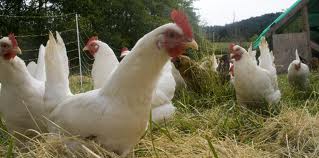
USA – Backyard Chickens hospitalize 273 and kill 2 with Salmonella – 1,135 sick in 2021 including 268 under the age of 5

Food Poison Journal

Salmonella Campylobacter

CDC: This year’s investigation of outbreaks linked to backyard poultry is over. However, any backyard poultry can carry Salmonella germs that can make you sick. Always take steps to stay healthy around your flock.

CDC and public health officials in several states investigated multistate outbreaks of Salmonella infections with serotypes of Enteritidis, Hadar, Indiana, Infantis, Mbandaka, and Muenchen.

Epidemiologic and laboratory data showed that contact with backyard poultry made people sick.

A total of 1,135 people infected with one of the outbreak strains were reported from 48 states, the District of Columbia, and Puerto Rico. The true number of sick people in these outbreaks was likely much higher than the number reported, and these outbreaks may not have been limited to the states with known illnesses. This is because many people recover without medical care and are not tested for Salmonella.