Category Archives: Microbiology

USA – Leftovers: Let’s Keep the Best Part of Thanksgiving Safe

FSIS USDA

he year’s biggest meal will be over soon, but delicious Thanksgiving leftovers will sustain you from Black Friday to Cyber Monday. Keep your favorite leftovers safe by following these food safety steps:

  • Remember the Two-Hour Rule: Refrigerate perishable items within two hours of coming out of the oven or refrigerator. After two hours, perishable food enters the “Danger Zone” (between 40 F and 140 F), where bacteria can multiply quickly and cause food to become unsafe. Perishable food should be discarded if left out for longer than two hours, so refrigerate or freeze items to prevent food waste.
  • Use Shallow Containers: After you breakdown your Thanksgiving meal into smaller portions, store leftover food in shallow containers in the refrigerator until the Monday after Thanksgiving, or in the freezer for later use.
  • Freeze or Consume Within Four Days: Use the Monday after Thanksgiving as a reminder that it is the last day you can safely eat leftovers. If you want to keep leftovers longer, freeze them within that four-day period. Frozen food stays safe indefinitely, though the quality may decrease over time (best quality if eaten within six months).
  • Reheat to 165 F: Make sure your reheated leftovers reach 165 F as measured with a food thermometer. Reheat sauces, soups and gravies safely by bringing them to a rolling boil.
  • Microwave Food Safely: When reheating in the microwave, cover and rotate the food for even heating. Arrange food items evenly in a covered microwave safe glass or ceramic dish and add some liquid, if needed. Because microwaves have cold spots, check the internal temperature of the food in several places with a food thermometer after allowing a resting time.

For more questions about food safety, contact the USDA’s Meat and Poultry Hotline at 1-888-MPHotline (1-888-674-6854) or email MPHotline@usda.gov to reach a food safety expert or chat live at ask.usda.gov from 10 a.m. to 6 p.m. Eastern Time, Monday through Friday, and 8 a.m. to 2 p.m. Eastern Time on Thanksgiving Day.

Research – Emerging Risks in Food: Probiotic Enterococci Pose a Threat to Public Health through the Food Chain

MDPI

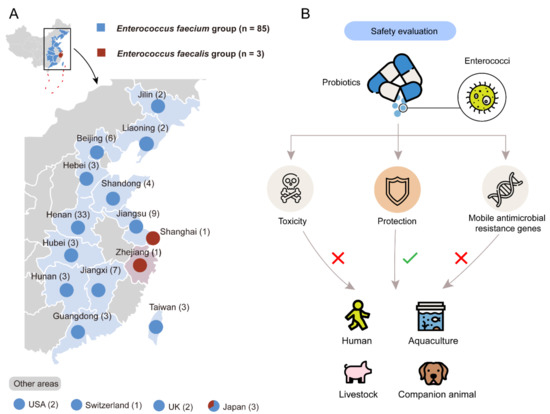
Probiotics have been associated with clinical infections, toxicity, and antimicrobial resistance transfer, raising public concerns. Probiotic enterococci are emerging food risks as opportunistic pathogens, yet little attention has been paid to them. Herein, we collected 88 enterococcal isolates from probiotic products used for humans, companion animals, livestock, and aquaculture. Results showed that all 88 probiotic enterococcal isolates harbored diverse virulence genes, multiple antimicrobial resistance genes, and mobile genetic elements. Notably, 77 isolates were highly resistant to gentamicin. Representative enterococcal isolates exerted toxic activities in both in vitro and in vivo models. Collectively, our findings suggest that probiotic enterococci may be harmful to hosts and pose a potential threat to public health. View Full-Text

Research – Gamma radiation treatment of postharvest produce for Salmonella enterica reduction on baby carrot and grape tomato

Wiley Online

Occurrences and contamination of Salmonella enterica on produce are a significant food safety issue. The objective of this research was to evaluate the effects of low-dose gamma radiation on survival and reductions of S. enterica on postharvest carrot and tomato. Irradiation treatments of 0–1 kGy were applied on produce, following pathogen inoculations in replicated experiments. The effects of temperatures (5 and 20°C) and storage times (0, 3, and 7 days) on pathogen reductions were determined. The mean Salmonella populations in untreated control produce varied from 7.12 ± 0.05 to 7.54 ± 0.12 log Cfu/g of produce. Pathogen reductions by gamma radiation were significant (p < .05) and varied with storage times (0–7 days). Salmonella populations were reduced on carrot by 4.3 logs (5°C) and 3.7 logs (20°C) at 1 kGy treatment. On tomato, pathogen reductions at 1 kGy did not differ significantly (p > .05) and were 5.6 and 5.8 logs at 5 and 20°C, respectively. Linear decreases in Salmonella populations occurred as radiation dosage increased. Injury of bacterial cells from radiation treatment was comparatively greater at 1 kGy than other treatments. Low-dose gamma radiation treatment resulted in significant Salmonella reductions on produce and enhanced postharvest safety of carrot and tomato.

Scotland – Glasgow school closes after Norovirus outbreak.

Glasgow Live

Food Borne Illness - Norovirus -CDC Photo

A Glasgow West End school has been shut due to a suspected Norovirus related outbreak.

Kelbourne Park primary and nursery closed on Monday after an outbreak of sickness and diarrhoea with children and a ‘large number’ of staff infected.

It comes as Sunnyside Primary in Craigend was hit with a Covid outbreak this week – with half the kids off and 10 teachers affected. The council’s education boss said it can’t close as vulnerable families need support and extra staff have been brought it to help run it. The school has been deep cleaned and all children were asked to take a lateral flow test.

Research – Peanut Skins as a Natural Antimicrobial Feed Additive to Reduce the Transmission of Salmonella in Poultry Meat Produced for Human Consumption

Journal of Food Protection

Salmonella is the leading cause of bacterial foodborne zoonoses in humans. Thus, the development of strategies to control bacterial pathogens in poultry is essential. Peanut skins, a considerable waste by-product of the peanut industry is discarded and of little economic value. However, peanut skins contain polyphenolic compounds identified that have antimicrobial properties. Hence, we aim to investigate the use of peanut skins as an antibacterial feed additive in the diets of broilers to prevent the proliferation of Salmonella Enteritidis (SE). One hundred sixty male hatchlings (Ross 308) were randomly assigned to, (1) PS: peanut skin diet without SE inoculation (2) PSSE: peanut skin diet and SE inoculation 3) CON: control diet without SE inoculation (4) CONSE: control diet with SE inoculation. Feed intake and body weights were determined at week 0 and 5. On days 10 and 24 post hatch, 3 birds/pen (24 total) from each treatment group were euthanized and the liver, spleen, small intestine, and ceca were collected. The weights of the liver, spleen and ceca were recorded. Organ invasion was determined by counting SE colonies. Each pen served as an experimental unit and was analyzed using a t-test. Performance data was analyzed in a completely randomized design using a general linear mixed model to evaluate differences. There were no significant differences ( P > 0.05) in weekly average pen body weight, total feed consumption, bird weight gain and feed conversion ratio between the treatment groups. There were no significant differences in SE CFU/g for fecal, litter or feed between treatment groups CONSE and PSSE. However, for both fecal and litter, the PSSE treatment group tended (P ≤0.1) to have a lower Salmonella CFU/g compared to the CONSE treatment group. The results indicate that peanut skins may have potential application as an antimicrobial feed additive to reduce the transmission or proliferation of SE in poultry environments or flocks.

Spain – Legionellosis outbreak reported in Montmeló and Montornès del Vallès

Outbreak News Today

Legionella_Plate_01

Health officials in Spain are reporting a legionellosis outbreak in the municipalities of Montmeló and Montornès del Vallès in the Vallès Oriental region.

To date, 26 cases have been detected. The cases have started symptoms between November 5 and 15. And, of the 26 cases, 10 did not require hospital admission, 2 cases required admission but have already been discharged and 14 cases are still hospitalized.

Those affected are 19 men and 7 women between 37 and 92 years old. And all the cases have had exposure in the municipalities of Montmeló or Montornès del Vallès.

USA – CDC – This year’s investigation of Salmonella outbreaks linked to backyard poultry is over

CDC

Salmonella Campylobacter

November 18, 2021

CDC and public health officials in several states investigated multistate outbreaks of Salmonella infections with serotypes of Enteritidis, Hadar, Indiana, Infantis, Mbandaka, and Muenchen.

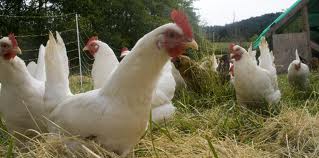
Epidemiologic and laboratory data showed that contact with backyard poultry made people sick.

Epidemiologic Data

A total of 1,135 people infected with one of the outbreak strains were reported from 48 states, the District of Columbia, and Puerto Rico (see map). The true number of sick people in these outbreaks was likely much higher than the number reported, and these outbreaks may not have been limited to the states with known illnesses. This is because many people recover without medical care and are not tested for Salmonella.

Illnesses started on dates ranging from December 15, 2020, to October 10, 2021 (see timeline). Age information was available for 1,132 people. Their ages ranged from less than 1 to 97 years, with a median age of 37 years. Many were young children: 268 (24%) were under 5 years and 140 (12%) were under 1 year. Of 1,107 people with sex information available, 646 (58%) were female. Of 829 people with information available, 273 (33%) were hospitalized. Two deaths were reported, one from Indiana and one from Virginia.

State and local public health officials interviewed people about the animals they came into contact with the week before they got sick. Of the 677 people interviewed, 449 (66%) reported contact with backyard poultry before getting sick.

Traceback Data

Of 293 people who reported contact with backyard poultry and provided more information, 212 (72%) reported that they bought backyard poultry this year. Purchase locations included feedstores, auctions, and directly from hatcheries. Traceback of these purchases did not identify a single, common source of backyard poultry. A total of 264 separate purchases from more than 150 purchase locations of 70 different companies were reported. At least 17 hatcheries supplied backyard poultry to these purchase locations.

Laboratory Data

Public health investigators used the PulseNet system to identify illnesses that were part of this outbreak. CDC PulseNet manages a national database of DNA fingerprints of bacteria that cause gastrointestinal illnesses. DNA fingerprinting is performed on bacteria using a method called whole genome sequencing (WGS). WGS showed that bacteria from sick people’s samples were closely related genetically. This means that people in these outbreaks likely got sick from the same type of animal.

Public health officials from several states found two of the outbreak strains (Hadar and Enteritidis) from sick people’s backyard poultry and the backyard poultry environment.

  • On April 15, public health officials in Ohio found the outbreak strain of Salmonella Hadar from a sick person’s ducklings.
  • On May 7, local public health officials in California found the outbreak strain of Salmonella Hadar from a sick person’s duck environment (the ground, duck poop, and duck’s sleeping area).
  • On June 1, public health officials in Arizona found the outbreak strain of Salmonella Hadar from a sick person’s chickens and the chicken environment (chickens’ roost and water source).
  • On June 15, public health officials in Maryland found the outbreak strain of Salmonella Enteritidis from a sick person’s chickens.

WGS was also used to identify any predicted antibiotic resistance for bacteria from 1,101 sick people’s samples, 4 animal samples, and 7 environmental samples. Of the 1,112 samples, 394 (35%) were predicted to be resistant to one or more of the following antibiotics: amoxicillin-clavulanic acid (0.5%), ampicillin (0.9%), chloramphenicol (0.3%), cefoxitin (0.5%), ceftriaxone (0.5%), ciprofloxacin (0.1%), gentamicin (1.8%), kanamycin (0.4%), streptomycin (33.8%), sulfamethoxazole (2.2%), tetracycline (32.6%), and trimethoprim-sulfamethoxazole (0.2%). Testing of 11 sick people’s samples using standard antibiotic susceptibility testing methods by CDC’s National Antimicrobial Resistance Monitoring System (NARMS) confirmed these results (streptomycin and kanamycin were not tested by this method).

Most people with Salmonella illness recover without antibiotics. However, if antibiotics were needed, some illnesses in these outbreaks may have been difficult to treat with some commonly recommended antibiotics and may have required a different antibiotic choice.

Public Health Action

CDC always advises everyone to take steps to stay healthy around backyard poultry. CDC routinely works with hatcheries and stores that sell poultry to educate new poultry owners and control the spread of Salmonella at hatcheries.

RASFF Alert – Animal Feed – Moulds – Sunflower Meal

RASFF

Sunflower meal from Ukraine infested with moulds in Poland

USA – Keep your Thanksgiving Full of Turkey and Free from Foodborne Illness

USDA

Next week, Americans will enjoy Thanksgiving with family and friends. While the COVID-19 pandemic is still top-of-mind, the U.S. Department of Agriculture (USDA) reminds us all that it’s also important to keep family and friends safe from foodborne illness this Thanksgiving.

“Thanksgiving is one of my favorite times to remind people about food safety,” said Agriculture Secretary Tom Vilsack. “I personally know how much effort it takes to prepare a full Thanksgiving meal, and I always ensure I’m following safe food practices like handwashing, using a food thermometer and avoiding cross-contamination.”

By following the tips below, you’ll lessen the chances of having a visit from foodborne illness — an unwelcome visitor — at your table this Thanksgiving.

Clean and Sanitize

Always wash your hands before preparing and handling food. Handwashing helps to prevent the spread of germs. Recent USDA observational research showed that 95 percent of participants failed to properly wash their hands before handing food. Make sure to follow the steps to wash your hands properly.

Clean and sanitize any surfaces that will touch food such as tabletops, kitchen counters, stoves, sinks, etc.

Avoid Cross-Contamination

In a recent study (PDF, 1.7 MB), USDA found 60 percent of kitchen sinks were contaminated with germs after participants washed or rinsed poultry. USDA advises against washing your turkey; however, if you do wash your turkey in the sink, it must be fully cleaned and sanitized afterwards. To clean, rub down surfaces — including the sink, cutting boards and counter tops — with soap and hot water, and then sanitize them with a cleaning solution to remove any residual germs. You can use a homemade solution of one tablespoon of unscented, liquid chlorine bleach in one gallon of water. Let the surfaces air dry. Be sure to use separate cutting boards—one for meat and another for vegetables and fruit.

Thaw the Turkey Safely

Never thaw a turkey on a counter or in hot water. USDA recommends thawing a turkey in a refrigerator since this allows for slow and safe thawing. The turkey will need about 24 hours for every four to five pounds of turkey. After thawing, it is safe to store in the refrigerator for one to two days. Turkey can also be thawed in a cold-water bath or microwave; however, it must be cooked immediately after it has thawed using these methods. If using the cold-water method, allow 30 minutes per pound and submerge the turkey in its original wrapping to avoid cross-contamination. It’s safe to cook a turkey from its frozen state; however, it will take at least 50 percent longer to fully thaw. Lastly, never leave a raw turkey out at room temperature for more than two hours.

Cook Thoroughly

Make sure your turkey reaches an internal temperature of 165 F. Use a food thermometer to measure the internal temperature in three parts: the thickest part of the breast, the innermost part of the wing and the innermost part of the thigh. USDA recommends using a food thermometer even if the turkey has a pop-up temperature indicator to ensure it has reached 165 F in the three previously stated places. When cooking a turkey breast instead of a whole turkey, check the temperature with the food thermometer to ensure it reaches 165 F at the thickest part the breast. All previously cooked side dishes should be reheated to 165 F.

Stuffing your Turkey

USDA does not recommend stuffing your turkey because it can be a breeding ground for bacteria if not prepared carefully. However, if you plan to stuff your turkey, please keep the following in mind:

  • The wet and dry ingredients for the stuffing should be prepared separately from each other and refrigerated until ready to use.
  • Stuff the turkey loosely — about 3/4 cup of stuffing per pound.
  • Immediately place the stuffed, raw turkey in an oven set no lower than 325 F.
  • A stuffed turkey will take longer to cook. Once it has finished cooking, place a food thermometer in the center of the stuffing to ensure it has reached a safe internal temperature of 165 F.
  • Let the cooked turkey stand 20 minutes before removing the stuffing.

For more information on turkey stuffing, visit Turkey Basics: Stuffing.

The Two-Hour Rule

All perishable foods must be refrigerated within two hours of being cooked, or one hour if the temperature is 90 F or above. After two hours, perishable food will enter the “Danger Zone” (between 40 F and 140 F), which is where bacteria can multiply quickly and cause the food to become unsafe. Discard all foods that have been left out for more than two hours.

Leftovers

After the meal (but within the two-hour rule), separate larger quantities of leftovers in small shallow containers and place them in the refrigerator. Thanksgiving leftovers are safely stored in a refrigerator for up to four days. In the freezer, leftovers can be safely frozen indefinitely but will keep best quality for two to six months. Reheat leftovers to an internal temperature of 165 F. Check the internal temperature of the food in several places with a food thermometer after allowing a resting time.

For Thanksgiving food safety questions, call the USDA Meat and Poultry Hotline at 1-888-MPHotline (1-888-674-6854), email MPHotline@usda.gov or chat live at ask.usda.gov from 10 a.m. to 6 p.m. Eastern Time, Monday through Friday.

Do you have any last-minute turkey day questions? The Meat and Poultry Hotline will be open on Thanksgiving Day from 8am-2pm EST.

USA – Salmonella Serotypes Associated with Illnesses after Thanksgiving Holiday, United States, 1998–2018

CDC

Food Poisoning Salmonella

Abstract

We sought to determine which Salmonella serotypes cause illness related to the Thanksgiving holiday in the United States and to foods disproportionately eaten then (e.g., turkey). Using routine surveillance for 1998–2018 and a case-crossover design, we found serotype Reading to be most strongly associated with Thanksgiving.

Thanksgiving, celebrated annually in the United States on the fourth Thursday of November, often brings together family and friends who eat specific traditional foods, such as mashed potatoes, cranberry sauce, and pumpkin pie; the most prominent food eaten is turkey (1). In 2017, ≈45 million turkeys were produced for Thanksgiving, ≈18% of annual production (2). Turkey is popular across regions, races, sexes, and generations; 88% of person in the United States report eating turkey during their Thanksgiving meal (1,3,4).

Foodborne Salmonella infections cause substantial illness and death in the United States: an estimated1 million cases, 20,000 hospitalizations, and 400 deaths occur annually (5). Typical illness consists of diarrhea, fever, and abdominal pain lasting 3–7 days; only a minority of persons seek health care. Incubation typically ranges from 6 hours to 6 days (5). Salmonella outbreaks caused by serotypes Hadar and Saint Paul have been most commonly attributed to turkey, and serotypes Enteritidis, Heidelberg, and Typhimurium have been frequent causes of turkey-associated outbreaks (6). During 2015‒2020, Reading and Hadar were the serotypes most often isolated from turkeys (7); less is known about which serotypes cause turkey-associated sporadic Salmonella infections. We aimed to determine which Salmonella serotypes cause sporadic enteric infections after the Thanksgiving holiday and are most likely related to foods disproportionately eaten then, particularly turkey.