Salmonella infantis in frozen chicken meat cat 3 from Netherlands in Italy
Salmonella brandenburg in petfood from France in Belgium

Salmonella infantis in frozen chicken meat cat 3 from Netherlands in Italy
Salmonella brandenburg in petfood from France in Belgium
Posted in Animal Feed, Animal Feed Salmonella, Animal Feed Testing, Food Micro Blog, Food Microbiology, Food Microbiology Blog, Food Microbiology Testing, microbial contamination, Microbiological Risk Assessment, Microbiology, Microbiology Investigations, Pet Food, Pet Food Testing, RASFF, Salmonella, Salmonella Dog Food, Uncategorized
The United States Food and Drug Administration (FDA) inspected your produce processing facility located at 222 Forbes Ave., New Haven, CT 06512 from July 13, 2021 through July 29, 2021. During our inspection, FDA investigators found serious violations of the Current Good Manufacturing Practice, Hazard Analysis, and Risk-Based Preventive Controls for Human Food regulation (CGMP & PC rule), Title 21, Code of Federal Regulations, part 117 (21 CFR part 117). Additionally, FDA collected environmental samples from various areas in your processing facility. FDA laboratory analysis of the environmental swabs found the presence of Listeria monocytogenes (L. monocytogenes), a human pathogen, in your facility. FDA’s inspection resulted in an issuance of a FDA Form-483 (FDA-483), Inspectional Observations, listing deviations found at your facility.
Based on FDA’s inspectional findings and the analytical results for the environmental samples, we have determined the RTE fresh-cut produce (e.g., onions, peppers, celery, broccoli, cantaloupe, watermelon, and kiwi) processed in your facility is adulterated within the meaning of section 402(a)(4) of the Federal Food, Drug, and Cosmetic Act (the Act) [21 U.S.C. § 342(a)(4)] in that it was prepared, packed, or held under insanitary conditions whereby it may have become contaminated with filth or rendered injurious to health. In addition, failure of the owner, operator, or agent in charge of a covered facility to comply with the preventive controls provisions of the CGMP & PC rule (located in subparts A, C, D, E, F, and G of part 117) is prohibited by section 301(uu) of the Act [21 USC 331(uu)]. You may find the Act and FDA’s regulations through links in FDA’s home page at http://www.fda.gov.External Link Disclaimer
We received your responses sent via email on August 12, 2021, and August 17, 2021, which included a summary of corrective actions you have taken or plan to take. After reviewing the inspectional findings and your responses to the observations listed in the FDA-483, we are issuing this letter to advise you of FDA’s concerns and provide detailed information describing the findings at your facility.

A team of scientists from NTU Singapore and Harvard T.H. Chan School of Public Health, US, has developed a ‘smart’ food packaging material that is biodegradable, sustainable and kills microbes that are harmful to humans. It could also extend the shelf-life of fresh fruit by two to three days.
The natural food packaging is made from a type of corn protein called zein, starch and other naturally derived biopolymers, infused with a cocktail of natural antimicrobial compounds (see video at the link above). These include oil from thyme, a common herb used in cooking, and citric acid, which is commonly found in citrus fruits.
In lab experiments, when exposed to an increase in humidity or enzymes from harmful bacteria, the fibres in the packaging have been shown to release the natural antimicrobial compounds, killing common dangerous bacteria that contaminate food, such as E. coli and Listeria, as well as fungi.
The packaging is designed to release the necessary miniscule amounts of antimicrobial compounds only in response to the presence of additional humidity or bacteria. This ensures that the packaging can endure several exposures, and last for months.
As the compounds combat any bacteria that grow on the surface of the packaging as well as on the food product itself, it has the potential to be used for a large variety of products, including ready-to-eat foods, raw meat, fruits, and vegetables.
In an experiment, strawberries that were wrapped in the packaging stayed fresh for seven days before developing mould, compared to counterparts that were kept in mainstream fruit plastic boxes, which only stayed fresh for four days.
The invention is the result of the collaboration by scientists from the NTU-Harvard T. H. Chan School of Public Health Initiative for Sustainable Nanotechnology (NTU-Harvard SusNano), which brings together NTU and Harvard Chan School researchers to work on cutting edge applications in agriculture and food, with an emphasis on developing non-toxic and environmentally safe nanomaterials.
The development of this advanced food packaging material is part of the University’s efforts to promote sustainable food tech solutions, that is aligned with the NTU 2025 strategic plan, which aims to develop sustainable solutions to address some of humanity’s pressing grand challenges.
Posted in Active Packagin, antimicrobial resistance, Antimicrobials, Decontamination Microbial, E.coli, Food Micro Blog, Food Microbiology, Food Microbiology Blog, Food Microbiology Research, Food Microbiology Testing, Listeria, Listeria monocytogenes, microbial contamination, Microbiological Risk Assessment, Microbiology, Microbiology Investigations
Climate change is likely to be part of the reason for the increase in mycotoxin issues for the global animal feed business. And the trend is expected to continue and even accelerate over the next 5 years.
7 out of 10 analyses run last year found raw ingredients contaminated with mycotoxins, according to Cargill’s annual review. But reassuringly, just 35% of these reached performance risk thresholds, showing that positive analyses are not always concerning.
Last year’s study analysed more than 328,000 samples across more than 150 global feed plants, on-farm samplings and storage locations in 54 countries. The majority of these were corn (212,254), cereals (85,478), oilseeds (27,602) or others (3,632). It found 72% of analyses were contaminated with at least one mycotoxin showing that contamination is more likely than not across all ingredients.
Since mycotoxins are produced by moulds as a natural defence response to environmental factors, their occurrence is linked to climate conditions.
Posted in Aflatoxin, Aflatoxin B1, Animal Feed Mould Toxin, Decontamination Microbial, Food Micro Blog, Food Microbiology, Food Microbiology Blog, Food Microbiology Research, Food Microbiology Testing, Food Toxin, Fusarium Toxin, microbial contamination, Microbiological Risk Assessment, Microbiology, Microbiology Investigations, mold, Mold Toxin, Mould Toxin, Mould/Mold, Mycotoxin, Ochratoxin, Toxin
| Date Posted |
Ref | Pathogen |
Product(s) Linked to Illnesses (if any) |
Investigation Status |
| 1/10/
2022 |
1050 | E. coli O121:H19 |
Romaine | Ended |
| 12/29/
2021 |
1052 | E. coli O157:H7 |
Packaged Salad | Active |
| 12/20/
2021 |
1039 | Listeria monocytogenes |
Packaged Salad | Active |
| 12/15/
2021 |
1048 | Listeria monocytogenes |
Packaged Salad | Active |
| 9/15/
2021 |
1031 | Salmonella Oranienburg |
Red, Yellow, and White Onions |
Active |
Posted in E.coli O121, food bourne outbreak, Food Micro Blog, Food Microbiology, Food Microbiology Blog, Food Microbiology Research, Food Microbiology Testing, foodborne outbreak, foodbourne outbreak, Listeria monocytogenes, microbial contamination, Microbiological Risk Assessment, Microbiology, Microbiology Investigations, outbreak, Research, Salmonella, Salmonella Oranienburg, STEC, STEC E.coli
At Consumer Reports, we’ll always tell you what we find with our testing—it’s important to highlight when products and services excel and when they fall short. When we look at food through a safety lens, unfortunately we often find reasons to be concerned—whether that’s because of substances like heavy metals in supplements, baby food, or spices, or disease-causing bacteria such as E. coli in ground beef.
But sometimes, as is the case with CR’s recent tests of frozen fruits and veggies, we get good news. Our food scientists recently tested more than 300 samples of eight types of frozen produce and didn’t find any harmful bacteria.
Most frozen vegetables are blanched in hot water or steamed before freezing, which may lead many to think they are already cooked and risk free—people let their toddlers snack on frozen veggies, or might toss them into a salad without cooking them first. But though frozen produce is convenient and generally safe, it may still harbor bacteria that cause foodborne illness, such as Listeria monocytogenes or salmonella.
Read more at the link above.
Posted in E.coli, Food Illness, Food Micro Blog, Food Microbiology, Food Microbiology Blog, Food Microbiology Research, Food Microbiology Testing, Foodborne Illness, Illness, Listeria, Listeria monocytogenes, microbial contamination, Microbiological Risk Assessment, Microbiology, Microbiology Investigations, Research, Salmonella
In March of this year it will be 4 years since I boarded a flight from Seattle to Johannesburg (20 plus hour flight) to speak at a food safety conference just days after the South African health authorities announced that a Listeria outbreak had been linked to a product named polony manufactured by the largest food manufacturer in Africa.
I recall how similar it felt to the early days of the Jack-in-the-Box E. coli outbreak of 1993– how everyone seemed honestly shocked that such a tragedy could happen.
I have spent the last 4 years working (being 10 hours behind has required far too many late nights and early morning calls) with a cadre of amazing lawyers and more amazing staff moving forward in the first foodborne illness class action in Africa. We have much to do to find justice to the more than 1,000 sickened and their families. I am saddened by the pace of the litigation, but determined to take care of our class members – we have to work harder.
Posted in Death, Decontamination Microbial, food bourne outbreak, food death, Food Illness, Food Micro Blog, Food Microbiology, Food Microbiology Blog, Food Microbiology Research, Food Microbiology Testing, Food Poisoning Death, Foodborne Illness, foodborne outbreak, foodbourne outbreak, Illness, microbial contamination, Microbiological Risk Assessment, Microbiology, Microbiology Investigations, outbreak, south africa
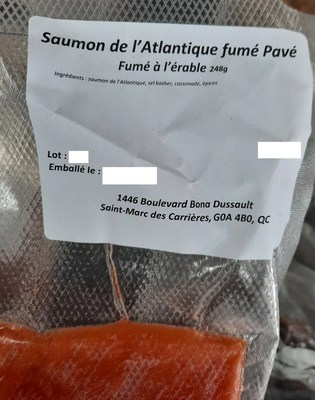
QUEBEC CITY, Jan. 25, 2022 /CNW Telbec/ – The Ministère de l’Agriculture, des Pêcheries et de l’Alimentation (MAPAQ), in collaboration with the company À each his beer, located at 1446, boulevard Bona-Dussault, in Saint-Marc- des-Carrières, warns the population not to consume the product indicated in the table below if it has not been kept in the freezer at all times since the time of purchase. Indeed, the product label does not include the information necessary for its safe consumption, namely the statement “Keep frozen until use” which is required.
|
Product name |
Format |
Affected lot |
|
“MAPLE-SMOKED PAVÉ-SMOKED ATLANTIC SALMON” |
248g |
Units sold until |
The product that is the subject of this warning was offered for sale until January 25, 2022 inclusively, and only at the establishment designated above. It was packaged in a clear plastic bag and sold frozen. The product label includes, in addition to its name and list of ingredients, the address of the establishment.
The operator is voluntarily recalling the product. It has agreed with MAPAQ to issue this warning as a precautionary measure. Persons who have this product in their possession and have not kept it in the freezer at all times since the time of purchase are advised not to consume it. They must either return it to the establishment where they bought it or throw it away. Even if the affected product shows no signs of tampering or suspicious odors, consuming it may pose a health risk. It should be noted that no case of illness associated with the consumption of this food has been reported to MAPAQ to date.
Hazard Classification: Class 1
Reference Number: 4477
Source:
Media relations
Direction des communications
Ministry of Agriculture, Fisheries
and Food
Tel. : 418 380-2100, extension 3512
www.mapaq.gouv.qc.ca

 View original content to download multimedia: http://www.newswire.ca/en/releases/archive/January2022/25/c7508.html
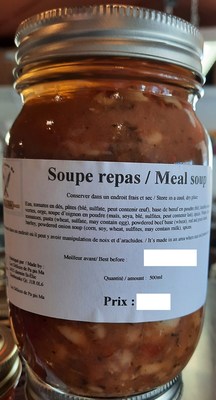
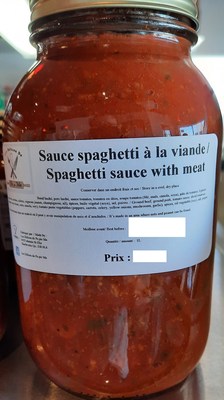
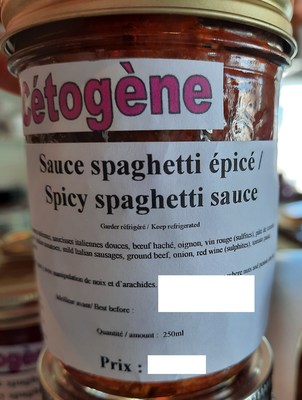
QUEBEC CITY, Jan. 25, 2022 /CNW Telbec/ – The Ministry of Agriculture, Fisheries and Food (MAPAQ), in collaboration with Les Délices de Pa pis Ma (SENC), located at 6025, chemin de Saint-Élie, in Sherbrooke , advises the public not to consume the products indicated in the table below, because they have not been packaged in such a way as to ensure their safety.
|
Product name |
Format |
Affected lot |
|
|
500ml 1 litre |
Units sold until |
|
“MEAL SOUP” |
500ml |
|
|
“SPICY SPAGHETTI SAUCE” |
125ml 250ml |
The products that are the subject of this warning were offered for sale until January 24, 2022, and this, only at the establishment designated above. The products were packaged in Mason-type glass jars with metal lids and sold at room temperature. The label of the products includes, in addition to their name, the mention “Les délices de Pa pis Ma”.
The operator is voluntarily recalling the products in question. It has agreed with MAPAQ to issue this warning as a precautionary measure. Also, people who have any of these products in their possession are advised not to consume it. They must return it to the establishment where they bought it or throw it away. Even if the affected products show no signs of tampering or suspicious odors, their consumption may represent a health risk. It should be noted that no case of illness associated with the consumption of these foods has been reported to MAPAQ to date.
Additional information
The Ministry publishes various information documents concerning food safety. Interested persons can consult them in the “Food Consumption” section of the MAPAQ website: www.mapaq.gouv.qc.ca/consommation . They also have the possibility of registering online, by visiting www.mapaq.gouv.qc.ca/rappelsfoods , to receive, by e-mail, the food recall press releases published by the Ministry. Finally, it is possible to follow “MAPAQfoods” on Twitter at the following address: www.twitter.com/MAPAQfoods .
| Issue Date | 25.1.2022 |
|---|---|
| Source of Information | The Department of Agriculture, Water and the Environment of Australia |
| Food Product | One kind of butter product imported from Australia |
| Product Name and Description | Product name: MG Brand Butter, Unsalted 25KG Brand: MG Place of origin: Australia Net weight: 25 kilograms Date of manufacture: April 21, 2021 Shelf life: Two years Importer: Foodgears Industrial International Ltd |
| Reason For Issuing Alert |
|
| Action Taken by the Centre for Food Safety |
|
| Advice to the Trade |
|
| Advice to Consumers |
|
| Further Information | The CFS press release
Enquiries about the recall can be made to the hotline at 3999 5706 during office hours. |
Centre for Food Safety
Food and Environmental Hygiene Department
2022-1-25


