Category Archives: Food Microbiology Research

Luxembourg – DELHAIZE CHICKEN CALZONE & MINI CHICKEN BURGERS – Salmonella

SAP

Delhaize is recalling the following products in Luxembourg:

Name DLL Chicken Calzone
Brand Delhaize
bar code 5400120804925
Use-by date (DLC) 03/01/2023
Batch 217176
Name DLL mini chicken burgers
Brand Delhaize
bar code 2208309000000
Use-by date (DLC) 03/01/2023
Batch 217176

Danger  : Presence of salmonella

Salmonella can cause symptoms such as nausea, vomiting, abdominal cramps, diarrhea, fever and headache within 6 to 72 hours after consumption. These symptoms may be aggravated in young children, immunocompromised subjects and the elderly. People who have consumed these products and have these symptoms are invited to consult a doctor and report this consumption to him.

ale confirmed in Luxembourg by: Delhaize

Source of Information: Delhaize Recall Notification

France – Rochefort Montagne farmhouse ovens cheese – Listeria monocytogenes

Gov france

Identification information of the recalled product

  • Product category Feed
  • Product subcategory Milk and dairy products
  • Product brand name Rochefort Montagne farmhouse ovens
  • Model names or references Batch from November 19, 2022 until batch from 01/25/23
  • Identification of products
    Batch Date
    19/11/2022 to 25/01/2023 Date of minimum durability between 02/19/2023 and 04/25/2023
  • Packaging All forms of packaging
  • Marketing start/end date From 13/12/2022 to 21/02/2023
  • Storage temperature Product to be stored in the refrigerator
  • Health mark EN 63-274-006 CE
  • Geographic area of ​​sale Whole France
  • Distributors– France Fresh Auvergne – Center E-Leclerc SA Sodicler Le Brezet – Center E-Leclerc La Pardieu – Fromagerie Nivesse Clermont-Ferrand – Establishment Charrade Neussargues

Practical information regarding the recall

  • Reason for recall Listeria
  • Risks incurred by the consumer Listeria monocytogenes (causative agent of listeriosis)

Research – Isolation of Salmonella species of public health concern from commonly fed dried meat dog treats

BVA Journals

Abstract

Background

Dried non-heat-treated meat treats, such as ears, skin and tails, are popular supplementary dog foods. Previous studies have demonstrated Salmonella spp. contamination on treats, particularly in pig ears and chicken products. This small, exploratory, cross-sectional study investigated Salmonella spp. presence in dried treats available in the UK.

Methods

A selection of dried treats from local pet shops and online retailers underwent bacterial culture for Salmonella spp. and subsequent antimicrobial susceptibility testing, with Salmonella serotype determined by whole genome sequencing.

Results

Eighty-four samples were tested, with 16% being Salmonella spp. positive. Five Salmonella serotypes were identified, each associated with specific treat types. An antimicrobial-resistant phenotype was identified in 39% of isolates. All serotypes identified are known to cause human infection.

Limitations

This study was limited by a small sample size and limited number of retail sources.

Conclusion

Salmonella spp. of public health concern were present in some dried dog treats in this study. Dog owners, pet food retailers and veterinary professionals should be aware of the potential zoonotic disease risk associated with these treats, and appropriate hygiene measures, including thorough hand washing, should be utilised if they are fed.

The Use of Ozone Technology: An Eco–Friendly Method for the Sanitization of the Dairy Supply Chain

MDPI

Abstract

The dairy field has considerable economic relevance in the agri-food system, but also has the need to develop new ‘green’ supply chain actions to ensure that sustainable products are in line with consumer requirements. In recent years, the dairy farming industry has generally improved in terms of equipment and product performance, but innovation must be linked to traditional product specifications. During cheese ripening, the storage areas and the direct contact of the cheese with the wood must be carefully managed because the proliferation of contaminating microorganisms, parasites, and insects increases significantly and product quality quickly declines, notably from a sensory level. The use of ozone (as gas or as ozonated water) can be effective for sanitizing air, water, and surfaces in contact with food, and its use can also be extended to the treatment of waste and process water. Ozone is easily generated and is eco-sustainable as it tends to disappear in a short time, leaving no residues of ozone. However, its oxidation potential can lead to the peroxidation of cheese polyunsaturated fatty acids. In this review we intend to investigate the use of ozone in the dairy sector, selecting the studies that have been most relevant over the last years.

Philippines – Dozens downed by food poisoning in Sulu

Manilla Times

ZAMBOANGA CITY: Dozens of villagers in the southern province of Sulu were rushed to hospital on suspicion of food poisoning after they consumed snacks given by soldiers, radio reports said.

Radio Pilipinas Jolo said at least 63 people, including 47 children, complained of dizziness and stomach ache after eating “ginataan” handed out by soldiers on Friday in the village of Tagbak in Indanan town.

The radio station also quoted Dr. Alhazer Siraji Ismael, of the Sulu Sanitarium Hospital, that most of the patients suffered from severe dehydration.

Ismael said six of the patients had to be monitored but the others were in stable condition.

Among those in the hospital were Girls Scout Executive Helen Hajan, and her daughter. The military did not issue any statement on the incident.

Switzerland – Swiss checks find microbially contaminated fruit salads

Food Safety News

Listeria and coagulase-positive Staphylococci have been found during inspections of fruit salads in Switzerland, according to the Swiss Association of Cantonal Chemists (ACCS).

Cantonal chemists analyzed the microbiological quality of fruit salads by taking 205 samples.

During the control, organized from May to September 2022, the samples of fruit salads were taken throughout Switzerland and Liechtenstein to check the microbial quality and for the presence of bacteria that could pose a health risk.

Food control is done by cantons, which carry out inspections and laboratory analyses with the help of cantonal chemists. Switzerland is made up of 26 regions called cantons.

Fruit salads can represent a health risk, particularly if storage temperatures and times are not adequate and products are intended for vulnerable people in retirement homes, nursing homes, or hospitals.

Targeted sampling looked at types of fruit more likely to be contaminated by bacteria such as low-acid fruits like melon or watermelon and followed criteria set in food legislation.

Research – Food safety considerations in the production of traditional fermented products: Japanese rice koji and miso

Wiley Online

Abstract

While established in Asia, rice koji and miso are fermented foods that are becoming more popular in western countries. They have been shown to contain a variety of microorganisms, consisting of bacteria, yeasts, and fungal species. Many contemporary miso varieties are not pasteurized as consumers are looking for more natural products, and/or have the desire to consume fermented foods containing live microorganisms. While correctly prepared fermented foods are rarely associated with food safety outbreaks, incidences have been recorded. On these occasions, pathogenic, or spoilage microorganisms were introduced into the products from external sources such as the raw material or the processing environment. Consequently, hygiene and fermentation conditions need to be carefully monitored to ensure food safety. Furthermore, many of the production steps during koji and miso manufacture do not fit into contemporary food safety guidelines for foods. Although pH is a required food safety hurdle for fermented foods, this does not apply to nonacidic foods such as koji or miso. This review focuses on control of microbial pathogens and discusses the processes of miso fermentation, and how fermentation of rice koji and miso fits with current food safety hurdles in western countries.

Argentina – Tainted meat linked to two deaths in Argentina

Food Safety News

Argentinian officials have confirmed leptospirosis and Salmonella in an outbreak that has killed two people.

Authorities in Buenos Aires reported that four adults were hospitalized in the city of Berazategui in early 2023. Salmonella and Shigella were detected in the fatal cases and in one patient it was Salmonella Typhimurium. Leptospirosis was also confirmed in two cases under investigation.

The deaths were in two men aged 48 and 36. A 40-year-old patient was discharged from the hospital at the end of January while a 47-year-old is recovering.

Initial investigations found all patients had a recent history of eating meat and meat products such as offal. Authorities said this led them to suspect a common food as the source of the outbreak.

In two cases, there was a link to a butcher shop. However, testing of seized products was negative for Salmonella, E. coli, and Shigella. For another patient, one food sample was positive for Salmonella.

Samples were sent for analysis to the National Food Safety and Quality Service (SENASA) and National Food Institute (INAL). Authorities in Berazategui also closed one butcher shop because of hygiene problems.

Bacteria that cause leptospirosis are spread through the urine of infected animals, which can get into water or soil and survive for weeks to months. People can get infected by consuming contaminated food or water.

Finland – Several cases of food poisoning caused by oysters confirmed in Helsinki

Helsinki Times

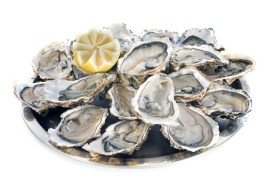
french oysters

The Environment Services of the City of Helsinki is investigating a number of suspected cases of food poisoning that are believed to be related to dining at several different restaurants and a pop-up event since the beginning of February. Currently, there are about 20 known cases of illness.

The individuals who have fallen ill all consumed oysters, and environmental services have taken food samples from the restaurants as well as patient samples from the city’s epidemiological action. Norovirus has been found in the samples.

The Food Safety Unit is requesting that anyone who has eaten oysters at Fisken på Disken, Ravintola Natura, Ravintola Gillet, The Cock, Ravintola Meripaviljonki, and the pop-up event at Ravintola Sake bar & Izakaya in February 2023 and has fallen ill after their meal, to contact the food safety unit. Illnesses may also be linked to other restaurants.

Those who have fallen ill are encouraged to contact the food safety unit primarily through an electronic food poisoning form at https://ilppa.fi. Contact can also be made by phone on weekdays from 8 am to 4 pm at +358 9 310 31527.

Norovirus is the most common cause of sudden intestinal infections in Finland.

UK – APHA part of 5 UK E. coli outbreaks in 2022

Food Safety News

The Animal and Plant Health Agency (APHA) was involved in another two E. coli outbreaks in the United Kingdom in the final quarter of 2022.

In the first, APHA helped Public Health Wales investigate two human cases of Shiga toxin-producing E. coli (STEC) O145 linked to a private collection of animals on a smallholding. Multiple species were onsite including cattle, goats, deer, and pigs. Some food consumed by people was grown in the garden where cattle manure was used. Thirty environmental fecal samples were collected but a match to the outbreak strain was not found.

In the second, APHA visited an open farm at the request of an incident management team following an outbreak of E. coli O157 in people. The outbreak strain was detected in one environmental sample from a pig enclosure. The incident is ongoing so it is unclear how many people are sick. The advice was provided to reduce the risk to the public by making improvements to the supervision of animal contact, enhancing handwashing facilities, and improving some animal exhibits.

In all of 2022, APHA was part of five E. coli investigations. The agency helped the UK Health Security Agency (UKHSA) investigate E. coli O103, O145, and O26 outbreaks between July and September.

The E. coli O26 outbreak also involved cryptosporidium. There were 11 cases of cryptosporidium and two people had confirmed E. coli O26. Cryptosporidium patients had visited an open farm attraction during the incubation period of illness. The E. coli patients had links to the same premises.

The E. coli O103 outbreak with 11 cases was associated with soft, raw milk cheese from a dairy farm in the East of England. Pasteurization was put in place for the production of the soft cheese, HACCP processes were reviewed, and enhanced control measures were taken.

The E. coli O145 outbreak with 10 patients was traced to the consumption of milk products from a dairy farm in North West England, with illness onset from mid-July. Investigations identified an issue with pasteurization and problems with the cleaning and storage of milk crates.