Category Archives: Food Microbiology Blog

RASFF Alerts -Salmonella – Polish Chicken Products – Black Pepper – Chicken Neck Skins – Ham and Pistachio Roll – Chicken Liver – Frozen Pork Meat – Organic Coriander Seed –

RASFF

Salmonella enteritidis in chicken neck skins from the Czech Republic in Slovakia

RASFF

Salmonella Infantis in 25 g of the product – poultry meat from Poland in the Czech Republic

RASFF

Salmonella in meat product (ham and pistachio roll) from Belgium in France

RASFF

Salmonella spp. in Chicken elements and chicken neck skin from Poland in the UK and Germany

RASFF

Salmonella Enteritidis in official samples of chicken neck skins from Poland in the Netherlands

RASFF

Salmonella in frozen pork meat from Spain in Finland

RASFF

Salmonella gr C in chicken filet from Poland in the Netherlands

RASFF

Salmonella spp. in organic coriander seed of unknown origin, via Italy in Germany

RASFF

Salmonella spp. in black pepper from Brazil in Germany

RASFF

Salmonella spp. in black pepper from Brazil in Germany

RASFF

Salmonella spp. in black pepper from Brazil in Germany

RASFF

Salmonella spp. in black pepper from Brazil in Germany

RASFF

Salmonella spp. in black pepper from Brazil in Germany

RASFF

Salmonella spp. in black pepper from Brazil in Germany

RASFF

Salmonella spp. in black pepper from Brazil in Germany and  the Netherlands

RASFF

Salmonella in chicken liver from Poland in the Netherlands

RASFF

Salmonella spp. in black pepper from Brazil in Germany

Research – Mechanisms of Inhibition of Quorum Sensing as an Alternative for the Control of E. coli and Salmonella

MDPI

Quorum sensing (QS) is a process of cell–cell communication for bacteria such as E. coli and Salmonella that cause foodborne diseases, with the production, release, and detection of autoinducer (AI) molecules that participate in the regulation of virulence genes. All of these proteins are useful in coordinating collective behavior, the expression of virulence factors, and the pathogenicity of Gram-negative bacteria. In this work, we review the natural or synthetic inhibitor molecules of QS that inactivate the autoinducer and block QS regulatory proteins in E. coli and Salmonella. Furthermore, we describe mechanisms of QS inhibitors (QSIs) that act as competitive inhibitors, being a useful tool for preventing virulence gene expression through the downregulation of AI-2 production pathways and the disruption of signal uptake. In addition, we showed that QSIs have negative regulatory activity of genes related to bacterial biofilm formation on clinical artifacts, which confirms the therapeutic potential of QSIs in the control of infectious pathogens. Finally, we discuss resistance to QSIs, the design of next-generation QSIs, and how these molecules can be leveraged to provide a new antivirulence therapy to combat diseases caused by E. coli or Salmonella. View Full-Text

RASFF Alerts – Ochratoxin A – Raisins

RASFF

Ochratoxin A (68 mg/kg – ppm) in raisins from Uzbekistan, via Lithuania in Latvia

RASFF Alerts- Aflatoxins – Groundnut Kernels – Ground Ginger – Organic Spelt Flour – Basmati Brown Rice – Groundnuts – Shelled Pistachios – Dried Figs

RASFF

Aflatoxins in Indian Groundnut Kernels in the Netherlands and Switzerland

RASFF

Aflatoxins in Indian Groundnut Kernels in the Netherlands and Switzerland

RASFF

Aflatoxin B1 in Indian Groundnut Kernels in the Netherlands and Switzerland

RASFF

Aflatoxins in ground ginger from Syria in Germany

RASFF

Aflatoxins in organic spelt flour from France in Belgium

RASFF

Aflatoxin B1 in super basmati brown rice from Pakistan in the Netherlands

RASFF

Aflatoxin in Bolivian Groundnuts in the Netherlands and Spain

RASFF

Aflatoxins in organic blanched Egyptian Groundnuts in Germany and the Netherlands

RASFF

Aflatoxins beyond the maximum limits allowed in shelled Pistachios from Turkey in Italy

RASFF

Pistachios in shell origin Iran / aflatoxins above the legal limits in pistachios in shell from Iran in Italy

RASFF

Aflatoxin B1 in Turkish organic diced dried Figs in the Netherlands

RASFF Alert – Animal Feed – Salmonella – Premix NutriBlend Plus Dry – Raw Dog Food

RASFF

Salmonella spp. in premix NutriBind Plus Dry from Germany in Belgium

RASFF

Salmonella Diarizonae in raw dog feed from Norway in Denmark, France, Germany, Lithuania, Norway Sweden, Switzerland and the UK

Research – Unraveling the Antimicrobial Effectiveness of Coridothymus capitatus Hydrolate against Listeria monocytogenes in Environmental Conditions Encountered in Foods: An In Vitro Study

MDPI

The increased resistance of bacteria to antimicrobials, as well as the growing interest in innovative and sustainable alternatives to traditional food additives, are driving research towards the use of natural food preservatives. Among these, hydrolates (HYs) have gained attention as “mild” alternatives to conventional antimicrobial compounds. In this study, the response of L. monocytogenes ATCC 7644 exposed to increasing concentrations of Coridothymus capitatus HY (CHY) for 1 h at 37 °C was evaluated by means of Phenotype Microarray, modelling the kinetic data obtained by inoculating control and treated cells into GEN III microplates, after CHY removal. The results revealed differences concerning the growth dynamics in environmental conditions commonly encountered in food processing environments (different carbon sources, pH 6.0, pH 5.0, 1–8% NaCl). More specifically, for treated cells, the lag phase was extended, the growth rate was slowed down and, in most cases, the maximum concentration was diminished, suggesting the persistence of stress even after CHY removal. Confocal Laser Scanner Microscopy evidenced a diffuse aggregation and suffering of the treated cells, as a response to the stress encountered. In conclusion, the treatment with HY caused a stressing effect that persisted after its removal. The results suggest the potential of CHY application to control L. monocytogenes in food environments.

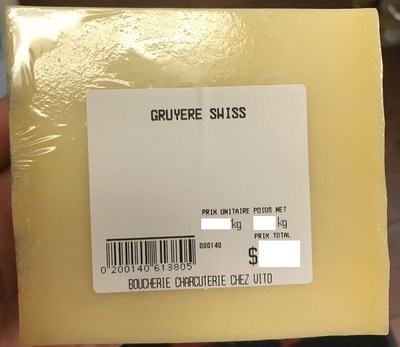
Quebec – Absence of information necessary for the safe consumption of raw milk Gruyère cheese packaged and sold by the Butchery Charcuterie at Vito

MAPAQ

QUEBEC CITY , April 27, 2022 /CNW Telbec/ – The Ministry of Agriculture, Fisheries and Food (MAPAQ), in collaboration with the Food Inspection Division of the City of Montreal and the Boucherie Charcuterie at Vito located at 5180, rue Saint-Urbain in Montreal, advises people considered vulnerable (pregnant women, people with weakened immune systems, children and the elderly) not to consume the product indicated in the table below. below, because it does not include the mention “made of raw milk” which is required.

Product name

Format

Affected batch

“GRUYERE SWISS”

Variable

Units sold until April 27, 2022

The product that is the subject of this warning was offered for sale until April 27, 2022 inclusive, only at the establishment designated above. It was wrapped in clear plastic wrap and sold chilled. The product label included the words “Boucherie Charcuterie chez Vito”.

The retailer is voluntarily recalling the products in question. It has agreed with MAPAQ and the Food Inspection Division of the City of Montreal to issue this warning as a precautionary measure. In addition, persons deemed vulnerable (designated above) who have this product in their possession are advised not to consume it. They should return it to the establishment where they bought it, use it in a cooked dish that will be cooked until it reaches a safe cooking temperature of 74°C or throw it away. However, no case of disease associated with the consumption of this food has been reported to MAPAQ to date.

Additional information

The Ministry publishes various information documents concerning food safety. Interested persons can consult them in the “Food Consumption” section of the MAPAQ website: www.mapaq.gouv.qc.ca/consommation  . They also have the possibility of registering online by visiting www.mapaq.gouv.qc.ca/rappelsfoods  to receive, by e-mail, the food recall press releases published by the Ministry. Finally, it is possible to follow “MAPAQfoods” on Twitter at the following address: www.twitter.com/MAPAQfoods  .

Gruyère Swiss (CNW Group/Ministry of Agriculture, Fisheries and Food) 

Hazard Classification: Class 1
Reference Number: 4540

Source:
Media relations
Direction des communications
Ministry of Agriculture, Fisheries
and Food
Tel. : 418 380-2100, extension 3512

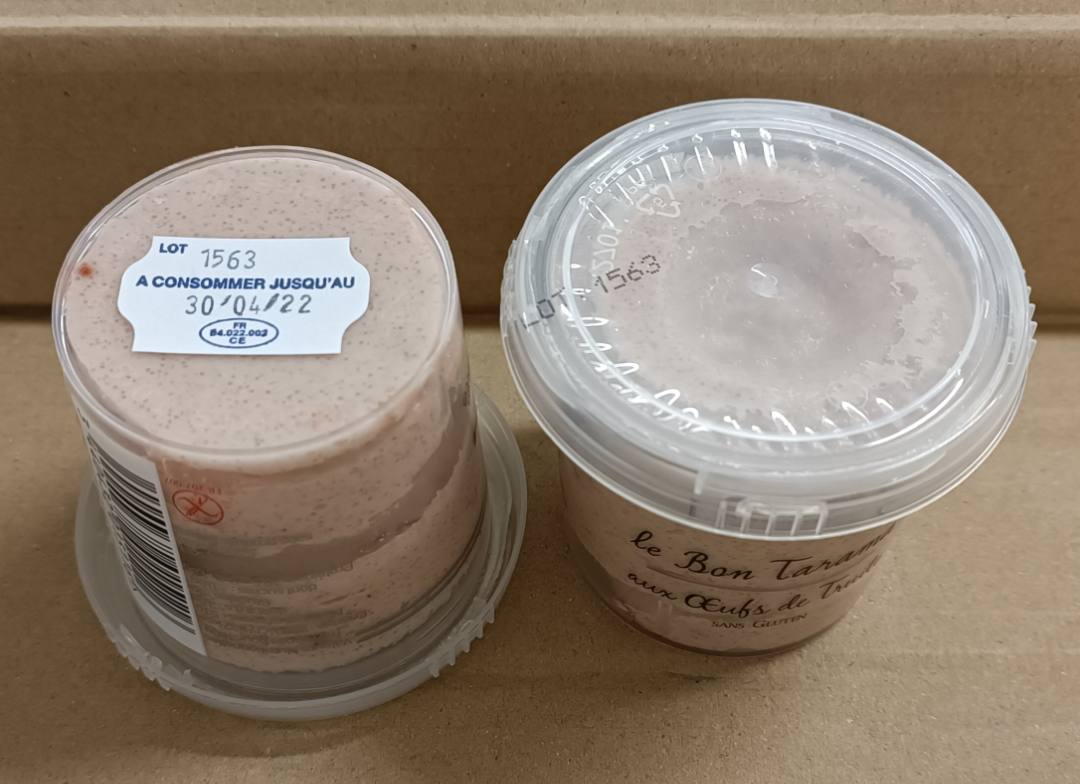
France – TROUT EGGS TARAMA – Listeria monocytogenes

Gov france

Identification information of the recalled product

  • Product category Food
  • Product subcategory Fishery and aquaculture products
  • Product brand name CHOISY SALMONERIE
  • Model names or references jar 100g
  • Identification of products
    GTIN Batch Date
    3440432015116 1563 Use-by date between 30/04/2022 and 21/05/2022
  • Packaging plastic jar
  • Marketing start/end date From 31/03/2022 to 21/04/2022
  • Storage temperature Product to be stored in the refrigerator
  • Health mark EN 94.022.002 EC
  • Geographic area of ​​sale Regions: Ile-de-France
  • Distributors crossroads

Practical information regarding the recall

  • Reason for recall detection of Listeria monocytogenes in a jar of tarama trout eggs (<10 cfu/g) during official sampling
  • Risks incurred by the consumer Listeria monocytogenes (causative agent of listeriosis)

USA – FSIS Issues Public Health Alert for Ground Beef Products Due to Possible E. coli O26 Contamination

FSIS USDA

WASHINGTON April 27, 2022, – The U.S. Department of Agriculture’s Food Safety and Inspection Service (FSIS) is issuing a public health alert due to concerns that specific ground beef products may be adulterated with E. coli O26. A recall was not requested because the products are no longer available for purchase.

The ground beef items for this public health alert were produced on December 16 and 17, 2021. The following products subject to the public health alert are [view labels]:

  • 1-lb. foam trays containing “ALL NATURAL LAURA’S LEAN BEEF 92% LEAN 8% FAT GROUND BEEF.” The product is labeled with 350/(timestamp)/Est.31805/002, with the timestamp ranging from 0602 to 1721.
  • 1-lb. foam trays containing “Kroger GROUND BEEF CARNE MOLIDA 96% LEAN 4% FAT.” The product is labeled with 350/(timestamp)/Est.31805/002, with the timestamp ranging from 0602 to 1721.
  • 1-lb. foam trays containing “Kroger GROUND BEEF CARNE MOLIDA 85% LEAN 15% FAT.” The product is labeled with 350/(timestamp)/Est.31805/002, with the timestamp ranging from 0602 to 1721.
  • 1.3-lb. foam trays containing “PRIVATE SELECTION ANGUS BEEF 90% LEAN 10% FAT GROUND SIRLOIN.” The product is labeled with 350/(timestamp)/Est.31805/002, with the timestamp ranging from 0602 to 1721. Additional product is labeled with 351/(timestamp)/Est. 31805/003, with the timestamp ranging from 1549 to 1651.
  • 1-lb. foam trays containing “Kroger GROUND BEEF CARNE MOLIDA 93% LEAN 7% FAT.” The product is labeled with 350/(timestamp)/Est.31805/002, with the timestamp ranging from 0602 to 1721.
  • 1-lb. foam trays containing “Kroger GROUND BEEF CARNE MOLIDA 80% LEAN 20% FAT.” The product is labeled with 350/(timestamp)/Est.31805/002, with the timestamp ranging from 0602 to 1721.

The ground beef products were distributed to warehouses in Oregon and Washington and sold at retail locations.

The problem was discovered after a consumer submitted a retail package of ground beef produced by Empire Packing bearing a use or freeze by date of “December 24, 2021” to a third-party laboratory for microbiological analysis. The consumer reported previously becoming ill but did not get tested for E coli.  The third-party laboratory confirmed the ground beef sample was positive for E. coli O26.

Anyone concerned about an injury or illness should contact a healthcare provider.

Many clinical laboratories do not test for non-O157 STEC, such as O26 because it is harder to identify than STEC O157:H7. People can become ill from STECs 2–8 days (average of 3–4 days) after consuming the organism.

Most people infected with STEC O26 develop diarrhea (often bloody) and vomiting. Some illnesses last longer and can be more severe. Infection is usually diagnosed by testing of a stool sample. Vigorous rehydration and other supportive care is the usual treatment; antibiotic treatment is generally not recommended. Most people recover within a week, but, rarely, some develop a more severe infection. Hemolytic uremic syndrome (HUS), a type of kidney failure, is uncommon with STEC O26 infection. HUS can occur in people of any age but is most common in children under 5 years old, older adults and persons with weakened immune systems. It is marked by easy bruising, pallor and decreased urine output. Persons who experience these symptoms should seek emergency medical care immediately

FSIS is concerned that some product may be in consumers’ freezers. Consumers who have purchased these products are urged not to consume them. These products should be thrown away or returned to the place of purchase.

FSIS advises all consumers to safely prepare their raw meat products, including fresh and frozen, and only consume ground beef that has been cooked to a temperature of 160 F. The only way to confirm that ground beef is cooked to a temperature high enough to kill harmful bacteria is to use a food thermometer that measures internal temperature, https://www.fsis.usda.gov/safetempchart.

Media and consumers with questions regarding the public health alert can contact Debbie Robinson, Vice President of Customer Service, Empire Packing, at drobinson@empirepk.com.

Consumers with food safety questions can call the toll-free USDA Meat and Poultry Hotline at 888-MPHotline (888-674-6854) or live chat via Ask USDA from 10 a.m. to 6 p.m. (Eastern Time) Monday through Friday. Consumers can also browse food safety messages at Ask USDA or send a question via email to MPHotline@usda.gov. For consumers that need to report a problem with a meat, poultry, or egg product, the online Electronic Consumer Complaint Monitoring System can be accessed 24 hours a day at https://foodcomplaint.fsis.usda.gov/eCCF/.

Product Images

Company Information

ESTABLISHMENT ID
PROCESSING CATEGORY

Raw – Non Intact

Company Contact Information

COMPANY MEDIA CONTACT
Empire Packing
Debbie Robinson, Vice President of Customer Service

FSIS Contact Information

MEDIA CONTACT
Congressional and Public Affairs
Cody Kahlig
(202)720-9113

Australia – Elite confectionery products – Salmonella

FSANZ

Date published: 28 April 2022

Product information

Benedikt Imports Ptd Ltd is conducting a recall of the various Elite branded confectionery products including Elite Chocolate, Elite Cakes, Elite Wafers, Energy Grain Snacks, Energy Chocolate Rice Cakes, Gum and Toffee Candies from all expiration dates. The products have been available for sale nationally at Coles, Woolworths, IGAs, 7/11, Independent Kosher stores and Milk bars.

Date markings

All batches, best before, used by and made on dates are being recalled.  


Problem

The recall is due to potential microbial (Salmonella) contamination.

Food safety hazard

Food products contaminated with Salmonella may cause illness if consumed. ​

Country of origin

Israel

​​What to do​

Consumers should not eat this product. Any consumers concerned about their health should seek medical advice and should return the products to the place of purchase for a full refund.

For further information please contact:

Benedikt Imports Ptd Ltd

03 9577 3000

http://www.benedikts.com

Related links: