
KSWFoodWorld
Category Archives: Food Inspections
Singapore – Recall of eggs from Lay Hong Berhad Layer Farm Jeram (Malaysia)due to presence of Salmonella Enteritidis
Germany – Petit Fleur Camembert, Pfefferbert, Kreitaberti, 250 g- Listeria monocytogenes
Warning type:Food
Date of first publication:03/12/2021
Product name:Petit Fleur Camembert, Pfefferbert, Kreitaberti, 250 g
Product pictures:
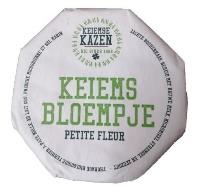


Manufacturer (distributor):Cheese wholesaler Paul Lerchenmüller
Reason for warning:
Listeria
Packaging Unit:see attached press release
Durability:see attached press release
Production date:see attached press release
Lot identification:see attached press release
Further information:
Reference is made to the attached press release from the food company.
Contact to the responsible authorities:
Baden-Württemberg:poststelle@mlr.bwl.de
Bavaria:poststelle@lgl.bayern.de
Hesse:Schnellwarnung@rpda.hessen.de
| Press releases and information | |
|---|---|
| title | Attachment or web link |
|
Press release
|
|
Posted in food contamination, Food Hazard, Food Hygiene, Food Inspections, Food Micro Blog, Food Microbiology, Food Microbiology Blog, Food Microbiology Testing, Food Pathogen, food recall, Food Safety, Food Safety Alert, Food Testing, Listeria, Listeria monocytogenes, microbial contamination, Microbiology
Germany – CAMEMBERT GRAINDORGE – STEC E.coli
steLMW
Warning type:Food
Date of first publication:03/13/2021
Product name:CAMEMBERT GRAINDORGE
Product pictures:


Manufacturer (distributor):MUNICH fromage GmbH & Co. KG
Reason for warning:
Detection of verotoxin-producing E. coli
Packaging Unit:250 g
Durability:04/07/2021
Lot identification:270121LI13
Further information:For more information, please refer to the attached press release.
Contact to the responsible authorities:
Baden-Württemberg:poststelle@mlr.bwl.de
Bavaria:poststelle@lgl.bayern.de
Hamburg:poststelle@justiz.hamburg.de
Hesse:Schnellwarnung@rpda.hessen.de
Lower Saxony:poststelle@ml.niedersachsen.de
North Rhine-Westphalia:poststelle@mulnv.nrw.de
| Press releases and information | |
|---|---|
| title | Attachment or web link |
|
Press release MÜNNICH fromage GmbH & Co. KG
|
|
Research – Campylobacter Contamination of UK-Produced Halal Chicken at Retail

Campylobacter is the leading cause of human bacterial diarrhoeal disease worldwide, with poultry meat products accounting for the majority of human cases. Recent surveys by the Food Standards Agency estimate the Campylobacter prevalence in fresh UK retail chicken to be 41.2%. However, such surveys have not distinguished between broiler chickens produced for different consumer demographics, such as the Halal market. Campylobacter colonisation of broilers is difficult to prevent, especially during routine partial depopulation of flocks. Broilers produced for the Halal market may undergo multiple depopulation events, which may increase the risk of colonisation and subsequent Campylobacter contamination of chicken meat. This project aimed to determine the prevalence and levels of Campylobacter contamination of chicken meat produced for the UK Halal market. Campylobacter was identified and enumerated from the neck skin and outer packaging of 405 Halal chickens. Following culture, isolates were assigned to species via PCR and disc diffusion antimicrobial susceptibility tests determined. Logistic regression analysis assessed risk factors for Campylobacter isolation, the level of Campylobacter contamination among positive carcasses and antimicrobial resistance outcomes. Campylobacter spp. were confirmed in 65.4% of neck skin samples and 17.1% of packaging samples. 13.8% of neck skin samples had the highest level of contamination (>1000 cfu/g). Large birds had a significantly higher number of samples with >1000 cfu/g (p<0.001) and as chicken carcass weight increased, birds were more likely to be Campylobacter-positive (p<0.05). A high prevalence of resistance was seen to ciprofloxacin (42.0%) and 38.5% of samples contained at least one multi-drug resistant Campylobacter isolate. This study demonstrates that Halal chicken has a higher Campylobacter prevalence than non-Halal chicken. Interventions should be introduced to reduce this increased public health risk to consumers.
UK – Update 12 March: The FSA is reiterating its advice on cooking frozen raw breaded chicken products following links to cases of Salmonella
The FSA is repeating advice to consumers following an updated recall linked to salmonella contamination.
SFC has issued an updated recall of chicken products because Salmonella Enteritidis (a food poisoning bug) has been found in some of these foods.
This update includes the original products identified in previous recalls as well as additional products.
Dr Colin Sullivan, Chief Operating Officer, FSA said:
‘The products are linked to two ongoing outbreaks of Salmonella Enteritidis (a food poisoning bug) in chicken from Poland.
‘The producer put additional controls in place to improve the safety of their products in November 2020. SFC has decided to withdraw and recall all of its chicken products produced before this date.
‘The FSA will be making additional checks to ensure the effectiveness of this withdrawal and recall.’
Products affected
The full list of products is available in the food alert.
Update on the wider Salmonella investigation
We are continuing to work with Food Standards Scotland (FSS), Public Health England (PHE), Public Health Scotland, Public Health Wales and the Public Health Agency in Northern Ireland as part of the ongoing investigation into two particular strains of Salmonella linked to frozen raw breaded chicken products from Poland.
We previously issued precautionary consumer advice in October 2020 and February 2021. Additional controls have been put in place by food businesses at production level. These changes to the production process are proving to be effective and we hope to see a further reduction in cases in the coming months as these products are removed from the food chain. While we continue these efforts, it is important that people carefully follow food hygiene advice.
Investigations are ongoing into identifying the source of the outbreaks at farm level in Poland. Should more products be identified actions to remove unsafe food will be taken.
Saheer Gharbia, Head of the Gastrointestinal Pathogens Unit of PHE’s National Infection Service, said:
‘While we appear to be past the peak of this outbreak, and case reporting rate has decreased in recent months, we are still detecting some cases through whole genome sequencing, so it is important that people carefully follow food hygiene advice. We continue to work closely with the Food Standards Agency to resolve the outbreak.
‘Salmonella generally causes a mild illness, although vulnerable groups like children under five years, the elderly, and those with weakened immune systems may experience more severe illness and may require hospitalisation. Symptoms of a Salmonella infection include diarrhoea, stomach cramps and sometimes vomiting and fever. Anyone who is concerned about symptoms should contact their GP or out of hours service in the first instance.’
Our advice to consumers
If consumers have bought any of the products in the updated recall, they can return them to the store where they were bought for a full refund.
We are encouraging consumers to always cook food at the right temperature and for the correct length of time to ensure any harmful bacteria are killed. Before serving these products, make sure they are steaming hot and cooked all the way through. When you cut into the thickest part of the meat, check that none of the meat is pink and that any juices run clear.
Anyone who is concerned about symptoms should contact their GP or out of hours service in the first instance.
Only the products listed in the recall notice are affected. There is no need to change your shopping habits for chicken products.
Posted in food bourne outbreak, food contamination, food death, Food Hazard, Food Hygiene, Food Illness, Food Inspections, Food Micro Blog, Food Microbiology, Food Microbiology Blog, Food Microbiology Research, Food Microbiology Testing, Food Pathogen, Food Poisoning Death, food recall, Food Safety, Food Safety Alert, Food Testing, foodborne outbreak, foodbourne outbreak, fsa, microbial contamination, Microbiology, outbreak, Salmonella, Salmonella in Chicken
FSA – Update 4 – SFC recalls SFC Chicken products because of the presence of Salmonella
SFC are recalling an extended range of SFC products because Salmonella has been found in some of their product ranges. This update extends the recall to all SFC products for certain dates, listed in the table below and adds an additional product, Little Hill Farm Chicken Breast Fillets. All batch codes are affected with best before dates up to and including 30 of June 2022. Products after this best before date are not affected.
The business put additional food safety controls in place in November 2020 to improve the safety of their products. They have now taken the precautionary step of recalling all products manufactured before the new and additional controls were put in place.
Product details
| SFC Crispy Dippers | |
|---|---|
| Pack size | 200g |
| Batch code | All codes |
| Best before | Up to and including 30 of June 2022 |
| SFC Crispy Dippers (Halal) | |
|---|---|
| Pack size | 200g |
| Batch code | All codes |
| Best before | Up to and including 30 of June 2022 |
| SFC Southern Fried Chicken Strips | |
|---|---|
| Pack size | 400g |
| Batch code | All codes |
| Best before | Up to and including 30 of June 2022 |
| SFC Southern Fried Chicken Strips | |
|---|---|
| Pack size | 155g |
| Batch code | All codes |
| Best before | Up to and including 30 of June 2022 |
| SFC Southern Fried Chicken Strips (Halal) | |
|---|---|
| Pack size | 155g |
| Batch code | All codes |
| Best before | Up to and including 30 of June 2022 |
| SFC Mega Box | |
|---|---|
| Pack size | 1610g |
| Batch code | All codes |
| Best before | Up to and including 30 of June 2022 |
| SFC Southern Fried Chicken Burgers | |
|---|---|
| Pack size | 228g |
| Batch code | All codes |
| Best before | Up to and including 30 of June 2022 |
| Little Hill Farm Chicken Breast Fillets | |
|---|---|
| Pack size | 500g |
| Batch code | All codes |
| Best before | Up to and including 30 of June 2022 |
| SFC Poppets | |
|---|---|
| Pack size | 190g |
| Batch code | All codes |
| Best before | Up to and including 30 of June 2022 |
| SFC Poppets (Halal) | |
|---|---|
| Pack size | 190g |
| Batch code | All codes |
| Best before | Up to and including 30 of June 2022 |
| SFC Take-Home Boneless Bucket | |
|---|---|
| Pack size | 650g |
| Batch code | All codes |
| Best before | Up to and including 30 of June 2022 |
| SFC Take-Home Boneless Box | |
|---|---|
| Pack size | 600g |
| Batch code | All codes |
| Best before | Up to and including 30 of June 2022 |
| SFC Take-Home Boneless Box | |
|---|---|
| Pack size | 625g |
| Batch code | All codes |
| Best before | Up to and including 30 of June 2022 |
| SFC Take-Home Boneless Box | |
|---|---|
| Pack size | 550g |
| Batch code | All codes |
| Best before | Up to and including 30 of June 2022 |
| SFC Take-Home Boneless Box (Halal) | |
|---|---|
| Pack size | 550g |
| Batch code | All codes |
| Best before | Up to and including 30 of June 2022 |
| SFC Chicken Nuggets | |
|---|---|
| Pack size | 200g |
| Batch code | All codes |
| Best before | Up to and including 30 of June 2022 |
Risk statement
The presence of Salmonella in the products listed above.
Symptoms caused by Salmonella usually include fever, diarrhoea and abdominal cramps.
Action taken by the company
SFC is recalling the above products. Point of sale notices will be displayed in all retail stores that are selling these products. These notices explain to customers why the products are being recalled and tell them what to do if they have bought the product. Please see the attached notice.
Our advice to consumers
If you have bought any of the above products do not eat them. Instead, return them to the store from where they were bought for a full refund or alternatively, email a photo of the product packaging clearly showing the best before date and where the product was purchased, to customerservices@sfcwholesale.co.uk for a refund and then safely dispose of the product at home.
Related alerts
Posted in food contamination, food death, Food Hazard, Food Hygiene, Food Illness, Food Inspections, Food Micro Blog, Food Microbiology, Food Microbiology Blog, Food Microbiology Testing, Food Pathogen, food recall, Food Safety, Food Safety Alert, Food Testing, fsa, Salmonella, Salmonella in Chicken
Research – Behavioral Ethics and the Incidence of Foodborne Illness Outbreaks
Cognitive biases play an important role in creating and perpetuating problems that lead to foodborne illness outbreaks. By using insights from behavioural ethics, we argue that sometimes people engage in unethical behaviour that increases the likelihood of foodborne illness outbreaks without necessarily intending to or being consciously aware of it. We demonstrate these insights in an analysis of the 2011 Listeriosis outbreak in the U.S. from the consumption of contaminated cantaloupes. We then provide policy implications that can improve our understanding of other kinds of disease outbreaks and epidemics.
Posted in food bourne outbreak, food contamination, Food Hazard, Food Hygiene, Food Inspections, Food Micro Blog, Food Microbiology, Food Microbiology Blog, Food Microbiology Research, Food Microbiology Testing, Food Safety, Food Testing, foodborne disease, Foodborne Illness, foodborne outbreak, foodbourne outbreak, Listeria, Listeria monocytogenes, Research
Denmark – Three suspected cases of botulism in Denmark

An outbreak of disease with suspected botulism has occurred among the participants in a private company in the region of Southern Denmark. The Danish Veterinary and Food Administration, Fødevareinstituttet DTU and Statens Serum Institut are working to identify the source of the infection, which is presumed to be limited to a single company.
Following a private party held on Friday, March 5, 2021, three adults have been hospitalized on suspicion of having botulism.
They are being treated with botulism antitoxin and are improving. The Statens Serum Institut (SSI) is now examining samples from the patients to find out if there was actually botulism.
SSI is also in the process of analyzing the ingredients and leftovers of the food that has been eaten by that company. No other patients with botulism are known outside the company that has been affected.
Posted in Bacterial Toxin, botulism, Clostridium, Clostridium botulinum, food contamination, Food Hazard, Food Hygiene, Food Illness, Food Inspections, Food Micro Blog, Food Microbiology, Food Microbiology Blog, Food Microbiology Testing, Food Pathogen, Food Poisoning, food recall, Food Safety, Food Safety Alert, Food Testing, Food Toxin, microbial contamination, Microbiology, Toxin
Kenya – Tough Terms As Kenya Lifts Tanzania, Uganda Maize Imports Ban -Aflatoxin
All stakeholders dealing in maize imports would be required to be registered, the consignments coming in must be accompanied with certificate of conformity on aflatoxin levels and that traders have to issue details of their warehouses and the certificate of conformity should indicate that the aflatoxin levels complies with the maximum required levels of 10 parts per billion, the Ministry of Agriculture said. This comes a week after Kenya banned the importation of maize from two neighbouring countries, Tanzania and Uganda, after studies revealed higher than normal levels of mycotoxins. In a letter to the neighbours, the Kenya Agriculture and Food authority said they were “conducting surveillance on the safety of food imports into Kenya”. Mycotoxins are naturally occurring toxins produced by certain fungi and can be found in food. It grows on a variety of different crops and foodstuffs including cereals, nuts, spices, dried fruits, apples and coffee beans, often under warm and humid conditions.
Posted in Aflatoxin, food contamination, Food Hazard, Food Hygiene, Food Inspections, Food Micro Blog, Food Microbiology, Food Microbiology Blog, Food Microbiology Research, Food Microbiology Testing, Food Poisoning, Food Safety, Food Testing, Food Toxin, Mold Toxin, Mould Toxin, Mycotoxin, Research
Sweden – Norovirus in Sweden linked to shrimp from Estonia

Outbreaks of norovirus in Sweden linked to shrimp from Estonia may have affected about 100 people.
Reports from local authorities have not been fully compiled yet but based on preliminary information officials believe more than 100 people have fallen sick.
It is mostly local outbreaks at workplaces where people have eaten shrimp sandwiches or a popular product in Scandinavia called “smörgåstårta.” This food, also called a sandwich cake, looks like a cake but instead of sponge uses bread and often includes cheese, vegetables, cold meats and fish.
Peeled shrimps in brine from the implicated batch were mostly distributed within one region which was named by local media as Varnamo in Jönköping County in southern Sweden.
Posted in food bourne outbreak, food contamination, Food Hazard, Food Hygiene, Food Illness, Food Inspections, Food Micro Blog, Food Microbiology, Food Microbiology Blog, Food Microbiology Testing, Food Pathogen, food recall, Food Safety, Food Safety Alert, Food Testing, Food Virus, foodborne disease, Foodborne Illness, foodborne outbreak, foodbourne outbreak, Norovirus, outbreak, Virus


