Category Archives: Food Illness

Research – Project confirms growing threat in Europe from toxins created by microalgae

Food Safety News

gam

A project looking at the risk of ciguatera poisoning in Europe has finished work after almost five years.

An international scientific meeting was held in October for the EuroCigua project which began in April 2016 and ends this month.

Ciguatera is a type of food poisoning associated with consumption of fishery products that contain toxins produced by a microalgae called Gambierdiscus toxicus. The toxin does not affect the appearance, odor or taste of the fish and is not destroyed by cooking, refrigeration or freezing.

It causes an estimated 10,000 to 50,000 cases per year worldwide and outbreaks have been reported in Spain and Portugal. From 2012 to 2018, four European countries reported 23 ciguatera outbreaks and 167 cases.

Results confirmed the appearance of ciguatera in the European Union, having identified native species of fish with ciguatoxins in Macaronesia, Madeira and the Canary Islands. The presence of Gambierdiscus in the Mediterranean Sea, Cyprus and Greece was also detected, as well as the first finding in the Balearic Islands.

USA – Sushi related outbreak stumps health officials; more than 150 sickened

Food Safety News

Public health officials in North Carolina have concluded their investigation of a foodborne illness outbreak linked to sushi, saying they were unable to determine the specific cause behind the illnesses of more than 150 people.

Only a handful of ill people who ate the suspect sushi sold at two Harris Teeter grocery stores agreed to provide samples for pathogen testing, according to the Cabarrus Health Alliance environmental health director. Officials also tested one sample of sushi.

All patient samples and the product specimen were tested for a broad range of pathogens in an attempt to identify the agent responsible for the illnesses. 

RASFF Alert – Norovirus – Oysters

European Food Alerts

RASFF

norovirus (presence /2g) in oysters (Crassostrea gigas) from France in Italy

Norway – The rules for selling raw milk remain unchanged

Mattilsynet

The Ministry of Health and Care Services (HOD) has decided not to change the regulations for the sale of raw milk for human consumption. The background is to have a high level of protection of consumer health.

In the autumn of 2017, the Ministry of Health and Care Services commissioned the Norwegian Food Safety Authority to prepare a draft regulation that allows a limited sale of raw milk and raw cream for consumption.

The proposed change in the regulations was that the farm or farms can sell up to 5000 liters of raw milk or raw cream per year if certain conditions are met, such as satisfactory hygiene, unbroken cold chain, warning marking and that the turnover was from the farm or farm.

The draft regulation was out for consultation . The Norwegian Food Safety Authority carried out a compilation of the consultation statements which were submitted to the Ministry of Health and Care Services. In its decision not to change the regulations, the Ministry of Health and Care Services has, among other things, emphasized the warnings from the Norwegian Institute of Public Health, the Norwegian Veterinary Institute and the Norwegian University of Life Sciences. All three agencies opposed liberalization in the consultation statement, out of consideration for the risk of infection and the risk of serious illness.

-From a public health perspective, restrictive regulations will be the most important risk-reducing measure to avoid illness in connection with the consumption of raw milk. This is ensured, among other things, through heat treatment of all raw milk and a ban on turnover, says senior adviser Margrethe Hovda Røed in the Norwegian Food Safety Authority.

Research – Investigation and Follow-Up of a Staphylococcal Food Poisoning Outbreak Linked to the Consumption of Traditional Hand-Crafted Alm Cheese

MDPI

Staph

Image CDC

Staphylococcal food poisoning (SFP) is one of the most important foodborne diseases. This work describes a SFP event linked to the consumption of alm cheese and involved three people belonging to the same family. Leftovers of the consumed cheese, samples from the grocery store and the producing alm were collected and tested for Coagulase positive staphylococci (CPS) enumeration and for the presence of staphylococcal enterotoxins (SEs). Isolates were typed with MLST, spa typing, and tested for SEs and methicillin resistance genes. An in vitro test evaluated SEs production in relation to bacterial growth. The presence of CPS and SEs was detected in all cheese samples and all isolates belonged to the same methicillin sensitive ST8/t13296 strain harbouring sedser and sej genes. The in vitro test showed the production of enterotoxins started from 105 CFU/mL. The farmer was prescribed with corrective actions that led to eradication of the contaminating strain. View Full-Text

RASFF Alert – Foodborne Outbreak – Salmonella – Courgettes

European Food Alerts

RASFF

foodborne outbreak suspected to be caused by Salmonella enterica ser. Kedougou in courgettes from the Netherlands and Spain in Finland

USA – Outbreak Investigation of E. coli – Leafy Greens (December 2020) – CDC declares outbreak over, FDA investigation ongoing

FDA

The FDA, along with CDC and state and local partners, investigated a multistate outbreak of E. coli O157:H7 infections in the fall of 2020. The epidemiology and traceback investigation have determined that the outbreak was linked to leafy greens. The epidemiological and traceback investigations were not able to determine a specific type of leafy green linked to illnesses. On 12/22/2020, the CDC announced that this outbreak appears to be over. This outbreak, announced by FDA and CDC on October 28, 2020, was caused by a strain of E. coli that is genetically related to a strain linked to the fall 2019 romaine outbreak.

The FDA completed a traceback investigation of multiple types of leafy greens identified in patient interviews. Although no single ranch was identified as a common source of the leafy greens, FDA and state partners also conducted on-site investigations on farms of interest. 

Teams were deployed to dozens of ranches in the region to conduct large scale environmental sampling. Additionally, no Shiga toxin-producing E. coli were found on leafy greens. 

At this time, FDA’s investigational activities, including sample analysis are ongoing. A detailed report of FDA’s findings in the investigation will be released in early 2021, following the conclusion of investigational activities.

Recommendation

CDC has declared this outbreak to be over. There is no recommendation for consumers, retailers, or suppliers.


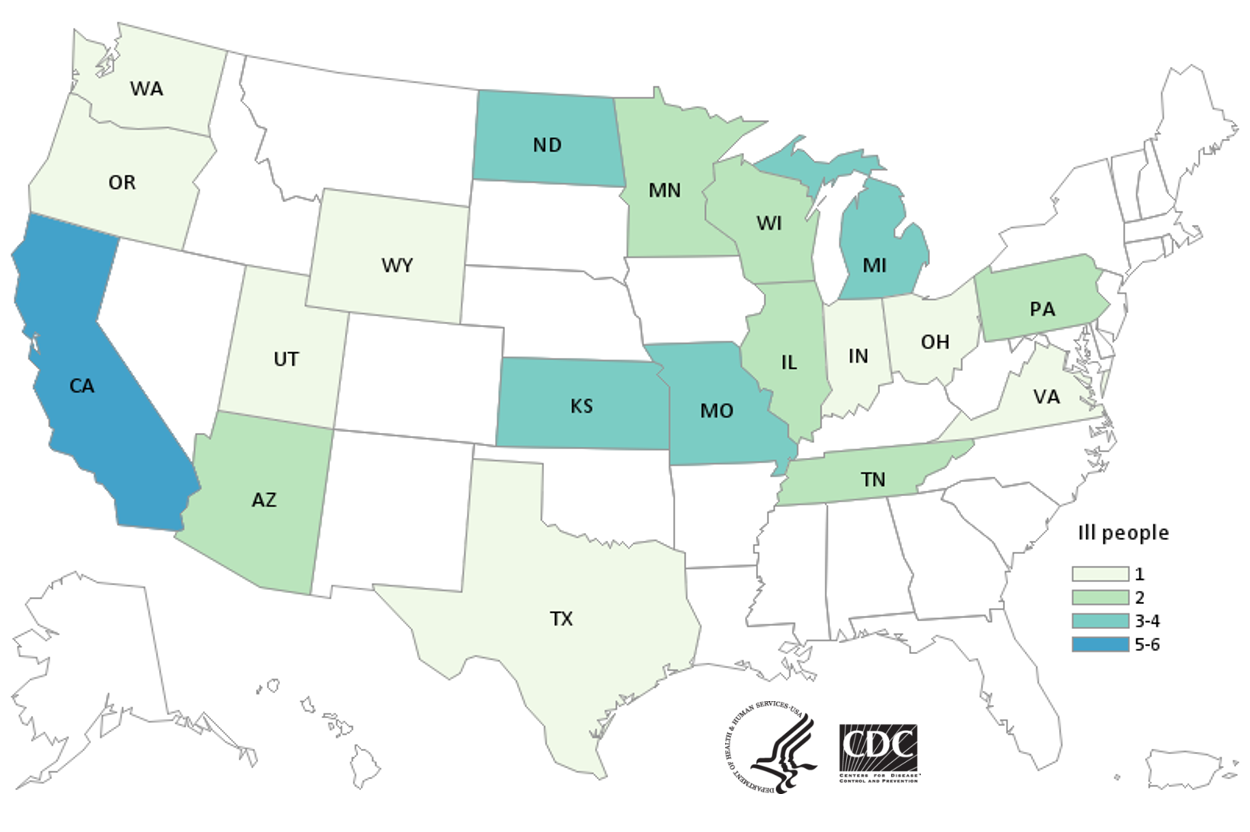
Case Count Map Provided by CDC

Outbreak Investigation of of E. coli in Leafy Greens (December 2020) - Case Count Map from CDC 12/22/2020

Case Counts

Total Illnesses: 40
Hospitalizations: 20 (4 Cases HUS)
Deaths: 0
Last Illness Onset Date: October 31, 2020
States with Cases: AZ (2), CA (6), IL (2), IN (1), KS (4), MI (3), MN (2), MO (3), ND (4), OH (1), OR (1), PA (2), TN (2), TX (1), UT (1), VA (1), WA (1), WI (2), WY (1)
*States with confirmed distribution; product could have been distributed further

Useful Links

Research – Evolution of a killer: How African Salmonella made the leap from gut to bloodstream

Science Daily

kswfoodworld.com

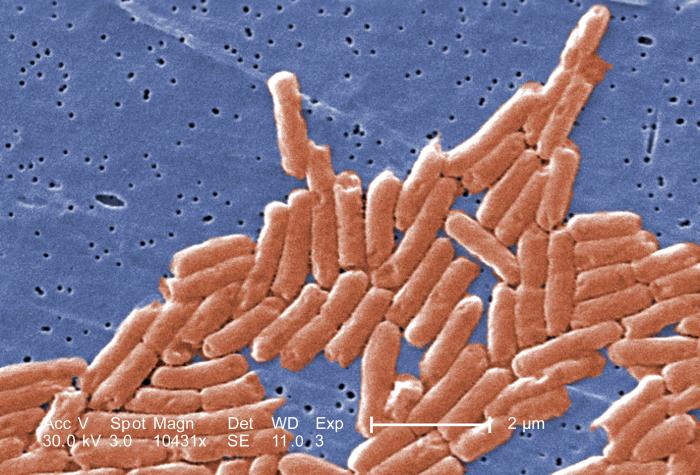
Image CDC

University of Liverpool scientists have exploited the combined power of genomics and epidemiology to understand how a type of Salmonella bacteria evolved to kill hundreds of thousands of immunocompromised people in Africa.

Bloodstream infections caused by a drug-resistant type of Salmonella Typhimurium called ST313 are a major public health concern in Africa, where the disease is endemic and causes ~50,000 deaths each year. What was missing was an understanding of the timing of the major evolutionary events that equipped African Salmonella to cause bloodstream infections in humans.

In a new paper published in Nature Microbiology, a team of researchers from the UK, France and Malawi, sampled two comprehensive collections of Salmonella isolates from African patients with bloodstream infections, spanning 1966 to 2018, to piece together the evolutionary journey of the Salmonella over 50 years of human infections in Africa, including the discovery of a new lineage of antibiotic-susceptible ST313.

The study was led by Professor Jay Hinton at the University of Liverpool, who has been researching Salmonella for more than 30 years and leads the 10,000 Salmonella Genomes Project — a worldwide effort to understand the epidemiology, transmission and virulence of invasive non-Typhoidal Salmonellosis.

Professor Hinton said: “Through a remarkable team effort we have removed some of the mystery about the evolution of African Salmonella. We hope that by learning how these pathogens became able to infect the human bloodstream we will be better prepared to tackle future bacterial epidemics.”

India – Kerala health minister on Shigella outbreak: ‘Everything is under control’

Outbreak News Today

Shigella - kswfoodworld

After a suspected Shigella outbreak that claimed the life of an 11-year old child in the city of Kozhikode, Kerala health prime minister KK Shailaja has stated that the aforementioned outbreak has been ‘under control’ by health authorities.

“An 11-year-old child died last week in Kozhikode. After that tests have been done for about fifty suspected cases and six have been infected. Now, only two are in the hospital while others have been discharged,” she said.

She further added that the Shigella bacteria is prevalent in densely populated areas, through contaminated water.

The health department has conducted an awareness campaign and set up medical camps. Wells in the area were chlorinated,” Shailaja commented, while stressing health authority directives that people should first boil their water before consuming.

Denmark – Disease outbreaks with rare microsporidia – Enterocytozoon bieneusi.

SSI

The Statens Serum Institut and the Danish Veterinary and Food Administration are currently investigating a disease outbreak in a company with a microorganism that has so far not been registered as a cause of disease outbreaks in Denmark. It is a species of microsporidia, Enterocytozoon bieneusi. It is believed that the infection occurred through food.

In October, a company in the metropolitan area reported more than 70 cases of diarrhea among their employees.

The Statens Serum Institut (SSI) has so far found samples from 11 people positive for Enterocytozoon bieneusi, which is a species of microsporidia. It is not a microorganism that we often detect in Denmark, and we have not previously seen disease outbreaks with it.

The infection can cause severe and prolonged diarrhea, abdominal pain and nausea. In addition, there may be symptoms such as fever, headache, muscle aches and fatigue (flu-like). The infection occurs from feces from infected people with poor hygiene to other people either directly or through food and drink.

“There are no registered persons outside the company who should have been infected with E. bieneus. But we urge the country’s physicians to pay attention to patients with prolonged diarrhea for no apparent reason. Especially if it is about immunocompromised people and with particularly long-lasting symptoms, ”says ward doctor Lasse Skafte Vestergaard, SSI. Read more about the disease outbreak with microsporidia  (EPI-NEWS – week 52a – 2020)

Diagrams of Enterocytozoon bieneusi Spore, Life Cycle, and Possible... |  Download Scientific Diagram

Microsporidia are protozoan parasites belonging to the phylum Microsporidia within which exist over 1000 species classified into approximately 100 genera. These eukaryotic obligate intracellular protozoans have been described infecting every major animal group, especially insects, fish, and mammals (Wittner 1999). Microsporidia have been increasingly recognized as opportunistic pathogens of immunodeficient patients (Weber et al. 1994), especially in Aids patients but it is also becoming increasingly common in immunocompetent individuals (Gainzarain et al. 1998, Lores et al. 2001).

Although during the last decade numerous data related to the epidemiology of this infection in humans and animals have been accumulated, implying a zoonotic nature of these parasites, direct evidence of transmission from animals to humans are still lacking (Deplazes et al. 2000).

Encephalitozoon cuniculi is probably the most extensively studied mammalian microsporidian and has been reported to infect a wide range of hosts, including common laboratory rodents as well as human and non-human primates. This is the first microsporidian species infecting humans that has been considered a zoonosis (Deplazes et al. 1996, Didier et al. 1996) .

The first identification of E. intestinalis in mammals other than humans was reported by Bornay et al. (1998) in the faeces of donkeys, dogs, pigs, cow, and goat suggesting that E. intestinalis might also be of zoonotic origin.

Enterocytozoon bieneusi is the most frequent microsporidian found in humans, especially in Aids patients. It has been associated mainly with chronic diarrhoea, although it has been diagnosed in patients with other forms of immunosuppression and in immunocompetent travellers with self-limited diarrhoea (Weber & Bryan 1994, Sobottka et al. 1995). In addition, this pathogen has recently been detected in other natural hosts such as pigs (Deplazes et al. 1996, Breitenmoser et al. 1999, Rinder et al. 2000), cows, goats, pigs, chickens, cats, turkeys (Bornay et al. 1998), rabbits, dogs (del Aguila et al. 1999), and in simian immunodeficiency virus-inoculated monkeys (Tzipori et al. 1997, Mansfield et al. 1997). Consequently, this microsporidian infection may be more common than previously suspected.