Category Archives: food contamination

France – Product recall: Picodon aop x2, x5 – Guinguette x6 – Goat cheese x3 from Les Fromagers Fermiers du Peytot

Oulah

Product recall: Picodon aop x2, x5 - Guinguette x6 - Goat cheese x3 from Les Fromagers Fermiers du Peytot

ENCOUNTERED PROBLEM

Presence of Escherichia coli O157: H7

PROPOSED SOLUTION

People who hold the product in question are asked not to consume them – and more particularly young children, pregnant women, immunocompromised people and the elderly – and to return them to the point of sale where they were purchased.

People who have consumed it and who present symptoms such as diarrhea, abdominal pain or vomiting should consult their doctor as soon as possible, mentioning this consumption and the possible link with the bacterium Escherichia coli.

If there are no symptoms within 10 days of consuming the affected products, there is no need to worry and consult a doctor.

The E. coli bacterium is naturally present in the digestive microflora of humans and warm-blooded animals. Some strains of E. coli are pathogenic, and can be responsible in humans for various disorders ranging from mild diarrhea to more serious forms such as hemorrhagic diarrhea or severe kidney damage such as HUS, mainly in young children.

FURTHER INFORMATION

▸ Type of packaging
Rolls x6, x5, x3, x2, tray x2 or bare

▸ Lots
• 23110
• 23810
• 24510
• 25210
• 25910
• 26610
• 27310

▸ Health
stamp FR 07.176.001 CE

▸ Marketing period
from August 17, 2020 to October 14, 2020

▸ Consumer service contact
La Sarl Les Fromagers Fermiers du Peytot is available to consumers to answer their questions by email at peytotsarl@gmail.com

▸ Source
https://www.supercasino.fr/

Denmark – Imported, fresh mint linked to Shigella outbreak

Outbreak News Today

Shigella - kswfoodworld

The Statens Serum Institut (SSI) has in collaboration with the Danish Veterinary and Food Administration and the DTU Food Institute report that a Shigella outbreak in August and September that sickened some 44 people is linked to fresh mint bought at a local greengrocer or bazaar in and around the Copenhagen area.

Of the 44 cases from August 22 to September 9, 30 of the cases was reported in women and 14 in men. A total of 13 people have been hospitalized. The sick live primarily in the Capital Region.

Because fresh mint has a short shelf life, it is no longer on the market. There is therefore no risk of more consumers becoming infected, says Emergency Manager Nikolas Kühn Hove from the Danish Veterinary and Food Administration.

Research – Invisible threat: Listeria in smoked fish

Science Daily

In 2018, 701 cases of severe invasive listeriosis were communicated to the Robert Koch Institute (RKI), which translates into 0.8 cases per 100,000 inhabitants. Most listeriosis illnesses reported are severe and are associated with blood poisoning, meningitis or miscarriages, for example. In 2018, the disease was fatal in 5% of cases. Elderly people, people with weakened immune defences, pregnant women and their new-born babies are particularly vulnerable. Listeria can be found in a large variety of foods of plant and animal origin. Cold or hot-smoked fish are often contaminated and are, therefore, also suspected of transmitting this illness. Other fish products and seafood eaten raw, such as sushi, sashimi and oysters or cured products such as graved fish, may also be affected. “Pregnant women, elderly people or those with weakened immune defences should only eat fish and seafood that have been thoroughly heated,” says BfR President Professor Dr. Dr. Andreas Hensel.

Not all Listeria bacteria cause illness. Of the 20 Listeria species described, only Listeria (L.) monocytogenes is a significant cause of infection in humans. Infections during pregnancy can lead to miscarriage, premature birth, stillbirth or the birth of a sick child. Furthermore, listeriosis mainly develops in people whose immune system is weakened by old age, pre-existing medical conditions or medication intake. They often suffer from blood poisoning, encephalitis or meningitis as well as e.g. from endocarditis or bacterial joint inflammation. Listeriosis is associated with relatively high mortality in risk groups. In healthy individuals who do not belong to one of the risk groups, an infection can lead to inflammation of the gastrointestinal tract plus a fever, with progression generally being mild.

The bacterium L. monocytogenes is widespread in the environment and can be found in many foods. High detection rates are found in minced meat, raw meat dishes (e.g. tartare), raw sausage meat (e.g. “Mettwurst” raw minced pork) and raw milk, for example. However, numerous other ready-to-eat foods of animal and plant origin, which are not subjected to further germicidal treatment (e.g. heating) after processing, may also contain L. monocytogenes. Examples include cheese (made from raw or pasteurised milk), pre-cut salads and vegetables, deli salads or sliced sausage products. This is because listeria can survive for a long time in food processing plants in recesses that are difficult to reach for cleaning and disinfection. As a result, the continuous entry of the germs during food production is possible.

Raw, smoked or cured fish products and seafood such as sushi, sashimi, oysters, cold or hot smoked fish (e.g. smoked salmon) and cured fish (e.g. graved salmon) are frequently contaminated with listeria. 7 to 18 % of the samples of cold-smoked or cured fish products examined by the food monitoring authorities in Germany between 2007 and 2017, and 3 to 9 % of the samples of hot-smoked fish products contained L. monocytogenes. Even low germ concentrations are hazardous to risk groups, for example when products are stored at home above the temperatures recommended by the manufacturer or when they are eaten after their best-before date. What’s more, handling contaminated products risks transferring listeria to other foods.

The German Nutrition Society (DGE) recommends at least one fish meal every week. Fish notably contains special fatty acids and the long-chain omega-3 fatty acids docosahexaenoic acid (DHA) and eicosapentaenoic acid (EPA).

The BfR recommends that people who have an increased risk of developing listeriosis should not generally avoid fish, but rather only eat fish or seafood that has been thoroughly heated. Listeria can be reliably killed off by heating food to a core temperature of 70 °C for at least two minutes. Risk groups should refrain from eating raw, smoked and cured fish products and seafood.


Story Source:

Materials provided by BfR Federal Institute for Risk Assessment. Note: Content may be edited for style and length.

Research – Presence of Foodborne Pathogens in Seafood and Risk Ranking for Pathogens

Mary Ann Leibert

This study aims at examining the contamination of coliform bacteria, Escherichia coli, Listeria monocytogenes, Vibrio vulnificus, and Vibrio cholerae, which carry extremely serious risks to the consumer health, in 700 seafood belonging to 4 different (raw sea fish, raw mussels, raw shrimp, and raw squid) categories. The total number of samples was determined as 700. When the obtained results were viewed in total, they were found to be 48.14%, 18.71%, 8.57%, and 3.42% for coliform bacteria, E. coli, L. monocytogenes, and V. vulnificus, respectively. V. cholerae, one of the factors studied, was not found. Conventional microbiological cultivation methods were used in the analysis stage as well as the real-time PCR method. This study aims at making a risk ranking modeling for consumer health based on product category and pathogens by interpreting the results of the analysis with statistical methods. According to the statistical analysis, significantly binary correlations were determined among some parameters that stimulate one another for reproducing. In the light of the obtained results of the study, it has been concluded that the studies of the most detailed examinations of the microbiological risks associated with seafood, forms of microbial pollution and microorganisms that cause deterioration in seafood and threaten consumer health and the path that their epidemiologies follow, are of primary importance to both protecting consumer health and obtaining safe and quality seafood.

Research – Effects of oilseed substrates (ground nyjer and flax seeds) on the growth and Ochratoxin A production by Aspergillus carbonarius

Wiley Online

kswfoodworld

Image CDC

Aspergillus carbonarius is one of the major Ochratoxin A (OTA) producing fungus. Nyjer and flax seeds are important oilseeds that are used for both human and animal consumption, but they are highly susceptible to fungal growth and mycotoxin contamination. The objectives of this study were to determine the growth and OTA production by A. carbonarius on ground nyjer and flax seeds with water activity levels ranging from 0.82 to 0.98 aw at three incubation temperatures (20, 30, 37°C). It was found that A. carbonarius was not able to grow on the two types of oilseeds with 0.82 or 0.86 aw. Also, the fungus was not able to grow on flax seeds with high water activity (0.98 aw). The OTA was only detected on flax seed samples with 0.94 aw at 20°C. On nyjer seeds, the highest concentration of OTA (271 μg/kg) was detected from samples with 0.98 aw incubated at 20°C for 5 days, while on flax seeds the highest OTA (146 μg/kg) was found on the seed samples with 0.94 aw incubated at 20°C for 15 days. Linear regression models also indicated that 0.98 aw was optimal for both fungal growth and OTA production on nyjer seeds. Overall, ground nyjer seed is better than flax seed to support growth and OTA production by A. carbonarius.

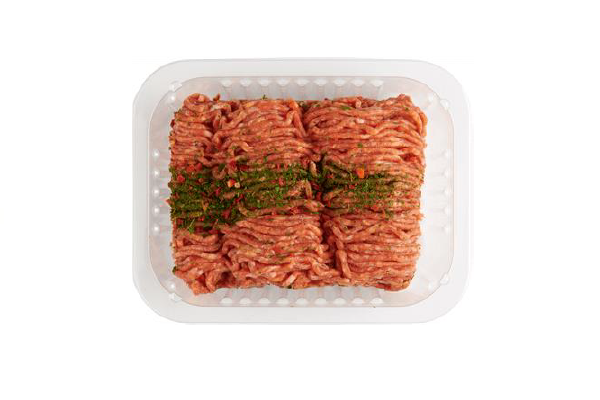
Netherlands – Important safety warning Butchers Best / 1 the Best Mixed Minced Stroganoff 400 grams Dekamarkt and Dirk – Salmonella

NVWA

packaging stroganoff minced meat

Immediately, DekaMarkt and Dirk have bought Butchers Best / 1 Best Mixed Minced Stroganoff 400 grams with barcode code 2390600 (first 7 digits) and best before date 17-10-2020 from the shelves. After checking, it appeared that salmonella was found in this product.

Customers are urged not to consume the product. If not heated sufficiently, this product may pose a health hazard, especially to young children, the elderly, people with a weakened immune system and pregnant women. Consult your doctor or general practitioner for more information if you have health complaints after eating the said product.

Customers who have purchased the product can return it to a DekaMarkt or Dirk store.

Belgium – Albert Heijn recall – Flevosap Appel (apple juice) – Patulin

AFSCA

In agreement with the AFSCA, Albert Heijn reminds consumers of the “Flevosap Appel” apple juice from the Flevosap brand, the date of minimum durability (DDM) of which is 30/09/2021. The product contains too high a patulin content (a mycotoxin). Consumption of this product may present a risk to health.

Albert Heijn asks his customers not to consume this product and to bring it back to the point of sale where it was purchased. The product will be refunded or changed there. Please contact a doctor if you have any health problem.

Product Description

• Product Category: Fruit Juice
• Product Name: Flevosap Appel
• Brand: Flevosap
• Date of Minimum Durability (DDM): 09/30/2021
• Batch number: L20232A
• Sales period: from 2/09/2020 to 09/10/2020 inclusive
• Type of packaging: glass bottle
• Weight: 1 l

The product was sold through Albert Heijn stores in Belgium.

For any further information , please contact Albert Heijn on 0800 777 05

UK – Precautionary advice on cooking frozen raw breaded chicken products following link to cases of Salmonella

FSA

kswfoodworld Salmonella

The Food Standards Agency and Public Health England are reminding people to take care when handling and cooking frozen raw breaded chicken products at home, such as nuggets, goujons, dippers, poppers and kievs.

This comes as we investigate a rise in cases of two particular strains of Salmonella Enteritidis (a food poisoning bug) linked to frozen raw breaded processed chicken products. Two product recalls have been undertaken, however further investigations are ongoing.

Nick Phin, Deputy Director of PHE’s National Infection Service, said:

‘From January 2020 there have been 390 cases of Salmonellosis caused by two strains of Salmonella Enteritidis linked to frozen, raw, breaded chicken products.

‘Salmonella generally causes a mild illness, although vulnerable groups like children under five years, the elderly, and those with weakened immune systems may experience more severe illness. Symptoms of a Salmonella infection include diarrhoea, stomach cramps and sometimes vomiting and fever. Anyone who is concerned about symptoms should contact their GP or out of hours service in the first instance.’

Further information on Salmonella can be found on the NHS choices website.

Colin Sullivan, Chief Operating Officer, FSA said:

‘You should always check the cooking instructions on food packaging, as different brands of the same product might have different instructions. Cooking food at the right temperature and for the correct length of time will ensure that any harmful bacteria are killed.

‘We’re not asking you to make changes to the food you buy, but we are asking you to always follow good hygiene practices to help reduce the risk of food poisoning to you and your family.’

Top food hygiene tips:

  • Always carefully check the advice on food packaging and follow the cooking instructions provided
  • If the packaging advises the product should be thawed/defrosted before cooking, follow the instructions
  • Consume or freeze food by its use-by date
  • Wash your hands with soap and water after touching raw chicken products and before you handle ready-to-eat food
  • Avoid cross-contamination by cleaning any surface, plate or utensil that has been in contact with raw meat

Salmonella is a common bacteria that can cause food poisoning. Salmonella can be found in raw meat (processed and unprocessed), undercooked poultry and unpasteurised milk. Inadequate cooking and cross-contamination in the kitchen during food preparation can lead to Salmonellosis.

The following recalls are linked to this Salmonella outbreak:

Aldi recalls Roosters Southern Fried Poppin’ Chicken and Roosters Breaded Poppin’ Chicken because of the possible presence of salmonella

Iceland recalls Chip Shop Curry Chicken Breast Toppers and Southern Fried Chicken Popsters because of the presence of salmonella

France – Product recall: Carrefour brand Basmati rice – Aflatoxin

Oulah

Product recall: Carrefour brand Basmati rice

ENCOUNTERED PROBLEM

Presence of aflatoxins B1

PROPOSED SOLUTION

Do not consume and return to the point of sale for reimbursement.

Aflatoxins are mycotoxins which can be present in different products such as cereals, coffee, rice, dried rasisins and dried fruits. Only a large quantity of contaminated products can lead to health problems.
People with hepatitis are sensitive to aflatoxins. You are advised to contact Carrefour in order to put them in touch with your medical consultant.

FURTHER INFORMATION

▸ Barcode
• 3245412435256 (Basmati rice box 500g – 4x125g)
• 3560070837984 (Basmati rice box 1kg bag)

▸ DDM / DLUO
• 07/16/2022 (Basmati rice 500g box – 4x125g)
• 07/20/2022 (Basmati rice 500g box – 4x125g)
• 07/21/2022 (Basmati rice 500g box – 4x125g)
• 07/15 / 2022 (Basmati rice in 1kg bag bag)

▸
EMB code 59606B

▸ Consumer service contact
For any further information, you can contact the Carrefour consumer service by dialing N ° Cristal 09 69 39 7000 (non-surcharged call from a landline) from Monday to Friday from 8:30 am to 7:00 pm

▸ Source
https://www.carrefour.fr/

Belgium – Fuet Espetec Extra 175 g of the Sola brand – Salmonella

AFSCA

Following a notification via the RASFF system (European Food and Feed rapid alert system), the AFSCA withdraws from sale and reminds consumers of the “Fuet Espetec Extra 175 gr” of the Sola brand, following the possible presence of Salmonella.

The AFSCA asks not to consume this product and to bring it back to the point of sale where it was purchased.

Product description

• Product name: Fuet Espetec Extra 175 gr
• Brand: Sola
• Batch number &
           Best before dates (DDM): 201802 – DDM 16/10/2020
           202508 – DDM 30/11/2020
           201741 – DDM 30 / 11/2020
           202809 – DDM 12/31/2020
• Packaging: plastic packaging
• Weight: 175 g

The product was sold through several points of sale in Belgium:

– Vanbergen-Vervaeke – Rue de l’Eglise 170, 1150 Bruxelles
– Vanbergen-Vervaeke – Place de la Victoire 6, 1370 Jodoigne
– La Fromagerie du Samson – Chaussée de Gramptinne 37, 5340 Gesves
– Crémerie Papy – Rue Patenier 24b, 5000 Namen
– L’Alpage by Julie – Avenue du Bourgmestre Jean Materne 99 5100 Jambes
– La Fromagée – Rue du Mat Pays 43, 4621 Retinne
– De Brandt – Rue Ropsy Chaudron 24-V13, 1070 Anderlecht

For any further information , you can contact the AFSCA contact point for consumers: 0800 / 13.550 or pointdecontact@afsca.be.