Category Archives: Bacillus

What Are Common Food Poisoning Pathogen Incubation Periods?

Food Safety Gov

Check out the fact sheets at the link above.

Bacteria and Viruses

Bacteria and viruses are the most common cause of food poisoning. The symptoms and severity of food poisoning vary, depending on which bacteria or virus has contaminated the food.

To prevent illness, always follow the food safety steps: cleanseparatecook, and chill. Other prevention tips for specific bacteria and viruses are included below.

The bacteria and viruses that cause the most illnesses, hospitalizations, or deaths in the United States are described below and include:

Other important bacteria and viruses that cause foodborne illness include:

RASFF Alerts – Bacillus cereus in Humus

RASFF

Bacillus cereus in humus from Serbia in Slovenia

Research – Insights into the Bacterial Diversity and Detection of Opportunistic Pathogens in Mexican Chili Powder

MDPI

Chili powder is the most frequently consumed spice in Mexican diets. Thus, the dissemination of microorganisms associated with chili powder derived from Capsicum annuum L. is significant during microbial quality analysis, with special attention on detection of potential pathogens. The results presented here describe the initial characterization of bacterial community structure in commercial chili powder samples. Our results demonstrate that, within the domain Bacteria, the most abundant family was Bacillaceae, with a relative abundance of 99% in 71.4% of chili powder samples, while 28.6% of samples showed an average relative abundance of 60% for the Enterobacteriaceae family. Bacterial load for aerobic mesophilic bacteria (AMB) ranged from 104 to 106 cfu/g, while for sporulated mesophilic bacteria (SMB), the count ranged from 102 to 105 cfu/g. Bacillus cereus sensu lato (s.l.) was observed at ca. ˂600 cfu/g, while the count for Enterobacteriaceae ranged from 103 to 106 cfu/g, Escherichia coli and Salmonella were not detected. Fungal and yeast counts ranged from 102 to 105 cfu/g. Further analysis of the opportunistic pathogens isolated, such as B. cereus s.l. and Kosakonia cowanii, using antibiotic-resistance profiles and toxinogenic characteristics, revealed the presence of extended-spectrum β-lactamases (ESBLs) and Metallo-β-lactamases (MBLs) in these organisms. These results extend our knowledge of bacterial diversity and the presence of opportunistic pathogens associated with Mexican chili powder and highlight the potential health risks posed by its use through the spread of antibiotic-resistance and the production of various toxins. Our findings may be useful in developing procedures for microbial control during chili powder production. View Full-Text

Sweden – Pasta meal behind 80 illnesses in Sweden – Staphylococcus/Bacillus

Food Safety News

Around 80 people got food poisoning from a pasta meal at a soccer tournament this past month in Sweden.

An investigation into the incident in Gammelstad on Aug. 5 revealed people fell ill after eating spaghetti bolognese from a restaurant in the city of Luleå.

Testing of the bolognese left at the restaurant was found to be satisfactory. Samples were also taken in Gammelstad where serving took place. High levels of bacteria were detected in the pasta, plus the presence of toxins that can cause food poisoning. Food had been left at room temperature for some time after serving, which provided an opportunity for bacterial growth.

Bacillus cereus and Staphylococcus aureus were found in the pasta meal. Symptoms experienced by those sick matched what would be expected with such contamination.

Research – Bacillus cereus in Dairy Products and Production Plants

MDPI

Spore-forming Bacillus cereus is a common contaminant of dairy products. As the microorganism is widespread in the environment, it can contaminate milk at the time of milking, but it can also reach the dairy products in each phase of production, storage and ripening. Milk pasteurization treatment is not effective in reducing contamination and can instead act as an activator of spore germination, and a potential associated risk still exists with the consumption of some processed foods. Prevalences and concentrations of B. cereus in milk and dairy products are extremely variable worldwide: in pasteurized milk, prevalences from 2% to 65.3% were reported, with concentrations of up to 3 × 10⁵ cfu/g, whereas prevalences in cheeses ranged from 0 to 95%, with concentrations of up to 4.2 × 10⁶ cfu/g. Bacillus cereus is also well known to produce biofilms, a serious concern for the dairy industry, with up to 90% of spores that are resistant to cleaning and are easily transferred. As the contamination of raw materials is not completely avoidable, and the application of decontamination treatments is only possible for some ingredients and is limited by both commercial and regulatory reasons, it is clear that the correct application of hygienic procedures is extremely important in order to avoid and manage the circulation of B. cereus along the dairy supply chain. Future developments in interventions must consider the synergic application of different mild technologies to prevent biofilm formation and to remove or inactivate the microorganism on the equipment. View Full-Text

Switzerland – Swiss outbreaks triple in 2021; illnesses also rise

Food Safety News

The number of foodborne outbreaks almost tripled in Switzerland in 2021 compared to the year before.

This past year, 37 outbreaks were reported with 540 people sick and 40 hospitalized versus 13 outbreaks in 2020.

Officials at the Federal Food Safety and Veterinary Office said the increase could be random, it could be due to better reporting and data collection or it could show the food safety situation has gotten worse, possibly because of the COVID-19 pandemic and other challenges facing businesses.

The agent was unknown in 17 outbreaks but Salmonella caused seven, norovirus four, Campylobacter three, two were due to Bacillus cereus and one each because of Shiga toxin-producing E. coli, Clostridium perfringens and hepatitis E.

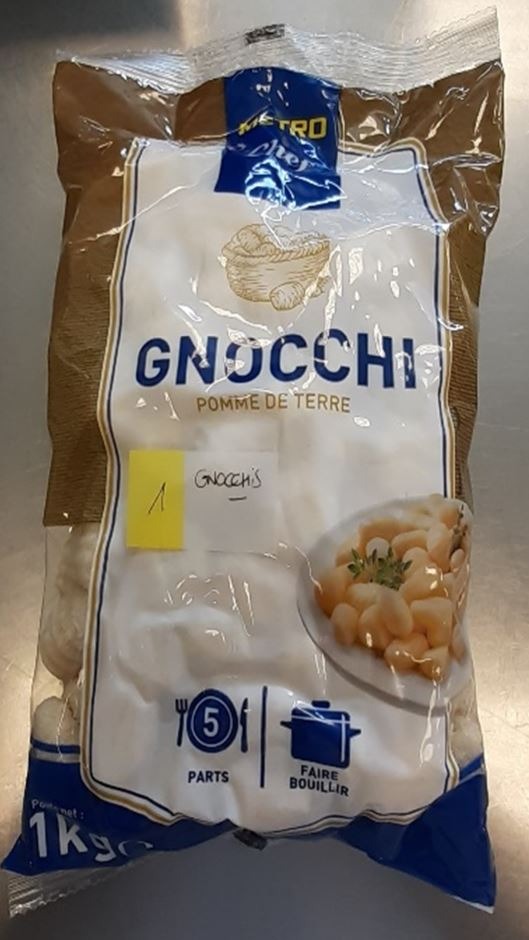
France – Potato gnocchi 1kg METRO CHEF – Bacillus cereus

Gov france

Identification information of the recalled product

  • Product category Feed
  • Product subcategory Prepared meals and snacks
  • Product brand name METRO CHEF
  • Model names or references Potato gnocchi 1kg METRO CHEF
  • Identification of products
    GTIN Batch Date
    3439496603001 1442 Use-by date 07/23/2022
  • Marketing start/end date From 02/06/2022 to 12/07/2022
  • Storage temperature Product to be stored in the refrigerator
  • Geographic area of ​​sale Whole France
  • Distributors SUBWAY

Practical information regarding the recall

  • Reason for recall Presumed presence of Bacillus cereus above the alert threshold
  • Risks incurred by the consumer Bacillus cereus

Netherlands – AH long-life semi-skimmed milk 6×200 ml – Bacillus cereus

NVWA

Safety warning AH long-life semi-skimmed milk 6×200 ml

Albert Heijn warns against long-life semi-skimmed milk. The product may contain Bacillus Cereus which can cause food poisoning. Do not drink this product.

See the website of Albert Heijn

Which product is it?

  • AH long-life semi-skimmed milk 6×200 ml
  • Best before date 27-11-2022
  • Lot code 513867 E

Sincerely

The Dutch Food and Consumer Product Safety Authority

Belgium – MILK – AH houdbare halfvolle melk 6x200ml with DDM 27-11-2022 – Bacillus cereus

AFSCA

PRODUCT RECALL
 Printable version   |   Last updated on13.07.2022
07/13/2022
Albert Heijn recall
Product: MILK – AH houdbare halfvolle melk 6x200ml with DDM 27-11-2022.
Problem: possible presence of Bacillus Cereus.


In agreement with the FASFC, Albert Heijn withdraws from sale the product ‘AH houdbare halfvolle melk 6x200ml’ with DDM 27-11-2022′ and recalls it from consumers.

The presence of Bacillus Cereus is possible in this product. Its consumption can therefore pose a health risk, especially for young children, the elderly, people with weakened immune systems and pregnant women.

Albert Heijn asks its customers not to consume this product and to return it to the point of sale where it was purchased. The product will be refunded or exchanged there. Please contact a doctor in case of any health problem.

Product description

– Product category: milk
– Product name: AH houdbare halfvolle melk 6x200ml
– Lot: 513867 E
– Brand: ALBERT HEIJN
– Dates of minimum durability (BDD): 27-11-2022
– Nature of packaging: cardboard bottle
– Sales period: 23-06-2022 until 29-06-2022 (included)
– Weight: 6x200ml

For any further information , please contact Albert Heijn via 0800 777 05.

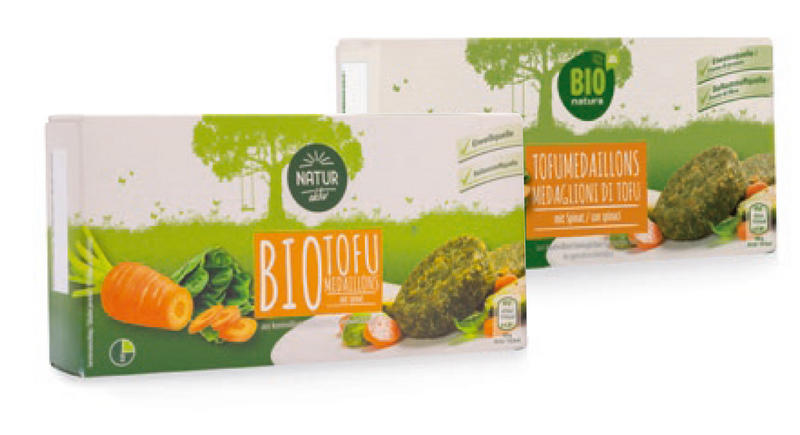
Austria – NATUR aktiv/BIO natura vegan medallions 320 g, variety tofu medallions with spinach – Bacillus cereus

AGES

AGES informs about a recall of the company HOFER KG. On June 17th, 2022, the company recalled the product NATUR aktiv/BIO natura vegan medallions 320 g, tofu medallions with spinach:
© HOFER KG
recall reason
Bacillus cereus
Marketed by
HOFER KG
Manufacturer
Biolab Srl
Expiry Date
04/15/2023
Batch number
Best before date/batch 01/14/2023/L.21170, 01/18/2023/L.21166 and 04/15/2023/L.21079

HOFER and its supplier Biolab Srl call the article “NATUR aktiv or BIO natura vegan medallions, variety tofu medallions with spinach” (320 g) with best before date/batch 01/14/2023/L.21170, 01/18/2023/L.21166 and 04/15. 2023/L.21079 back.

The article “NATUR aktiv or BIO natura vegan medallions, variety tofu medallions with spinach” (320 g) from Biolab Srl, with best before date/batch 01/14/2023/L.21170, 01/18/2023/L.21166 and 04/15/2023/L .21079 is being recalled by the supplier Biolab Srl and HOFER KG for reasons of precautionary consumer protection.

As the company reports, Bacillus cereus was detected in a sample of the article mentioned. The product must not be consumed. Bacillus cereus can cause gastrointestinal diseases and flu-like symptoms. Serious illnesses can occur as a result of consumption, especially in pregnant women, small children and people with a weakened immune system.

The article “NATUR aktiv or BIO natura vegan medallions, variety tofu medallions with spinach” (320 g) was available in HOFER branches in Vienna and in Lower Austria, Upper Austria and parts of Burgenland and Salzburg. The sale of the product was stopped immediately.

The product can be returned in all HOFER branches. Of course, customers will also be reimbursed the purchase price without proof of purchase. This warning does not imply that the hazard was caused by the producer, manufacturer or distributor.

If you have any questions, the HOFER customer service center can be reached by telephone on (+43) 5 70 30 355 00 (Mon-Fri 7:15 a.m. to 8:00 p.m. and Sat 7:15 a.m. to 6:00 p.m.).

original broadcast

More info

Bacillus cereus