Archives
-
Join 346 other subscribers
KSWFoodWorld
Blog Stats
- 450,706 Views
Author Archives: KSW
Research – Opportunistic Pathogens in Drinking Water Distribution Systems—A Review
In contrast to “frank” pathogens, like Salmonella entrocolitica, Shigella dysenteriae, and Vibrio cholerae, that always have a probability of disease, “opportunistic” pathogens are organisms that cause an infectious disease in a host with a weakened immune system and rarely in a healthy host. Historically, drinking water treatment has focused on control of frank pathogens, particularly those from human or animal sources (like Giardia lamblia, Cryptosporidium parvum, or Hepatitis A virus), but in recent years outbreaks from drinking water have increasingly been due to opportunistic pathogens. Characteristics of opportunistic pathogens that make them problematic for water treatment include: (1) they are normally present in aquatic environments, (2) they grow in biofilms that protect the bacteria from disinfectants, and (3) under appropriate conditions in drinking water systems (e.g., warm water, stagnation, low disinfectant levels, etc.), these bacteria can amplify to levels that can pose a public health risk. The three most common opportunistic pathogens in drinking water systems are Legionella pneumophila, Mycobacterium avium, and Pseudomonas aeruginosa. This report focuses on these organisms to provide information on their public health risk, occurrence in drinking water systems, susceptibility to various disinfectants, and other operational practices (like flushing and cleaning of pipes and storage tanks). In addition, information is provided on a group of nine other opportunistic pathogens that are less commonly found in drinking water systems, including Aeromonas hydrophila, Klebsiella pneumoniae, Serratia marcescens, Burkholderia pseudomallei, Acinetobacter baumannii, Stenotrophomonas maltophilia, Arcobacter butzleri, and several free-living amoebae including Naegleria fowleri and species of Acanthamoeba. The public health risk for these microbes in drinking water is still unclear, but in most cases, efforts to manage Legionella, mycobacteria, and Pseudomonas risks will also be effective for these other opportunistic pathogens. The approach to managing opportunistic pathogens in drinking water supplies focuses on controlling the growth of these organisms. Many of these microbes are normal inhabitants in biofilms in water, so the attention is less on eliminating these organisms from entering the system and more on managing their occurrence and concentrations in the pipe network. With anticipated warming trends associated with climate change, the factors that drive the growth of opportunistic pathogens in drinking water systems will likely increase. It is important, therefore, to evaluate treatment barriers and management activities for control of opportunistic pathogen risks. Controls for primary treatment, particularly for turbidity management and disinfection, should be reviewed to ensure adequacy for opportunistic pathogen control. However, the major focus for the utility’s opportunistic pathogen risk reduction plan is the management of biological activity and biofilms in the distribution system. Factors that influence the growth of microbes (primarily in biofilms) in the distribution system include, temperature, disinfectant type and concentration, nutrient levels (measured as AOC or BDOC), stagnation, flushing of pipes and cleaning of storage tank sediments, and corrosion control. Pressure management and distribution system integrity are also important to the microbial quality of water but are related more to the intrusion of contaminants into the distribution system rather than directly related to microbial growth. Summarizing the identified risk from drinking water, the availability and quality of disinfection data for treatment, and guidelines or standards for control showed that adequate information is best available for management of L. pneumophila. For L. pneumophila, the risk for this organism has been clearly established from drinking water, cases have increased worldwide, and it is one of the most identified causes of drinking water outbreaks. Water management best practices (e.g., maintenance of a disinfectant residual throughout the distribution system, flushing and cleaning of sediments in pipelines and storage tanks, among others) have been shown to be effective for control of L. pneumophila in water supplies. In addition, there are well documented management guidelines available for the control of the organism in drinking water distribution systems. By comparison, management of risks for Mycobacteria from water are less clear than for L. pneumophila. Treatment of M. avium is difficult due to its resistance to disinfection, the tendency to form clumps, and attachment to surfaces in biofilms. Additionally, there are no guidelines for management of M. avium in drinking water, and one risk assessment study suggested a low risk of infection. The role of tap water in the transmission of the other opportunistic pathogens is less clear and, in many cases, actions to manage L. pneumophila (e.g., maintenance of a disinfectant residual, flushing, cleaning of storage tanks, etc.) will also be beneficial in helping to manage these organisms as well.
Research – Biological Control of Escherichia coli O157:H7 in Dairy Manure-Based Compost Using Competitive Exclusion Microorganisms
Abstract
Background: Animal manure-based compost is a valuable organic fertilizer and biological soil amendment. To ensure the microbiological safety of compost products, the effectiveness of competitive exclusion microorganisms (CE) in reducing Escherichia coli O157:H7 in dairy manure-based compost was evaluated. Methods: A cocktail of E. coli O157:H7 strains were inoculated into dairy compost along with CE strains isolated from compost, and the reduction in E. coli O157:H7 by CE was determined in compost with 20%, 30%, and 40% moisture levels at 22 °C and 30 °C under laboratory conditions, as well as in fall, winter, and summer seasons under greenhouse settings. Results: Under lab conditions, CE addition resulted in 1.1–3.36 log reductions in E. coli O157:H7 in compost, with enhanced pathogen reduction by higher moisture and lower temperature. In the greenhouse, >99% of the E. coli O157:H7 population in compost with ≥30% moisture due to cross-contamination can be effectively inactivated by CE within 2 days during colder seasons. However, it took ≥8 days to achieve the same level of reduction for heat-adapted E. coli O157:H7 cells. Conclusions: Our results demonstrated that the competitive exclusion of microorganisms can be an effective tool for controlling foodborne pathogens in compost and reducing the potential for soil and crop contamination.
Research – Exploring Propolis as a Sustainable Bio-Preservative Agent to Control Foodborne Pathogens in Vacuum-Packed Cooked Ham
Abstract
The search for natural food additives makes propolis an exciting alternative due to its known antimicrobial activity. This work aims to investigate propolis’ behaviour as a nitrite substitute ingredient in cooked ham (a ready-to-eat product) when confronted with pathogenic microorganisms of food interest. The microbial evolution of Listeria monocytogenes, Staphylococcus aureus, Bacillus cereus, and Clostridium sporogenes inoculated at known doses was examined in different batches of cooked ham. The design of a challenge test according to their shelf life (45 days), pH values, and water activity allowed the determination of the mesophilic aerobic flora, psychotropic, and acid lactic bacteria viability. The test was completed with an organoleptic analysis of the samples, considering possible alterations in colour and texture. The cooked ham formulation containing propolis instead of nitrites limited the potential growth (δ < 0.5 log10) of all the inoculated microorganisms until day 45, except for L. monocytogenes, which in turn exhibited a bacteriostatic effect between day 7 and 30 of the storage time. The sensory analysis revealed the consumer’s acceptance of cooked ham batches including propolis as a natural additive. These findings suggest the functionality of propolis as a promising alternative to artificial preservatives for ensuring food safety and reducing the proliferation risk of foodborne pathogens in ready-to-eat products.
Research – Enhancing Escherichia coli Inactivation: Synergistic Mechanism of Ultraviolet Light and High-Voltage Electric Field
Abstract
This study investigated the bactericidal effects of ultraviolet (UV) radiation, a high-voltage electric field (HVEF), and their combination on Escherichia coli. The results indicated that UV and combined disinfection were more effective with longer exposure, leading to significant reductions in microbial activity. Specifically, the single UV disinfection alone reduced activity by 3.3 log after 5 min, while combined disinfection achieved a 4.2 log reduction. In contrast, short-term HVEF treatment did not exhibit significant bactericidal effects, only achieving a reduction of 0.17 log in 5 min. Furthermore, prolonged exposure to both UV disinfection and an HVEF was found to damage cell membranes, ultimately causing cell death, while shorter durations did not. Despite rapid cell count decreases, flow cytometry did not detect apoptotic or necrotic cells, likely due to rapid cell rupture. This study suggests that combining UV radiation and an HVEF could be a promising approach for inhibiting bacterial reproduction, with HVEF enhancing UV effects. These findings provide insights for using combined HVEF and UV disinfection in food safety and preservation.
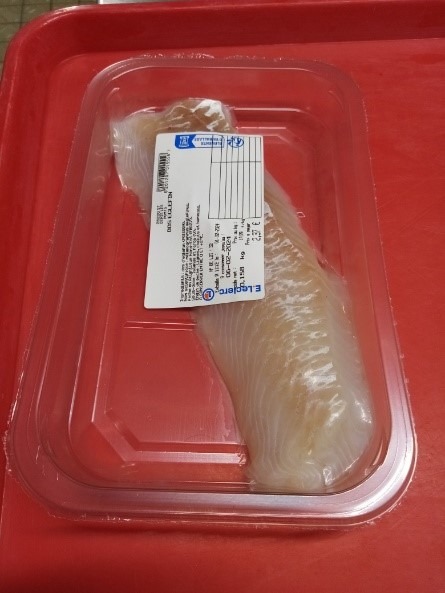
France – SARDINE FILLETS – Histamine

Product category
Food
Product subcategory
Fishing and aquaculture products
Product brand name
E.LECLERC
Model names or references
SARDINE FILLETS UNDER SKIN AND IN BULK
Product identification
GTIN Date
0201139000000 Use-by date between 04/10/2024 and 04/15/2024
Packaging
Under skin and in bulk.
Start/end date of marketing
From 04/10/2024 to 04/15/2024
Storage temperature
Product to keep in the refrigerator
Further information
Fish stall: product sold in bulk on 04/11 and 12/2024. Self-service: product sold under skin from 04/10/2024 to 04/15/2024
Geographical sales area
E.Leclerc from Saint-Denis-les-Ponts
Distributors
E.Leclerc
Posted in food contamination, food handler, Food Hazard, Food Hygiene, Food Inspections, Food Micro Blog, Food Microbiology, Food Microbiology Blog, Food Microbiology Testing, Food Poisoning, Food Quality, food recall, Food Safety, Food Safety Alert, Food Safety Management, Food Safety Regulations, Food Testing, Food Toxin, Histamine
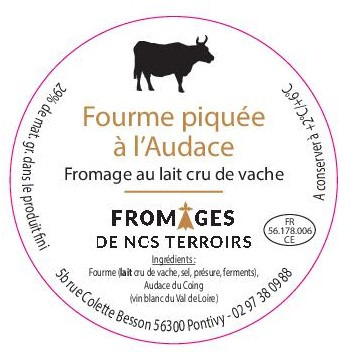
France – Fourme pique à l’Audace – Staphylococcus aureus

Product category
Food
Product subcategory
Milk and dairy products
Product brand name
Unbranded
Model names or references
Fourme pique à l’Audace
Product identification
Batch Date
078023244 Minimum durability date 06/21/2024
0780232412 Minimum durability date 06/24/2024
Packaging
Cut cheese of approximately 2.2 kg, wrapped in paper, packaged in boxes of 2 units
Start/end date of marketing
From 04/22/2024 to 04/29/2024
Storage temperature
Product to keep in the refrigerator
Health mark
FR 56.178.006 CE
Geographical sales area
Regions: Brittany, Pays-de-la-Loire
Distributors
Team-West Distralis
Posted in food contamination, food handler, Food Hazard, Food Hygiene, Food Inspections, Food Micro Blog, Food Microbiology, Food Microbiology Blog, Food Microbiology Testing, Food Pathogen, Food Poisoning, Food Quality, food recall, Food Safety, Food Safety Alert, Food Safety Management, Food Safety Regulations, Food Testing, Food Toxin, Staphylococcal Toxin, Staphylococcus aureus
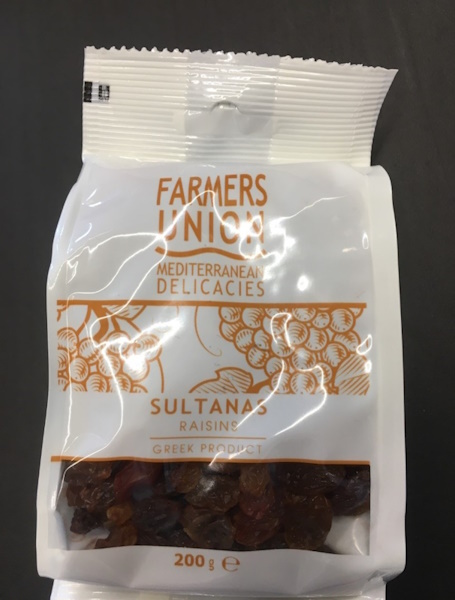
Greece – “SULTANINA RAISINS – FARMERS UNION MEDITERRANEAN DELICACIES 200 gr” – Aflatoxin
E.F.E.T. and in particular the Regional Directorate of Western Greece, within the framework of the Program “Official Control for the Monitoring of the Levels of Food Additives and Aromatic Substances in various types of Food”, sampled food with the following information: “SULTANINA RAISINS – FARMERS UNION MEDITERRANEAN DELICACIES 200 gr” (Expiry date: 12/2024 and batch number, L 2308″), produced by the company “Panaigialios Union of Cooperatives AES SA”.
The product was examined by the 1st Department of the 1st Chemical Service of Athens of the General Chemistry of the State, AADE and was characterized as abnormal and unsafe because the substance sulphite (as SO 2) which is an allergen is not listed on its packaging , while it will should be highlighted in typeface that clearly distinguishes it from the rest of the list of ingredients .
E.F.E.T. demanded the immediate recall of the entire specific batch of the product in question and the relevant controls are already underway.
Consumers who have purchased the disputed batch of the above product and are allergic to the substance in question are urged not to consume it.
An illustration of the product is shown on the next page of the press release.

Posted in Aflatoxin, Aspergillus Toxin, EFET, food contamination, food handler, Food Hazard, Food Hygiene, Food Inspections, Food Micro Blog, Food Microbiology, Food Microbiology Blog, Food Microbiology Testing, Food Poisoning, Food Quality, food recall, Food Safety, Food Safety Alert, Food Safety Management, Food Safety Regulations, Food Testing, Food Toxin, Mold Toxin, Mould Toxin, Mycotoxin
France – OLD-FASHIONED COUNTRY TERRINE – Listeria monocytogenes

Product category
Food
Product subcategory
Meats
Product brand name
PRESTIGE OF SARTHE
Model names or references
SLICE OF OLD-FASHIONED COUNTRY TERRINE
Product identification
GTIN Batch Date
3700155203024 15102 Use-by date 05/16/2024
Packaging
Tray under protective atmosphere
Start/end date of marketing
From 04/24/2024 to 04/30/2024
Storage temperature
Product to keep in the refrigerator
Health mark
FR 72 132 002 CE
Geographical sales area
Departments: SARTHE (72)
Distributors
SMART FEES Savigné-L’Evêque
Posted in food contamination, food handler, Food Hazard, Food Hygiene, Food Inspections, Food Micro Blog, Food Microbiology, Food Microbiology Blog, Food Microbiology Testing, Food Pathogen, Food Quality, food recall, Food Safety, Food Safety Alert, Food Safety Management, Food Safety Regulations, Food Testing, Listeria, Listeria France, Listeria monocytogenes
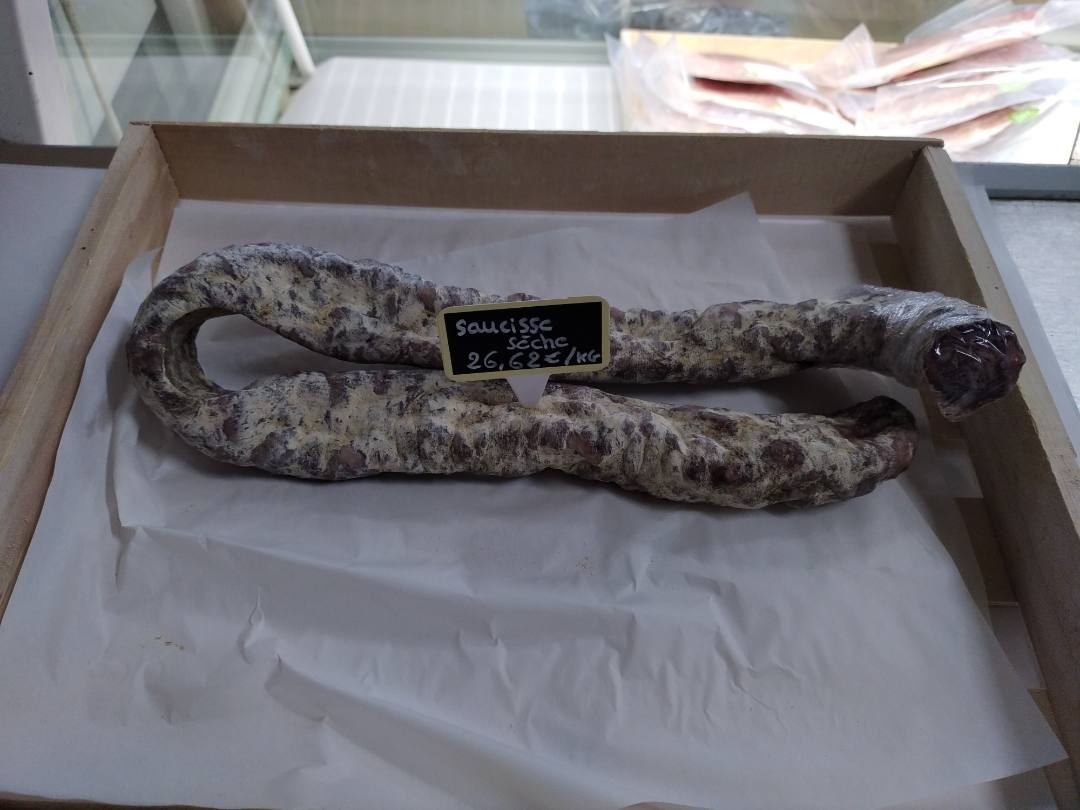
France – Dried sausage – Listeria monocytogenes

Product category
Food
Product subcategory
Meats
Product brand name
SAS 3 pastors
Model names or references
dried sausage
Product identification
Batch Date
0112 Minimum durability date between 04/05/2024 and 06/05/2024
Packaging
sale by cut as is
Start/end date of marketing
From 04/05/2024 to 04/19/2024
Storage temperature
Product to be stored at room temperature
Further information
dry cut sausage
Geographical sales area
Regions: Occitanie
Distributors
Locavorium Local farmer Origin from the Cévennes Peasant avenue
Posted in food contamination, food handler, Food Hazard, Food Hygiene, Food Inspections, Food Micro Blog, Food Microbiology, Food Microbiology Blog, Food Microbiology Testing, Food Pathogen, Food Quality, food recall, Food Safety, Food Safety Alert, Food Safety Management, Food Safety Regulations, Food Testing, Listeria, Listeria France, Listeria monocytogenes
RASFF Alerts- Salmonella – Polish Poultry Products – Brazilian Poultry Products – Thyme – Duck Breast – Mussels – Raw Goats Milk Concentrate – Bacon Burger – Skinless Chicken Breast –
Salmonella spp in duck breast from Hungary in Italy
Salmonella Newport in Poultry meat preparation from Brazil in Germany
Salmonella Minnesota and S. Newport in poultry meat preparation from Brazil in Germany
Salmonella Newport in frozen chicken meat preparation from Brazil in Germany
Salmonella in concentrated raw goat’s milk from the Netherlands in Bulgaria
Fresh poultry meat from Poland – Salmonella enteritidis in Austria
Salmonella in bacon burger, from Belgium in the Netherlands
Presence of Salmonella infantis on chicken skinless breast with fork from Greece in Italy
Salmonella in thyme from Morocco in France
Salmonella enteritidis in chilled chicken from Poland in the Czech Republic
Salmonella in mussels from Spain in France
Posted in food contamination, food handler, Food Hazard, Food Hygiene, Food Inspections, Food Micro Blog, Food Microbiology, Food Microbiology Blog, Food Microbiology Testing, Food Pathogen, Food Quality, food recall, Food Safety, Food Safety Alert, Food Safety Management, Food Safety Regulations, Food Testing, Polish Chicken Salmonella, RASFF, Raw Milk, Salmonella, Salmonella in Chicken, Salmonella Poland