Monthly Archives: September 2020

Germany – Cheese Four Seasons Italy Sliced ​​cheese made from raw milk -Salmonella

LMW

Warning type:

Food

Date of first publication:

September 18, 2020

Product name:

Cheese Four Seasons Italy Sliced ​​cheese made from raw milk, at least 45% fat in dry matter. Tr.
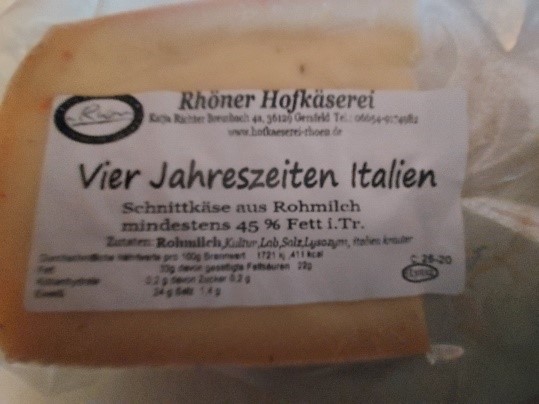
Product pictures:

Image.jpg

Rhön farm cheese dairy

Manufacturer (distributor):

Rhöner Hofkäserei – Katja Richter Brembach 4a 36129 Brembach – Gersfeld

Reason for warning:

Detection of salmonella

Packaging Unit:

180 g

Lot identification:

25-20

Further information:

See attached information from the manufacturer.

Salmonella disease manifests itself within a few days after infection with diarrhea, abdominal pain and occasionally vomiting and a slight fever. The symptoms usually subside on their own after several days. Infants, toddlers, senior citizens and people with a weakened immune system in particular can develop more severe disease processes. People who have eaten this food and develop severe or persistent symptoms should seek medical attention and advise them of a possible salmonella infection.

Seeking preventive medical treatment without symptoms does not make sense.

The cheese was sold in grocery stores in Hesse and Bavaria.

Contact to the responsible authorities:

Bavaria:

poststelle@lgl.bayern.de

Hesse:

Schnellwarnung@rpda.hessen.de

Hong Kong – Hong Kong officials investigate two suspected ciguatoxin poisoning cases

Outbreak News Today

The Hong Kong Centre for Health Protection (CHP) reported Friday the investigation of two suspected ciguatoxin poisoning cases.

The cases, one male and one female, aged 9 and 16 respectively, who developed symptoms of ciguatoxin poisoning including nausea and tongue numbness about 30 minutes to one and a half hours after consuming a marine fish at a restaurant in To Kwa Wan Thursday.

Both patients are now in stable condition.

Ciguatera fish poisoning is not uncommon in tropical areas. It is mainly associated with the consumption of big coral reef fish which have accumulated the toxin in the body, particularly in internal organs, through eating small fish that consumed toxic algae in coral reef seas.

A larger fish is therefore more likely to carry higher amounts of the toxin. However, it is not easy to tell from the appearance of the fish whether it contains the toxin.

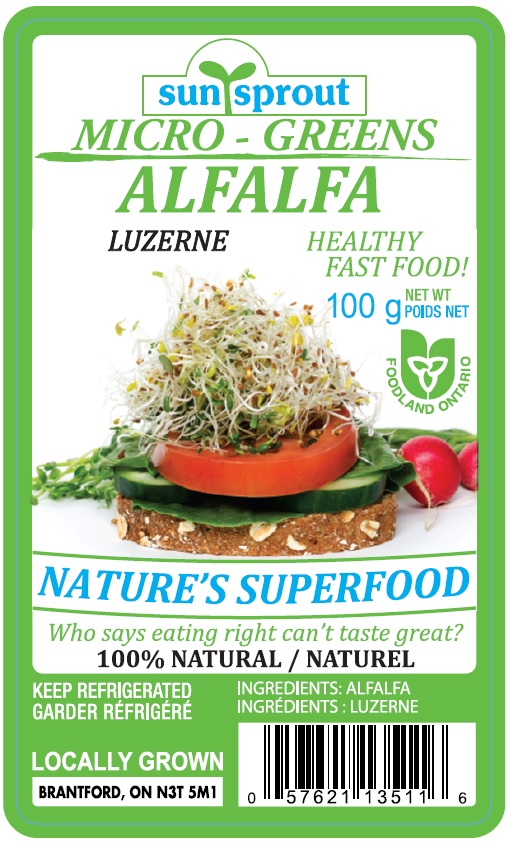
Canada – Updated Food Recall Warning – Sprouts Alive brand and Sunsprout brand Micro – Greens Alfalfa recalled due to Salmonella

CFIA

Recall date:
September 19, 2020
Reason for recall:
Microbiological – Salmonella
Hazard classification:
Class 1
Company / Firm:
Sunsprout Natural Foods
Distribution:
Ontario
Extent of the distribution:
Consumer

Recall details

Ottawa, September 19, 2020 – The food safety warning issued on August 11, 2020 has been updated to include additional product information. This additional information was identified during the Canadian Food Inspection Agency’s (CFIA) food safety investigation.

Sunsprout Natural Foods is recalling Sprouts Alive brand and Sunsprout brand Micro – Greens Alfalfa from the marketplace due to possible Salmonella contamination. Consumers should not consume and retailers, restaurants, and institutions should not sell or use the recalled products described below.

Recalled products

Brand Product Size UPC Codes
Sprouts Alive Micro – Greens Alfalfa 100 g 0 69022 10030 3 All best before dates up to and including BBOCT13
Sunsprout Micro – Greens Alfalfa 100 g 0 57621 13511 6 All best before dates up to and including BBOCT13

What you should do

If you think you became sick from consuming a recalled product, call your doctor.

Check to see if you have the recalled products in your home or establishment. Recalled products should be thrown out or returned to the location where they were purchased.

Food contaminated with Salmonella may not look or smell spoiled but can still make you sick. Young children, pregnant women, the elderly and people with weakened immune systems may contract serious and sometimes deadly infections. Healthy people may experience short-term symptoms such as fever, headache, vomiting, nausea, abdominal cramps and diarrhea. Long-term complications may include severe arthritis.

Background

This recall was triggered by findings by the CFIA during its investigation into a foodborne illness outbreak. The CFIA is conducting a food safety investigation, which may lead to the recall of other products. If other high-risk products are recalled, the CFIA will notify the public through updated Food Recall Warnings.

The CFIA is verifying that industry is removing the recalled products from the marketplace.

Illnesses

Public Health Ontario is investigating an outbreak of human illness associated with consumption of these products.

Product photos

Printer ready version of photos

  • Sprouts Alive - Micro – Greens Alfalfa - 100 g
  • Sunsprout - Micro – Greens Alfalfa - 100 g

Public enquiries and media

Public enquiries
Toll-free: 1-800-442-2342 (Canada and U.S.)
Telephone: 1-613-773-2342 (local or international)
Email: cfia.enquiries-demandederenseignements.acia@canada.ca
Media relations
Telephone: 613-773-6600
Email: cfia.media.acia@canada.ca

Research – Surveillance of foodborne disease outbreaks in China, 2003–2017

Science Direct

Foodborne disease remains a major public health problem worldwide. To understand the epidemiology and changes of foodborne disease in China, data reported to the National Foodborne Disease Outbreak Surveillance System during 2003–2017 were collected. A total of 19,517 outbreaks, which resulted in 235,754 illnesses, 107,470 hospitalizations, and 1,457 deaths, were reported in this period. Of the 13,307 outbreaks with known etiology, 31.8% of outbreaks were caused by poisonous mushrooms, followed by Vibrio parahaemolyticus (11.3%), saponin (8.0%), Salmonella (6.8%), nitrite (6.4%), pesticide (4.8%), Staphylococcus aureus (4.2%) and Bacillus cereus (3.0%). Among 18,955 outbreaks with reported setting, 46.6% were associated with food prepared in a household, followed by 22.5% with food prepared in a restaurant, and 18.4% prepared in a canteen. Of the 13,305 outbreaks associated with a single food category, fungi (mainly poisonous mushroom) were the most commonly implicated food category, followed by meats, vegetables, aquatic animals, condiments, poisonous plants (such as saponin, tung oil or seed, aconite) and grains (such as rice, noodle, rice noodle). Analysis of foodborne disease outbreaks can provide insight into the most important causative agents and sources of foodborne disease, and assist public health agencies determine the high-risk etiology and food pairs, specific points of contamination and settings to reduce foodborne disease illnesses.

Research – Potential of pulsed electric field to control Aspergillus parasiticus, aflatoxin and mutagenicity levels: Sesame seed quality

Wiley Online

kswfoodworld

Image CDC

Seed processing technologies are essential for seed safety and functionality through protection of physicochemical quality, pathogen inactivation, aflatoxin detoxification and alleviation of mutagenicity. Design of a pilot‐scale unit of pulsed electric fields (PEF) to treat sesame seeds with respect to quality parameters, Aspergillus parasiticus inactivation and aflatoxin reduction as well as alleviation of aflatoxin mutagenicity were prompted in this study. PEF energy ranged from 0.97 to 17.28 J achieved maximum reductions of peroxide value and acidity number of 67.4 and 85.7%, respectively, and did not change color L*, a*, b* and hue values. A 60% reduction of A. parasiticus counts occurred at the maximum PEF energy. Aflatoxins G1, G2, B1, and B2 contents decreased by 94.7, 92.7, 86.9, and 98.7%, respectively. Except for the samples treated by 2.16 J with 100 μg/plate and by 6.80 J with 10 μg/plate, PEF treatment provided elimination of aflatoxin mutagenity. It is concluded that PEF treatment can be used to treat sesame seeds with preservation of physicochemical properties, inactivation of A. parasiticus and decomposition of aflatoxins with reduced mutagenicity.

Research – Resurgence of an international hepatitis A outbreak linked to imported frozen strawberries, Germany, 2018 to 2020

Eurosurveillance

Hepatitis A kswfoodworld

Following outbreaks linked to frozen strawberries in Sweden and Austria in 2018, 65 cases linked to the same hepatitis A virus strain were detected in Germany between October 2018 and January 2020, presenting in two waves. Two case–control studies and a comparison of cases’ consumption frequencies with purchase data from a large consumer panel provided strong evidence for frozen strawberry cake as the main vehicle of transmission. Of 46 cases interviewed, 27 reported consuming frozen strawberry cake and 25 of these identified cake(s) from brand A spontaneously or in product picture-assisted recall. Trace back investigations revealed that the Polish producer involved in the previous outbreaks in Sweden and Austria had received frozen strawberries from Egypt via a wholesaler that also delivered frozen strawberries to manufacturer of brand A. Phylogenetic analyses linked the outbreak strain to similar strains formerly isolated from sewage, stool and strawberries in Egypt. Complete trace back and timely recall of products with strong evidence of contamination is important to control an outbreak and prevent later resurgence, particularly for food items with a long shelf life. Continued molecular surveillance of hepatitis A is needed to identify outbreaks and monitor the success of food safety interventions.

Research – Human Norovirus strains differ in sensitivity to the body’s first line of defense

Science Daily

Interferon (IFN) responses are one of the first defenses the body mounts against viral infections, and research has shown that it plays a role controlling viral replication. But when researchers at Baylor College of Medicine investigated whether IFN restricted human norovirus (HuNoV) infection in human intestinal enteroids (HIEs), a cultivation system that recapitulates many of the characteristics of the human infection, they unexpectedly discovered that endogenous IFN responses by HIEs restricted growth of HuNoV strain GII.3, but not of GII.4, the most common strain worldwide.

UK – Tesco and Asda improve Campylobacter in chicken results

Food Safety News

Campylobacter kswfoodworld

Image CDC

The percentage of chickens at Tesco and Asda testing positive for Campylobacter at the top level of contamination in the second quarter of 2020 has fallen below the FSA target.

The two supermarkets had recorded levels above the Food Standards Agency (FSA) threshold of 7 percent of birds with more than 1,000 colony forming units per gram (CFU/g) of Campylobacter in the first quarter of this year.

Tesco reported 9 percent of 132 samples in 1Q 2020 had the highest level of Campylobacter contamination while Asda recorded 9.2 percent.

The figures for 2Q from April to June show Tesco had 3 percent and Asda had 3.6 percent above the top level of contamination.

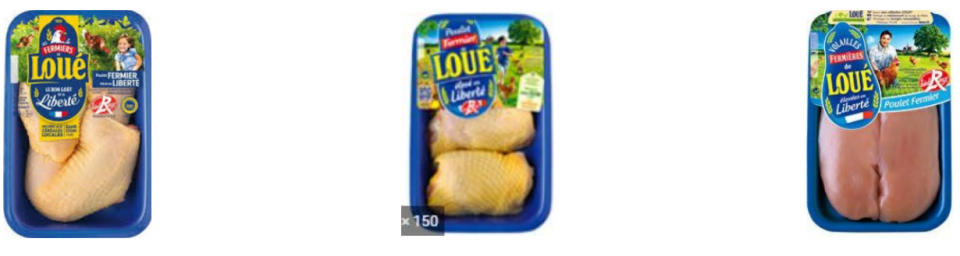
Luxembourg – TRAY OF 2 YELLOW CHICKEN THIGHS, TRAY OF 2 WHITE CHICKEN FILLETS, TRAY OF 3 HIGH CHICKEN THIGHS FROM THE LDC BRAND – PRESENCE OF SALMONELLA

SAP

Last name Tray of 2 yellow chicken thighs
Mark LDC
Bar code 0217823000000
Best before date (DLC) 09/09/2020
Lot 2020037392
Last name Tray of 2 white chicken fillets
Mark LDC
Bar code 3266980282882
Best before date (DLC)

NEW DLC!

1) 08/09/2020 & 09/09/2020

2) 09/22/2020

Lot

NEW LOT!

1) 2020037371

2) 2020038037

Last name Tray of 3 tall chicken thighs
Mark LDC
Bar code 3266980006969
Best before date (DLC) 09/11/2020
Lot 2020037371

Danger: Presence of salmonella


Salmonella can cause symptoms such as nausea, vomiting, abdominal cramps, diarrhea, fever and headache within 6 to 72 hours after consumption. These symptoms may be aggravated in young children, immunocompromised individuals and the elderly. People who have consumed these products and who present these symptoms are advised to consult a doctor, notifying him of this consumption.


Sale in Luxembourg by: Auchan

A sale by other operators cannot be excluded.

Source of information: Auchan recall notification.


Communicated by: Government Commission for Quality, Fraud and Food Safety .


Denmark – Risk of mold in various rye breads

DVFA

kswfoodworld

Image CDC

Lantmännen Schulstad is recalling several types of rye bread, after several own samples show that there is a risk of mold in several types of rye bread. The company has also received some customer complaints.
The risk of mold makes the rye breads unsuitable as food.

Recalled Foods , Published: September 18, 2020

Rye bread produced from 09-09-2020 to 10-09-2020 and exclusively with letter markings PH, PI and PG and “best before” dates from 18.09 and 19.09.
What food:
Forester 
Net weight: 1000 grams
Best before date: 18.09.PH, 18.09.PI, 19.09.PH, 19.09.PI
EAN barcode: 5701205005498
Forester 
Net weight: 500 grams
Best before date: 18.09.PG, 18.09.PI, 19.09.PG, 19.09.PI
EAN barcode: 5701205005481
Sch. Schwarzbrød
Net weight: 1000 grams
Best before date: 18.09.PH, 18.09.PI, 19.09.PH, 19.09.PI
EAN barcode: 5701205005498
Sold in:
Shops across the country
What food:
Coop COOP Schwarzbrot
Net weight: 500 grams
Best before date: 18.09.PG, 18.09.PI, 19.09.PG, 19.09.PI
EAN barcode: 5700383226435
 
Sold in:
COOP stores nationwide
What food:
Rema 1000 Schwarzbrød
Net weight: 500 grams
Best before date: 18.09.PG, 18.09.PI, 19.09.PG, 19.09.PI
EAN barcode: 5705830010704
REMA 1000 Coarse Rye Bread 
Net weight: 1000 grams
Best before date: 18.09.PH, 18.09.PI, 19.09.PH, 19.09.PI
EAN barcode: 5705830600752
Sold in:
REMA1000 stores nationwide
Rye bread produced from 09-09-2020 to 17-09-2020 and exclusively with letter marking AI and “best before” dates from 18.09 and 25.09.
What food:
Kondi Karl Rye Bread 
Net weight: 500 grams
Best before date: 18.09 to 25.09 AI
EAN barcode: 5701205005511
Livelihood Kernegrov 
Net weight: 475 grams
Best before date: 18.09 to 25.09 AI
EAN barcode: 5701205006938
Sold in:
Shops across the country
Company recalling:
Lantmännen Schulstad A / S
Cause:
The company has had errors in production and found mold on several of its own reference samples. 
Risk:
Risk of mildew makes the products unsuitable as food.

Advice for consumers:
The Danish Veterinary and Food Administration advises consumers to deliver the products back to the store where they were purchased or to discard them.