Monthly Archives: June 2020

Ireland – Recall of Kresto Sezam Sesame Seeds due to the Presence of Salmonella

FSAI

Summary
Category 1: For Action
Alert Notification: 2020.34
Product: Kresto Sezam Sesame Seeds, pack size: 200g
Batch Code: L200551V4646; Best before: 31/08/2021
Country Of Origin: India

Message:

The above batch of Kresto Sezam Sesame Seeds is being recalled due to the presence of Salmonella.  Point-of-sale recall notices will be displayed in stores supplied with the implicated batch.

Nature Of Danger:

The implicated batches could cause salmonellosis. Symptoms can include diarrhoea, stomach cramps, vomiting and fever.

Action Required:

Manufacturers, wholesalers, distributors, caterers & retailers:

Retailers are requested to remove the implicated batch from sale and to display a point-of-sale recall notice in stores where the affected batches were sold.

Consumers:

Consumers are advised not to consume the implicated batch.

Kresto Sesame Seeds


USA – Outbreak of Cyclospora Infections in the Midwestern U.S. Linked to Bagged Salad Mix

CDC

CDC, public health and regulatory officials in several states, and the U.S. Food and Drug Administrationexternal icon (FDA) are investigating a multistate outbreak of Cyclospora infections linked to bagged salad mix containing iceberg lettuce, carrots, and red cabbage produced by Fresh Express and purchased at ALDI, Hy-Vee, Jewel-Osco, and Walmart stores in the Midwestern United States.

Advice to Consumers, Restaurants, Retailers, and Suppliers/Distributors

CDC has important advice for consumers and retailers in Arkansas, Illinois, Indiana, Iowa, Kansas, Michigan, Minnesota, Missouri, Nebraska, North Dakota, South Dakota, and Wisconsin:

  • Do not eat, sell, or serve:
    • Recalled Marketside brand Classic Iceberg Salad
      • Sold at Walmart stores in Iowa, Michigan, Minnesota, Nebraska, North Dakota, South Dakota, and Wisconsin
      • 12-ounce and 24-ounce bags
      • Use-by dates of 05/19/2020 through 07/04/2020
    • Recalled Little Salad Bar brand Garden Salad
      • Sold at ALDI stores in Arkansas, Illinois, Indiana, Iowa, Michigan, Minnesota, Missouri, North Dakota, South Dakota and Wisconsin
      • 12-ounce bags
      • Use-by dates of 05/01/2020 through 06/29/2020
    • Recalled Hy-Vee brand Garden Salad
      • Sold at Hy-Vee stores in Illinois, Iowa, Kansas, Minnesota, Missouri, Nebraska, South Dakota, and Wisconsin
      • 12-ounce bags
      • Any use-by date
    • Recalled Jewel-Osco Signature Farms brand Garden Salad
      • Sold at Jewel-Osco stores in Illinois, Indiana, and Iowa
      • 12-ounce bags
      • Use-by dates of 05/16/2020 through 07/04/2020
  • Check your home for any of these recalled salads. Throw any remaining salad away, even if some of it has been eaten and no one has gotten sick.
  • If you live in Arkansas, Illinois, Indiana, Iowa, Kansas, Michigan, Minnesota, Missouri, Nebraska, North Dakota, South Dakota, or Wisconsin and don’t know whether the bagged salad mix you have in your home is one of these recalled salads, do not eat it. Throw it away.

Take action if you have symptoms of a Cyclospora infection:

  • Talk to your healthcare provider.
  • Write down what you ate in the two weeks before you started to get sick.
  • Report your illness to the health department.
  • Assist public health investigators by answering questions about your illness.

Latest Outbreak Information

  • 206 people with laboratory-confirmed Cyclospora infections and who reported eating bagged salad mix before getting sick have been reported from 8 Midwestern states (Illinois, Iowa, Kansas, Minnesota, Missouri, Nebraska, North Dakota, and Wisconsin).
    • Illnesses started on dates ranging from May 11, 2020 to June 17, 2020.
    • 23 people have been hospitalized. No deaths have been reported.
  • Epidemiologic and traceback evidence indicates that bagged salad mix containing iceberg lettuce, carrots, and red cabbage produced by Fresh Express is a likely source of this outbreak.
  • Bagged salad mixes purchased at ALDI, Hy-Vee, Jewel-Osco, and Walmart do not explain all of the illnesses in this outbreak. CDC and FDA continue to investigate to determine whether other products are a source of illnesses.
  • CDC will provide updates when more information is available.

Investigation Details

June 26, 2020

Since the last update on June 23, 2020, 84 new laboratory-confirmed Cyclospora infections have been reported, including 6 from a new state, North Dakota.

Health officials in North Dakota interviewed ill people in their state. In interviews, all six ill people reported eating a salad purchased from a single restaurant location in North Dakota. Health officials determined that the restaurant used Marketside brand bagged garden salad mix purchased from Walmart.

On June 25, 2020, Fresh Express recalled Marketside brand Classic Iceberg Salad sold in 12-ounce and 24-ounce bags at Walmart stores in Iowa, Michigan, Minnesota, Nebraska, North Dakota, South Dakota, and Wisconsin.

As of June 25, 2020, a total of 206 people with laboratory-confirmed Cyclospora infections associated with this outbreak have been reported from 8 states: Illinois (57), Iowa (74), Kansas (1), Minnesota (25), Missouri (10) Nebraska (20), North Dakota (6), and Wisconsin (13).

Illnesses started on dates ranging from May 11, 2020 to June 17, 2020. Ill people range in age from 16 to 92 years with a median age of 60 and 57% are female. Of 198 people with available information, 23 people (12%) have been hospitalized. No deaths have been reported.

Illnesses might not yet be reported due to the time it takes between when a person becomes ill and when the illness is reported. This takes an average of 4 to 6 weeks. If the number of cases reported by CDC is different from the number reported by state or local health officials, data reported by local jurisdictions should be considered the most up to date. Any differences may be due to the timing of reporting and website updates.

There are typically multiple clusters of Cyclospora infections that occur each summer. CDC is working to determine if other recent cases of Cyclospora infection are linked to contaminated ingredients in these bagged salad mixes. This investigation is ongoing.

USA – Walmart salad served by restaurant linked to parasitic infections; grocery store bagged salads still involved

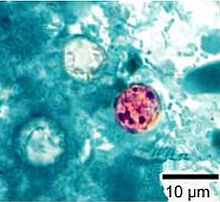
Food Safety News 220px-Cyclospora_cayetanensis_stained

With another 84 patients confirmed and an eighth state involved, an outbreak of Cyclospora infections linked to Fresh Express bagged salads sold by grocery stores is now being blamed for sickening restaurant patrons.

As of an update today, federal officials are reporting 206 patients have been confirmed as infected by the Cyclospora parasite in the outbreak. The microscopic organism is often found on fresh produce that is eaten raw, especially lettuces and herbs such as cilantro. 

Public health officials are concerned that consumers may have unused portions of the implicated salads in their homes. Four bagged salad mixes have been recalled so far. Some of the salad products have use-by dates into July.

France – Petitgas brand dried filet mignon 30 slices – Salmonella

Oulah

wow, product recall, product recall, consumption, consumer, danger, health, product safety

ENCOUNTERED PROBLEM

Presence of Salmonella

PROPOSED SOLUTION

Those who hold this product are asked not to consume and destroy them, or to bring them back to the store for exchange.

Food poisoning caused by salmonella results in gastrointestinal disturbances, diarrhea, vomiting and abdominal pain, often accompanied by fever; these symptoms may be more severe in young children, immunocompromised people and the elderly. The incubation period can range from 6 to 72 hours.
People who have consumed the products mentioned below and who present these symptoms are invited to consult their doctor by reporting this consumption.

FURTHER INFORMATION

▸ Barcode, DLC and lot
• 3275461006367 – DLC: 08/28/2020 – Lot: 01710010
• 3275461006398 – DLC: 08/27/2020 – Lot: 01700015

▸ Sale date
From June 23, 2020 to today

▸ Contact customer service
Contact the customer service at contact@petitgas.fr or at 02.51.55.73.64 for any questions.

▸ Source
https://www.auchan.fr/

France – Nature Bio brand young shoot salad – Listeria monocytogenes

Oulah

wow, product recall, product recall, consumption, consumer, danger, health, product safety

ENCOUNTERED PROBLEM

Potential risk of the presence of listeria

PROPOSED SOLUTION

People who hold this product are asked not to consume and destroy it, or to bring it back to the store for exchange or refund.

People who have consumed this product and who have a fever, isolated or accompanied by headaches, are invited to consult their doctor by reporting this consumption.
Pregnant women should be especially attentive to these symptoms, as well as the immunocompromised and the elderly. These symptoms may suggest listeriosis, a disease which can be serious and which can take up to eight weeks to incubate.

FURTHER INFORMATION

▸ Barcode
3257986789925

▸ DLC and lot
• DLC: 27/06/20 – Lot: 26199703 041
• DLC: 28/06/20 – Lot: 26208446 041

▸ Source
https://www.cora.fr/

Research – Evaluation of weakly acidic electrolyzed water and modified atmosphere packaging on the shelf life and quality of farmed puffer fish (Takifugu obscurus ) during cold storage

Wiley Online

The combined effect of weakly acidic electrolyzed water (WAEW) and modified atmosphere packaging (MAP) treatments on the quality of puffer fish (Takifugu obscurus ) during cold storage was studied on aspects of microbiological activity, texture, total volatile basic nitrogen (TVB‐N), trimethylamine (TMA), free amino acids (FAAs), thiobarbituric acid reactive substance (TBARS), ATP‐related compounds and value, volatile organic compounds (VOCs), and organoleptic properties. As a result, significantly ( < .05) higher inhibitory effects on total viable counts (TVC), H2S‐producing bacteria (including Shewanella putrefaciens ), Pseudomonas spp., and lactic acid bacteria (LAB) were observed in WAEW‐treated puffer fish packaged in 60%CO2/5%O2/35%N2 atmosphere than that in air package and vacuum package with/without WAEW‐treated samples. In addition, chemical results showed that WAEW together with MAP treatments were highly efficient in maintaining lower TVB‐N, TMA, and TBARS values in refrigerated puffer fish. Moreover, the presence of WAEW combined with MAP treatments showed positive effects on retarding the relative content of fishy flavor compounds, such as 1‐octen‐3‐ol, 1‐penten‐3‐ol, hexanal, heptanal, nonanal, decanal, ()‐2‐octenal, and 2,3‐butanedione. As a whole, the combined effect of WAEW and MAP on refrigerated puffer fish is advisable to maintain better quality and extend the shelf life.

Research – Effects of oilseed substrates (ground nyjer and flax seeds) on the growth and Ochratoxin A production by Aspergillus carbonarius

Wiley Online

Aspergillus carbonarius is one of the major Ochratoxin A (OTA) producing fungus. Nyjer and flax seeds are important oilseeds that are used for both human and animal consumption, but they are highly susceptible to fungal growth and mycotoxin contamination. The objectives of this study were to determine the growth and OTA production by A. carbonarius on ground nyjer and flax seeds with water activity levels ranging from 0.82 to 0.98 aw at three incubation temperatures (20, 30, 37°C). It was found that A. carbonarius was not able to grow on the two types of oilseeds with 0.82 or 0.86 aw. Also, the fungus was not able to grow on flax seeds with high water activity (0.98 aw). The OTA was only detected on flax seed samples with 0.94 aw at 20°C. On nyjer seeds, the highest concentration of OTA (271 μg/kg) was detected from samples with 0.98 aw incubated at 20°C for 5 days, while on flax seeds the highest OTA (146 μg/kg) was found on the seed samples with 0.94 aw incubated at 20°C for 15 days. Linear regression models also indicated that 0.98 aw was optimal for both fungal growth and OTA production on nyjer seeds. Overall, ground nyjer seed is better than flax seed to support growth and OTA production by A. carbonarius .

Research – Effects of post‐packaging pasteurization process on microbial, chemical, and sensory qualities of ready‐to‐eat cured vacuum‐packed Turkey breast

Wiley Online

Ready‐to‐eat (RTE) cured vacuum‐packed turkey breast was pasteurized (80°C, 5.5 min) and stored at 8°C (like supermarkets refrigerator temperature). After 42 days (current shelf life of this product), in control group (RTE cured vacuum‐packed turkey breast), the number of mesophilic, anaerobic, lactic acid bacteria, mold and yeast, coliform, and psychrotrophic increased 5.82, 6.85, 5.85, 4.75, 1.49, and 5.57 log CFU/g, respectively. However, in the pasteurized samples, the number of mesophilic, anaerobic, and lactic acid bacteria increased 1.86, 2.12, and 2.28 log CFU/g, respectively, and mold and yeast, coliform, and psychrotrophic bacteria were under the detection limit. The effects of post‐packaging pasteurization on the reduction of total mesophilic, anaerobic and lactic acid bacteria counts on Day 42 of storage was 7.04 ± 0.33, 4.73 ± 0.11, and 5.58 ± 0.11 log CFU/g, respectively. Sensory quality of treated samples was significantly better than the control’s ( < .05). Post‐packaging pasteurization (PPP) significantly inhibited the reduction in the pH and the increase in TVB‐N, TBARS, titratable acidity, and drip loss ( < .05). This study shows the effectiveness of PPP on microbial, chemical, and sensory quality of cured vacuum‐packed turkey breast during cold storage.

Research – Antibacterial activities of Camellia sinensis plant extracts against uropathogenic E. coli in vitro and in vivo

AJ

This study evaluated the in vitro and in vivo antibacterial activities of methanol and ethyl acetate extracts of Camellia sinensis (Green tea) against Escherichia coli implicated in urinary tract infections. Antibacterial activities of these plant extracts were tested against 10 multi-drug resistant E. coli isolates obtained from clinical specimens of UTI patients. Forty-five (45) Wister albino rats were used for this study and exactly 0.1 ml of standardized (0.5 McFarland’s) E. coli suspension was each inoculated into the 45 rats through intra-urethral route and observed after 48 h. This was followed by oral administration of different concentrations of methanol and ethyl acetate extracts of C. sinensis, and ciprofloxacin antibiotic for 14 days. Phytochemical screening of extracts showed the presence of bioactive components. Results revealed that methanol extract was better than ethyl acetate extract of C. sinensis in the treatment of UTI caused by E. coli. Body weight, white blood cell count, and erythrocyte sedimentation rate level returned to normal values after treatment with methanol extract of C. sinensis at 200 mg/kg body weight when compared to ethyl acetate extract of C. sinensis. This study has shown that C. sinensis possess bioactive ingredients with antimicrobial activities. Information from this study adds to the current information on the potential health benefits of green tea. Thus, further studies on other plant products should be explored so as to understand their potential health benefits and as alternative therapeutics in the treatment of bacterial infections.

Research – Fate of Salmonella enterica and Enterohemorrhagic Escherichia coli on Vegetable Seeds Contaminated by Direct Contact with Artificially Inoculated Soil during Germination

JFP

ABSTRACT

Contaminated vegetable seeds have been identified as a potential source of foodborne bacterial pathogens. This study was undertaken to observe the behavior of Salmonella and enterohemorrhagic Escherichia coli (EHEC) on vegetable seeds, contaminated by direct contact with artificially inoculated soil, during germination. Sterile sandy soil inoculated with lyophilized cells of four individual strains of Salmonella or EHEC (three O157:H7 strains and one O104:H4 strain) was mixed with sanitized seeds (2 g) of alfalfa, fenugreek, lettuce, and tomato at 20°C for 1 h. The contaminated seeds were germinated on 1% water agar at 25°C for 9 days in the dark. Populations of Salmonella and EHEC on various tissues (seed coat, root, cotyledon, and stem, etc.) of sprouts and seedlings were determined every other day over the germination period. Overall, 70.4 and 72.4% of collected tissue samples (n = 544) tested positive for Salmonella and EHEC, respectively. In general, the mean populations of Salmonella and EHEC on sprout and seedling tissues increased with the prolongation of germination time. Seed coats had the highest bacterial counts (4.00 to 4.06 log CFU/0.01 g), followed by the root (3.36 to 3.38 log CFU/0.01 g), cotyledon (3.13 to 3.38 log CFU/0.01 g), and stem tissues (2.67 to 2.84 log CFU/0.01 g). On average, tissue sections of fenugreek sprouts and lettuce seedlings had significantly higher (P < 0.05) numbers of Salmonella and EHEC cells than that of alfalfa sprouts and tomato seedlings. Data suggest that the growth and dissemination of Salmonella and EHEC cells on alfalfa, fenugreek, lettuce, and tomato sprout and seedling tissues are influenced by the type of vegetable seeds and sprout and seedling tissues involved. The study provides useful information on the fate of two important foodborne bacterial pathogens on selected vegetable seeds, contaminated by direct contact with inoculated soil, during the germination process.

HIGHLIGHTS
  • Vegetable seeds were contaminated via contact with pathogen-bearing sandy soil.
  • Pathogens on contaminated seeds were recovered from tissues of sprouts and seedlings.
  • Tomato and alfalfa tissues had lower pathogen counts than fenugreek and lettuce tissues.
  • Seed coats had higher pathogen counts than the root and cotyledon tissues.
  • Stem tissues had lower Salmonella/EHEC counts compared with all other tissues.